
 100% FREE ACCESS
7th Standard CBSE Syllabus & Materials
7th Standard CBSE
CBSE 7th Social Science Theme E - Understanding Market - New Sample Question Papers Study Material - QB365 Set A
NEW7th Standard CBSE
CBSE 7th Social Science Theme E - From Barter to Money - New Sample Question Papers Study Material - QB365 Set A
NEW7th Standard CBSE
CBSE 7th Social Science Theme D - The Constitution of India- An Introduction - New Sample Question Papers Study Material - QB365 Set A
NEW7th Standard CBSE
CBSE 7th Social Science Theme D - From the Rulers to the Ruled : Types of Governments - New Sample Question Papers Study Material - QB365 Set A
NEW7th Standard CBSE
CBSE 7th Social Science Theme B - The Age of Reorganisation - New Sample Question Papers Study Material - QB365 Set A
NEW7th Standard CBSE
CBSE 7th Social Science Theme B - The Rise of Empires - New Sample Question Papers Study Material - QB365 Set A

Published on: 31/10/2025
Download CBSE Class 7th Standard CBSE Science question papers, sample papers, important questions, and previous year solved papers in PDF format. Get free study materials, NCERT solutions, and exam preparation resources for Class 7th Standard CBSE Science
Questions + Answers key
Take MCQ Science Test
1.
Why does topsoil have the most humus?
2.
Why are earthworms called a farmer's friend?
3.
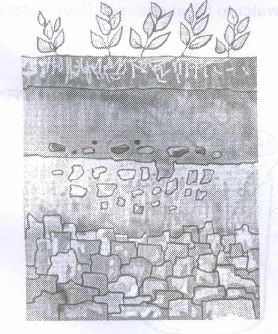
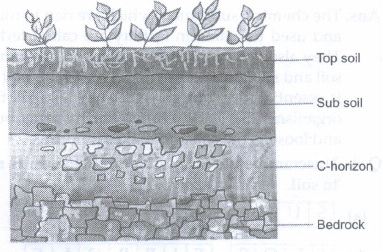
Locate the following zones given as boxed items in Figure, which shows a diagram of soil profile. Top soil, Sub soil, C-horizon, Bedrock
4.
What makes soil a shelter for many living organisms?
5.
Explain that "Soil is an inseparable part of our life."
6.
Why on a hot summer day the soil seems to shimmer?
7.
For planting rice, which kind of soil would be most suitable?
8.
Do all types of soil absorb water to the same extent? Give reason for your answer.
9.
Can we make toys with the soil obtained from a field? Explain?
10.
Explain the term humus that is generally found in the uppermost layer of soil.
11.
List the substances which pollute the soil.
12.
There are two components of soil one that comes from living thing and other from non-living thing. What are these two components?
13.
When we add some dry soil to the water in a glass and stir it, bubbles are observed from the soil. What causes these bubbles to raise?
14.
Give the formula to calculate the absorption percentage.
15.
In how many groups the soil has been categorised? Name them.
1.
Humus is formed by decaying remains of plants and animals which are only found in topsoil.
2.
Earthworms are called a farmer's friend because earthworms till the land by moving in soil when the land is watered.
3.
4.
Soil contains organic materials such as starch, cellulose, fats and proteins and remains of dead organisms. These give energy to the living organisms. Air, water and minerals present in soil also give enough energy to living organisms to sustain their lines.
5.
(i) Soil is the most important natural resource. It supports the growth of plants by holding the roots firmly.
(ii) It helps in supplying water and nutrients to plants
(iii) It is the home of many organisms
(iv) It is essential for agriculture, which provides food, clothing and shelter for all. Soil is thus an inseparable part of our life.
6.
On a hot summer day, the vapour coming out of the soil reflect the sunlight and the air above the soil seems to shimmer.
7.
For planting paddy (rice), clayey soil that is rich in organic matter and have a good water retaining capacity is ideal
8.
No, it is because different types of soil has different absorbing capacity of water.
9.
No, soil from a field cannot be used to make toys. In order to make toys, the soil should be clayey.
10.
The rotting dead matter in the soil is called humus.
11.
The substances which pollute the soil are
polythene bags, plastics, waste products, chemicals, pesticides, etc.
12.
The two major components of soil are weathered rock particles, i.e. non-living components and humus that consists of living organisms like fungi, bacteria, worm, insects, etc.
13.
When dry soil is added in the water in a glass and stir it, bubbles appear. These bubbles are caused due to the air present in between the soil particles
14.
The absorption percentage of water can be calculated by the formula given below
Percentage of water absorb
\(\frac { amount\quad of\quad water\quad absorted(in\quad ml) }{ amount\quad of\quad soil(in\quad gm) } x100\)
15.
The soil has been categorised into four major groups, i.e.
(i) clay
(ii) silt
(iii) sand
(iv) gravel

7th Standard CBSE Syllabus & Materials
7th Standard CBSE
CBSE 7th Social Science Theme B - New Beginnings : Cities and States - New Sample Question Papers Study Material - QB365 Set A
NEW7th Standard CBSE
CBSE 7th Social Science Theme A - Climates of India - New Sample Question Papers Study Material - QB365 Set A
NEW7th Standard CBSE
CBSE 7th Social Science Theme A - Geographical Diversity of India - New Sample Question Papers Study Material - QB365 Set A
NEW7th Standard CBSE
CBSE 7th Science Earth, Moon and the Sun - New Sample Question Papers Study Material - QB365 Set A



NCERT Books

Syllabus

Exam Pattern

Sample Question Papers

Previous year Question Papers

Important Notes

MCQ Practice test

NCERT Exemplers

Case study Questions

Image Based Questions

Passage based Questions

HOT Questions

Value Based Questions

Model Questions Papers
NCERT ( Book Back ) Questions

Assertion and Reason
Important Questions And Answers

CBSE 7th Standard CBSE Subjects
CBSE Standards


