
 100% FREE ACCESS
7th Standard CBSE Syllabus & Materials
7th Standard CBSE
CBSE 7th Social Science Theme E - Understanding Market - New Sample Question Papers Study Material - QB365 Set A
NEW7th Standard CBSE
CBSE 7th Social Science Theme E - From Barter to Money - New Sample Question Papers Study Material - QB365 Set A
NEW7th Standard CBSE
CBSE 7th Social Science Theme D - The Constitution of India- An Introduction - New Sample Question Papers Study Material - QB365 Set A
NEW7th Standard CBSE
CBSE 7th Social Science Theme D - From the Rulers to the Ruled : Types of Governments - New Sample Question Papers Study Material - QB365 Set A
NEW7th Standard CBSE
CBSE 7th Social Science Theme B - The Age of Reorganisation - New Sample Question Papers Study Material - QB365 Set A
NEW7th Standard CBSE
CBSE 7th Social Science Theme B - The Rise of Empires - New Sample Question Papers Study Material - QB365 Set A

Published on: 31/10/2025
Download CBSE Class 7th Standard CBSE Science question papers, sample papers, important questions, and previous year solved papers in PDF format. Get free study materials, NCERT solutions, and exam preparation resources for Class 7th Standard CBSE Science
Questions + Answers key
Take MCQ Science Test
1.
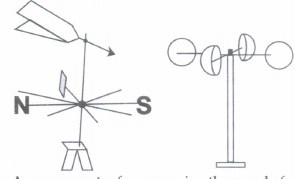
What is an anemometer? Explain with the help of a diagram.
2.
The advanced technologies issue the alerts and warnings of unexpected storm. Comment.
3.
Name some effective safety measures against cyclone?
4.
How will you help your neighbours in case cyclone approaches your village/town?
5.
Explain why holes are made in hanging banners and hoardings.
6.
State two experiences that made you think that air exerts pressure.
7.
Suggest two methods to find out wind direction at a given place.
8.
The whole ______ of India is vulnerable to cyclone.
9.
The name of cyclone in American continent is ______
10.
Winds carrying ______ cause rain.
11.
________ is an electric discharge in the sky.
12.
Human body is a ______ conductor of electricity.
13.
The warm air is ______ than cold air.
14.
Very low pressure system with very high speed minds revolving around it is called a ______
15.
The main cause of wind movement is uneven ___________
16.
A violent Tornado can travel at the speeds of about ___________
17.
Winds are generated due to _________ heating on the earth.
18.
Why do you think that a steel skyscraper has no need for lightning rods?
19.
What precautions you would take to provide protection against lightning?
20.
Describe a tornado.
21.
Suggest some precautions to be taken to prevent the roof of a tin sheet from flying away during a fierce wind storm.
22.
Name the ocean which is mainly responsible to bring rain bearing monsoon winds to Kerala coast in June every year.
23.
Why is Chandigarh unlikely to be affected by a cyclone?
24.
Describe an activity to demonstrate that warm air is lighter than cool air.
25.
Explain how cyclones can cause tremendous loss of life and property?
26.
Write a short note on the disaster management in case of cyclones.
1.
The device which is used to measure wind speed is called anemometer. Since wind speed plays an important role in the formation of storms, an anemometer becomes useful to predict the cyclones or storms in cyclone prone areas.
2.
The technologies that include satellites and radars issue the information of expected storm in advance in the form of cyclone warnings. It is issued in two stages, i.e. a cyclone alert or cyclone watch is issued 48 h in advance of any expected storm and cyclone warning is issued 24 h in advance. The message is broadcasted every hour or half hour when a cyclone is nearest the coast.
3.
These are produced by the dark clouds which form at fairly low altitude in the atmosphere.
4.
I will help my neighbours in case cyclone approaches my village/town by the following ways:
(i) I will help in shifting their household articles, domestic animals, etc., to safer place. (ii) I will provide phone numbers of all emergency services like police, fire brigade and medical centres.
(iii) I will give them safety advice like avoid driving on roads through standing water, not to touch wet switches, etc.
5.
Holes are made in hanging banners and hoardings to allow air to pass through them as a result of which there will be less pressure of air on the banners or hoardings. Unless it is done, these may be uprooted or distorted due to the pressure of the air.
6.
Two experiences that made us think that air exerts pressure are
(i) Cycling against the direction of the wind, it is difficult to ride. It shows that the air exerts pressure.
(ii) While rowing a sailboat in the direction of the wind, it is always easier to row and while rowing a sailboat against the direction of the wind, it is very difficult to row. It also shows that the air exerts pressure.
7.
Two methods to find out wind direction at a given place are
(i) An instrument called anemometer can be used to find the direction and speed of the wind.
(ii) Hold a strip of paper outside. The direction in which the paper is blowing is the direction in which the wind blows.
8.
()
Coastline
9.
()
Hurricane
10.
()
Water
11.
()
Lightning
12.
()
Good
13.
()
Lighter
14.
()
Cyclone
15.
()
heating
16.
()
300 km/h
17.
()
uneven
18.
Steel being a good conductor of electricity allows a clear passage of the energy of lightning to the ground with any damage. Therefore, they do not need lightning rods.
19.
(i) Lightning conductor should be installed on large buildings. When lightning strikes, it provides a path to the charge to pass through it.
(ii) We should be stand under a tree because lightning can set the tree on fire.
(iii) We should confine ourselves indoors.
20.
A tornado is a dark funnel shaped cloud that reaches from the sky to the ground.
The diameter of a tornado can be as small as a metre and as large as kilometre or even wider. The funnel of a tornado sucks dust, debris or everything that comes near its base (due to low pressure) and throws them out up to the top.
21.
Some precautions are
(i) Put heavy stones on it.
(ii) Screw it tight.
22.
An Indian ocean is mainly responsible to bring rain bearing monsoon winds to Kerala coast in June every year.
23.
Chandigarh is unlikely to be affected by a cyclone because it is not near to the sea or an ocean.
24.
Take two paper bags or empty paper cups of the same size. Hang the two bags in the inverted position on the two ends of a metal or wooden stick. Tie a piece of thread in the middle of the stick. Hold the stick by the thread as in a balance. Put a burning candle below one of the bags. As the warm air rises up, it pushes the bag above the candle. This activity proves that warm air is lighter than cool air.
25.
Cyclones can be very destructive as they travel over seas at 15-30 km/h and the strong winds push water towards the shore even when the storm is hundreds of kilometres away. This is actually the first indication of an approaching cyclone. The central low pressure area lifts the water surface in the centre to a height of 3 - 12 metres and it appears like a water wall moving towards the shore. As a result seawater enters and floods the low lying coastal areas causing loss of life and property. This reduces the fertility of the soils also. Since cyclones are accompanied by heavy rainfall, it further worsens the flood situation. In addition, the communication system, livestock, trees, buildings, bridges and many other man-made structures are also damaged by high speed wind.
26.
The disaster management of a cyclone involves:
(A) Effective Safety Measures:
(i) A cyclone forecast and warning service.
(ii) Rapid communication of warning to the government agencies, the ports, fisherman, ships and to the general public.
(iii) Construction of cyclone shelters in the cyclone prone areas and administrative arrangements for moving people fast to safer places.
(B) Action on the Part of the People:
(i) We should not ignore the warnings issued by the meteorological department through media like TV, radio or newspapers.
(ii) We should:
(a) make necessary arrangements to shift the essential household goods, domestic animals and vehicle etc., to safer places.
(b) avoid driving on roads through standing water, as floods may have damaged the roads and
(c) keep ready the phone numbers of all emergency services; like police, fire brigade and medical centre. Some other precautions if you are staying in a
cyclone prone area:
(1) Do not drink water that could be contaminated. Always store drinking water for emergencies.
(2) Do not touch wet electric switches and fallen powerlines.
(3) Do not pressurise the rescue force by making undue demands.

7th Standard CBSE Syllabus & Materials
7th Standard CBSE
CBSE 7th Social Science Theme B - New Beginnings : Cities and States - New Sample Question Papers Study Material - QB365 Set A
NEW7th Standard CBSE
CBSE 7th Social Science Theme A - Climates of India - New Sample Question Papers Study Material - QB365 Set A
NEW7th Standard CBSE
CBSE 7th Social Science Theme A - Geographical Diversity of India - New Sample Question Papers Study Material - QB365 Set A
NEW7th Standard CBSE
CBSE 7th Science Earth, Moon and the Sun - New Sample Question Papers Study Material - QB365 Set A



NCERT Books

Syllabus

Exam Pattern

Sample Question Papers

Previous year Question Papers

Important Notes

MCQ Practice test

NCERT Exemplers

Case study Questions

Image Based Questions

Passage based Questions

HOT Questions

Value Based Questions

Model Questions Papers
NCERT ( Book Back ) Questions

Assertion and Reason
Important Questions And Answers

CBSE 7th Standard CBSE Subjects
CBSE Standards


