
 100% FREE ACCESS
7th Standard CBSE Syllabus & Materials
7th Standard CBSE
CBSE 7th Social Science Theme E - Understanding Market - New Sample Question Papers Study Material - QB365 Set A
NEW7th Standard CBSE
CBSE 7th Social Science Theme E - From Barter to Money - New Sample Question Papers Study Material - QB365 Set A
NEW7th Standard CBSE
CBSE 7th Social Science Theme D - The Constitution of India- An Introduction - New Sample Question Papers Study Material - QB365 Set A
NEW7th Standard CBSE
CBSE 7th Social Science Theme D - From the Rulers to the Ruled : Types of Governments - New Sample Question Papers Study Material - QB365 Set A
NEW7th Standard CBSE
CBSE 7th Social Science Theme B - The Age of Reorganisation - New Sample Question Papers Study Material - QB365 Set A
NEW7th Standard CBSE
CBSE 7th Social Science Theme B - The Rise of Empires - New Sample Question Papers Study Material - QB365 Set A

Published on: 31/10/2025
Download CBSE Class 7th Standard CBSE Science question papers, sample papers, important questions, and previous year solved papers in PDF format. Get free study materials, NCERT solutions, and exam preparation resources for Class 7th Standard CBSE Science
Questions + Answers key
Take MCQ Science Test
1.
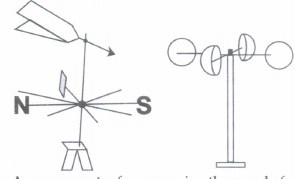
What is an anemometer? Explain with the help of a diagram.
2.
What is thunderstorm? How does it develop?
3.
Briefly explain what are cyclones and how are they formed.
4.
Tanay came to know about drastic loss of human lives, property, agriculture etc. in the cyclone affected area of Odisha. His mother gave him Rs. 500to purchase a dress for his birthday which was just after seven days to happen. But in his school, teacher said about a circular in which students are supposed to donate in the rescue fund of disaster affected people. Tanay donated the money to the fund.
On this situation answer the following questions:
(i) What is cyclone?
(ii) Which area of Indian coast are prone to cyclone?
(iii) State some effective safety measures of cyclone.
(iv) Which value of Tanay is shown here?
5.
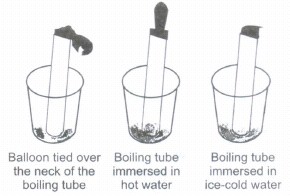
Describe an activity to demonstrate that warm air is lighter than cool air.
6.
Explain that temperature is also involved in the increasing or decreasing speed of wind.
7.
Explain how cyclones can cause tremendous loss of life and property?
8.
Write a short note on the disaster management in case of cyclones.
9.
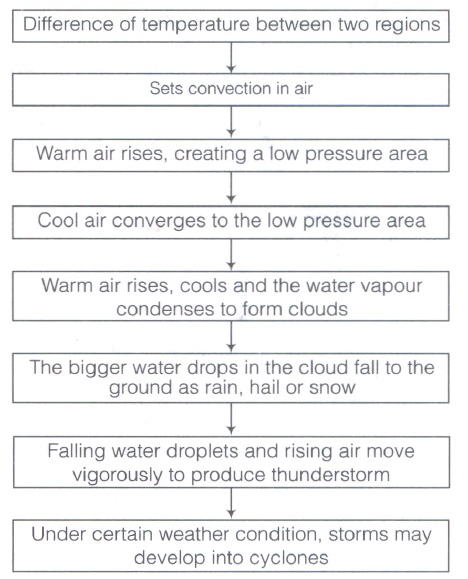
The phenomenon of cloud formation, rain, storm and cyclone are inter linked. Do you agree? If yes, give a flow chart that explain this relation.
10.
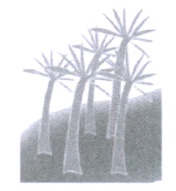
The picture in figure shows tree line along the sea coast on an island near the equator. As shown, the tree tops are permanently bent in one direction. Are the trees bend towards the sea or away from it? Explain.
1.
The device which is used to measure wind speed is called anemometer. Since wind speed plays an important role in the formation of storms, an anemometer becomes useful to predict the cyclones or storms in cyclone prone areas.
2.
Thunderstorm develops in hot humid tropical areas. The rising temperatures produce strong upward rising winds. These winds carry water droplets upwards where they freeze and fall down again.
The swift movement of the falling water droplets along with the rising air crete lightning and sound. This event is called thunderstorm.
3.
High speed winds and air pressure difference can cause cyclones.They are formed when water vapour changes back to liquid by the release of heat. This heat warms air around and it rises to move up and more air rushes to the vacant place. Thus, a cycle is formed which have low pressure and very high speed of air.
4.
(i) Water takes up heat from atmosphere to change into vapour. Next water vapour changes back to liquid raindrops and release heat in the atmosphere. This heat warms the air around and rises up causing a drop in pressure. This cycle is repeated that leads to very low pressure system with very high speed winds revolving around it. It is known as cyclone.
(ii) Particularly the East coastline of India is vulnerable to cyclones.
(iii) (a) Forecast and warning service.
(b) Construction of cyclone centres in cyclone prone areas.
(c) Rapid communication of warnings to the Government agencies, fisherman, ships and general public.
(iv) Tanay is an aware student and concerned about the incidents happening around him. He is a responsible future citizen of our country.
5.
Take two paper bags or empty paper cups of the same size. Hang the two bags in the inverted position on the two ends of a metal or wooden stick. Tie a piece of thread in the middle of the stick. Hold the stick by the thread as in a balance. Put a burning candle below one of the bags. As the warm air rises up, it pushes the bag above the candle. This activity proves that warm air is lighter than cool air.
6.
Take a boiling tube. Stretch a balloon tightly over the neck of the tube. Pour some hot water in a beaker. Insert the boiling tube with the balloon in the hot water. Observe for any change in shape of balloon. We see that balloon lifts upward. Take the tube out, let it cool down to the room temperature. Take some ice cold water in another beaker and place the boiling tube in it. The balloon inflates when the boiling tube is placed in hot water. But the same balloon deflates when tube is kept in cold water. This activity shows that warm air rises up and warm air is lighter than the cold air. In this way, we can say that difference in temperature also involved in making speed of wind.
7.
Cyclones can be very destructive as they travel over seas at 15-30 km/h and the strong winds push water towards the shore even when the storm is hundreds of kilometres away. This is actually the first indication of an approaching cyclone. The central low pressure area lifts the water surface in the centre to a height of 3 - 12 metres and it appears like a water wall moving towards the shore. As a result seawater enters and floods the low lying coastal areas causing loss of life and property. This reduces the fertility of the soils also. Since cyclones are accompanied by heavy rainfall, it further worsens the flood situation. In addition, the communication system, livestock, trees, buildings, bridges and many other man-made structures are also damaged by high speed wind.
8.
The disaster management of a cyclone involves:
(A) Effective Safety Measures:
(i) A cyclone forecast and warning service.
(ii) Rapid communication of warning to the government agencies, the ports, fisherman, ships and to the general public.
(iii) Construction of cyclone shelters in the cyclone prone areas and administrative arrangements for moving people fast to safer places.
(B) Action on the Part of the People:
(i) We should not ignore the warnings issued by the meteorological department through media like TV, radio or newspapers.
(ii) We should:
(a) make necessary arrangements to shift the essential household goods, domestic animals and vehicle etc., to safer places.
(b) avoid driving on roads through standing water, as floods may have damaged the roads and
(c) keep ready the phone numbers of all emergency services; like police, fire brigade and medical centre. Some other precautions if you are staying in a
cyclone prone area:
(1) Do not drink water that could be contaminated. Always store drinking water for emergencies.
(2) Do not touch wet electric switches and fallen powerlines.
(3) Do not pressurise the rescue force by making undue demands.
9.
Yes, the following flow chart explains the phenomenon leading to the formation of cloud, rain, storm and cyclone.
10.
In the given figure, the tree line along the sea coast on an island near the equator shows that tree tops are permanently bent in one direction. The reason behind this movement of tree is that during the day time the wind blows from sea to land because land gets warmer more quickly than sea.
This makes the air of land, warm and lighter which is raised up in the sky. Therefore, the top of the bent trees shows the moving direction of wind from sea to land.

7th Standard CBSE Syllabus & Materials
7th Standard CBSE
CBSE 7th Social Science Theme B - New Beginnings : Cities and States - New Sample Question Papers Study Material - QB365 Set A
NEW7th Standard CBSE
CBSE 7th Social Science Theme A - Climates of India - New Sample Question Papers Study Material - QB365 Set A
NEW7th Standard CBSE
CBSE 7th Social Science Theme A - Geographical Diversity of India - New Sample Question Papers Study Material - QB365 Set A
NEW7th Standard CBSE
CBSE 7th Science Earth, Moon and the Sun - New Sample Question Papers Study Material - QB365 Set A



NCERT Books

Syllabus

Exam Pattern

Sample Question Papers

Previous year Question Papers

Important Notes

MCQ Practice test

NCERT Exemplers

Case study Questions

Image Based Questions

Passage based Questions

HOT Questions

Value Based Questions

Model Questions Papers
NCERT ( Book Back ) Questions

Assertion and Reason
Important Questions And Answers

CBSE 7th Standard CBSE Subjects
CBSE Standards


