
 100% FREE ACCESS
7th Standard CBSE Syllabus & Materials
7th Standard CBSE
CBSE 7th Social Science Theme E - Understanding Market - New Sample Question Papers Study Material - QB365 Set A
NEW7th Standard CBSE
CBSE 7th Social Science Theme E - From Barter to Money - New Sample Question Papers Study Material - QB365 Set A
NEW7th Standard CBSE
CBSE 7th Social Science Theme D - The Constitution of India- An Introduction - New Sample Question Papers Study Material - QB365 Set A
NEW7th Standard CBSE
CBSE 7th Social Science Theme D - From the Rulers to the Ruled : Types of Governments - New Sample Question Papers Study Material - QB365 Set A
NEW7th Standard CBSE
CBSE 7th Social Science Theme B - The Age of Reorganisation - New Sample Question Papers Study Material - QB365 Set A
NEW7th Standard CBSE
CBSE 7th Social Science Theme B - The Rise of Empires - New Sample Question Papers Study Material - QB365 Set A

Published on: 31/12/2018
Class 7 Revision Test
Download CBSE Class 7th Standard CBSE Science question papers, sample papers, important questions, and previous year solved papers in PDF format. Get free study materials, NCERT solutions, and exam preparation resources for Class 7th Standard CBSE Science
Questions + Answers key
Take MCQ Science Test
1.
Shaving mirrors are _______ mirrors.
2.
Using less water and preventing water from getting polluted is called ________________of water
3.
The quality and quantity of wool depend upon the ____ of the sheep.
4.
A change in the direction of wind is caused dueto __________ of earth.
5.
During photosynthesis, plants take in ___________ and release ____________
6.
Which one is an animal product?
Humus
Clay
Gum
Honey
7.
The colour of blood is red due to the presence of:
Chlorophyll
Haemoglobin
Oxygen
Carbon dioxide
8.
The atmospheric pressure is measured by:
Anemometer
Voltmeter
Barometer
Thermometer
9.
The power of lens is measured in:
Dioptre
Watt
Dyne
cm
10.
All the changes of weather are caused by:
Stars
Sun
Earth
Moon
11.
Burrs are the :
Wool obtained from the camel
Wool obtained from the goat
Small fluffy fibres in wool
Pupa
12.
The raw materials for photosynthesis are:
Oxygen and water
Carbon dioxide and water
Water, carbon dioxide, chlorophyll and solar energy
Nitrogen and water
13.
Choose which among the following can breathe through lungs as well as through skin?
Fish
Frog
Earthworm
Dolphin
14.
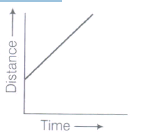
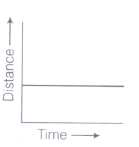
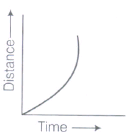
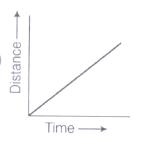
Which of the following distance-time graphs shows a truck moving with speed which is not constant?
15.
The water holding capacity is the highest in
sandy soil
clayey soil
loamy soil
mixture of sand and loam
16.
Loamy soil
17.
Cotton
18.
Snails and slugs
19.
Garden lizard
20.
Sandy soil
21.
(a) Why does a glowing electric bulb become warm?
(b) Mention any two effects of electric current.
(c) Why does a glowing CFL not become warm?
22.
Plants prepare their food by a process called photosynthesis. Can we call photosynthesis is a chemical change? Explain.
23.
The given diagram is of human excretory system. Label the marked parts of it.
.png)
24.
List five products we get from forests.
25.
Explain how is small intestine designed to absorb digested food.
26.
"Forests are our lifeline." Write five sentences on this tropic.
27.
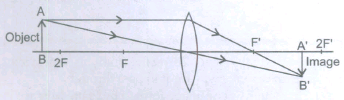
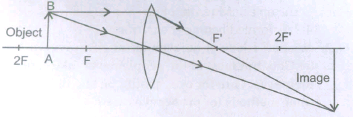
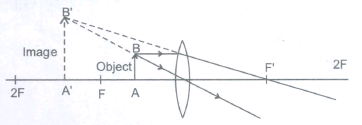
Draw the ray diagram formed by a convex lens under three different positions of the object.
28.
On last Monday, Pankaj was dealing immense cough and cold. Besides this, he was suffering from a great headache. So, he decided to take a leave on that day so that he could take some rest at his home. After one hour he thought to check his fever through a clinical thermometer, so before using it, he washed it and started shaking it very fastly in his hand, so that the mercury level of thermometer gets reduced. At the same time, his elder brother Vishwas scold him and suggested him to shake thet hermometer slowly.
(a) State some precautionary measures while checking the fever through a clinical thermometer.
(b) Mention the values showed by the elder brother of Pankaj ( i.e. Vishwas).
29.
(a) Plants lack a specialised respiratory system. How do they carry out respiratory process? Explain.
(b) The plant roots being underground respire by using which mechanism?
30.
The raw and baked soil differs from each other. How they are different? How can you prepare matkas from soil?
31.
Microorganisms are present in the domestic waste also.
32.
The distance-time graph of standing vehicle is a straight line parallel to x-axis.
33.
Insects have spiracles on the lower surface of the body.
34.
A blue deposit is formed on an iron nail when dipped in copper sulphate solution.
35.
Canines are used for grinding of food.
36.
Name the various factors which affect the nature of soil
37.
How does food move in opposite direction during vomiting?
38.
When oxygen enters our body it combines with haemoglobin to form a new substance. What is that new product?
39.
Consider if one half of a convex lens is covered with a black paper, then state whether this lens produces a complete image of the object
40.
Name the three processes involved in treatment of wastewater.
41.
Why do we wear light coloured clothes when it is hot?
42.
Why the speed of incoming waste water is decreased when it goes into grit and sand removed tank?
43.
What do you mean by fresh water?
44.
Why is the same balloon deflated when the tube is kept in cold water?
45.
Can you suggest can method to let more rain water percolate and reach the water underground?
46.
Do you find any relationship between your heart beat and pulse rate?
47.
Does the mixture turn red litmus blue?
48.
What happens when light falls on a mirror or what is reflection?
49.
What percentage of the Earth's surface is covered by rain forest?
50.
Can plants use nitrogen in the manner they use carbon dioxide?
1.
()
Cancave
2.
()
conservation
3.
()
breed
4.
()
rotation
5.
()
carbon dioxide, oxygen
6.
(d)
Honey
7.
(b)
Haemoglobin
8.
(c)
Barometer
9.
(a)
Dioptre
10.
(b)
Sun
11.
(c)
Small fluffy fibres in wool
12.
(c)
Water, carbon dioxide, chlorophyll and solar energy
13.
(b)
Frog
14.
(c)
15.
The water holding capacity is the highest in clayey soil
16.
()
Moderate water holding capacity
17.
()
Sandy loam soil
18.
()
Surface of shaded moist soils
19.
()
Surface of soil
20.
()
Large particles
21.
(a) Part of electricity supplied produced heating effect.
(b) Electricity produces two effects:
(i) Heating effect.
(ii) Magnetic effect.
(c)The electricity supplied is mostly used to produce light and heating effect is minimum.
22.
During photosynthesis, the plants intake carbon dioxide and water in the presence of chlorophyll and sunlight to form two new substances, i.e. glucose (food) and oxygen gas. So, photosynthesis is a chemical change.
23.
The various parts of human excretory system are as follows
.png)
24.
(i) Fruits
(ii) Vegetables
(iii) Medicines
(iv) Oxygen
(v) Cereals
25.
The finger-like projections called villi are present in the inner walls of the small intestine. The villi increase the surface area. The large surface area of small intestine helps in the rapid absorption of the digested food.
26.
(i) Forests give oxygen to keep us alive.
(ii) Forests absorb carbon dioxide, a gas which in excess in atmosphere contribute to climatic changes.
(iii) Forests provide us wood, gum, medicinal plants and many more things.
(iv) Forests save the soil from erosion.
(v) Forests help in maintaining the ground water level.
27.
(a) When the object is far away the image is real, inverted and smaller in size.
(b) When the object is between F and radius lens, the image is real, inverted but bigger in size.
(c) When the object is near to the lens. The image is real, inverted and much bigger (magnified).
28.
(a) The following precautionary measures while checking the fever through a clinical thermometer are
(i) While reading the clinical thermometer, it should never be held by the bulb.
(ii) The clinical thermometer should be washed properly (before and after use).
(b) The values showed by the elder brother of Pankaj, Vishwas, are concern towards the way of using the clinical thermometer and the importance of money as well.
29.
(a) The plants do not possess any respiratory system still plants respire. The various parts of the plants like leaves, roots, etc., carry out respiration independently.
These parts take in oxygen from air in different manner and utilise it to obtain energy and give out CO2, The leaves of plants possess tiny pores on their surface which is called as stomata. The gaseous exchange during respiration takes place through their stomata.
(b) Roots of the plants respire under the ground. Root cells get oxygen from the air present in the space between the soil particles.
There are several root hairs present on the roots of a plant.
The oxygen from the air (between soil particle) diffuses into root hair and reaches to the cells of the roots. This oxygen is utilised for respiration.
30.
Raw soil differs from baked soil. The raw soil is white or dull blackish coloured soil. It contains water and air in it and can be moulded.
Baked soil is the heated raw soil which lost its water molecule due to heating and becomes red. Once the soil gets heated, it cannot be moulded into other form. Clay soil is used for making matkas, toys, pots, etc. The soil is kneaded along with horse dung to make best quality of raw clay soil. This kneaded soil is then placed on the wheel and appropriate shape is given. The final shape of the material is given with hands. The pots and matkas are then kept for drying for three days. These items are baked at high temperature after drying in air and then coloured.
31.
(a)
32.
(a)
33.
(b)
34.
(b)
35.
(b)
36.
The nature of any soil depends upon the rocks from which it has been formed and the type of vegetation that grows on it.
37.
Food is pushed into the stomach by the peristaltic movement of the walls of oesophagus. Sometimes the food is not accepted by stomach and then the walls of food pipe move the food in opposite directions and food comes out as vomiting.
38.
Oxyhaemoglobin.
39.
If one half of a convex lens is covered with a black paper, then yes, the convex lens will produce the complete image of the object.
40.
Treatment of wastewater involves physical, chemical and biological processes for removing different types of contaminants.
41.
()
Light coloured clothes of cotton give us a feeling of coldness by reflecting heat.
42.
()
The speed of waste water is slowed down in order to allow sand grit and pebbles to settle down.
43.
()
The water that is fit for the human use in called fresh water.
44.
()
The air contracts owing to low temperature.
45.
()
Yes. By making small holes more rain water can be percolated.
46.
()
Yes. Both are the same.
47.
()
Does the mixture turn blue litmus red?
48.
()
When a ray of light falls on the surface of any mirror it bounces back in the same medium. This is called reflection of light.
49.
()
6%
50.
()
The plants can not use nitrogen in the manner they use carbon dioxide. They need N2 in soluble form.

7th Standard CBSE Syllabus & Materials
7th Standard CBSE
CBSE 7th Social Science Theme B - New Beginnings : Cities and States - New Sample Question Papers Study Material - QB365 Set A
NEW7th Standard CBSE
CBSE 7th Social Science Theme A - Climates of India - New Sample Question Papers Study Material - QB365 Set A
NEW7th Standard CBSE
CBSE 7th Social Science Theme A - Geographical Diversity of India - New Sample Question Papers Study Material - QB365 Set A
NEW7th Standard CBSE
CBSE 7th Science Earth, Moon and the Sun - New Sample Question Papers Study Material - QB365 Set A



CBSE 7th Standard CBSE Subjects
CBSE Standards




