
 100% FREE ACCESS
7th Standard CBSE Syllabus & Materials
7th Standard CBSE
CBSE 7th Social Science Theme E - Understanding Market - New Sample Question Papers Study Material - QB365 Set A
NEW7th Standard CBSE
CBSE 7th Social Science Theme E - From Barter to Money - New Sample Question Papers Study Material - QB365 Set A
NEW7th Standard CBSE
CBSE 7th Social Science Theme D - The Constitution of India- An Introduction - New Sample Question Papers Study Material - QB365 Set A
NEW7th Standard CBSE
CBSE 7th Social Science Theme D - From the Rulers to the Ruled : Types of Governments - New Sample Question Papers Study Material - QB365 Set A
NEW7th Standard CBSE
CBSE 7th Social Science Theme B - The Age of Reorganisation - New Sample Question Papers Study Material - QB365 Set A
NEW7th Standard CBSE
CBSE 7th Social Science Theme B - The Rise of Empires - New Sample Question Papers Study Material - QB365 Set A

Published on: 14/09/2019
Fibre to Fabric
Download CBSE Class 7th Standard CBSE Science question papers, sample papers, important questions, and previous year solved papers in PDF format. Get free study materials, NCERT solutions, and exam preparation resources for Class 7th Standard CBSE Science
Questions + Answers key
Take MCQ Science Test
1.
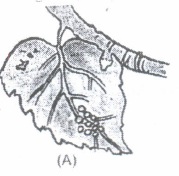
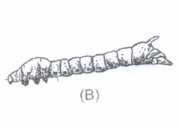
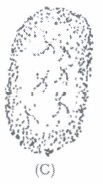
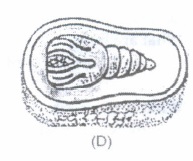
Write a caption for each of the figures given as Figure (A-D).
2.
What are the uses of wool?
3.
Why do wool giving animals bear a thick coat of hair on their bodies?
4.
Why are silk fibres called animals fibres?
5.
Why can't a cotton garment keep us as warm as a woollen sweater?
6.
How are silk fibres of different texture prepared?
7.
Explain the process to obtain silk thread from Cocoon.
8.
What kind of animals in different regions are reared for obtained wool?
9.
How many fibres do sheep have?
10.
Silk fibre belongs to which class of organic substance?
11.
Name the stage next to caterpillar in the life cycle of silk moth.
12.
Out of scouring or shearing, which process comes first in the production of wool from sheep?
13.
Name the natural fibre obtained from insects.
14.
Write the name of the animal from which wool for pashmina shawls is obtained.
15.
Name some wool yielding animals
1.
(A) Eggs of silk moth on mulberry leaves
(B) Silkworm
(C) Cocoon
(D) Cocoon with developing moth.
2.
Wool is used for making fabrics, shawls, blankets, carpets, felt and upholstery. Wool felt is used to cover piano hammers. It is also used to absorb noise in heavy industry and stereo-speakers.
3.
Animals from which we get wool bear a thick coat of hair on their bodies. This is because air is a poor conductor of heat. The thick coat of hair traps a lot of air, there by creating an insulating barrier. Thus thick coat of hair shield these animals from cold.
4.
Silk fibres are derived from silkworms and are therefore called animal fibres. The scientific name for the silk producing moth (species) is Bambyx mari. It is one of the most beautiful moth.
5.
Woollen sweaters contain air trapped between them. Air, being a bad conductor of heat, does not allow the body heat to flow outward. On the other hand, cotton garments cannot trap air between them and so do not provide any insulation and thus cannot keep up as warm as woollen sweaters.
6.
The silk yarn is obtained form the cocoon of the silk moth. There is a variety of silk moths which look very different from one another and the silk yarn they yield is different in texture like coarse, smooth and shiny etc. Thus tassar silk, mooga silk and kosa silk are obtained from cocoons spun by different types of moths. The common silk moth is the mulberry silk moth. The cocoon of this moth yield soft, lustrous and elastic silk fibre.
7.
Cocoons of silk moth are used to obtain the silk fibres. These cocoons are kept under the sun or boiled or exposed to steam. The silk fibres separate out. This process of obtaining wool from the cocoons is called reeling the silk. Reeling is done in special machines
8.
Various kinds of animals are :
(i) Yak: Wool is common in Tibet and Ladakh.
(ii) Angora goat: They are used to obtain Angora wool. They are found in hilly regions such as Jammu and Kashmir.
(iii) Kashmiri goats: They are used to obtain under fur.
(iv) Camel: It also provides fur.
(iv) Llama and Alpaca: They are found in South America and also yield wool.
9.
Sheep have two types of fibres: (i) the coarse beard hair and (ii)the fine soft under hair close to the skin.
10.
Protein.
11.
The stage next to caterpillar in the life cycle of silk moth is called pupa.
12.
The first step is shearing then scouring.
13.
Silk.
14.
Kashmiri goats.
15.
Wool yielding animals are sheep, yak, llama, alpaca, angora goat, angora rabbit and camel.

7th Standard CBSE Syllabus & Materials
7th Standard CBSE
CBSE 7th Social Science Theme B - New Beginnings : Cities and States - New Sample Question Papers Study Material - QB365 Set A
NEW7th Standard CBSE
CBSE 7th Social Science Theme A - Climates of India - New Sample Question Papers Study Material - QB365 Set A
NEW7th Standard CBSE
CBSE 7th Social Science Theme A - Geographical Diversity of India - New Sample Question Papers Study Material - QB365 Set A
NEW7th Standard CBSE
CBSE 7th Science Earth, Moon and the Sun - New Sample Question Papers Study Material - QB365 Set A



CBSE 7th Standard CBSE Subjects
CBSE Standards




