
 100% FREE ACCESS
7th Standard CBSE Syllabus & Materials
7th Standard CBSE
CBSE 7th Social Science Theme E - Understanding Market - New Sample Question Papers Study Material - QB365 Set A
NEW7th Standard CBSE
CBSE 7th Social Science Theme E - From Barter to Money - New Sample Question Papers Study Material - QB365 Set A
NEW7th Standard CBSE
CBSE 7th Social Science Theme D - The Constitution of India- An Introduction - New Sample Question Papers Study Material - QB365 Set A
NEW7th Standard CBSE
CBSE 7th Social Science Theme D - From the Rulers to the Ruled : Types of Governments - New Sample Question Papers Study Material - QB365 Set A
NEW7th Standard CBSE
CBSE 7th Social Science Theme B - The Age of Reorganisation - New Sample Question Papers Study Material - QB365 Set A
NEW7th Standard CBSE
CBSE 7th Social Science Theme B - The Rise of Empires - New Sample Question Papers Study Material - QB365 Set A

Published on: 12/09/2019
Human-Environment Interactions: The Tropical And The Subtropical Region
Download CBSE Class 7th Standard CBSE Social Science question papers, sample papers, important questions, and previous year solved papers in PDF format. Get free study materials, NCERT solutions, and exam preparation resources for Class 7th Standard CBSE Social Science
Questions + Answers key
Take MCQ Social Science Test
1.
Bromeliads store water in their
Leaves
Stem
Roots
Fruit
2.
Climate of Amazon basin is
Hot and dry
Cold and dry
Hot and wet
Cold and wet
3.
Cash crops grown in Ganga-Brahmaputra basin are
Maize and rice
Sugarcane and jute
Wheat and millets
Gram and sorghum
4.
Bengal tiger is found in
mountains
delta area
Amazon
5.
Deodars and firs are a type of
coniferous trees
deciduous trees
shrubs
6.
Some TV channels broadcast documentaries on the wildlife of the world. Try to watch some of the films and share your experience with the class.
7.
How tourism flourished in the Ganga-Brahmaputra region?
8.
Write a short note on the activity of the people of the Ganga-Brahmaputra region.
9.
What is the location of the Ganga- Brahmaputra Basin and type of climate?
10.
Write a short note on 'slash and burn agriculture'
11.
Write a note on the people of rainforests.
12.
Discuss the fauna of the rainforests.
13.
The environment does not plays a dominant role in the distribution of the population.
14.
The monsoon brings rains from mid-June to mid-September.
15.
The tributaries of rivers Ganga and Brahmaputra together form the Ganga Brahmaputra Basin in the Indian subcontinent.
16.
In 1970, the Trans Amazon highway made all parts of the rainforests accessible.
17.
Life of the people of the Amazon Basin is slowly changing due to developmental activities.
18.
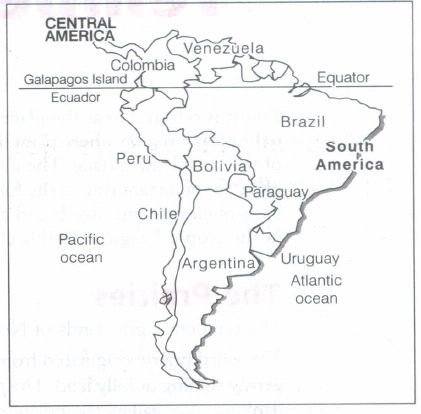
On the polltical map of South America, draw the equator. Mark the countries through which the equator passes.
19.
Name the birds that you are likely to find in the rainforests of the Amazon.
20.
What are the crops grown by the people of the Amazon Basin?
21.
Where is the Taj Mahal situated?
22.
Name the crops grown in rainforests.
23.
What type of animals found in the Amazon forests?
1.
(a)
Leaves
2.
(c)
Hot and wet
3.
(b)
Sugarcane and jute
4.
(b)
delta area
5.
(a)
coniferous trees
6.
Some TV channels like Discovery channel, National Geographic Channel, Animal Planet, etc., broadcast documentaries on the wildlife of the world. The channels give vivid description so knowledge of the children gets increased Students should try to watch wildlife movies such as Out of African, The African Lion, March of the Penguins, Jungle Book, etc. so that they can share their experience with the class.
7.
Tourism is another important activity of the basin. Taj Mahal on the banks of River Yamuna in Agra, Allahabad on the confluence of the Rivers Ganga and Yamuna.
Buddhist stupas in Uttar Pradesh and Bihar, Lucknow with its Imambara, Assam with Kaziranga and Manas with wildlife sanctuaries and Arunachal Pradesh with a distinct tribal culture are some of the places worth a visit.
8.
The main activity of the people of the Ganga-Brahmaputra region is agriculture. Wheat, maize, sorghum, gram and millets are the other crops that are grown. Cash crops like sugarcane and jute are also grown.
Banana plantations are seen in some areas of the plain. In West Bengal and Assam tea is grown in plantations. Silk is produced through the cultivation of silkworms in parts of Bihar and Assam. In the mountains and hills, where the slopes are gentle, crops are grown on terraces.
9.
The basin lies in the subtropical region that is located between 1DoN to 3oN latitudes. The tributaries of the River Ganga like the Ghaghra, the Son, the Chambal, the Gandak, the Kosi and the tributaries of Brahmaputra drain it. The area of the Ganga-Brahmaputra Basin is dominated by monsoon climate.
10.
Slash and burn is a way of cultivating land where farmers clear a piece of land by slashing or cutting down trees and bushes. These are then burnt, which releases the nutrients into the soil. Now, crops are grown in this cleared field for a few years.
After repeatedly using the patch of land, the soil looses its nutrients. So, it is abandoned. Then, they clear another plot of land to plant. In the mean time young trees grow in the old field. In this way soil fertility is restored. People can then return to it and start cultivating it again.
11.
People grows most of their food in small areas after clearing some trees in the forest. While men hunt and fish along the rivers, women take care of the crops. They mainly grow tapioca, pineapple and sweet potato. As hunting and fishing are uncertain it is the women who keep their families alive by feeding them the vegetables they grow. They practice "slash and burn agriculture".
The staple food is manioc, also known as cassava that grows under the ground, like the potato. They also eat queen ants and egg sacs. Cash crops like coffee, maize and cocoa are also grown.
The rainforests provide a lot of wood for the houses. Some families live in thatched houses shaped like beehives. There are other large apartment like houses called 'Maloca' with a steeply slanting roof.
12.
The rainforest is rich in fauna. Birds such as toucans, humming birds, bird of paradise with their brilliantly coloured plumage, oversized bills for eating make them different from birds we commonly see in India.
These birds also make loud sounds in the forests. Animals like monkeys, sloth and ant-eating tapirs are found here. Various species of reptiles and snakes also thrive in these jungles.
Crocodiles, snakes, pythons abound, anaconda and boa constrictor are some of the species. Besides, the basin is home to thousands of species of insects. Several species of fishes including the flesh-eating Piranha fish is also found in the river. This basin is thus extraordinarily rich in the variety of life found there.
13.
(b)
14.
(a)
15.
(a)
16.
(a)
17.
(a)
18.
The equator is passes through Ecuador, Colombia, Peru and Brazil.
19.
()
Toucans, humming birds and bird of paradise are some of the birds that are found in the rainforests of the Amazon.
20.
()
Tapioca, pineapple, sweet potato, cassava, coffee, maize and cocoa are the crops grown by the people of the Amazon Basin
21.
()
The Taj Mahal is situated on the bank of river Yamuna in Agra.
22.
()
Crops that are mainly grown in rainforests, are tapioca, pineapple and sweet potato.
23.
()
Monkeys, sloth and ant-eating tapirs.

7th Standard CBSE Syllabus & Materials
7th Standard CBSE
CBSE 7th Social Science Theme B - New Beginnings : Cities and States - New Sample Question Papers Study Material - QB365 Set A
NEW7th Standard CBSE
CBSE 7th Social Science Theme A - Climates of India - New Sample Question Papers Study Material - QB365 Set A
NEW7th Standard CBSE
CBSE 7th Social Science Theme A - Geographical Diversity of India - New Sample Question Papers Study Material - QB365 Set A
NEW7th Standard CBSE
CBSE 7th Science Earth, Moon and the Sun - New Sample Question Papers Study Material - QB365 Set A



CBSE 7th Standard CBSE Subjects
CBSE Standards




