
 100% FREE ACCESS
7th Standard CBSE Syllabus & Materials
7th Standard CBSE
CBSE 7th Social Science Theme E - Understanding Market - New Sample Question Papers Study Material - QB365 Set A
NEW7th Standard CBSE
CBSE 7th Social Science Theme E - From Barter to Money - New Sample Question Papers Study Material - QB365 Set A
NEW7th Standard CBSE
CBSE 7th Social Science Theme D - The Constitution of India- An Introduction - New Sample Question Papers Study Material - QB365 Set A
NEW7th Standard CBSE
CBSE 7th Social Science Theme D - From the Rulers to the Ruled : Types of Governments - New Sample Question Papers Study Material - QB365 Set A
NEW7th Standard CBSE
CBSE 7th Social Science Theme B - The Age of Reorganisation - New Sample Question Papers Study Material - QB365 Set A
NEW7th Standard CBSE
CBSE 7th Social Science Theme B - The Rise of Empires - New Sample Question Papers Study Material - QB365 Set A

Published on: 26/09/2019
HIS - Towns, Traders And Craftspersons
Download CBSE Class 7th Standard CBSE Social Science question papers, sample papers, important questions, and previous year solved papers in PDF format. Get free study materials, NCERT solutions, and exam preparation resources for Class 7th Standard CBSE Social Science
Questions + Answers key
Take MCQ Social Science Test
1.
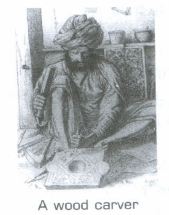
Observe the picture and answer the following questions. Does this create environmental hazards?
2.
Observe the picture and answer the following questions. What does the picture show?
3.
Observe the picture and answer the following questions.
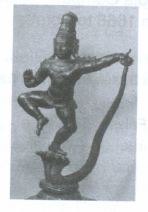
What does this image depict about?
4.
How did the Indian craftspersons lose their independence?
5.
Give an account of the voyage of Vasco da Gama.
6.
How did the English traders emerge as most successful commercial and political power of the subcontinent?
7.
What types of taxes were collected by the temple authorities?
8.
Describe Surat as a gateway to the west.
1.
The large-scale use of wood is not good for the environment as it leads to deforestation and soil erosion.
2.
The picture shows the woodcarver carving wood for making furniture. Wood carving flourished in the Medieval period. The contribution of Cholas and Vijayanagara empire in the field of wood carving was simply unparalleled.
3.
It is a bronze statue of Krishna subduing the serpent demon Kaliya. It was a story that during the childhood days of lord Krishna. A playing ball went into the river Yamuna. No boy dared to take the bailout of the river. Lord Krishna went into the water, fought with the serpent demon 'Kaliya'. Then he made the serpent to surrender to him. Thus, it was a win over evil. He in the last came outside the water, danced on the head of the serpent and made everyone surprised.
4.
Initially, Indian crafts and textiles were in great demands in the European markets. As a result, the English began to make attempts to control the Indian craftspersons by appointing Indian traders as their agents. They introduced the system of advances under which the weavers had to weave cloth which was only and already promised to European agents. They no longer were able to sell their own cloth or weaving their own patterns. Thus, the Indian craftspersons lost their independence.
5.
i) Vasco da Gama, a Portuguese sailor, was one of those who sailed across the Atlantic to the African coast. He went round it, crossing over to the Indian ocean. He first set sail to the voyage and took a year in it.
ii) He reached Calicut in 1498 and returned to Lisbon, the capital of Portugal. He lost two of his four ships and of the 170 men at the beginning of the voyage, only 54 survived.
iii) Inspite of inevitable hazards, the routes proved profitable to the English, Dutch and French sailors who followed his routes.
6.
In the 16th and 17th centuries, European countries were in search of spices and textiles for European market. In Europe and West Asia, these commodities became popular. The English, Dutch and French formed East India Companies to expand their business in the East. Among the Indian traders, there were notable Indian traders like Mulla Abdul Ghafur and Virji Vora who owned a large number of ships. In the beginning, they competed with the English, Dutch and French Companies. But the European companies used their naval power to gain control of the sea trade and forced Indian traders to work as their Agents. Finally,the English emerged as the most successful commercial and political power in the subcontinent.
7.
As per 10th century inscription from, Rajasthan the temple authorities collected the following taxes sugar, jaggery, dyes, thread, cotton, coconut, salt, nuts, butter, sesame oil and cloth.
Taxes were collected from traders of gold, distillers, oil, cattle fodder and grain. Only some of the taxes were taken in cash.
8.
(i) Surat in Gujarat was the emporium of western trade during the Mughal period. Surat was the gateway for trade with West Asia via the Gulf of Ormuz. Surat has also been called the 'Gate to Mecca' because many pilgrim ships set sail from here.
(ii) The city was cosmopolitan and people of all castes and creeds lived there. In the seventeenth century the Portuguese, Dutch and English had their factories and warehouses at Surat.
(iii) There were also several retailers and wholesalers of cotton textiles. The textiles of Surat were famous for their gold lace borders (zari) and had a market in West Asia, Africa and Europe.
(iv) The state built numerous rest-houses to take care of the needs of people from all over the world who carne to the city. There were magnificent buildings and innumerable pleasure parks.
(v) The Kathiawad seths or mahajans (money changers) had huge banking houses at Surat. It is remarkable that the Surat hundis were honoured in the far-off markets of Cairo in Egypt, Basra in Iraq and Antwerp in Belgium.

7th Standard CBSE Syllabus & Materials
7th Standard CBSE
CBSE 7th Social Science Theme B - New Beginnings : Cities and States - New Sample Question Papers Study Material - QB365 Set A
NEW7th Standard CBSE
CBSE 7th Social Science Theme A - Climates of India - New Sample Question Papers Study Material - QB365 Set A
NEW7th Standard CBSE
CBSE 7th Social Science Theme A - Geographical Diversity of India - New Sample Question Papers Study Material - QB365 Set A
NEW7th Standard CBSE
CBSE 7th Science Earth, Moon and the Sun - New Sample Question Papers Study Material - QB365 Set A



CBSE 7th Standard CBSE Subjects
CBSE Standards




