
 100% FREE ACCESS
10th Standard CBSE Syllabus & Materials
10th Standard CBSE
CBSE 10th Social Science ECO - Globalisation and the Indian Economy - New Model Questions Papers Study Material - QB365 Set A
NEW10th Standard CBSE
CBSE 10th Social Science ECO - Money and Credit - New Model Questions Papers Study Material - QB365 Set A
NEW10th Standard CBSE
CBSE 10th Social Science ECO - Sectors of the Indian Economy - New Model Questions Papers Study Material - QB365 Set A
NEW10th Standard CBSE
CBSE 10th Social Science ECO - Development - New Model Questions Papers Study Material - QB365 Set A
NEW10th Standard CBSE
CBSE 10th Social Science PS - Outcomes of Democracy - New Model Questions Papers Study Material - QB365 Set A
NEW10th Standard CBSE
CBSE 10th Social Science PS - Gender, Religion and Caste - New Model Questions Papers Study Material - QB365 Set A

Published on: 15/09/2018
Model Question Paper
Download CBSE Class 10th Standard CBSE Maths question papers, sample papers, important questions, and previous year solved papers in PDF format. Get free study materials, NCERT solutions, and exam preparation resources for Class 10th Standard CBSE Maths
Questions + Answers key
Take MCQ Maths Test
1.
Write the degree of the following polynomials.
\(7q^{ 6 }+4q^{ 2 }+\frac { 3 }{ 2 } +q-8\)
2.
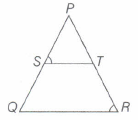
In the adjoining figure, \(\frac { PS }{ SQ } =\frac { PT }{ TR } \) and \(\angle PRQ\) Prove that PQR is an isosceles triangle.
3.
Show that \(3\sqrt { 2 } \) is an irrational number.
4.
Find the HCF of 960 and 432.
5.
Show that the square of any positive odd integer, is of the form 4m + 1, for some integer m.
6.
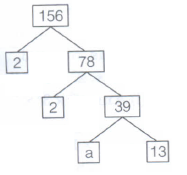
See the following factor tree for factorisation of 156. Find the value of a.
7.
What can you say about the prime factorisation of the denominators?
(i) 34.12345 (ii) \(34.\overline { 5678 } \)
8.
Show that \(\left( \sqrt { 3 } +\sqrt { 5 } \right) ^{ 2 }\) is an irrational number.
9.
Explain whether the following numbers are prime or composite number.
7 x 11 x 13 +13
10.
In Euclid's division lemma a = bq + r, where \(0 \leq r<b\) . What is a?
11.
If \(\alpha\) and \(\beta\) are the zeroes of a polynomial \({ x }^{ 2 }-4\sqrt { 3 } x+3\), then find the value of \(\alpha+\beta-\alpha\beta\)
12.
If - 1 is a zero of the polynomial f(x) = x2 - 7x - 8, then calculate the other zero.
13.
If sum of the zeroes of the quadatic polynomial 3x2 - kx + 6 is 3, then find the value of k.
14.
What is the HCF of the smallest composite number and the smallest prime number?
15.
a and b are two positive integers such that the least prime factor of a is 3 and the least prime factor of b is 5. Then calculate the least prime factor of (a + b).
16.
Explain why 13233343563715 is a composite number?
17.
If one zero of the polynomial (a2+9)x2+13x+6a is a reciprocal of the other, then find the value of a.
18.
Write whether the following expressions are polynomials or nt. Give reasons for your answer.
(i) \(x^{ 3 }+\frac { 1 }{ x^{ 2 } } +\frac { 1 }{ x } +1\)
(ii) x2+x+3
(iii) y-12-3y+2
(iv) \(\sqrt { 2 } y^{ 3 }+\sqrt { 3 } y\)
19.
Write whether \(\left( \frac { 2\sqrt { 45 } +3\sqrt { 20 } }{ 2\sqrt { 5 } } \right) \) on simplification gives a rational or an irrational number.
20.
Write the HCF and LCM of the smallest odd composite number and the smallest odd prime number. If an odd number p divides q2, then will it divide q3 also? Explain.
1.
In the polynomial \(7q^{ 6 }+4q^{ 2 }+\frac { 3 }{ 2 } +q-8\) , the highest power of the variable q is 6.
2.
Given \(\frac { PS }{ SQ } =\frac { PT }{ TR } \) and \(\angle PRQ\)
To prove \(\triangle PQR\) is an isosceles triangle, i.e. PQ = PR.
Proof Since, \(\frac { PS }{ SQ } =\frac { PT }{ TR } \)
\(\therefore ST\parallel QR\)
[ by converse of basic proportionality theorem]
Then, \(\angle PST=\angle PQR\) [corresponding angles] ... (i)
Also, \(\angle PST=\angle PRQ\) [given] ... (ii)
From Eqs. (i) and (ii),
\(\angle PRQ=\angle PQR\Rightarrow PQ=PR\)
[since, sides opposite to equal angles of a triangle are also equal]
Hence, \(\triangle PQR\) is an isosceles triangle.
3.
Let \(3\sqrt { 2 } \) be a rational number. Then, it will be of the form \(\frac { p }{ q } \) , where p, q are coprime integers and \(q\neq 0\).
Now, \(\frac { p }{ q } \) = \(3\sqrt { 2 } \) \(\Rightarrow \quad \frac { p }{ 3q } =\sqrt { 2 } \)
Since, p is an integer and 3q is also an integer \(\left( 3q\neq 0 \right) \).
So, \(\frac { p }{ 3q } \) is a rational number.
\(\Rightarrow \quad \sqrt { 2 } \) is a rational number.
But this contradicts the fact that \(\sqrt { 2 } \) is an irrational number.
Hence, \(3\sqrt { 2 } \) is an irrational number.
4.
On applying Euclid's division lemma for 960 and 432, we get
960 = (432 x 2) + 96
Here, remainder = 96 \(\neq \) 0,
so take new dividend as 432 and divisor as 96.
Then, we get 432 = (96 x 4) + 48
Here, remainder = 48 \(\neq \) 0,
so take new dividend as 96 and divisor as 48.
Then. we get 96 = (48 x 2) + 0
Here, the remainder is 0 (zero) and last divisor is 48.
Hence, HCF of 960 and 432 is 48.
5.
Let a be any odd positive integer, then on dividing a by b, we have a = bq + r,\( \ 0\le r ..\). (i) [by Euclid's division lemma]
On putting b = 2 in Eq. (i), we get
a = bq + r, \(0\le\) r
If r = 0, then a = 2q, which is divisible by 2. So, 2q is even.
If r = 1, then a = 2q + 1, which is not divisible by 2.
\(\therefore \quad \left( 2q+1 \right) \) is odd.
Now, as a is odd, so it cannot be of the form 2q. Thus, any odd positive integer a is of the form (2q + 1).
Now, consider \({ a }^{ 2 }=\left( 2q+1 \right) ^{ 2 }={ 4q }^{ 2 }+1+4q\quad \left[ \because \quad \left( x+y \right) ^{ 2 }={ x }^{ 2 }+{ y }^{ 2 }+2xy \right] \)
= 4(q2 + q) + 1 = 4 m + 1, where m = q2 + q
Hence, for some integer m, the square of any odd integer is of the form 4m + 1.
6.
a x 13 = 39
= 3
7.
First, write the given number in the form of p/q and then factorise the denominator.
(i) Denominator is of the form 2n 5m
(ii) Denominator contains a factor other than 2 or 5.
8.
Irrational
9.
We have, 7 x 11 x 13 + 13 = 13(7 x 11 + 1)
= 13 x 78
= 2 x 3 x 132
As it is the product of prime factors 2, 3 and 13.
Hence, it is a composite number.
10.
a is any positive integer
11.
\({ x }^{ 2 }-4\sqrt { 3 } x+3=0\)
If \(\alpha\) and \(\beta\) are the zeroes of \({ x }^{ 2 }-4\sqrt { 3 } x+3\)
then \(\alpha+\beta=-\frac{b}{a}\)
\(\Rightarrow \quad \alpha +\beta =-\frac { \left( -4\sqrt { 3 } \right) }{ 1 } \)
\(\Rightarrow \quad \alpha +\beta=4\sqrt { 3 }\)
and \(\alpha\beta=\frac{c}{a}\)
\(\Rightarrow \quad \alpha\beta=\frac{3}{1}\)
\(\Rightarrow \quad \alpha\beta=3\)
\(\therefore \quad \alpha +\beta -\alpha \beta =4\sqrt { 3 } -3\)
12.
f(x) = x2 - 7x - 8
Let other zero be k, then
Sum of zeroes \(-1+k=-\left( \frac { -7 }{ 1 } \right) =7\)
\(\Rightarrow k = 8\)
13.
p(x) = 3x2 - kx + 6
Sum of the zeroes = 3 \(=-\frac { Coefficient\quad of\quad x }{ Coefficient\quad of\quad { x }^{ 2 } } \)
\(\Rightarrow \quad 3=-\frac { \left( -k \right) }{ 3 } \)
k = 9
14.
The smallest prime number is 2 and the smallest composite number is 22 Hence, required HCF (22,2) = 2.
15.
a and b are two positive integers such that the least prime factor of a is 3 and the least prime factor of b is 5. Then least prime factor of (a + b) is 2.
16.
The given number ends in 5. Hence it is a multiple of 5. Therefore it is a composite number
17.
Let α and \(\frac { 1 }{ \alpha } \) be two zeroes of the given polynomial, which are reciprocal of each other.
On comparing the given polynomial with Ax2+Bx+C, we get
A=a2+9, B=13 and C=6a
Now, product of zeroes,
\(\alpha \times \frac { 1 }{ \alpha } =\frac { Constant \ term }{ Coefficient \ of \ x^{ 2 } } \)
\(\\ \Rightarrow \ 1=\frac { 6\alpha }{ a^{ 2 }+9 }\)
\( \\ \Rightarrow \ a^{ 2 }+9=6a\)
\(\\ \Rightarrow \ a^{ 2 }-6a+9=0\)
\(\\ \Rightarrow \ (a-3)^{ 2 }=0\ \ \left[ \because \quad (x-y)^{ 2 }=x^{ 2 }+y^{ 2 }-2xy \right] \)
\(\\ \therefore \ a=3\)
18.
We know that a polynomial in one variable x, is an algebraic expression of the form,
\(p(x)=a_{n} x^{n}+a_{n-1} x^{n-1}+\ldots+a_{1} x+a_{0}\) where n is a positive integer and a0, a1, a2,..., an are constants.
(i) No, because powers of any polynomial is always positive integer.
(ii) Yes, because it satisfies the definition of polynomial.
(iii) No, because powers of any polynomial can not be negative integer.
(iv) Yes, because it satisfies the condition of polynomial.
19.
Rational
20.
\(\because \) smallest odd composite number = 9
and smallest odd prime number = 3.
\(\therefore \) HCF of 9 and 3 = 3
and LCM of 9 and 3 = 9
Now, if an odd number p divides q2, then p is one of the factors of q2, i.e. q2 = pm, for some integer m. .... (i)
Now, q3 = q2 . q \(\Rightarrow \) q3 = pm . q [from Eq.(i)]
\(\Rightarrow \) q3 = p (mq)
\(\Rightarrow \) p is a factor of q3 also \(\Rightarrow \) p divides q3

10th Standard CBSE Syllabus & Materials
10th Standard CBSE
CBSE 10th Social Science PS - Federalism - New Model Questions Papers Study Material - QB365 Set A
NEW10th Standard CBSE
CBSE 10th Social Science PS - Power Sharing - New Model Questions Papers Study Material - QB365 Set A
NEW10th Standard CBSE
CBSE 10th Social Science GEO - Manufacturing Industries - New Model Questions Papers Study Material - QB365 Set A
NEW10th Standard CBSE
CBSE 10th Social Science GEO - Minerals and Energy Resources - New Model Questions Papers Study Material - QB365 Set A



CBSE 10th Standard CBSE Subjects
CBSE Standards





