
 100% FREE ACCESS
7th Standard CBSE Syllabus & Materials
7th Standard CBSE
CBSE 7th Social Science Theme E - Understanding Market - New Sample Question Papers Study Material - QB365 Set A
NEW7th Standard CBSE
CBSE 7th Social Science Theme E - From Barter to Money - New Sample Question Papers Study Material - QB365 Set A
NEW7th Standard CBSE
CBSE 7th Social Science Theme D - The Constitution of India- An Introduction - New Sample Question Papers Study Material - QB365 Set A
NEW7th Standard CBSE
CBSE 7th Social Science Theme D - From the Rulers to the Ruled : Types of Governments - New Sample Question Papers Study Material - QB365 Set A
NEW7th Standard CBSE
CBSE 7th Social Science Theme B - The Age of Reorganisation - New Sample Question Papers Study Material - QB365 Set A
NEW7th Standard CBSE
CBSE 7th Social Science Theme B - The Rise of Empires - New Sample Question Papers Study Material - QB365 Set A

Published on: 15/02/2019
Revision Test on History
Download CBSE Class 7th Standard CBSE Social Science question papers, sample papers, important questions, and previous year solved papers in PDF format. Get free study materials, NCERT solutions, and exam preparation resources for Class 7th Standard CBSE Social Science
Questions + Answers key
Take MCQ Social Science Test
1.
Explain the social changes emerging among the tribal people.
2.
Read the following extract and answer the question
Classical Dances
The question of defining any art form as 'classical' is often quite complicated. Do we define something as classical if it deals with a religious theme?
Or do we consider it classical because it appears to require a great deal of skill acquired through long years of training? Or is it classical because it is performed according to rules that are laid down and variations are not encouraged?
These are questions we need to think about. It is worth remembering that many dance forms that are classified as 'folk' also share several of the characteristics considered typical of 'classical' - forms. So, while the use of the term 'classical' may suggest that these forms are superior, this need not always be literally true.
Other dance forms that are recognised as classical at present are:
Bharatanatyam (Tamil Nadu)
Kathakali (Kerala)
Odissi (Orissa)
Kuchipudi (Andhra Pradesh)
Manipuri (Manipur)
Find out more about anyone of these dance forms.
3.
Read the given information and answer the question that follows.
Taxes on markets
The following is a summary from a 10th century inscription from Rajasthan, which lists the dues that were to be collected by temple authorities:
There were taxes in kind on: Sugar and jaggery, dyes, thread and cotton, On coconuts, salt, areca nuts, butter, sesame oil, On cloth. Besides, there were taxes on traders, on those who sold metal goods, on distillers, on oil, on cattle fodder and on loads of grain. Some of these taxes were collected in kind, while others were collected in cash.
Find out more about present-day taxes on markets: who collects these, how are they collected and what are they used for.
4.
An inscription in Shah Jahan's diwan-i-Khas in Delhi stated, "If there is paradise on Earth, it is here, it is here, it is here". How was this image created?
5.
How was water supplied to the city of Thanjavur?
6.
Give an account of Akbar Nama and Ain-i-Akbari?
7.
How did the Khaljis and Tughluqs help the people of humble birth? How did it lead to instability in the Sultanate?
8.
What were the two major cities under the control of the Chahamanas?
9.
Why the views of Shias differed from that of Sunnis?
10.
Why do you think rulers made such claims?
11.
Compare figures 1, 2, 3 and 4. What similarities and differences do you notice amongst the mosques?
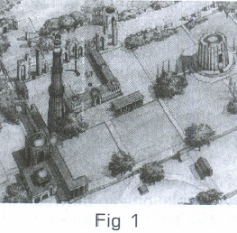
Quwwat aI-Islam mosque and minaret, built during the last decade of the 12th century. This was the congregational mosque of the first city built by the Delhi Sultans described in the chronicles as Delhi-i-Kuhna (the old city). The mosque was enlarged by IItutmish and Alauddin Khalji. The minar was built by two Sultans. Qutbuddin Aybak and IItutmish.
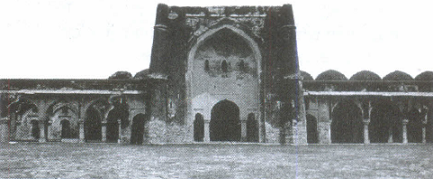
Begumpuri mosque built in the reign of Muhammad Tughluq was the main mosque of Jahanpanah the 'Sanctuary of the World' his new capital in Delhi.
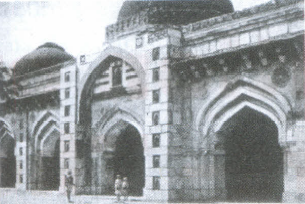
Moth ki Masjid, built in the reign of Sikandar Lodi by his minister.
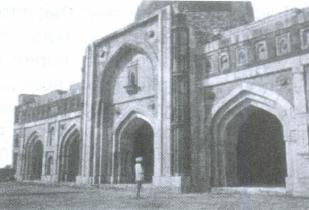
12.
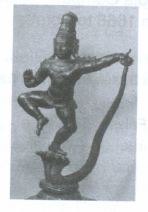
Observe the picture and answer the following questions.
What does this image depict about?
13.
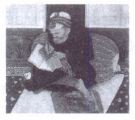
Answer the question based on following picture.
(a) What is the picture all about?
(b) What is he doing?
(c) Why is it called miniature?
(d) What were the two features of miniatures?
14.
Difficulties faced by the historians in using manuscripts are:
Hand writing of manuscripts is not clear.
Lot of information is provided in Manuscripts
Manuscripts were copied by hand.
None of these.
15.
What are Viharas?
Educational Institutions
Buddhist monastries
Tourist places
Health centres
16.
Muslim scholars developed a holy law called as
sufiyat
silsilas
shariat
zikr
17.
The weight of the superstructure above the doors and windows was sometimes carried by arches and this architectural form was called
Trabeate
Arcuate
Corbelled
Pietra dura
18.
Hauz-i-Sultani is also known as
people's reservoir
women's reservoir
king's reservoir
guest's reservoir
19.
By 1206 Genghis Khan united the Mongol and_____into a powerful military force.
Hunas
Koch
Turkish
Chandelas
20.
Multan and Sind were dominated by the tribe called
Arghuns
Langahs
Balochis
Both (a) and (b)
21.
Panipat and Ballabhgarh became important trading centres under the domination of the
Jats
Marathas
Sikhs
Rajputs
22.
Shah Abbas (1588-1629) was a Safavid ruler of
Turkey
Iran
Iraq
Afghanistan
23.
Orchha was seized during the reign of
Aurangzeb
Shah Jahan
Akbar
Humayun
24.
Ahmad Shah Abdali had seized the rich province of the
Awadh and Hyderabad
Bengal and Orissa
Punjab and Sirhind
Amber and Nagpur
25.
Pilgrims who flocked to the temples also made
houses
shops
hotels
donations
26.
Territories under the Khalji and Tughluq's were known as
Jagir
Kingdom
Iqta
Mandala
27.
Kings rewarded Brahmanas grants of
money
land
gold
big palace
28.
Rule of Ghiyasuddin Balban is
14th century
13th century
12th century
16th century
29.
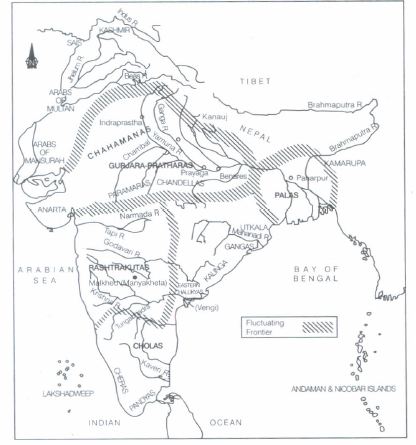
Locate the following
(i) Gurjara - Pratiharas (ii) Rashtrakutas (iii) Palas (iv) Cholas (v) Chahamanas
30.
Give a detailed description of watan jagirs of the Rajputs.
31.
Give an account of Masulipatnam.
32.
Write an account of the regional influence on art.
33.
Describe the works of Baba Guru Nanak
34.
Explain the problem of dearth of original manuscripts.
35.
Have you ever seen tribal people? Mention some states where tribal people live in India.
36.
Find out more about anyone of these dance forms?
37.
How did the Sufi masters perform their activities?
38.
Try and find out more about the ideas of Shankara or Ramanuja.
39.
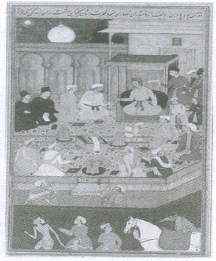
What are the details shown in this miniature? When this picture is prepared?
1.
i) By the 11th and 12th centuries Rajput clans became powerful amongst some tribes. The Rajput became the rulers in different parts of India which inspired the tribal people.
ii) Gradually with the support of the Brahmans, many tribes included in the caste system.
iii) Only the leading tribal families could join the ruling class. A large majority of tribes joined the lower jatis of caste society.
vi) Many dominant tribes of Punjab, Sind and North-West Frontier adapted Islam to reject the orthodox Hindu casteism.
2.
Bharatanatyam (Tamil Nadu) dance form is among the leading dance forms of India. It is the product of 19-20th century reconstructions of Sadir, the art of temple dancers called Devadasis. It was described in the treatise.
Natya Shastra by Bharata. It is known for its grace, purity, tenderness, expression and sculpturesque poses. Lord Shiva is considered the God of this dance form. It is most popular today and is practiced by male and female dancers all over the world.
The word Bharatanatyam combines, 'Bhavam' meaning expression, 'ragam' meaning music, 'thalam' meaning rhythm and 'Natyam' meaning dance.
Tamil, Telugu, Kannada and Sanskrit are traditionally used in the music of Bharatnatyam.
3.
Present day taxes on markets are collected as licence fees for each shop.
It is the duty of the Municipal Corporation in big cities and Municipal Committee in small towns to collect the taxes. The agencies work with the help of different agencies to collect these taxes. These taxes collected are used for the welfare of the public, roads, sewage, infrastructure development.
4.
Shah Jahan's diwan-i-khas was designed in such a way that it fused together in a grand harmonious synthesis. It was carefully planned. It was placed within a large courtyard. Behind the Emperor's throne, there were a series of pietra-dura inlays.
It depicted the legendary God Orpheus playing the lute. The diwan-i-khas aimed to communicate the king's justice would treat the high and the low as equals, creating a world where everyone could line in harmony. It reflected the image of a paradise in itself.
5.
Water supply for the city of Thanjavur came from wells and tanks.
6.
Abul Fazl, one of Akbar's close friends and courtiers wrote a three-volume history of the reign of Akbar. It was titled as Akbar Nama.
The 1st volume speaks about the Akbar's ancestors, the 2nd volume recorded the events of Akbar's reign. Ain-i-Akbari is the 3rd volume. It deals with Akbar's administration, household, army, the revenues and the geography of the Empire, This book also provides details about the traditions and cultures of the Indian people. It is rich in statistical details about things as diverse as crops, yields, prices, wages, and revenues.
7.
The Khaljis and the Tughluq's raised people of humble birth who were often their clients, to high political positions. They were appointed as generals and governors. However, the slaves and clients were loyal to their masters and patrons but not to their heirs. Heirs were the new rulers, they neglected such appointed man of high posts. This led to conflict between old and new nobility.
8.
The two major cities under the control of the Chahamanas were Delhi and Ajmer.
9.
These two sects of Islam got divided after the Death of Prophet Mohammad.
Shia Muslims followed the teachings of Prophet Mohammad's son-in-law, Ali and regarded him as the legitimate leader of the Muslim community.
Sunni Muslims, however, accepted the authority of the early leaders (Khalifas) of the community and the succeeding Khalifas.
10.
Rulers made the exaggerated claims of conquests as they wanted to show others that they had control over large areas. They were the real rulers of the country. No other ruler could fight or challenge them. They showed power to make others fearful towards them.
11.
The mosques in Fig. 2, 3 and 4 show an evolution in the architectural tradition that culminates in Shah Jahan's mosque in Delhi. In Fig. 1 the earlier mosque is shown which is plain and rough. Only a centre hall mosque is there. Thereafter, in fig. 2, the mosque had many supporting masjids in the left and right side of the main hall.
Fig. 3 Moth ki Masjid, showed many soft skills, craftwork carved on the pillars, walls, Arabic calligraphy. The facade was decorated with Arabic calligraphy and vegetal motifs in the fig. 3 and 4. Craftsmen used corbelled arches, a technique commonly used in India. Different types of red sandstone marble were used to create such monuments. These all spoke highly about the art and culture that flourished during the Delhi Sultanate.
12.
It is a bronze statue of Krishna subduing the serpent demon Kaliya. It was a story that during the childhood days of lord Krishna. A playing ball went into the river Yamuna. No boy dared to take the bailout of the river. Lord Krishna went into the water, fought with the serpent demon 'Kaliya'. Then he made the serpent to surrender to him. Thus, it was a win over evil. He in the last came outside the water, danced on the head of the serpent and made everyone surprised.
13.
The picture shows a scribe.
(b) He is making a copy of a manuscript.
(c) This painting is small in size, Because of smaller size, it is called as miniature (10.5 cm by 7.1 ern).
(d) The two features of miniatures are
(i) Miniature is used to illustrate the text of manuscripts
(ii) Miniatures are so beautiful that later collectors of manuscripts took the
manuscripts apart and just sold the miniatures.
14.
(c)
Manuscripts were copied by hand.
15.
(b)
Buddhist monastries
16.
(c)
shariat
17.
(b)
Arcuate
18.
(c)
king's reservoir
19.
(c)
Turkish
20.
(d)
Both (a) and (b)
21.
22.
(b)
Iran
23.
(b)
Shah Jahan
24.
(c)
Punjab and Sirhind
25.
(d)
donations
26.
(c)
Iqta
27.
(b)
land
28.
(b)
13th century
29.
30.
The watan jagirs of the Rajputs:
(i) Many Rajput kings mostly of Amber and Jodhpur, had served under the Mughals with distinction.
(ii) In exchange, they were permitted to enjoy considerable autonomy in their watan jagirs.
(iii) In the eighteenth century, these rulers attempted to extend their control over adjacent regions.
(iv) Ajit Singh, the ruler of Jodhpur, was also involved in the factional politics at the Mughal court.
(v) These Rajput families claimed the subedari of the rich provinces of Gujarat and Malwa.
Raja Ajit Singh of Jodhpur held the governorship of Gujarat.
Sawai Raja [ai Singh of Amber was governor of Malwa.
(vi) These offices were renewed by Emperor Jahandar Shah in 1713.
(vii) They also tried to extend their territories by seizing portions of imperial territories adjacent to their watans.
Nagaur was conquered and annexed to the house of Jodhpur.
Amber seized large portions of Bundi. Sawai Raja [ai Singh founded his new capital at Jaipur.
He was given the subedari of Agra in 1722.
(viii) Maratha campaigns into Rajasthan from the 1740s put severe pressure on these principalities and checked their further expansion.
31.
The town of Masulipatnam or Masulipatnam (literally, fish port town) lay on the delta of the Krishna river. As Masulipatnam became the most important port on the Andhra coast so both the Dutch and English East India Companies attempted to control it. The fort at Masulipatnam was built by the Dutch.
To prevent the trade passing completely into the hands of the various East India Companies, the Qutb Shahi ruler of Golconda imposed royal monopolies on the sale of textiles, spices and other items.
Fierce competition among various trading groupsthe Golconda nobles, Persian merchants, Telugu Komati Chettis, and European traders made the city popular and prosperous.
In 1686-1687 Mughal Emperor Aurangzeb annexed Golconda. This caused the European Companies to look for alternatives.
As the Company traders moved to Bombay, Calcutta (present-day Kolkata) and Madras (present-day Chennai), Masulipatnam lost both its merchants and prosperity and finally declined in the eighteenth century. Now it is not more than a dilapidated little town.
32.
Regional influence on Art :
(i) Along with increase in construction activity between the eighth and eighteenth century, there was a significant sharing of ideas across regions.
(ii) The traditions of one region were adopted by the other. In Vrindavan, near Mathura, temples were constructed in architectural style, similar to the Mughal palaces in Fatehpur Sikri. Vijayanagara's architecture was influenced by the Sultanate of Bijapur and Golconda. For example, their elephant stables.
(iii) Mughal rulers were specifically skilled in adapting regional architectural styles in the construction of their own buildings
In Bengal, the local rulers had developed a roof that was designed to resemble a thatched hut.
The Mughals liked this "Bangla dome" to such extent, that they widely used it in architecture.
The impact of other regions was also evident.
In Akbar's capital at Fatehpur Sikri, many of the buildings have the impact of the architectural styles of Gujarat and Malwa.
33.
Guru Nanak and (1469-1539) born at Talwandi (Nankana Sahib in Pakistan). He travelled widely before establishing a centre at Kartarpur (Dera Baba Nanak on the river Ravi). A regular worship that consisted of the singing of his own hymns was established there for his followers.
Irrespective of their previous creed, caste or gender, his followers ate together in the common kitchen (langar). The holy space thus created by Guru Nanak was known as dharmsal. It is now known as Gurdwara.
Before his death in 1539, Guru Nanak appointed one of his followers as his successor. His name was Lehna but later he came to be known as Guru Angad, representing that he was a part of Guru Nanak himself.
Guru Angad compiled the compositions of Guru Nanak, to which he added his own new script known as Gurmukhi.
The three successors of Guru Angad also wrote under the name of 'Nanak' and all of their compositions were compiled by Guru Arjan in 1604. In 1706 this compilation was authenticated by his son and successor, Guru Gobind Singh. It is now known as Guru Granth Sahib, the holy scripture of the Sikhs.
34.
We can rarely find original manuscripts of the authors. This is a severe problem today.
(i) We are entirely dependent on the copies made by later scribes.
(ii) As a consequence, the historians have to go through different manuscripts (versions) of the same text to identify what the author had originally written.
(iii) At times various authors revised their chronicles.
(iv) For example, Z. Barani wrote his first chronicle book in 1356 and another version came two years later. The two versions differed from one another and the historians did not even know about the existence of the first version till 1960s as it had remained lost in massive library collection.
35.
Yes, I have seen tribal people when I went for a visit to Chhattisgarh last year. Some states where tribal people live in India include Chhattisgarh, Odisha, Jharkhand, Madhya Pradesh and some parts of north-eastern states.
36.
In the series of Bharatnatayam, Kathakali, Odissi. Kuchipudi and Manipuri, other dance form is Kathak. It developed in the 15th and 16th century, with the spread of Bhakti movement. It developed in two traditions or gharanas i.e. Rajasthan (Jaipur) and Lucknow. Under the patronage of Wajid All Shah, it grew into major art form.
37.
(i) The Sufi masters held their assemblies in their khanqahs or hospices.
(ii) They discussed spiritual matters.
(ill) Devotees of all groups including members of the royalty and nobility, and ordinary people flocked
to these khanqahs.
(iv)They sought the blessings of the saints in solving their worldly problems.
They also simply attended the music and dance sessions
38.
Shankara considered the world around to be an illusion or maya and preached renunciation of the world and adoption of the path of knowledge to understand the true nature of Brahman and attain salvation while according to Ramanuja salvation can be attained through intense devotion to Vishnu, who in his grace helps the devotees to attain the bliss of union with him.
39.
Akbar is holding discussions with learned individuals of different faiths in the Ibadat Khana. This miniature painting is an illustration to the Akbar Nama. This miniature painting was prepared by Nar Singh, CE.1605.

7th Standard CBSE Syllabus & Materials
7th Standard CBSE
CBSE 7th Social Science Theme B - New Beginnings : Cities and States - New Sample Question Papers Study Material - QB365 Set A
NEW7th Standard CBSE
CBSE 7th Social Science Theme A - Climates of India - New Sample Question Papers Study Material - QB365 Set A
NEW7th Standard CBSE
CBSE 7th Social Science Theme A - Geographical Diversity of India - New Sample Question Papers Study Material - QB365 Set A
NEW7th Standard CBSE
CBSE 7th Science Earth, Moon and the Sun - New Sample Question Papers Study Material - QB365 Set A



CBSE 7th Standard CBSE Subjects
CBSE Standards




