
 100% FREE ACCESS
11th Standard CBSE Syllabus & Materials
11th Standard CBSE
CBSE 11th Economics PART-A - Presentation of Data - New Sample Question Papers Study Material - QB365 Set A
NEW11th Standard CBSE
CBSE 11th Economics PART-A - Organisation of Data - New Sample Question Papers Study Material - QB365 Set A
NEW11th Standard CBSE
CBSE 11th Economics PART-A - Collection of Data - New Sample Question Papers Study Material - QB365 Set A
NEW11th Standard CBSE
CBSE 11th Economics PART-A - Introduction to Economics and Statistics - New Sample Question Papers Study Material - QB365 Set A
NEW11th Standard CBSE
CBSE 11th Business Studies International Trade Sample Question Papers Study Material - QB365 Set A
NEW11th Standard CBSE
CBSE 11th Business Studies Evolution and Fundamentals of Business Sample Question Papers Study Material - QB365 Set A

Published on: 30/12/2018
Class 11 Model Question
Download CBSE Class 11th Standard CBSE Chemistry question papers, sample papers, important questions, and previous year solved papers in PDF format. Get free study materials, NCERT solutions, and exam preparation resources for Class 11th Standard CBSE Chemistry
Questions + Answers key
Take MCQ Chemistry Test
1.
A gas occupying a volume of 100 litres is at 20°C under a pressure of 2 bar. What temperature will it have when it is placed in an evacuated chamber of volume 175 litres? The pressure of the gas in the chamber is one-third of its initial pressure.
2.
State as to why alkali metals are prepared by electrolysis of their fused chlorides ?
3.
An equilibrium mixture at 300K contains N2 O4 and NO2 at .28 and 1.1 atm pressure respectively. If the volume of the container is doubled, calculate the new equilibrium pressure of two gases.
4.
Calculate the equilibrium constant for the following reaction at 298 K and 1 atm pressure
NO(g) + \(\frac { 1 }{ 2 } \)O2(g) \(\rightleftharpoons \) NO2(g)
Given \(\triangle { H }_{ f }^{ o }\) at 298 K are NO(g) = 90.4 KJ mol-1
and NO2(g) = 33.8 KJ mol-1 , \(\triangle \)So at 298 K for the
reaction = -70.0 JK-1mol-1, R = 8.31 JK-1mol-1.
5.
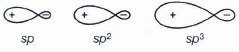
Draw the shape of the following hybrid orbitals sp, sp2 and sp3.
6.
Which is the largest in size Cu+,Cu2+ or Cu and why?
7.
Correct the following electronics configuration of the elements in the ground state.
(i) \({ 1s }^{ 2 }2s^{ 1 },{ 2p }_{ x }^{ 2 },{ 2p }_{ y }^{ 2 },{ 2p }_{ z }^{ 2 },3s^{ 2 },{ 3p }_{ x }^{ 1 }\)
(ii) \({ 1s }^{ 2 }2s^{ 1 },{ 2p }_{ x }^{ 1 },{ 2p }_{ y }^{ 1 },{ 2p }_{ z }^{ 1 }\)
(iii) \({ 1s }^{ 2 }2s^{ 2 },{ 2p }^{ 6 },3s^{ 2 },{ 3p }^{ 6 },3d^{ 5 }\)
(iv) \({ 1s }^{ 2 }2s^{ 2 },{ 2p }^{ 6 },3s^{ 2 },{ 3p }^{ 6 },3d^{ 4 },4s^{ 2 }\)
8.
Calculate
(5.7 x 10⁻⁵) \(\div \) (4.2 x 10⁻³)
9.
Compare four properties of alkali metals and alkaline earth metals
10.
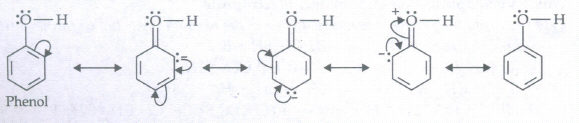
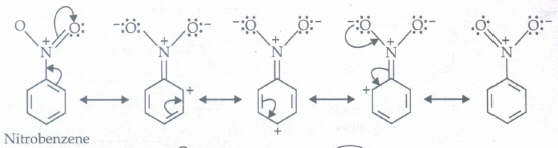
Draw the resonance structures for the following compounds. Show the electron shift using curved-arrow notation.
(a) C6H5OH
(b) C6H5NO2
(c) CH3CH = CHCHO
(d) C6H5-CHO
(e) C6H5-CH2
(f) CH3CH = CHCH2
11.
Calculate no. of carbon and oxygen atoms present in 11.2 litres of CO2 at N. T.P.
12.
Give the reson for following Potassium carbonate cannot be prepared by Solvay ammonia process.
13.
In a process, 701 J of heat is absorbed by a system and 394 J of work is done by the system. What is the change in internal energy for the process?
14.
Chlorine is prepared in the laboratory by treating manganese dioxide (MnO2) with aqueous hydrochloric acid according to the reaction, 4 HCI (aq) + MnO2(s) \(\longrightarrow \) 2H2O(l) + MnCI2(aq) + CI2(g). How many grams of HCI reacts with 5.0 g of manganese dioxide?
15.
Are all the B-H bonds in diborane equivalent?
16.
State as to why a solution of Na2CO3 is alkaline?
17.
Name one industrial method for the preparation of dihydrogen.
18.
What would have happened to the gas if the molecular collision were not elastic?
19.
What is meant by reaction quotient?
20.
Why N2 is more stable than 02? Explain on the basis of molecular orbital theory.
21.
Assign oxidation number to the underlined elements in each of the following species - KAl(SO4)2.12H2O
22.
In the combustion of methane, what is the limiting reactant and why?
23.
Sodium salt of which acid will be needed for the preparation of propane? Write chemical equation for the reaction.
24.
What are the raw materials used for the manufacture of washing soda by Solvay process ?
25.
Dihydrogen gas is obtained from natural gas by partial oxidation with steam as per following endothermic reaction.
\({ CH }_{ 4 }\left( g \right) +{ H }_{ 2 }O\left( g \right) \rightleftharpoons { CO }\left( g \right) +3{ H }_{ 2 }\left( g \right) \)
How will the value of Kp and composition of equilibrium mixture be affected by
(a) increasing the pressure
(b) increasing the temperature
(c) using a catalyst?
26.
Assign oxidation number to the underlined elements in each of the following species.
NaH2P O4
27.
If enthalpy of fusion and enthalpy of vaporisation of sodium metals are 2.6 and 98.2KJ mol-1 respectively, what is the enthalpy of sublimation of sodium.
28.
The density of liquid CO2 at room temperature is 0.8 g cm-3 .how large a cartridge of liquid CO2 must be provided to inflate a life jacket of 4 L capacity at STP?
1.
From the available data: V1 = 100 L, V2 = 175L
P1 = 2 bar, P2 = 2 x 1/3 = 2/3 bar
T1 = 20 + 273 = 293 K, T2=?
According to Gas equation,\(\frac { { P }_{ 1 }V_{ 1 } }{ { T }_{ 1 } } =\frac { { P }_{ 2 }V_{ 2 } }{ { T }_{ 2 } } \) or T2 = \(\frac { { P }_{ 2 }V_{ 2 }{ T }_{ 2 } }{ { T }_{ 2 } } \)
By substituting the values, T2 = \(\frac { (2/3bar)\times (175L)\times (293K) }{ (2bar)\times (100L) } \)
= 170.9 K = 170.9 - 273.0 = -102.1oC
2.
I. Alkali metals are strong reducing agents, hence cannot be extracted by reduction of their oxides and other compounds.
II. Being highly positive in nature it is not possible to displace them from their salt solutions by any other elements.
III. Alkali metals cannot be obtained by the electrolysis of the aqueous solution of their salts because H2 is liberated at cathode instead of alkali metal.
That's why alkali metals are prepared by electrolysis of their fused chloride.
NaCl \(\underrightarrow { Fusion } \) Na+ + Cl-
During electrolysis
At anode, 2 Cl- \(\longrightarrow \) Cl2 + 2 e-
At cathode, 2 Na+ + 2 e- \(\longrightarrow \) 2 Na
3.
\({ N }_{ 2 }{ O }_{ 4 }(g)\leftrightharpoons { 2NO }_{ 2 }(g)\)
\( Pressure \ at \ equilibrium \ 0.28\ \ \ 1.1\)
\( { K }_{ P }=\frac { p{ { (NO }_{ 2 }) }^{ 2 } }{ p({ N }_{ 2 }{ O }_{ 4 }) } =\frac { { (1.1) }^{ 2 } }{ (0.28) } =4.32atm\)
If volume of the container is doubled, the pressure will be reduced to half
\( { N }_{ 2 }{ O }_{ 4 }\leftrightharpoons { 2NO }_{ 2 }\)
\( New \ pressure \ \left( \frac { 0.28 }{ 2 } -p \right) \ \left( \frac { 1.1 }{ 2 } +2p \right)\)
\( { K }_{ p }=\frac { { \left( \frac { 1.1 }{ 2 } +2p \right) }^{ 2 } }{ \left( \frac { 0.28 }{ 2 } -p \right) } =4.32\)
\( On \ solving,\)
\( p=0.045\)
\( \therefore \ p({ N }_{ 2 }{ O }_{ 4 })=0.14-0.0045=0.095atm\)
\( p({ NO }_{ 2 })=0.55+0.045=0.64 \ atm\)
4.
Enthalpy change for the reaction,
\(\triangle { H }^{ o }=\sum { { \triangle }_{ f } } { H }^{ o }_{ (products) }-\sum { { \triangle }_{ f } } { H }^{ o }_{ (reactants) }\\ [{ \triangle }_{ f }{ H }^{ 0 }N{ O }_{ 2 }(g)]-[{ \triangle }_{ f }{ H }^{ 0 }NO(g)+\frac { 1 }{ 2 } { \triangle }_{ f }{ H }^{ 0 }{ O }_{ 2 }(g)]\)
\( =[33.8]-\left[ 904+\frac { 1 }{ 2 } \times0 \right] =-56.6KJ \ { mol }^{ -1 }\)
\(\triangle { S }^{ 0 }=-70J{ K }^{ -1 }{ mol }^{ -1 } ...(i)\)
\(Now, \ \triangle { G }^{ o }=\triangle { H }^{ o }-T\triangle { S }^{ o },T=298K\)
\( \triangle { G }^{ o }= \ 56600-298\times(-70)=-35740J{ mol }^{ -1 }\)
\(logk=-\frac { \triangle G }{ 2.303RT } \)
\(or \ logK=-\frac { -35740 }{ 2.303\times8.31\times298 } =6.267\)
∴ K = Antilog (6.267) = 1.85 x 10⁶
5.
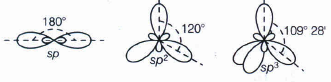
All the hybrid orbitals have same shape. However, their sizes are in the order : sp < sp2 < sp3
6.
Cu is largest due to less effective nuclear charge. It has 29 elements,29 protons.Cu+ has 28 elements and 29 protons, Cu2+ has 27 electrons and 29 protons.
7.
(i) \({ 1s }^{ 2 }2s^{ 2 },{ 2p }_{ x }^{ 2 },{ 2p }_{ y }^{ 2 },{ 2p }_{ z }^{ 2 },3s^{ 2 }\)
(ii) \({ 1s }^{ 2 }2s^{ 2 },{ 2p }_{ x }^{ 1 },{ 2p }_{ y }^{ 1 },{ 2p }_{ z }^{ 1 }\)
(iii) \({ 1s }^{ 2 }2s^{ 2 },{ 2p }^{ 6 },3s^{ 2 },{ 3p }^{ 6 },4s^{ 2 },3d^{ 3 }\)
(iv) \({ 1s }^{ 2 }2s^{ 2 },{ 2p }^{ 6 },3s^{ 2 },{ 3p }^{ 6 },3d^{ 5 },4s^{ 1 }\)
8.
Given, (5.7 x 10⁻⁵) \(\div \) (4.2 x 10⁻³)
(5.7 \(\div \) 4.2) x (10-5-(-3)) = 23.94 x 10⁻²
9.
| Alkali metals | Alkaline earth metals |
| (i) They are soft metals | (i) They are harder than alkali metals |
| (ii) Alkali metals show +1 oxidation state | (ii) Alkaline earth metals show +2 oxidation state |
| (iii) Their carbonates are soluble in water except LiCO3 | (iii) Their carbonates are insoluble in water |
| (iv) Except Li alkali metals do not form complex compounds | (iv) They can form complex compounds |
10.
(a)
(b)
(c)

(d)
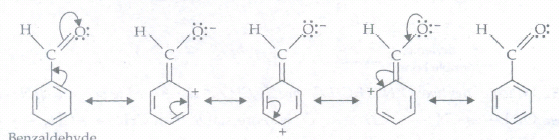
(e)
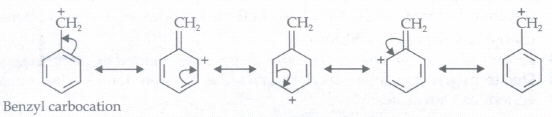
(f)

11.
22.4litres of CO2 at N.T.P. = 1 gram mol
11.2 litres of CO2 at N.T.P. =\(\frac { (1 \ gram \ mol) }{ (22.4 \ liters) } \times \)(11.2 litres) = 0.5 gram mol
Now 1 gram mole of CO2 contain molecules = 6.022 x 10²³
\(\therefore \) 0.5 gram mole of CO2 contain molecules = 6.022 x 1023 x 0.5 = 3.011 x 10²³
Step II. Number of carbon and oxygen atoms in 3.011 x 1&3 molecules of CO2
1 molecule of CO2 contains carbon atoms = 1
\(\therefore \)3.011 x 10²³ molecules of CO2 will contain carbon atoms = 3.011 x 10²³
Similarly, 1 molecule of CO2 contains oxygen atoms = 2
\(\therefore \) 3.011 x 10²³molecules of CO2 will contain oxygen atoms = 2 x 3.011 x 1023
= 6.022 x 10²³ atoms.
12.
This is because of high solubility of potassium hydrogen carbonate due to which it does not precipitate out when CO2 is pased through an ammoniated solution of KCl.
13.
Given, q = +701 J (heat is absorbed, hence q is positive).
W = -394 J (work is done by the system, hence W is negative). By first law of thermodynamics;
Internal energy change,
\(\Delta U=q+W\)
\( =+701J+(-394J)=+307J\)
Hence, internal energy of the system increases by 307J.
14.
From the given chemical equation of the reaction is
MnO2 + 4HCl→ MnCl2+Cl2+2H2O
So, in this reaction we can understand that the 1 mole of MnO2 reacts with 4 moles of HCl
Now, Mass of MnO2 = atomic mass of Manganese + 2(atomic mass of oxygen)
Therefore, we can write the mass of MnO2 is = 55 +2(16)55 +2(16) = 87 gms/mole
This means, 1 mole of MnO2 comprises 87 gm of MnO2.
Similarly, Mass of HCl = atomic mass of Hydrogen + atomic mass of Chlorine
Therefore, we can write as mass of HCl = 1 + 35.451 + 35.45 =36.46 gms/mole
This means, 1 mole of HCl comprises a mass of 36.46 gm of MnO2.
So, 4 moles of HCl = 4 ×36.46 gm. = 145.84 gm of HCl
Thus, according to given chemical equation,145.84 gm. of HCl reacts with 87 gm. of MnO2 to accomplish the reaction.
So now we can find the mass of HCl reacts with 5gm of MnO2 to accomplish the reaction.
∴ Mass of HCl (gm.) required = \(\frac { 4\times 36.5\times 5 }{ 87 } \)= 8.39 g HCI.
Hence, the answer is, 8.38 gm. of HCl will require to react with 5 gm. of MnO2
15.
()
No,there are two types of bonds in diborane two electron normal bonds and three centred two electron bonds.
16.
()
Na2CO3 is a salt of a weak acid (H2CO3) and a strong base (NaOH) therefore, it undergoes hydrolysis to produce strong base, NaOH and hence, its aqueous solution is alkaline in nature.
Na2CO3(s) + H2O(l)\(\rightarrow \) 2NaOH(aq) + H2CO3(aq)
Strong base Weak acid
17.
()
Bosch process.
18.
()
On every collision, there would have been loss of energy.As a result, the molecules would have slowed down and ultimately settle down in the vessel.Moreover, the pressure would have gradually reduced to zero.
19.
It is defined as the ratio of product of molar concentration of products to the product of molar concentration of reactants at any stage of reaction.
Qc = \(\frac { \left[ C \right] ^{ c }\left[ D \right] ^{ d } }{ \left[ A \right] ^{ a }\left[ B \right] ^{ b } } \)
for the reaction
aA + bB ⇌ cC + dD
20.
Bond order of N2 (= 3) is greater than that of 02 (= 2).
21.
\(\overset { +1 }{ K } \overset { +3 }{ Al } \left( \overset { x }{ S } \overset { -2 }{ { O }_{ 4 } } \right) 12\left( \overset { +1\quad +2 }{ { H }_{ 2 }O } \right) \)or
+ 1 + 3 + 2x + 8 (-2) + 12 (2 x 1 - 2) or x = + 6
Alternatively, since H20 is a neutral molecule, therefore, sum of oxidation numbers of all the atoms in H20 may be taken as zero. As such water molecules may be ignored white computing the oxidation number of 5.
\(\therefore\) + 1 + 3 + 2x - 16 = 0 or x = +6
Thus, the oxidation number of S in KAI(SO4)2.12H20 = +6
22.
Methane is the limiting reactant because the other reactant is oxygen of the air which is always present in excess. Thus, the amounts of CO2 and H2O formed depend upon the amount of methane burnt.
23.
Butanoic acid,
\(\mathrm{CH}_3 \mathrm{CH}_2 \mathrm{CH}_2 \mathrm{COO}^{-} \mathrm{Na}^{+}+\mathrm{NaOH} \stackrel{\mathrm{CaO}}{\longrightarrow} \mathrm{CH}_3 \mathrm{CH}_2 \mathrm{CH}_3+\mathrm{Na}_2 \mathrm{CO}_3\)
24.
Raw materials used for the manufacture of washing soda by Solvay process are NaCl, CaCO3 and NH3.
25.
(i) According to Le Chatelier’s principle, the equilibrium will shift in the backward direction.
(ii) According to Le Chatelier’s principle, as the reaction is endothermic, the equilibrium will shift in the forward direction.
(iii) The equilibrium of the reaction is not affected by the presence of a catalyst. A catalyst only increases the rate of a reaction. Thus, equilibrium will be attained quickly.
26.
NaH2P O4
Let the oxidation number of P be x. Writing the oxidation number of each atom above its symbol, we get \(\stackrel{+1}{\mathrm{Na}} \stackrel{+1}{\mathrm{H}}{ }_2 \stackrel{\mathrm{P}-2}{\mathrm{P}} \mathrm{O}_4\)
In neutral compounds the sum of the oxidation numbers of all the atoms is zero.
1(+1)+2(+1)+x+4(-2)=0
3+x+(-8) =0
x=8-3=+5
Hence, the oxidation number of P in NaH2PO4 is +5.
Calculate oxidation number of other elements in the same way as shon in(i). You will get oxidation number of S,P,Mn,O,B,S,S,Cr,S in the given compound as
+6,+5,+6,-1,+3,+6,+6,+6,+2 respectively.
Note
H2 O is a neutral molecule, therefore sun of oxidation numbers of all atoms in H2O is Zero.
Hence, the oxidation number of S in
KAI(SO4)2.12H2O is +6.
27.
△subH∘=△fusH∘+△vapH∘ = 2.6+98.2
= 100.8KH mol-1
28.
V = 9.82 cm3

11th Standard CBSE Syllabus & Materials
11th Standard CBSE
CBSE 11th Business Studies Forms of Business Organisation Sample Question Papers Study Material - QB365 Set A
NEW11th Standard CBSE
CBSE 11th Business Studies Business, Trade and Commerce Sample Question Papers Study Material - QB365 Set A
NEW11th Standard CBSE
CBSE 11th Physics Waves Sample Question Papers Study Material - QB365 Set A
NEW11th Standard CBSE
CBSE 11th Physics Kinetic Theory Sample Question Papers Study Material - QB365 Set A



CBSE 11th Standard CBSE Subjects
CBSE Standards









