
 100% FREE ACCESS
11th Standard CBSE Syllabus & Materials
11th Standard CBSE
CBSE 11th Economics PART-A - Presentation of Data - New Sample Question Papers Study Material - QB365 Set A
NEW11th Standard CBSE
CBSE 11th Economics PART-A - Organisation of Data - New Sample Question Papers Study Material - QB365 Set A
NEW11th Standard CBSE
CBSE 11th Economics PART-A - Collection of Data - New Sample Question Papers Study Material - QB365 Set A
NEW11th Standard CBSE
CBSE 11th Economics PART-A - Introduction to Economics and Statistics - New Sample Question Papers Study Material - QB365 Set A
NEW11th Standard CBSE
CBSE 11th Business Studies International Trade Sample Question Papers Study Material - QB365 Set A
NEW11th Standard CBSE
CBSE 11th Business Studies Evolution and Fundamentals of Business Sample Question Papers Study Material - QB365 Set A

Published on: 09/09/2022
QB365 provides a detailed and simple solution for every Possible Case Study Questions in Class 11 Chemistry Subject - Organic Chemistry: Some Basic Principles and Techniques, CBSE. It will help Students to get more practice questions, Students can Practice these question papers in addition to score best marks.
Download CBSE Class 11th Standard CBSE Chemistry question papers, sample papers, important questions, and previous year solved papers in PDF format. Get free study materials, NCERT solutions, and exam preparation resources for Class 11th Standard CBSE Chemistry
Questions + Answers key
Take MCQ Chemistry Test
1.
Organic compounds are formed by covalent bonding. The nature of covalent bonding can described with the help of hybridisation, sp, Sp2 and sp3. The structure and reactivity depends upon type of bonds present in organic compounds. Organic compound can be represented by various structural formulae, Wedge and Dash formula is 3-D representation. Organic compounds can be classified on the basis of functional groups. Organic reactions mechanism are based on structure of substrate and the attacking reagent.
The intermediate formed can be free radical, carbocation, carbanion or carbene. The attacking reagent can be electrophile or nucleophile. The inductive, electromeric, resonance and hyper conjugative effect may help in polarisation of covalent bond. Organic reactions may be regarded as substitution, addition, elimination and rearrangement, oxidation and reduction reaction.
After the compound is obtained in pure state, qualitative analysis helps to detect elements present in organic compounds whereas quantitative analysis helps to find percentage of various elements. Dumas and Kjeldahl method help to determine percentage of nitrogen, Carius method for halogens and sulphur. Carbon and hydrogen are estimated by the amount of CO2 and H2Oformed. Phosphorus estimation is done by oxidising it to H3 PO4, sulphur to H2 SO4 , The percentage of oxygen is determined by taking the difference of 100 and percentage of all elements. Empirical formula gives simple ratios of elements whereas molecular formula gives exact number of atoms of each element present in a compound.
(a) What are free radicals?
(b) Write the order of stability of carbocation.
(c) An organic compounds has 8% sulphur. What is minimum molar mass of compound?
(d) If C is 75%, H = 25%, what is molecular formula of compound?
(e) In estimation of sulphur, which compound of sulphur is formed?
(f) f Lassaigne extract of organic compound give blood-red colour with FeCI3, what does it show?
(g) Why should we add HNO3 to Lassaigne extract before testing for halogens.
2.
The order of decreasing priority of some functional groups is \(-\mathrm{COOH},-\mathrm{SO}_{3} \mathrm{H},-\mathrm{COOR},-\mathrm{COCl},-\mathrm{CONH}_{2}\),

Observe the table based on different functional groups and their respective prefix and suffix given below and answer the questions as follow.
| Functional Group | Prefix | Suffix |
| Alkane | - | - ane |
| Alkane | - | - ene |
| Alkane | - | - yne |
| -x | Halo (chloro, bromo, iodo) | - |
| -OH | Hydroxy | - ol |
 |
Aldo or formyl | - al |
 |
Oxo | - one |
| \(-\mathrm{C} \equiv \mathrm{N}\) | Cyano | nitrile |
| -ROR | Alkoxy | ether |
| -COOH | Carboxy | - oic acid |
| -COOR | Alkoxy carbonyl | - oate |
| -NH2 | Amino | - amine |
| -NO2 | Nitro | - |
| -CONH2 | Carbamoyl or Amido | - amide |
| -COX | Halo formyl | - oyl halide |
| -SO3H | Sulpho | sulphonic acid |
(a) Write IUPAC Dame of HOCH2 -(CH2 )3-CH2COCH3 .
(b) What is IUPAC Dame of CH2 =CH-CH2Br. Give reason.
(c) What is IUPAC name of
(i)

(ii) CH2 =CH-CH=CH2
(d) Write structural formula of 6-methyl ectan-s-ol.
(e) Write IUPAC name of
(i)
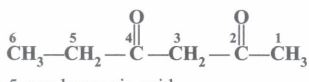
(ii)
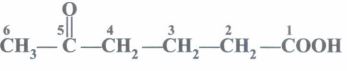
(f) Write IUPAC name of

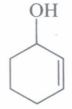
(g) Write structural formula of cyclohex-2-en-1-ol.
3.
It is essential to purify an organic compound. The method used for purification depends upon nature of compound and impurity present in it. The common methods to purify a solid is sublimation and crystallisation. Crystallisation is most common method applicable to most of solid organic compounds. Liquids are purified by simple distillation, fractional distillation, distillation under reduced pressure, steam distillation. Differential extraction is used to extract organic compound from aqueous solution. Chromatography is used to separate coloured substances from plants. Column chromatography, thin layer chromatography and partition chromatography are types of chromatography used for isolation and purification of organic compounds.
(a) Which method is used to purify camphor?
(b) How is unwanted colour from organic compounds removed?
(c) How is chloroform (Boiling point 334 K) and aniline (b.pt. 457 K) are separated? Why?
(d) Which is condensed first in fractionating column, vapours of higher boiling point liquid or lower boiling point liquid?
(e) How is glycerol purified?
(f) How is Aniline purified? Why?
(g) How are o-nitrophenol and p-nitrophenol separated? Why?
1.
(a) Free radicals are atoms or group of atoms having one electron in excited state
(b) 3° > 2° > 1°.
(c) 400 g mol-1, because it will contain at least one atom 'S', i.e., 32 g of sulphur.
(d) CH4.
(e) It is estimated by taking mass of BaSO4 formed.
(f) It is done to convert NaCN to HCN and N2S to H2S if nitrogen and sulphur are present because they will interfere with the AgNO3 test for halogens, H2S and HCN are removed as gases.
2.
(a) 7-hydroxy heptan-2-one,
.JPG)
(b) 3-Bromoprop-2-ene. It is because double bond is preferred over halogen.
(c) (i) Ethane 1, 2-diol
(ii) Buta-l, 3-diene
(d)

(e) (i) Hexane 2, 4-dione
(ii) 5-oxo hexanoic acid
(f) Hexa I, 3-dien-5-yne
(g)
3.
(a) Sublimation.
(b) It is removed by adsorbing over activated charcoal.
(c) Simple distillation because there is large difference in boiling points.
(d) Vapours of higher boiling point liquid are condensed first.
(e) It is purified by distillation under reduced pressure.
(f) It is purified by steam distillation because it is steam volatile and insoluble in water.
(g) They are separated by steam distillation because o-nitrophenol is steam volatile where as p-nitrophenol is not.

11th Standard CBSE Syllabus & Materials
11th Standard CBSE
CBSE 11th Business Studies Forms of Business Organisation Sample Question Papers Study Material - QB365 Set A
NEW11th Standard CBSE
CBSE 11th Business Studies Business, Trade and Commerce Sample Question Papers Study Material - QB365 Set A
NEW11th Standard CBSE
CBSE 11th Physics Waves Sample Question Papers Study Material - QB365 Set A
NEW11th Standard CBSE
CBSE 11th Physics Kinetic Theory Sample Question Papers Study Material - QB365 Set A



CBSE 11th Standard CBSE Subjects
CBSE Standards









