
 100% FREE ACCESS
11th Standard CBSE Syllabus & Materials
11th Standard CBSE
CBSE 11th Economics PART-A - Presentation of Data - New Sample Question Papers Study Material - QB365 Set A
NEW11th Standard CBSE
CBSE 11th Economics PART-A - Organisation of Data - New Sample Question Papers Study Material - QB365 Set A
NEW11th Standard CBSE
CBSE 11th Economics PART-A - Collection of Data - New Sample Question Papers Study Material - QB365 Set A
NEW11th Standard CBSE
CBSE 11th Economics PART-A - Introduction to Economics and Statistics - New Sample Question Papers Study Material - QB365 Set A
NEW11th Standard CBSE
CBSE 11th Business Studies International Trade Sample Question Papers Study Material - QB365 Set A
NEW11th Standard CBSE
CBSE 11th Business Studies Evolution and Fundamentals of Business Sample Question Papers Study Material - QB365 Set A

Published on: 09/09/2022
QB365 provides a detailed and simple solution for every Possible Case Study Questions in Class 11 Chemistry Subject - Chemical Bonding and Molecular Structure, CBSE. It will help Students to get more practice questions, Students can Practice these question papers in addition to score best marks.
Download CBSE Class 11th Standard CBSE Chemistry question papers, sample papers, important questions, and previous year solved papers in PDF format. Get free study materials, NCERT solutions, and exam preparation resources for Class 11th Standard CBSE Chemistry
Questions + Answers key
Take MCQ Chemistry Test
1.
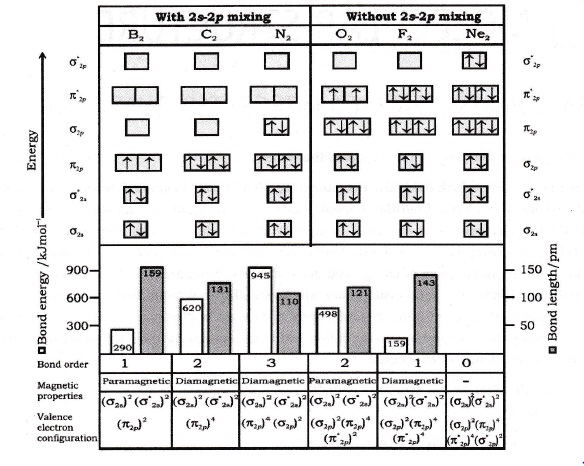
Table shows the molecular orbital occupancy and molecular properties for B2, C2, N2, O2, F2, and Ne2. Observe this figure and answer the questions based on this diagram and related studied concepts.
MO occupancy and molecular properties for B2 through Ne2.
(a) Why does bond enthalpy of N2 is higher than O2?
(b) Why is Ne2 not formed according to M.O. theory?
(c) Why F2 diamagnetic where as O2 paramagnetic?
(d) Arrange B2, C2, N2, O2, F2 in increasing order of stability. Give reason.
(e) Why is F2 more reactive than O2 ?
(f) Arrange B2, C2, N2, O2, F2 in increasing order of bond length.
(g) What is speciality of double bond in C2?
(h) How are C2 and Li2 molecules detected?
2.
An ionic compound has 3-D crystal lattice in which positive and negative charges are equal. The crystal lattice is stabilised by enthalpy of lattice formation, bond length, bond angle, bond enthalpy, bond order and bond polarity have significant effect on properties of compounds. All the properties of certain compounds cannot be explained by single structure, more than one structure of a compound to explain its property are called resonating structures.
Dipole moment depends upon polarity and shapes of molecules. Shapes of molecules can be determined by VSEPR theory as well as hybridisation sp, Sp2, Sp3, Sp3d, Sp3 d2 are linear, trigonal planar, tetrahedral, trigonal bipyramidal and octahedral geometery respectively. Hydrogen bond is formed between hydrogen and F, O, N. Intra-molecular H-bonding is within the molecules which is weaker than inter molecular H-bonding, between the molecules.
(a) Why does CO2 have zero dipole moment?
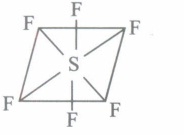
(b) What is hybridisation of 'S' in SF6 and its shape?
(c) Why do all bonds in \(\mathrm{CO}_{3}^{2-}\) have equal bond length?
(d) Why is o-nitropbenol steam volatile, p-nitropbenol is not?
(e) Wby is bond angle in H2 O is more tban H2 S?
(f) Why is bond \(\sigma\) stronger than \(\pi\)-bond?
(g) Arrange NaCl, NaBr, NaF. NaI in increasing order of ionic character.
3.
The attractive force which holds the two atoms together is called chemical bond. Covalent bond is formed by equal sharing of electrons. Coordinate bond is formed by unequal sharing of electrons. Ionic bond is formed by transfer of electrons from one atom to another. Octet rule, although very useful but it is not universally applicable. According to valence bond theory, covalent bond is formed by overlapping of half filled atomic orbitals resulting in lowering of energy and more stability. Bond order is the number of bonds between atoms in a molecule. Higher the bond order, more will be stability and bond dissociation enthalpy but smaller bond length. Polarity of covalent bond depends upon difference in electronegativity. Covalent character of bond depends upon polarising power, smaller cation and bigger anions have higher polarising power. VSEPR theory helps to predict shapes of molecules.
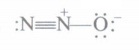
(a) Write the, electron dot structure of N2O.
(b) What are ions present in CsI3?
(c) Out of CN+, CN-, NO, which has highest bond order?
(d) What is correct order of repulsion bp - bp, lp - lp and lp - bp?
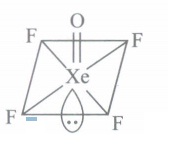
(e) Draw the structure of XeOF4 on the basis of VSEPR theory.
(f) Which out of B2 ,CO, \(\mathrm{O}_{2}^{2-}\) and NO+ are paramagnetic and why?
1.
(a) It is because \((\mathrm{N} \equiv \mathrm{N})\) , N2 has triple bond which has higher bond dissociation enthalpy than \(\mathrm{O}_{2}(\mathrm{O}=\mathrm{O})\) which has double bond.
(b) It is because its bond order is zero.
\(\text { B.O. }=\frac{1}{2}\left(N_{b}-N_{a}\right)=\frac{1}{2}(10-10)=0\)
(c) It is because F2 does not have unpaired electron whereas O2 has unpaired electron.
(d) F2< B2 < O2 < C2 < N2. Higher the bond order, more is stability, more is bond dissociation enthalpy.
(e) It is because F2 has lower bond dissociation enthalpy than O2.
(f)
| N2 | < | O2 | < | C2 | < | F2 | < | B2 |
| 110 | 121 | 131 | 145 | 159 pm. |
(g) The double bond in C2 consist of both \(\pi\) bonds because of the presence of four electrons in two \(\pi\) molecular orbitals.
(e) C2 and Li2 molecules are detected only in vapour phase.
2.
(a) It is linear molecule, dipoles are equal and opposite, net dipole moment is zero.\(\mathrm{O} \stackrel{\leftrightarrow}{=} \mathrm{C} \stackrel{\leftrightarrow}{=} 0\)
(b) In SF6,'S' has sp3d2 hybridisation, octahedral shape.
(c) It is due to resonance.
(d) It is because o-nitrophenol has weak intra molecular H-bonds, where as p-nitrophenol has little stronger inter molecular H-bonds.
(e) 'S' is bigger in size, less electronegative than O.
(f) In \(\sigma\) bond extent of overlapping is more than \(\pi\)-bond.
(g) NaI < NaBr < NaCl < NaF.
3.
(a)
(b) Cs+ and \(\mathrm{I}_{3}^{-}\)
(c) \(\mathrm{CN}(14): \sigma 1 s^{2} \sigma^{*} 1 s^{2} \sigma 2 s^{2} \sigma^{*} 2 s^{2} \pi^{2} p_{x}^{2} \pi^{2} p_{y}^{2} \sigma 2 p_{z}^{2}\)
\(\mathrm{BO}=\frac{1}{2}(10-4)=\frac{6}{2}=3\)
(d) lp - lp> lp - bp > bp - bp [bp is bond pair, lp is lone pair]
(e)
(f) \(\mathrm{B}_{2}(10): \sigma 1 s^{2} \sigma^{*} 1 s^{2} \sigma 2 s^{2} \sigma^{*} 2 s^{2} \pi^{2} p_{x^{1}} \pi^{2} p_{y^{1}}\) is paramagnetic due to presence of two unpaired electrons.

11th Standard CBSE Syllabus & Materials
11th Standard CBSE
CBSE 11th Business Studies Forms of Business Organisation Sample Question Papers Study Material - QB365 Set A
NEW11th Standard CBSE
CBSE 11th Business Studies Business, Trade and Commerce Sample Question Papers Study Material - QB365 Set A
NEW11th Standard CBSE
CBSE 11th Physics Waves Sample Question Papers Study Material - QB365 Set A
NEW11th Standard CBSE
CBSE 11th Physics Kinetic Theory Sample Question Papers Study Material - QB365 Set A



CBSE 11th Standard CBSE Subjects
CBSE Standards









