
 100% FREE ACCESS
7th Standard CBSE Syllabus & Materials
7th Standard CBSE
CBSE 7th Social Science Theme E - Understanding Market - New Sample Question Papers Study Material - QB365 Set A
NEW7th Standard CBSE
CBSE 7th Social Science Theme E - From Barter to Money - New Sample Question Papers Study Material - QB365 Set A
NEW7th Standard CBSE
CBSE 7th Social Science Theme D - The Constitution of India- An Introduction - New Sample Question Papers Study Material - QB365 Set A
NEW7th Standard CBSE
CBSE 7th Social Science Theme D - From the Rulers to the Ruled : Types of Governments - New Sample Question Papers Study Material - QB365 Set A
NEW7th Standard CBSE
CBSE 7th Social Science Theme B - The Age of Reorganisation - New Sample Question Papers Study Material - QB365 Set A
NEW7th Standard CBSE
CBSE 7th Social Science Theme B - The Rise of Empires - New Sample Question Papers Study Material - QB365 Set A

Published on: 31/12/2018
Class 7 Model Question
Download CBSE Class 7th Standard CBSE Science question papers, sample papers, important questions, and previous year solved papers in PDF format. Get free study materials, NCERT solutions, and exam preparation resources for Class 7th Standard CBSE Science
Questions + Answers key
Take MCQ Science Test
1.
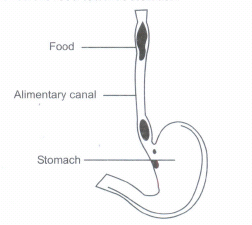
The scarcity of water brings condition of _________.
2.
Winds carrying ______ cause rain.
3.
Light is a form of _______.
4.
_____ and _____ fibres are obtained from animals.
5.
Green plants are called _____________ since they synthesise their own food.
6.
Image formed by a plane mirror is always:
Virtual, erect
Real, erect
Virtual, inverted
Real, inverted
7.
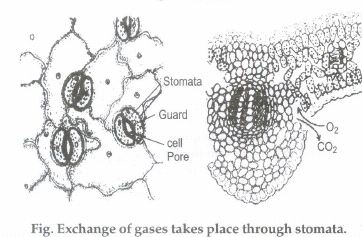
The climate found in Kerala is:
Very hot and wet
Wet
Hot and dry
Moderately hot and dry
8.
Silkworm is called:
Adult silk moth
Female silk moth
Caterpillar
Pupa
9.
Spiracles on the body of insect are connected to a network of thin air tubes called
lungs
tracheae
gills
blow holes
10.
Microorganisms act upon the dead plants to produce
sand
mushroom
humus
wood
11.
They are pipe-like consisting of a group of specialised cells. They transport substances and form a two-way traffic in plants. Which of the following terms qualifies for the features mentioned above?
Xylem tissue
Vascular tissue
Root hairs
Phloem tissue
12.
Which one of the following places is unlikely to be affected by a cyclone?
Chennai
Mangaluru (Mangalore)
Amritsar
Puri
13.
Manure is added into the soil to increase its
water holding capacity
to increase size of soil particle
to make soil well aerated
to drain water from it
14.
A car moves with a speed of 40 km/h for 15 min and then with a speed of 60 km/h for the next 15 min. The total distance covered by the car is
100 km
25 km
15 km
10 km
15.
Which part of the plant takes in carbon dioxide from the air for photosynthesis?
Root hair
Stomata
Leaf veins
Sepals
16.
When a candle burns, both physical and chemical changes occur. Explain.
17.
Boojho made an electromagnet by winding 50 turns of wire over an iron screw. Paheli also made an electromagnet by winding 100 turns over a similar iron screw. Which electromagnet will attract more pins? Give reason.
18.
Give one function of each of the following organs.
(a) Blood vessels
(b) Kidney
(c) Blood platelets
(d) Heart.
19.
Why should we worry about the conditions and issues related to forest far from us?
20.
Alimentary canal is different from digestive system. Comment.
21.
Used water is wastewater.
22.
The smallest time interval that can be measured with commonly available clocks and watches is one second.
23.
Exhaled air has more percentage of CO2 than inhaled air.
24.
When a candle burns, both physical and chemical changes take place.
25.
Ruminant can digest cellulose (carbohydrate).
26.
Soil erosion
27.
Humus
28.
Garden lizard
29.
Silt
30.
Soil
31.
What are the harmful effect of releasing untreated sewage in water bodies?
32.
How does breathing rate vary during heavy exercise?
33.
Why is horse dung mixed in soil which is used for making matkas and surahis?
34.
What is a food pipe? Write its functions.
35.
Explain why are concave and convex mirrors called spherical mirrors.
36.
Explain the respiration in plants
37.
Continuously water-logged soils are disadvantages for plant growth. Why?
38.
State four reasons, why we must preserve forest.
39.
On last Monday, Pankaj was dealing immense cough and cold. Besides this, he was suffering from a great headache. So, he decided to take a leave on that day so that he could take some rest at his home. After one hour he thought to check his fever through a clinical thermometer, so before using it, he washed it and started shaking it very fastly in his hand, so that the mercury level of thermometer gets reduced. At the same time, his elder brother Vishwas scold him and suggested him to shake thet hermometer slowly.
(a) State some precautionary measures while checking the fever through a clinical thermometer.
(b) Mention the values showed by the elder brother of Pankaj ( i.e. Vishwas).
40.
It was observed that when the distance between an object and a lens decreases, the size of the image increases. What is the nature of this lens? If you keep on decreasing the distance between the object and the lens, will you still able to obtain the image on the screen? Explain
41.
Why do we wear woollen clothes during winter?
42.
Why are open drains a concern?
43.
What is the percentage of water on earth is available for use by human?
44.
Does this activity indicate that warm air rises up?
45.
I wonder why I found some pieces of plastic articles and polythene bags in the soil samples collected from the roadside and the garden.
46.
Do you see any droplet of water there?
47.
Do you see the heart and the blood vessels?
48.
Do fishes and butterflies also migrate like birds?
49.
What kind of image is formed by a convex mirror?
50.
Can plants use nitrogen in the manner they use carbon dioxide?
1.
()
Drought
2.
()
Water
3.
()
Energy
4.
()
Silk, wool
5.
autotrophs
6.
(a)
Virtual, erect
7.
(a)
Very hot and wet
8.
(c)
Caterpillar
9.
(b)
tracheae
10.
(c)
humus
11.
(d)
Phloem tissue
12.
(c)
Amritsar
13.
(a)
water holding capacity
14.
(b)
25 km
15.
(b)
Stomata
16.
It is true that when a candle burns, both physical and chemical changes occur. initially, candle burns to produce heat and light. It is a chemical change because candle burns with the formation of gases. Due to the heat produced, some candles simultaneously melts. This is a physical change as the molten candle wax behaves like original candle.
17.
Since the magnetic effect directly depends on the number of turns of the coil. As, Paheli's coil has more number of turns than Boojho. So, her electromagnet is stronger than Boojho.
So, electromagnet of Paheli attracts more pins as compared to Boojho.
18.
The main function of the following organs are as follows:
(a) Blood vessels These run between the heart and the rest of the body. It helps in the transport of blood between heart and various organs of the body.
(b) Kidney It is called as the 'magic filters'. It helps in the removal of unwanted substances like urea from the blood.
(c) Blood platelets This component of blood helps in blood clotting and prevents the blood loss from the body.
(d) Heart It is a pumping organ which receives blood from the body through veins and pumps it with enough force into the arteries from where it is carried to the various body parts.
19.
There are various reasons for which we should be vigilant about matters related to forests:
(i) A decrease in forest area would lead to an increase in carbon dioxide in air. This will lead to an increase of earth's temperature.
(ii) Soil erosion would occur if there are no forests.
(iii) Floods would occur if there are no forests
(iv) Forests provide shelter and food to the living organisms.
20.
Alimentary canal is a long, muscular coiled tube. It is also known as digestive tract. The alimentary canal with its associated glands constitute the digestive system.
These glands are salivary glands, liver and pancreas.
21.
(a)
22.
(a)
23.
(a)
24.
(a)
25.
(a)
26.
()
Removal of upper soil
27.
()
Dead decaying matter
28.
()
Surface of soil
29.
()
Deposited at river beds
30.
()
Blackish-brown in colour
31.
Untreated excreta contaminates water. It encourages algae bloom in water bodies. The water of such water bodies become unfit for drinking and other household purposes. Such water is also cause of a large number of water borne diseases such as typhoid, cholera, hepatitis and polio, etc.
32.
During heavy exercise, the breathing rate can rise upto 25 times per minute.
33.
When surahis and matkas are baked, the burnt horse dung open up the pores in the soil. So that water percolates out of the matkas or surahis, evaporate and cools the water inside the matka.
34.
A long tube along the neck and the chest is called a food pipe or oesophagus. The swallowed food passes into the food pipe. Food is pushed down by the movement of the wall of the food pipe. It pushed the food towards stomach.
35.
Concave and convex mirrors are the parts of sphere whose one side is polished or silvered. So, they are called spherical mirrors.
36.
Plants take in oxygen and give out carbon dioxide. In the cells, oxygen is used to breakdown glucose into carbon dioxide and water as in other organisms. In plants each part can independently take in oxygen from the air and give out carbon dioxide.
Leaves of the plants have tiny pores called stomata for exchange of oxygen and carbon dioxide. Like all other living cells of plants, the root cells also need oxygen to generate energy. Roots take up air from the air spaces present between the soil particles. The stems of some plants have tiny pores called lenticels which help in exchange of gases.
37.
Roots, although underground, possess living cells that require oxygen for respiration and production of energy. They absorb oxygen that is present in the spaces between soil particles. But in waterlogged soils, water occupies the spaces between soil particles and pushes the oxygen out into the atmosphere. Thus, roots are deprived of oxygen and this affects root and plant growth.
38.
We must protect our forest because:
(i) Forests provide us with oxygen.
(ii) They protect soil and provide habitat to a large number of animals.
(iii) Forest help in bringing good rainfall in neighbouring areas.
(iv) They are sources of medicines, timber and many other useful products.
39.
(a) The following precautionary measures while checking the fever through a clinical thermometer are
(i) While reading the clinical thermometer, it should never be held by the bulb.
(ii) The clinical thermometer should be washed properly (before and after use).
(b) The values showed by the elder brother of Pankaj, Vishwas, are concern towards the way of using the clinical thermometer and the importance of money as well.
40.
On decreasing the distance between the object and lens, the size of the image increases, the nature of the lens will be convex type.
If the distance between object and lens is less than the focus of the lens, then it forms a virtual image and this image cannot be obtained on a screen but formed on the same side of the object.
41.
()
The wool is a poor conductor of heat. So, woollen cloths keeps us warm during winter.
42.
()
It is so because they create unsanitary and unhygienic conditions.
43.
()
0.006%.
44.
()
Yes.
45.
()
It is because people throw used plastic articles and polythene bags in the soil.
46.
()
Yes, droplets of water appear there.
47.
()
No, we have seen these only in the picture.
48.
()
Yes
49.
()
The image formed by convex mirror is always virtual, erect and diminished in size.
50.
()
The plants can not use nitrogen in the manner they use carbon dioxide. They need N2 in soluble form.

7th Standard CBSE Syllabus & Materials
7th Standard CBSE
CBSE 7th Social Science Theme B - New Beginnings : Cities and States - New Sample Question Papers Study Material - QB365 Set A
NEW7th Standard CBSE
CBSE 7th Social Science Theme A - Climates of India - New Sample Question Papers Study Material - QB365 Set A
NEW7th Standard CBSE
CBSE 7th Social Science Theme A - Geographical Diversity of India - New Sample Question Papers Study Material - QB365 Set A
NEW7th Standard CBSE
CBSE 7th Science Earth, Moon and the Sun - New Sample Question Papers Study Material - QB365 Set A



CBSE 7th Standard CBSE Subjects
CBSE Standards




