
 100% FREE ACCESS
7th Standard CBSE Syllabus & Materials
7th Standard CBSE
CBSE 7th Social Science Theme E - Understanding Market - New Sample Question Papers Study Material - QB365 Set A
NEW7th Standard CBSE
CBSE 7th Social Science Theme E - From Barter to Money - New Sample Question Papers Study Material - QB365 Set A
NEW7th Standard CBSE
CBSE 7th Social Science Theme D - The Constitution of India- An Introduction - New Sample Question Papers Study Material - QB365 Set A
NEW7th Standard CBSE
CBSE 7th Social Science Theme D - From the Rulers to the Ruled : Types of Governments - New Sample Question Papers Study Material - QB365 Set A
NEW7th Standard CBSE
CBSE 7th Social Science Theme B - The Age of Reorganisation - New Sample Question Papers Study Material - QB365 Set A
NEW7th Standard CBSE
CBSE 7th Social Science Theme B - The Rise of Empires - New Sample Question Papers Study Material - QB365 Set A

Published on: 05/03/2019
Tracing Changes Through a Thousand Years Important Questions
Download CBSE Class 7th Standard CBSE Social Science question papers, sample papers, important questions, and previous year solved papers in PDF format. Get free study materials, NCERT solutions, and exam preparation resources for Class 7th Standard CBSE Social Science
Questions + Answers key
Take MCQ Social Science Test
1.
What was the outcome of easy availability of paper in the 14th century?
2.
Into how many parts is medieval history normally divided?
3.
Find out where records are kept in your village or city? Who writes these records? Is there any archive? Who manages it? What kinds of documents are stored there? Who are the people who use it?
4.
How different is Medieval age from that of Modern age?
5.
Give an account of different names given to Indian sub-continent.
6.
In the 13th century, a scholar had to wash a manuscript to rewrite on the same manuscript. It shows that paper expensive in the 13th century. In the 14th century, any one could get food wrapped in paper in the market. It revealed that paper was easily available and not expensive.
7.
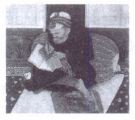
Answer the question based on following picture.
(a) What is the picture all about?
(b) What is he doing?
(c) Why is it called miniature?
(d) What were the two features of miniatures?
8.
Describe the major developments in the religious traditions during 750 AD to 1750 AD.
9.
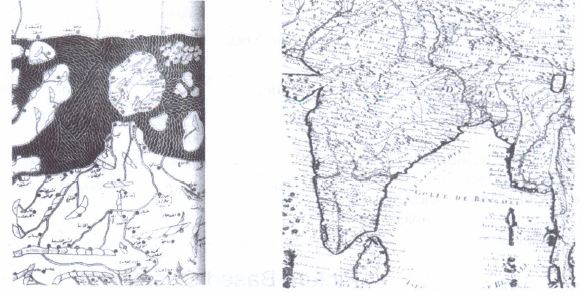
Compare either Map 1 or Map 2 with the present day map of the subcontinent listing as many similarities and differences (page no) as you can find.
10.
This is the holy book of Muslims
Gita
Ramayan
Quran
Bible
11.
Name the dynasties which were able to build a pan-regional empire.
Cholas and Khaljis
Mughals
Tughluqs and Mughals
Both 'a' and 'c'
12.
Which of the followings are sources of History?
Monuments
Coins
Artefacts and paintings
All of the above
13.
From which region did AI-Idrisi belong?
Arab
France
Germany
Sri Lanka
14.
How did Brahmanas and artists got protection in the medieval period?
15.
What do you mean by 'archives'?
16.
Name the poet who used the term 'Hind' for the first time.
17.
Status of a jati remained same from region to region.
18.
Persian wheel was used in transportation.
19.
Persian wheel was used in____________.
20.
Did you notice that the names by which languages are known have changed with time?
21.
What was the result of the decline of the Mughal Empire in the 18th century?
22.
Describe the changes which took place between 700 and 1750.
23.
Explain the problem of dearth of original manuscripts.
1.
(i) Paper was used by people to write holy text, letters and teachings of saints, ruler's chronicles, petitions and judicial records and for maintaining accounts and taxes.
(ii) Manuscripts were collected by wealthy people, rulers, temples and monasteries. These manuscripts were placed in libraries and archives that provided a lot of details to historians.
2.
The time frame of medieval history is taken as one thousand years, from roughly 750 to 1750, which is further divided into two parts:
(a) Early medieval period
(b) Later medieval period
The medieval history is strongly associated with Islamic influence and rule in India. It also witnessed the rise and fall of many religion and dynasties.
3.
In our city records are kept in Tehsil. The government officials writes these records. Yes, Archive manager manages it. Documents related to old history are stored there. Historians and Research scholars of history use it
4.
In the medieval period, we find the spread of peasant societies, the rise of regional and imperial state formations sometimes at the cost of pastoral and forest people. Medieval period shows the development of Hinduism and Islam and the arrival of European trading companies. Modern age shows a sense of material progress and intellectual advancement. Societies reached a certain level of prosperity.
5.
The term 'Hindustan' was first used by Minhaj-i- Siraj, a Persian chronicler, in the 13th century. Amir Khusrau, the notable poet, used the word 'Hind' for the first time in the 14th century in his poems. Mughal Emperor Babur used the term 'Hindustan' to describe the geography, the fauna and the culture of the inhabitants.
6.
Technological Changes Buses, cars, bikes, bicycles, auto-rickshaw are seen and people use mobile telecommunication. Houses are tall, beautiful.
Economic Changes People are busy in moneymaking by taking different professions.
Social Changes No jati, sub-caste, Jati Panchayat is seen, equality to all is maintained by the state. Rule of law and not the rule of king is there.
Cultural Changes People follow Western culture, dress code is changed. People speak English or Hindi. In village
Technological Changes Peasants use improved seeds, fertilisers, machines to cultivate. Tractors are used in fields. Mobile phones are used.
Economic Changes People now sell their produce in nearby market. Cash crops are more widely grown.
Social Changes People now can eat, talk, sit with any caste, whosoever. Jati Panchayat is not so powerful than judicial court.
Cultural Changes People now talk usually in Hindi, not their particular dialect. Health and hygiene are taken care of.
7.
The picture shows a scribe.
(b) He is making a copy of a manuscript.
(c) This painting is small in size, Because of smaller size, it is called as miniature (10.5 cm by 7.1 ern).
(d) The two features of miniatures are
(i) Miniature is used to illustrate the text of manuscripts
(ii) Miniatures are so beautiful that later collectors of manuscripts took the
manuscripts apart and just sold the miniatures.
8.
Significant developments were noticed in the religious traditions of groups and people.
People started believing in the divine in a personal way and collectively as well.
Collective belief in super-natural agency religion got closely connected with the social and economic organisation of local groups and communities.
Important changes were seen in Hinduism worship of new deities. The temples were constructed with the help of rulers. Brahmanas were considered the uppermost caste and got patronage by rulers. The priests became a dominant caste in society.
The idea of Bhakti emerged and surfaced which made devotees more inclined towards deities.
9.
Differences Map 1 and Map 2 given in the NCERT text book (Map 2) represent two different times
Map 1 was made in 1154 CE by Al-ldrisi, an Arab geographer, the map given here is the map of Indian subcontinent from his larger map of the world.
Map 2 was made by a French cartographer in 1720. Both maps are quite different from each other in mode of presentation and contexts. However, both traced the outlines of the area of Indian subcontinent in their cartography.
Similarities Map 1, South India was at that place where North India is at present and Sri Lanka is the island the top. Name of place were in Arabic. Today's map of India is far ahead of Map 1 and Map 2. It is made to scale and shows clear-cut boundaries and areas.
10.
(c)
Quran
11.
(d)
Both 'a' and 'c'
12.
(d)
All of the above
13.
(a)
Arab
14.
()
They got protection from patrons, a group of the rulers and rich class of people.
15.
()
Archives were the places where manuscripts and documents were kept or collected.
16.
()
Amir Khusrau used the term 'Hind' in his poems.
17.
(b)
18.
(b)
19.
()
irrigation
20.
The names of languages which changed over time are as follows
Lahori : Punjabi
Telangani : Telugu
Gujari : Gujarati
Mabari : Tamil
Gauri : Bengali
Hindawi : Hindi
21.
(i) When the Mughal Empire declined in the eighteenth century, it resulted into the reemergence of regional states.
(ii) Years of imperial, pan-regional rule had transformed the character of the regions.
(iii) Across most of the subcontinent, the regions were left with the legacies of the big and small states that ruled over them.
(iv) This was clear in the emergence of various distinct and shared traditions: in the style of governance, the management of the economy, elite cultures and language.
(v) Through the thousand years between 700 and 1750 A.D, the character of the different regions did not grow in isolation.
They felt the impact of larger pan-regional forces of integration, without losing their own character.
22.
(i) Throughout the period between 700 and 1750, there was a gradual clearing of forests and expansion of agriculture. This was a change, faster and more complete in some areas as compared to others.
(ii) Changes in their habitat forced many forestdwellers to migrate.
(iii) Other people Regional markets, chieftains, priests, monasteries and temples started to influence them.
(i) They became a part of large and complex societies.
(ii)They were required to pay taxes and offer goods and services to local feudal lords. As a result, various major economic and social differences emerged among the peasants.
(i) Some possessed more productive land.
(ii) Other people kept cattle,
(iii) Yet other people combined artisanal work with agricultural activities during the lean season
23.
We can rarely find original manuscripts of the authors. This is a severe problem today.
(i) We are entirely dependent on the copies made by later scribes.
(ii) As a consequence, the historians have to go through different manuscripts (versions) of the same text to identify what the author had originally written.
(iii) At times various authors revised their chronicles.
(iv) For example, Z. Barani wrote his first chronicle book in 1356 and another version came two years later. The two versions differed from one another and the historians did not even know about the existence of the first version till 1960s as it had remained lost in massive library collection.

7th Standard CBSE Syllabus & Materials
7th Standard CBSE
CBSE 7th Social Science Theme B - New Beginnings : Cities and States - New Sample Question Papers Study Material - QB365 Set A
NEW7th Standard CBSE
CBSE 7th Social Science Theme A - Climates of India - New Sample Question Papers Study Material - QB365 Set A
NEW7th Standard CBSE
CBSE 7th Social Science Theme A - Geographical Diversity of India - New Sample Question Papers Study Material - QB365 Set A
NEW7th Standard CBSE
CBSE 7th Science Earth, Moon and the Sun - New Sample Question Papers Study Material - QB365 Set A



CBSE 7th Standard CBSE Subjects
CBSE Standards




