
 100% FREE ACCESS
7th Standard CBSE Syllabus & Materials
7th Standard CBSE
CBSE 7th Social Science Theme E - Understanding Market - New Sample Question Papers Study Material - QB365 Set A
NEW7th Standard CBSE
CBSE 7th Social Science Theme E - From Barter to Money - New Sample Question Papers Study Material - QB365 Set A
NEW7th Standard CBSE
CBSE 7th Social Science Theme D - The Constitution of India- An Introduction - New Sample Question Papers Study Material - QB365 Set A
NEW7th Standard CBSE
CBSE 7th Social Science Theme D - From the Rulers to the Ruled : Types of Governments - New Sample Question Papers Study Material - QB365 Set A
NEW7th Standard CBSE
CBSE 7th Social Science Theme B - The Age of Reorganisation - New Sample Question Papers Study Material - QB365 Set A
NEW7th Standard CBSE
CBSE 7th Social Science Theme B - The Rise of Empires - New Sample Question Papers Study Material - QB365 Set A

Published on: 02/03/2019
Heat Important Question Papers
Download CBSE Class 7th Standard CBSE Science question papers, sample papers, important questions, and previous year solved papers in PDF format. Get free study materials, NCERT solutions, and exam preparation resources for Class 7th Standard CBSE Science
Questions + Answers key
Take MCQ Science Test
1.
Seema's family is shifted from Masouri to Mumbai, She saw the outer walls of their house were painted white. Moreover, she noticed that it is better when she is out of the house in comparison to inside of the house. Her mother gave her some light cotton clothes to wear.
On the basis of the situation answer the following:
(i) How does the heat reach us from the Sun?
(ii) Why is the wall painted white but not with any other colour?
(iii) Why did her mother prefer cotton clothes?
2.
How does heat travel in air ? Give any two such instances.
3.
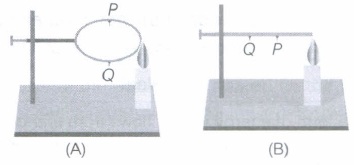
In the arrangements A and B as shown in figure, pins P and Q are fixed to a metal loop and an iron rod with the help of wax. In which case are both the pins likely to fall at different times? Explain.
4.
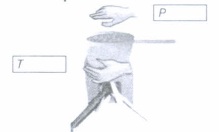
Observe the picture given in figure. Water is being boiled in a pan of wide base.
(a) Which position P or T will feel warmer?
(b) Fill up the boxes P and T to indicate the mode of flow of heat to the hand.
5.
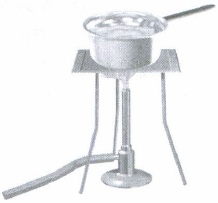
Look at the figure, mark where the heat is being transferred by conduction, by convection and by radiation.
6.
Heat from sun reaches us by :
Conduction
Radiation
Convection
All of these
7.
Convection may occur through:
Solids, liquids
Liquids, gases
Solids, gases
Solids, liquids, gases
8.
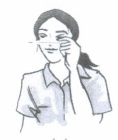
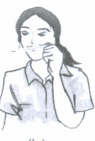
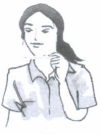
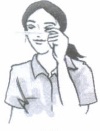
Figure (a, b, c, d) shows a student reading of a doctor's thermometer. Which of the figure indicates the correct method of reading temperature?
9.
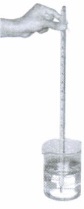
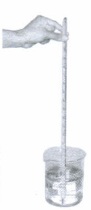
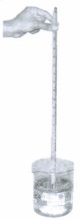
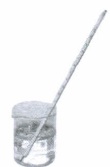
Four arrangements to measure temperature of ice in beaker with laboratory thermometer are shown in figure (a, b, c, d). Which one of them shows the correct arrangement for accurate measurement of temperature?
10.
Stainless steel pans are usually provided with copper bottoms. The reason for this could be that
copper bottom makes the pan more durable
such pans appear colourful
copper is a better conductor of heat than the stainless steel
copper is easier to clean than the stainless steel
11.
Look at following figure.
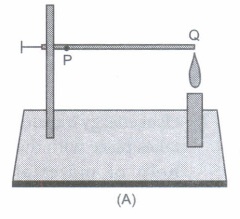
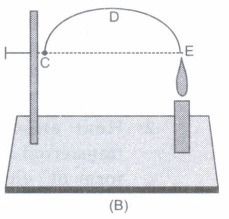
The length of wire PQ in case of A is equal to the diameter of the semicircle formed by the wire CDE, in case B. One pin is attached to each wire with the help of wax as shown in figure. Which pin will fall first? Explain
12.
How are the lower and upper scale of a thermometer fixed?
13.
Why ice is wrapped in gunny bags?
14.
Why is it advised not to hold the thermometer by its bulb while reading it?
15.
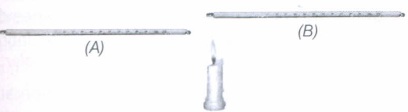
A laboratory thermometer A is kept 7 cm away on the side of the flame while a similar thermometer B is kept 7 cm above the flame of a candle as shown in figure. Which of the thermometers A or B will show a greater rise in temperature? Give reason for your answer.
16.
Explain the working of a thermo flask.
17.
Describe in detail about the occurrence of oceanic currents.
18.
On last Monday, Pankaj was dealing immense cough and cold. Besides this, he was suffering from a great headache. So, he decided to take a leave on that day so that he could take some rest at his home. After one hour he thought to check his fever through a clinical thermometer, so before using it, he washed it and started shaking it very fastly in his hand, so that the mercury level of thermometer gets reduced. At the same time, his elder brother Vishwas scold him and suggested him to shake thet hermometer slowly.
(a) State some precautionary measures while checking the fever through a clinical thermometer.
(b) Mention the values showed by the elder brother of Pankaj ( i.e. Vishwas).
19.
Heat flows from a _________ surface to________surface.
20.
Wool is a ______ conductor of heat.
21.
Shining thread in thermometer is the column of mercury.
22.
Sea breeze
23.
Do all liquids expand on heating?
1.
(i) The radiation of the Sun gives us heat which do not require any medium.
(ii) White colour absorbs less heat coming from Sun and more it reflects. The temperature of any object increases due to absorbed part of the heat, in case of white colour it is least.
(iii) Her mother preferred cotton clothes as they are light and porous through which air can pass easily and make our body cool, as the climate of Mumbai is temperate.
2.
The air near the heat source gets hot and rises. The cold air from sides takes its place. In this way, air gets heated. This gives interesting phenomenon in coastal regions.
(i) During the day, land gets heated faster than water. The air over the land becomes hotter and rises up. The cooler air from sea rushes in towards the land to take its place. The warm air from land moves towards sea to complete the cycle. The air from sea is cool and is called sea breeze.
(ii) At night, it is exactly the reverse. The water cools down more slowly than land. So, the cool air from land moves towards sea. This is called land breeze.
3.
As in the given figures A and B, in case A P and Q got equal heat. so pin fix at P and Q in case of a fall simultaneously. But in case of B pin at point P falls first than after pin at Q will fall as because heat received at P is greater than Q at the same time.
4.
(a) As in the given diagram, position P will feel warmer because of heat, air rises.
(b) The flow of heat to P is a convection process and flow of heat to T is radiation.
5.
(i) Heat is being transferred in the steel vessel by conduction.
(ii) Heat is being transferred from vessel to water by convection.
(iii) Heat is being transferred from vessel to surroundings by radiation.
6.
(b)
Radiation
7.
(b)
Liquids, gases
8.
In first case, eyes of student are in level of the thermometer, so it is correct way to measure temperature using clinical thermometer
9.
(a)
10.
As copper is a better conductor of heat than the stainless steel. So, stainless steel pans are usually provided with copper bottom.
11.
The pin on the wire in case A will fall first as heat will reach to it before it reaches the pin in case B.
12.
In Celsius scale, the temperature at which pure water freezes at sea level is taken as the lower fixed point whereas, the temperature at which pure water boils at sea level is taken as the upper fixed point. The lower and upper fixed points are marked as 00C and 100°Crespectively. The scale between these points is then divided into 100 parts.
13.
Gunny bags have a number of fine pores filled with air. Air being a bad conductor of heat does not allow heat from outside to go to the ice and melt it.
14.
It is advised not to hold the thermometer bulb while reading it as the level of mercury increases from the actual reading by our body temperature.
15.
Thermometer B will show a greater rise in temperature because heated-air above the candle risesimmediatly and increase the temperature of bulb of thermometer B quite greater than A.
16.
Thermo flask is a special kind of flask for keeping liquids. It prevents loss or gain of heat by any of the three methods. It keeps liquid warm or cold for a long time. It was invented by Sir James Dewan in 1893.
It consists of a double-walled glass-cylinder. A vacuum is created in the space between the double walls. The two inner surfaces of glass walls are silvered. The flask is placed on a spring within a non-conducting cylindrical case to protect it from jerks and breakages. The gaps between flask and outer casing is packed with felt pads. The mouth of the flask is finally closed with a cork.
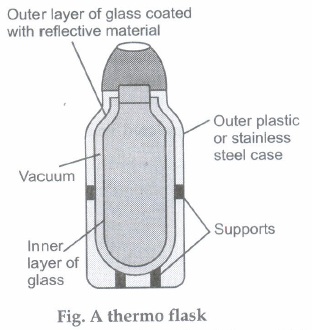
Since the container is made of glass which is a bad conductor of heat and therefore, the loss or gain of heat due to conduction is prevented. As there is vacuum between the double walls, it prevents transmission of heat by convection. Due to silvering of the inner surfaces, the heat loss by radiation is prevented. The cork and the felt pads also help to preserve the heat inside the flask. So, the hot liquids like tea, coffee, etc., remain hot and cold liquids like water, juice, etc., remain cold for a long time.
17.
Since, it is a fact that the water present in the ocean (near the equator) is heated by the sun to a very higher temperature than the water near the poles of the earth. It is due to the falling of the sun rays perpendicularly in the equatorial region. So, in the equatorial region, the ocean water expands and becomes lighter.
While on the other side, the water in the polar region remains cold and heavy. It leads to the flow of convection currents of heat of warm water from the equator towards the poles.
Heat of the cold water flow from the poles towards the equator just below the surface of ocean. So, these types of currents are known as oceanic currents.
18.
(a) The following precautionary measures while checking the fever through a clinical thermometer are
(i) While reading the clinical thermometer, it should never be held by the bulb.
(ii) The clinical thermometer should be washed properly (before and after use).
(b) The values showed by the elder brother of Pankaj, Vishwas, are concern towards the way of using the clinical thermometer and the importance of money as well.
19.
()
hotter, colder
20.
()
poor
21.
(a)
22.
()
Day time
23.
()
All liquids expand on heating except water which contracts when heated below 4°C.

7th Standard CBSE Syllabus & Materials
7th Standard CBSE
CBSE 7th Social Science Theme B - New Beginnings : Cities and States - New Sample Question Papers Study Material - QB365 Set A
NEW7th Standard CBSE
CBSE 7th Social Science Theme A - Climates of India - New Sample Question Papers Study Material - QB365 Set A
NEW7th Standard CBSE
CBSE 7th Social Science Theme A - Geographical Diversity of India - New Sample Question Papers Study Material - QB365 Set A
NEW7th Standard CBSE
CBSE 7th Science Earth, Moon and the Sun - New Sample Question Papers Study Material - QB365 Set A



CBSE 7th Standard CBSE Subjects
CBSE Standards




