
 100% FREE ACCESS
7th Standard CBSE Syllabus & Materials
7th Standard CBSE
CBSE 7th Social Science Theme E - Understanding Market - New Sample Question Papers Study Material - QB365 Set A
NEW7th Standard CBSE
CBSE 7th Social Science Theme E - From Barter to Money - New Sample Question Papers Study Material - QB365 Set A
NEW7th Standard CBSE
CBSE 7th Social Science Theme D - The Constitution of India- An Introduction - New Sample Question Papers Study Material - QB365 Set A
NEW7th Standard CBSE
CBSE 7th Social Science Theme D - From the Rulers to the Ruled : Types of Governments - New Sample Question Papers Study Material - QB365 Set A
NEW7th Standard CBSE
CBSE 7th Social Science Theme B - The Age of Reorganisation - New Sample Question Papers Study Material - QB365 Set A
NEW7th Standard CBSE
CBSE 7th Social Science Theme B - The Rise of Empires - New Sample Question Papers Study Material - QB365 Set A

Published on: 30/07/2018
From the chapter The Delhi Sultans , some of the important questions are covered in this question paper. The questions are covers from the Higher Order Thinking Questions and Value Based Questions.
Download CBSE Class 7th Standard CBSE Social Science question papers, sample papers, important questions, and previous year solved papers in PDF format. Get free study materials, NCERT solutions, and exam preparation resources for Class 7th Standard CBSE Social Science
Questions + Answers key
Take MCQ Social Science Test
1.
Why did Alauddin control the prices of goods in Delhi? What did he do for this?
2.
Who was Raziyya? Why was she not accepted as a Sultan inspite of being talented?
3.
According to the 'Circle of Justice' why was it important for military commanders to keep the interests of the peasantry in mind?
4.
Alauddin constructed a new Garrison town for his soldiers. The name of this town was
Siri
Daulatabad
Jahanpanah
Firuzabad
5.
Queen Rudramadevi (1262-1289) belonged to
Lodi dynasty
Slave dynasty
Kakatiya dynasty
Khalji dynasty
6.
Ritual leader of Namaaz is
Imam
Iqtadar
Ulema
Wazir
7.
Minhaj-i-Siraj was a
Chronicler
Historian
Samanta
Sultan
8.
When did Raziyya Sultan sat on the throne?
1235
1236
1237
1238
9.
Who was the first woman ruler in Delhi Sultanate and when did she become Sultan?
10.
What is internal frontier?
11.
What is Dehliwal?
12.
In spite of many administrative changes, why Muhammad Tughluq's regime were a failure? Explain with examples.
13.
What is called a masjid? Explain the contribution of Delhi Sultans in building different masjids.
14.
Emperor __________ followed the administration model of Sher Shah Suri when he consolidated the Mughal Empire.
15.
Leader of the namaz is called ___________
16.
The ruler of Delhi between 1414-1421, Khizr Khan was of ________Dynasty.
17.
Muhammad Tughluq shifted his capital to __________
18.
In __________ language, a mosque is called a masjid.
19.
Genghis Khan invaded Iran and left India untouched.
20.
Citizens were known as Bandagan.
21.
Controlling garrison towns was easier for the Delhi Sultanate.
22.
Delhi first became the capital of a kingdom under the Tomara Rajputs
23.
Ideal social order was based on birthright and gender distinctions.
24.
Shamsuddin Iitutmish
25.
Lodi Dynasty
26.
Tawarikh
27.
Khizr Khan
28.
Tomara Rajputs
29.
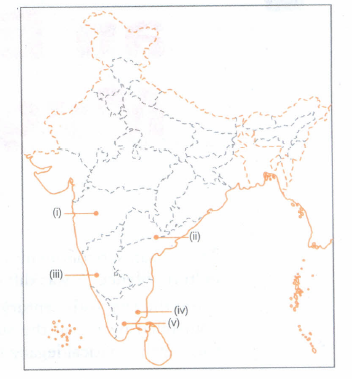
In the given below map, centres of Alauddin Khalji's campaign into South India are marked. Identify and write their names.
1.
Alauddin paid great importance to his soldiers because it was they who could defend the sultanate from outsiders. He, therefore, decided to pay their salaries in cash rather than iqtas. The soldiers, therefore, would buy their supplies from merchants in Delhi and it was thus feared that merchants would raise their prices. To stop this, Alauddin controlled the prices of goods in Delhi.
2.
Raziyya became Sultan of Delhi Sultanate in 1236. According to Minhaj-i-Siraj, she was more able and qualified than all tier brothers. Many including the nobles did not feel comfortable to share things with her. Those were the days when women were not allowed to enjoy independent identity. This led to her removal in 1240.
3.
During that period, agriculture was the only source of income. The peasantry was the backbone of any kingdom. The soldiers got the salaries which came out of this revenue. Hence, it was necessary to keep the peasants prosperous and happy.
4.
(a)
Siri
5.
(c)
Kakatiya dynasty
6.
(a)
Imam
7.
(a)
Chronicler
8.
(b)
1236
9.
()
Sultan Iitutmish's daughter Raziyya Sultan was the first woman ruler and in 1236 she became Sultan.
10.
()
It means the hinterlands of the garrison towns.
11.
()
It is a kind of coin minted in Delhi.
12.
Muhammad Tughluq introduced many significant changes in his administrative system. In spite of all these changes his regime was a failure.
His major administrative failures were
(i) He campaigned into Kashmir but it proved a disastrous campaign. He then gave up plans to attack Transoxiana and disbanded his large army.
(ii) He shifted the residents of the old city to Daulatabad in the South. They resented collectively due to this.
(iii) In order to meet the expense of maintaining a large number of soldiers, levied additional taxes which increased the burden of the common man.
(iv) The famine in the Ganga-Yamuna belt led to widespread rebellion.
(v) People did not trust the token currency that was launched by Sultan. They saved their gold and silver coins and paid all their taxes to the state with the token currency. This cheap currency could also be counterfeited easily.
13.
A mosque is called a masjid in Arabic, literally, it is a place where a Muslim prostrates in reverence to Allah. In a congregational mosque, Muslim read their prayers. Members of the congregation choose the most respected, learned male as their leader or Imam for the rituals of prayer-Imam delivers the sermon (Khutba) during Friday prayer.
The Delhi Sultans build several mosques in cities all over the subcontinent.
They wanted to claim themselves as protectors of Islam and Muslims. Mosques also helped to create the senses of a community of believers who shared a common code of conduct and belief.
Quwwat al-islam was built by Qutbuddin Aybak and IItutmish. Muhammad Tughluq constructed Begumpuri mosque. Moth ki Masjid built by a minister of Sikandar Lodi, Mosque of Jamali Kamali was also built in the late 1520s.
14.
()
Akbar
15.
()
Imam
16.
()
Sayyid
17.
()
Daulatabad
18.
()
Arabic
19.
(b)
20.
(b)
21.
(b)
22.
(a)
23.
(a)
24.
()
Raziyya
25.
()
1451-1526
26.
()
Persian Language
27.
()
Sayyid Dynasty (1414-1451 )
28.
()
Delhi was made capital for the first time.
29.
(i) Devagiri
(ii) Warangal
(iii) Dwarasamudra
(iv) Thanjavur
(v) Madurai

7th Standard CBSE Syllabus & Materials
7th Standard CBSE
CBSE 7th Social Science Theme B - New Beginnings : Cities and States - New Sample Question Papers Study Material - QB365 Set A
NEW7th Standard CBSE
CBSE 7th Social Science Theme A - Climates of India - New Sample Question Papers Study Material - QB365 Set A
NEW7th Standard CBSE
CBSE 7th Social Science Theme A - Geographical Diversity of India - New Sample Question Papers Study Material - QB365 Set A
NEW7th Standard CBSE
CBSE 7th Science Earth, Moon and the Sun - New Sample Question Papers Study Material - QB365 Set A



CBSE 7th Standard CBSE Subjects
CBSE Standards




