
 100% FREE ACCESS
10th Standard CBSE Syllabus & Materials
10th Standard CBSE
CBSE 10th Social Science ECO - Globalisation and the Indian Economy - New Model Questions Papers Study Material - QB365 Set A
NEW10th Standard CBSE
CBSE 10th Social Science ECO - Money and Credit - New Model Questions Papers Study Material - QB365 Set A
NEW10th Standard CBSE
CBSE 10th Social Science ECO - Sectors of the Indian Economy - New Model Questions Papers Study Material - QB365 Set A
NEW10th Standard CBSE
CBSE 10th Social Science ECO - Development - New Model Questions Papers Study Material - QB365 Set A
NEW10th Standard CBSE
CBSE 10th Social Science PS - Outcomes of Democracy - New Model Questions Papers Study Material - QB365 Set A
NEW10th Standard CBSE
CBSE 10th Social Science PS - Gender, Religion and Caste - New Model Questions Papers Study Material - QB365 Set A

Published on: 05/03/2019
Life Process Important Questions
Download CBSE Class 10th Standard CBSE Science question papers, sample papers, important questions, and previous year solved papers in PDF format. Get free study materials, NCERT solutions, and exam preparation resources for Class 10th Standard CBSE Science
Questions + Answers key
Take MCQ Science Test
1.
Name the process by which autotrophs prepare their own food
2.
Match the words of Column (A) with that of Column (B)
| Column A | Column B |
| (a) Phloem | (i) Excretion |
| (b) Nephron | (ii) translocation of food |
| (c) Veins | (iii) Clotting of blood |
| (d) Platelets | (iv) Deoxygenated blood |
3.
What do the following transport?
(a)Xylem
(b)Phloem
(c)Pulmonary vein
(d)Pulmonary artery
4.
How is the amount of urine produced regulated?
5.
What processes would you consider essential for maintaining life?
6.
Which one of the following will decide whether something is alive:
Body structure
Movement
Cellular organization
Both (a) and (b)
7.
Carbohydrate in humans is stored in the form of
Glycogen
Starch
Glucose
Maltose
8.
Which of the following statement(s) is (are) correct?
(i)Pyruvate can be converted into ethanol and carbon dioxide by yeast
(ii)Fermentation takes place in aerobic bacteria
(iii)Fermentation takes place in mitochondria
(iv)Fermentation is a form of anaerobic respiration
(i) and (iii)
(ii) and (iv)
(i) and (iv)
(ii) and (iii)
9.
Oxygen liberated during photosynthesis comes from
Water
Chlorophyll
Carbon dioxide
Glucose
10.
What prevents backflow of blood inside the heart during contraction?
Valves in heart
Thick muscular walls of venticles
Thin walls of atria
All of the above
11.
Which of the following statement(s) is (are) true about respiration?
(i)During inhalation, ribs inward and diaphragm is raised
(ii)In the alveoli, exchange of gases takes place i.e., oxygen from alveolar air diffuse into blood and carbon dioxide from blood into alveolar air
(iii)Haemoglobin has greater affinity for carbon dioxide than oxygen
(iv)Alveoli increase surface area for exchange of gases
(i) and (iv)
(ii) and (iii)
(i) and (iii)
(ii) and (iii)
12.
Which part of alimentary canal receives bile from the liver?
Stomach
Small intestine
Large intestine
Oesophagus
13.
In which of the following groups of organisms, food material is broken down outside the body and absorbed?
Mushroom, green plants, Amoeba
Yeast, mushroom, bread mould
Paramecium, Amoeba, Cuscuta
Cuscuta, lice, tapeworm
14.
The breakdown of pyruvate to give carbon dioxide, water and energy takes place in
Cytoplasm
Mitochondria
Chloroplast
Nucleus
15.
Define the terms 'nutrients' and 'nutrients'.List two differences between 'Holozoic nutrition' and 'Saprophytic nutrition'.Give two examples of each of these two types of nutrition.
16.
(a)Draw the respiratory system of human beings.
(b)Label the following on the diagram drawn: Larynx, Trachea, Primary Bronchus, Lungs
(c)What happens to the carbon dioxide which collects in human tissues?
17.
Describe the process of urine formation in kidneys.
18.
How do carbohydrates, proteins and fats get digested in human beings?
19.
Describe the alimentary canal of man.
20.
How 'respiration' different from 'breathing'? Explain the processes of 'aerobic' respiration and 'anaerobic' respiration.
21.
What is 'translocation'? Why is it essential for plants?Where in plants are the following synthesized:
(i)Sugar (ii)Hormones
22.
Give reasons for the following:
(i)The glottis is guarded by epiglottis
(ii)The lung alveoli are covered with blood capillaries.
(iii)The wall of trachea is supported by cartilage rings.
23.
Write the functions of the following in the digestive process:
(i)Bile
(ii)Bicarbonate secreted by the duodenum
(iii)Pancreatic amylase
24.
How are oxygen and carbon dioxide transported in human beings? How are lungs designed to maximize the area for exchange of gases?
1.
The process by which autotrophs prepare their own food from CO2, H2O and sunlight is known as photosynthesis.
2.
(a) (ii), (b) (i), (c) (iv), (d) (iii)
3.
(a)Xylem- Transports water and dissolved minerals in plants.
(b)Phloem-Transport prepared food in plants.
(c)Pulmonary vein-Transports oxygenated blood from lungs to left ventricles of heart.
(d)Pulmonary artery -Transports deoxygenated blood from body to right ventricles.
4.
The amount of urine produced is regulated by the selective reabsorption in the tubule of nephron as urine flows along the tube. The amount of water reabsorbed (or urine formed) depends on how much excess of water is there in the body and on how much of dissolved wastes is there which is to be excreted.
5.
Four basic processes that are essential for maintaining life are
(i) Nutrition It is the process of transferring source of energy from outside to the body of an organism.
(ii) Respiration It is the process of acquiring oxygen from outside into the body and using it for the breakdown of food sources to release energy for cellular needs.
(iii) Transportation It is the process of carrying food and oxygen from one place to another in the body.
(iv) Excretion It is the process of removing byproducts and waste products from body which are formed during energy generating reactions.
6.
(b)
Movement
7.
(a)
Glycogen
8.
(c)
(i) and (iv)
9.
(a)
Water
10.
(a)
Valves in heart
11.
(d)
(ii) and (iii)
12.
(b)
Small intestine
13.
(b)
Yeast, mushroom, bread mould
14.
(b)
Mitochondria
15.
Nutrition can be defined as the process of acquiring source of energy from the outside to the inside of the body. Nutrients are the different sources of energy acquired by living organisms by the process of nutrition.
| Holozoic nutrition | Saprophytic nutrition |
|---|---|
| 1.It is the process in which living organisms take up complex. |
1.In this type of nutrition, the organisms obtain their nutrients by digesting dead and decaying organic matter. |
| 2.A specialised digestive system is involved. Examples: human beings, cow |
2.The organisms lack specialised digestive system and produce enzymes, which digest the organic matter outside the cell and the digested nutrients are then absorbed into the cell. Examples : Some bacteria and fungi. |
16.
(a) and (b)
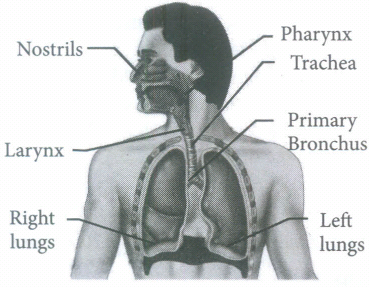
(c) The carbon dioxide which gets collected in the human tissues dissolves in the blood and is transported back to the lungs to be expelled out.
17.
The mechanism of urine formation includes three steps namely,
(i) Glomerular ultra-filtration
(ii) Tubular reabsorption
(iii) Tubular secretion
(i)Glomerular Ultrafiltration:
Ultrafiltration of blood takes place inthe Malphighian body which acts as a biological filter. A Malphighian body comprises of Bowman's capsule and glomeruli.
The blood from the kidney flows through the capillaries of glomerulus where the blood pressure, is comparatively high and so brings about effective filtration. The hydrostatic pressure of the blood is always greater than the opposing pressures existing in the plasma protein and renal capillaries. Thus, the available net filtering force is chiefly responsible for glomerular filtration. The fluid in the capsule which is obtained by this process is termed glomerular filtrate. In man it is about 125ml/min. In 24 hours, the total volume of glomerular filtrate is 170 to 180 litres.
(ii) Tubular Reabsorption: Reabsorption takes place in the 'uriniferous tubules. Reabsorption of useful substances is a differential or selective process. The glomerular filtrate contains many useful substances such as glucose, amino acids, mineral salts and vitamins dissolved in large amount of water. Substances such as glucose, sodium and calcium, are actively reabsorbed in large quantities. Substances like urea and uric acid etc are reabsorbed in small quantities by a simple diffusion process or passive reabsorption. Substances like creatinine are not reabsorbed. They are completely eliminated.
Proximal convoluted tubule is responsible for the reabsorption of water, glucose, sodium phosphate and bicarbonates. On entering the distal convoluted tubule, the urine becomes nearly isotonic to the surrounding tissue fluid due to the active transport of sodium and passive transport of water. As urine (isotonic) passes into the collecting tubule it becomes once again hypertonic by the osmotic reabsorption of water under the influence of the hormone ADH. Thus the urine formed contains 96% of water, 2% urea and 2% of the metabolic products.
(iii) Tubular Secretion: This is the final step in the formation of urine during which the walls of tubule actively remove additional waste substances which are harmful to the body from the blood that have escaped filtration.
18.
The salivary glands secrete saliva. The saliva contains water, salts, mucus and an enzyme ptyalin. The enzyme ptyalin, also glycogen and convert them into maltose. The mucus and water makes the food soft and slippery for the formation of bolus and also protects soft lining of alimentary canal. Thus the digestion of starch i.e., carbohydrate begins in the mouth. Since,the food remains in the mouth only for a short time and so, the digestion of food remains incomplete.
\(Starch(Carbohydrates)+Glycogen\overset { Ptyalin }{ \longrightarrow } Maltose\)
The partially digested food is further digested in the stomach. The food is broken down into smaller pieces and churned to form a semi-solid paste. The wall of the stomach contains three tubular glands. These glands secrete gastric juice. The gastric juice contains hydrochloric acid, mucus, pepsin, gastric lipase and rennin.
Hydrochloric acid:
It softens the food
It makes food acidic for the function of pepsin
It stops the action of salivary amylase
It kills germs and bacteria to disinfect the food
It converts inactive pepsinogen and prorennin into active pepsin and rennin.
\(InactivePepsinogen\overset { HCI }{ \longrightarrow } ActivePepsin\\ InactivePro-rennin\overset { HCI }{ \longrightarrow } Activerenin\)
Pepsin: It hydrolyses proteins into soluble proteoses and peptones only in presence of hydrochloric acid.
\(Protein\overset { Pepsin }{ \longrightarrow } Peptones+Proteoses\)
Rennin: It is active only in infants. The main function of rennin is that it converts soluble milk protein casein into insoluble protein called paracasein. Due to this, milk stays in stomach for longer duration.
\(\underset { (solublemilkprotein) }{ Casein } \overset { Rennin }{ \longrightarrow } \underset { (Insoluble) }{ Paracasein } \)
Mucus: The main function of mucus is to protect the inner lining of stomach from corroding action of hydrochloric acid as well as from pepsin enzyme.
Small Intestine: It is the seat of major digestion and absorption. Small intestine receives the secretion of two glands namely,
(i) Liver, (ii) Pancreas
Liver: It is the largest gland of the body. It is reddish brown in colour. It has soft pear - shaped sac called gall bladder. The gall bladder secretes bile juice. Bile is alkaline containing bile pigment. Thus, bile is stored in the gall bladder. It helps to emulsify or break the fats or lipids present in the food.
The bile performs the following functions:
(i) It breaks the larger globules of fat into small globules to make the enzyme to act and digest them.
(ii) It prevents putrefaction of food.
(iii) The bile creates a medium for the pancreatic juice to act on food by neutralizing the acidity in the food.
Pancreas: Pancreas secretes a digestive fluid called pancreatic juice. This juice contains digestive enzymes such as trypsin, nucleases, pancreatic lipase and pancreatic amylase. The enzyme trypsin digests the proteins, the enzyme pancreatic amylase breaks down the starch and the enzyme lipase breaks down the emulsified
facts. Pancreas produces two important hormones namely,
(i) Insulin, (ii) Glucagon
Insulin is essential for using glucose and storing it into glycogen. Glucagon is essential for conversion of glycogen into glucose. The alkaline medium is favourable
for the action of pancreatic enzymes.
\(Starch\xrightarrow [ ]{ Pancreaticamylase } Maltose\\ Fat\xrightarrow [ ]{ Lipase } Fattyacids+Glycerol\\ Proteins\xrightarrow [ ]{ Trypsin } Peptides\)
Secretion of intestinal juice by liver and pancreatic glands
The intestinal juice contains a number of enzymes which complete the digestion process. Here, the complex carbohydrates are converted into glucose, proteins are converted into amino acids and fats are converted into fatty acids and glycerol. All these end products i.e., amino acids, glucose, fatty acids and glycerol are small
and water soluble molecules. This complete digestion of food takes place by biological catalysts called enzymes. The intestinal juice includes - maltase, invertase, lactase etc.
\(Peptides\xrightarrow [ ]{ Trypsin } Aminoacids\\ Sucrose\xrightarrow [ ]{ Invertase } Glucose+Fructose\\ Maltose\xrightarrow [ ]{ Maltose } Glucose+Glucose\\ Lactose\xrightarrow [ ]{ lactose } Glucose+Galactose\)
19.
The alimentary canal is nearly 9 m long. It includes -
1. Mouth and Buccal Cavity: It is the upper most opening of human digestive system which gives passage if for ingestion of food. Buccal cavity takes in the food cuts the food into small pieces and chews them to make it soft or easy swallowing. Buccal cavity also has three pairs of salivary glands. These glands secrete saliva
which contains water, salts, mucin and an enzyme ptyalin. Ptyalin is salivary amylase which splits starch and glycogen into maltose.
2. Pharynx: It acts as a passage for the food from buccal cavity to oesophagus.
3. Oesophagus: It is a long and tubular structure which pushes the food rhythmically forward.
4. Stomach: It is a large organ which expands when food enters it. It serves four functions:
(i) Storage of food - Carbohydrates gets digested till the salivary enzyme ptyalin is destroyed by HCI, secreted in the stomach.
(ii) Churning of food - The stomach wall produces muscular contraction, for the food to get churned and to mix it thoroughly with gastric juice.
(iii) Partial digestion - There are three types of gastric juice in stomach namely HCI, protein digesting enzyme (pepsin) and mucus.
(iv) Exit of food - The stomach releases food into the small intestine in a controlled and regulated manner.
Functions of the Gastric Juices
(i) HCI - Makes the tnedium acidic, kills the germs present in the food.
(ii) Pepsin - Acts in acidic medium, breaks proteins into peptone.
(iii) Mucus - Protects the inner lining of the stomach from the action of the acid under normal conditions.
(iv) Gastric juice - Also contains some gastric lipase which partially breaks down lipids.
(v) Regulation of flow of food - Stomach regulates the flow of partially digested food into the small intestine.
5. Small intestine: It is the longest part of digestive system. It is a narrow tube divided into three parts
(i) duodenum
(ii) jejunum and
(iii) ileum. It is the site of the complete digestion of proteins, carbohydrate and fats. Duodenum receives the secretion of bile from bile duct and pancreatic juice from pancreatic duct.
Bile juice
(i) It is secreted by liver and stored temporarily in the gall bladder.
(ii) It has bile pigments and bile salts.
(iii) It has no enzymes and thus has no chemical action on food, but breaks down the fat molecules into small globules.
(iv) This process is called emulsification of fats. Pancreatic juice
(i) It includes pancreatic amylase which breaks down starch, pancreatic lipase which breakdown lipids and trypsin for digesting proteins.
(ii) The secretions of pancreatic duct make the medium alkaline, which is favourable for the action of pancreatic enzymes.
Pancreas secretes hormones insulin and glucagons. The walls of small intestine contains glands which secrete intestinal juice called succus entericus which helps in digesting protein A into amino acids, carbohydrates into glucose, fats into fatty acids and glycerol. The digested food is taken up by the walls of the intestine which has numerous fingers like projection called villi. Villi are richly supplied with blood vessels which the absorbed food to obtain energy. The presence of villi and
blood capillaries increases the capacity of absorption by the wall of intestine
6. Large intestine: It includes three parts namely caecum, colon and rectum. It is shorter but wider than small intestine. It secretes mucus for lubrication. The undigested food is collected as faeces egested out through anus which is regulated by anal sphincter.
20.
Breathing is the process by which oxygen is taken in (inhalation) and carbon dioxide is released out (exhalation). Respiration involves the oxidation of the food we eat to release energy. Carbon dioxide produced as a result of this is released out during exhalation.
Aerobic respiration: During aerobic respiration, the oxidation of food takes place in the presence of oxygen. Aerobic respiration can be summarised by the given equation:
\({ C }_{ 6 }{ H }_{ 12 }{ O }_{ 6 }+{ 6O }_{ 2 }\longrightarrow { 6CO }_{ 2 }+{ 6H }_{ 2 }O+Energy\)
Anaerobic respiration: During anaerobic respiration, food is broken down in the absence of oxygen. It is also known as fermentation and is more common in microorganisms such as yeast.
Sometimes pyruvate gets converted into lactic acid in muscles by the process of anaerobic respiration.
\({ C }_{ 6 }{ H }_{ 12 }{ O }_{ 6 }\xrightarrow [ ]{ Absenceofoxygen } Alcohol+{ CO }_{ 2 }+{ H }_{ 2 }O+Energy\)
21.
The transport of soluble products of photosynthesis is known as translocation. Translocation in plants occurs by means of the vascular tissue known as phloem. Translocation is necessary because without it, the food prepared by the leaves cannot reach other parts of the plant.
(i)In plants, the synthesis of sugars takes place in the leaves by the process of photosynthesis.
(ii)Hormones are synthesised away from their targrt site.
22.
(i)The glottis is gaurded by epiglottis because it prevents the entry of food in wind pipe. If the food enters wind pipe, then it chokes it, leading to the death of the person.
(ii)The lung alveoli are covered with blood vessels because the oxygen that we inhale dissolves in the blood, present in these blood capillaries only, as it reaches the lungs.
(iii)The wall of trachea is supported by cartilage rings because these rings prevent the air passage from collapsing.
23.
(i)Bile is helpful in the emulsification of fats i.e., the breaking down of large fat droplets into smaller fat globules, which the pancreatic enzymes can act upon.
(ii)The pancreatic juice contains enzymes that require an alkaline medium to act. The bicarbonate secreted by the duodenum provides this alkaline medium.
(iii)The function of pancreatic amylase is to convert complex carbohydrates into glucose, which is absorbed in the blood.
24.
(i) Oxygen enters the human body through the nasal passage and reaches the lungs.
(ii) Numerous alveoli are present in the lungs. These alveoli are surrounded by many blood capillaries. From the alveoli, 02 is taken up by the red blood cells present in the blood capillaries.
(iii) Similarly, the CO2 from the various tissues is transported to the alveoli.
(iv) This CO2 is then released through the nasal passage during exhalation. Alveoli are the sites of exchange of gases. Each lung contains 300- 350 million alveoli.
These alveoli increase the surface area for gaseous exchange, making the process of respiration more efficient.

10th Standard CBSE Syllabus & Materials
10th Standard CBSE
CBSE 10th Social Science PS - Federalism - New Model Questions Papers Study Material - QB365 Set A
NEW10th Standard CBSE
CBSE 10th Social Science PS - Power Sharing - New Model Questions Papers Study Material - QB365 Set A
NEW10th Standard CBSE
CBSE 10th Social Science GEO - Manufacturing Industries - New Model Questions Papers Study Material - QB365 Set A
NEW10th Standard CBSE
CBSE 10th Social Science GEO - Minerals and Energy Resources - New Model Questions Papers Study Material - QB365 Set A



CBSE 10th Standard CBSE Subjects
CBSE Standards





