
 100% FREE ACCESS
11th Standard Syllabus & Materials
11th Standard
TN 11th Tamil இயற்கை வேளாண்மை,சுற்றுச்சூழல் -செய்யுள் - மனோன்மணீயம் Important Questions And Answers Study Material - QB365 Set A
NEW11th Standard
TN 11th Tamil என்னுயிர் என்பேன் -துணைப்பாடம் - இசைத்தமிழர் இருவர் Important Questions And Answers Study Material - QB365 Set A
NEW11th Standard
TN 11th Tamil மொழி கலை -செய்யுள் - ஒவ்வொரு புல்லையும் Important Questions And Answers Study Material - QB365 Set A
NEW11th Standard
TN 11th Tamil பீடு பெற நில் - இலக்கணம் - பகுபத உறுப்புகள் Important Questions And Answers Study Material - QB365 Set A
NEW11th Standard
TN 11th Tamil பீடு பெற நில் - துணைப்பாடம் - வாடிவாசல் Important Questions And Answers Study Material - QB365 Set A
NEW11th Standard
TN 11th Tamil பீடு பெற நில் - செய்யுள் - குறுந்தொகை Important Questions And Answers Study Material - QB365 Set A

Published on: 04/03/2019
+1 Public March 2019 Model Question
Download Tamil Nadu 11th Standard Commerce question papers, model tests, one-mark questions, important questions, and public exam papers in PDF format. Free study materials and answer keys for TN State Board students.
Questions + Answers key
Take MCQ Commerce Test1.
What was the Historical Development of 'Banks in India'?
2.
Define Transport.
3.
How do you classify Trade?
4.
What is meant by Import Trade?
5.
Mention the components of Banking Capital.
6.
Give the meaning of Social power.
7.
Classify the following as Business, Profession and Employment.
8.
What is Sole trading business?
9.
'Bata' is flourishing in ............country.
France
U.S.A
England
India
10.
All agreements between the parties are enforceable in a Court of law ....................
false
true
both (a) and (b)
none of these
11.
Economies of scale are enjoyed when goods are produced at___________.
small-scale
large-scale
lower-scale
consumption level
12.
____________Policy is a plan which provides coverage to a number of persons under one contract.
Endowment
Money Back
Group Insurance
Term
13.
Which of the following is not one of the underlying principles of the corporate governance combined code of practice?
acceptability
integrity
openness
accountability
14.
15.
Tax charged on Long Term Capital Gain is _______.
20%
15%
25%
30%
16.
MSME supplies to large scale industries_______.
Accessories
Spare Parts
Components
All the above
17.
A Company, in which not less than fifty are the percent of paid-up share capital is held by a State Government, is known as __________ Company.
Chartered
Foreign
Government
Statutory
18.
Commerce is mainly concerned with ______.
Connecting producer and consumer
Pricing of Goods
Buying and Selling of Goods
Manufacturing of goods
19.
Airport Authority of India is a public enterprise. Identify the form of organisation _______.
Statutory Corporations
Departmental Undertakings
Multi-National Corporations
State Owned Company
20.
21.
22.
A Company under outsourcing transfers activities which are ________.
Core
Non-core
Business
Non Business
23.
Internal sources of Capital are those that are ___________
generated through outsiders such as suppliers
generated through loans from commercial banks
generated through issue of shares
generated within the business
24.
25.
A ________ is a mercantile agent to whom goods are entrusted for sale by a principal and takes physical possession of the goods, but does not obtain ownership.
Broker
Factor
warehouse-keeper
Commission agent
26.
All Cooperatives are established with __________
Philanthropic motive
Service Motive
Profit motive
Reform motive
27.
Which bank has the power to issue Bank notes?
Central Bank
Commercial Bank
Co-operative Bank
Foreign Bank
28.
In Pandyas Dynasty the place where the goods are sold is ______
Angadi
Market
Nalangadi
Allangadi
29.
Show the classification of contract by a flow chart.
30.
Explain
(a) claim of quantum merit
(b) claim of injunction.
31.
Enumerate the objectives of export trade.
32.
What are the types of partners?
33.
Define Foreign Direct Investment (FDI).
34.
What is Annuity Policy?
35.
Why is Ethics necessary in Business?
36.
What is the role and significance of MSMEs in Indian Economy?
37.
What do you mean by Core Banking Solutions?
38.
What do you mean by Total Income?
39.
Name the type of business enterprise which operates in more than one country.
40.
41.
What are theadvantages of departmental stores?
42.
What are the aims and needs of Foreign Trade?
43.
Explain Corporate Social Responsibility in India with an example:
44.
What are the disadvantages of franchising?
45.
Explain the types of Ocean Transport.
46.
What are the Quantitative Method of Credit Control? Explain.
47.
What are the characteristics of commerce?
48.
49.
Explain how far India has benefited from IMF.
50.
51.
Difference between Contract and Agreement.
52.
Write a note on consumer Co-operative Society ?
53.
List out the various Sources of Financing.
54.
Explain the development of Commerce and Trade in North India.
1.
(i) Bank of Hindustan was the first bank in India established in 1770 and was closed in 1932.
(ii) The General Bank of India was established in 1786 and was also liquidated in 1791.
(iii) Bank of Calcutta was the first joint stock bank established in 1806. It was renamed as the Bank of Bengal in 1809.
(iv) Bank of Bombay in 1840 and Bank of Madras in 1843 were established."These banks are called Presidential Banks"(Bengal, Bombay and Madras only)
2.
According to K.K. Sexena, "the transport system acts with reference to the area it serves in the same way as a candle does in a dark room".
3.
On the basis of geographical location of buyers and sellers, trade can be broadly classified into two categories;
1) Internal Trade
2) External Trade
4.
When a business firm of a country purchases goods from the firm of another country it is called as Import Trade.
5.
Banking capital includes movement into external financial assets and liabilities commercial and co-operative banks authorized to dealing in foreign exchange.
6.
1. Business have considerable social power.
2. Their decisions and actions affect the lives and fortunes of the society.
3. They collectively determine for the nation such important matters as level of employment, rate of economic progress and distribution of income among various groups.
7.
(i) A hawker sells toys for children near the park.
(ii) Paramesh works as a manager in a mobile company.
(iii) John is a advocate of high court.
8.
A sole trader is a simple business structure whereby one individual runs and owns the entire business.
9.
(d)
India
10.
(a)
false
11.
(b)
large-scale
12.
(c)
Group Insurance
13.
(a)
acceptability
14.
(c)
15.
(a)
20%
16.
(d)
All the above
17.
(c)
Government
18.
(a)
Connecting producer and consumer
19.
(b)
Departmental Undertakings
20.
(d)
21.
(a)
22.
(b)
Non-core
23.
(d)
generated within the business
24.
(c)
25.
(b)
Factor
26.
(b)
Service Motive
27.
(a)
Central Bank
28.
(a)
Angadi
29.
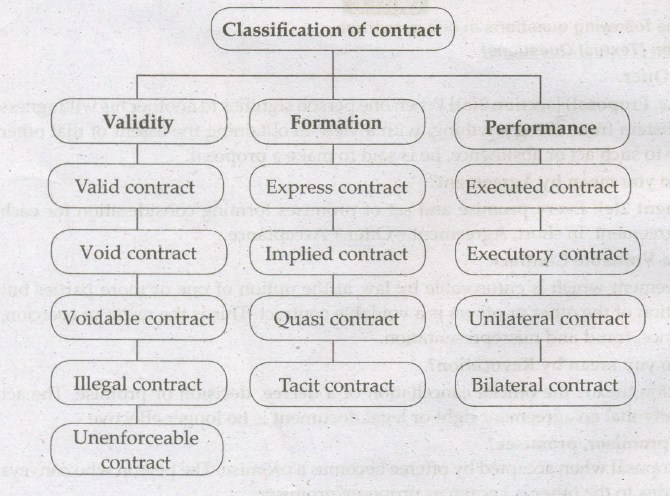
30.
(i) The claim for quantum merit may arise if a contract performed by one party has become discharged by breach of the other party. The meaning of the phrase quantum merit is as much as earned. The claim is not for the original contract that has been discharged or void, but on an implied promise by the other party to pay for what he has done. The court may order injunction in the following cases
(a) if the contract is voidable.
(b) if the contract becomes void or
(c) on discovering the contract as void.
(ii) Injunction is an order passed by a competent court restraining a person from doing some act. An injunction can be defined as a mode of securing the specific performance of the negative terms of a contract. Negative terms of the contract imply doing something, which a party has promised not to do. The injunction is an order which is granted by the court restraining the person to do what he had promised not to do.
31.
The important objectives of the export trade are :
(i) Facilitating selling of goods to countries which desperately need such goods.
(ii) Expanding the market for goods by producing them on a large scale.
(iii) Earning foreign exchange through exports.
(iv) Helping a country increase the national income.
(v) Creating employment opportunity in a country by promoting of export - oriented and export related enterprises.
(vi) Generating revenue for the Government in the form of customs and excise duties.
(vii) Promoting mutual understanding and co-operation among the nations.
(viii) Achieving optimum utilization of resources by large scale production of goods
32.
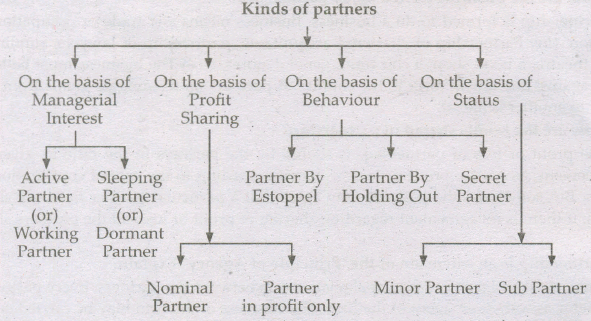
33.
Foreign direct investment (FDI) is an investment made by a company or an individual in one country with business interests in another country, in the form of either establishing business operations or acquiring business assets in the other country, such as ownership or controlling interest in a foreign company.
34.
Under this policy, the assured sum or policy money is payable in monthly or annual instalments after the assured attains a certain age. The policy is useful to those who prefer a regular income after a certain age.
35.
1. All business units have realised that ethics is vitally important for the existence and progress of the business as well as the society.
2. It is very important as it improves public image, earns public confidence, and leads to greater success.
3. Ethics and profits go together in the long run. It enhances the quality of life, standard of living and business.
36.
The MSME sector contributes about 8% to Gross Domestic Product (GDP) besides 45% to the total manufacturing output and 40% to the exports from the country on the production of more than 6000 products. This sector consists of 36 million units and provides employment to over 8 crore people.
37.
1. 'CORE' stands for 'Centralized Online Real time Exchange'.
2. In the centralized server of the bank, all the details of all the accounts of all the branches of the bank are available.
3. A customer can withdraw money through cheque at any branch of that bank throughout the world.
4. Similarly anyone can deposit money into the account.
38.
Out of Gross Total Income, Income tax Act, 1961 allows certain deductions under section 80. After allowing these deductions the figure which we arrive at is called 'Total Income' and on this figure tax liability is computed at the prescribed rates.
39.
Multinational Company is an enterprise operating in several countries but managed from one country.
40.
41.
(i) Convenience in buying:
The departmental stores provide great convenience to all the members in a family in buying almost all goods of their requirements at one place. A large variety of goods available in all the departments enable customers to save time and no need to run from one place to another to complete their shopping.
(ii) Attractive services:
It aims at providing maximum services and facilities to the customers such as home delivery of goods, execution of telephone orders, restrooms, restaurants, salons, children game centers, etc.
(iii) Central location:
These stores are usually located in central places so that more people can approach easily.
(iv) Elimination of middleman:
A departmental store combines both the functions of retailing as well as warehousing. They purchase directly from manufacturers and operate separate warehouses. It helps in eliminating undesirable middlemen between the producers and the consumers.
(v) Economies of large scale operations:
The Departmental stores are organised at a large scale i.e., buy goods in bulk, therefore they enjoy the benefit of special discount. In turn, the customers get their goods in quality and lower price.
42.
The aims and needs of Foreign trade are:
(i) To raise national income and standard of living:
The aim of foreign trade is to increase the income of the nation and increase the standard of living of the people.
(ii) To enable equal distribution of natural resources:
Every country has a different type of natural resources. A country which has more natural resources gives to other countries. For example, Kuwait has more petrol Hence, foreign trade distributes surplus resources to the needy countries.
(iii) To enable even distribution of agricultural products:
Different countries have different facilities to produce agricultural resources. For example, Cuba produces more sugar, Egypt produces more cotton and Argentina produces surplus wheat. Thus, foreign trade distributes surplus production to needy countries.
(iv) To minimise hurdles in production:
The developing and under-developed countries face a shortage of raw materials, machinery, technical know-how, etc. Through foreign trade, these countries can import goods from other countries.
(v) To reduce differences in economic growth rate:
Economic growth rate differs from one country to another. The underdeveloped countries takes financial and technical help from the advanced countries. This increases international trade.
(vi) To share the benefits of low cost of production:
Foreign trade enables a country to share the benefits of low cost of production by importing goods from the country, where the cost of production is minimum.
(vii) To enjoy the fruits of the development of science and technology:
Due to the advancement of science and technology, the needs of the consumers have increased Internal trade alone cannot satisfy the needs of the people, so international trade becomes essential.
43.
Tata Group is the best example for the corporate social responsibility in India. The Tata Group conglomerate in India carries out various CSR projects, most of which are community improvement and poverty alleviation programs. Through self-help groups, it is engaged in women empowerment activities, income generation, rural community development, and other social welfare programs. In the field of education, the Tata Group provides scholarships and endowments for numerous institutions.
44.
Franchising fees:
The initial franchising fee and the subsequent renewal fees can be very high in case of successful businesses. From the franchisee's point of view, this may be a deterrent.
Fixed royalty payment:
The franchisee has to make payment of royalty to the franchiser on a regular basis. This considerably reduces the income of the franchisee.
Danger of image tarnishing:
If the franchisee does not maintain standards of quality and service; there is a danger that the goodwill and image of the reputed franchiser will be adversely affected.
Lack of freedom:
The franchisee does not have the freedom to run his business in an independent manner. He has to abide by management and operational policies of the franchiser, This may serve as a deterrent whether suitable to him or not.
Limitation on range of products:
The franchisee cannot introduce new product lines into the business, except those permitted by franchiser. This may mean loss of business to franchisee amidst demands based on local conditions.
45.
Ocean transport may be divided into two broad categories.
a) Coastal shipping :
Coastal shipping constitutes an important means of transport in all countries having a long coastline. It is a cheap means of transport for the movement of bulky cargoes like coal, iron ore etc. to domestic ports of country. Usually, coastal shipping trade of· a country is reserved for national shipping. In India, Coastal shipping trade is now exclusively reserved for Indian ships.
b) Overseas shipping :
It means the passengers and goods have to cross ocean. Example India export goods to America.
46.
The methods which influence the total volume of credit in Indian economy are called quantitative or general methods. An increase in the first three measures will reduce the volume of money in circulation in India and vice versa.
i. Bank Rate Policy:
Bank rate refers to the rate at which the RBI rediscounts the bills given by the Scheduled banks.
ii. Cash Reserve Ratio (CRR):
It is the ratio of Cash reserves with the RBI kept by Scheduled bank in proportion to the total Time and Demand Liabilities with them.
iii. Statutory Liquidity Ratio (SLR):
It is the ratio of money and money equivalents kept within the bank in proportion to the total Time and Demand Liabilities with them.
IV. Open Market Operations:
The RBI directly buys or sells the securities and bills in the money market either to decrease or to increase the total volume of money.
47.
The following are the characteristics of Commerce.
(i) Economic activities:
(1) All economic activities are undertaken to earn Profit. commerce deals with all economic activities undertaken for profit.
(2) So, commerce is concerned with all economic activities directed towards earning profit.
(ii) Exchange of goods and services :
(1) Commerce involves an exchange of goods and services for profit.
(2) Goods may be produced for the purpose of resale to the consumers.
(iii) Earning motive :
(1) Profit is an incentive for undertaking all commercial activities.
(2) Any activity, which does not have the incentive of profit, will not be a part of commerce.
For Example: If a trader gives some goods as Charity.
(iv) Creation of Utility:
Commerce creates form, place and time utility in goods.
(v) Regularity of transaction:
The transaction should be regular. No isolated transaction will be a part of commerce.
48.
49.
IMF and India:
Free Convertibility of Indian Rupee:
Indian rupee has become independent after the establishment of IMF, Earlier it was linked with pound sterling. Its value is now determined in terms of Gold. Hence it is freely convertible.
(i) Loan for developmental activities :
India has got several loan facilities from IMF for its several development projects.
(ii) Ability to purchase Foreign currencies :
Government of India is able to purchase foreign currencies from time to time to meet the ever-growing requirement of development activities.
(iii) Expert Advice:
(1) India used to get expert advice from IMF for solving the economic problems.
(2) It has given valuable advice to India with regards to financing its 5 year plan.
(iv) Timely help:
India has received timely help from IMF many a time to eliminate the deficit in its balance of payments. India got help from IMF during 1966 in the aftermath of war with Pakistan. It received assistance from IMF during for combating oil shock. Between 1980 and 1983 India got assistance from IMF to manage global economic recession.
(v) Financial assistance during natural calamities :
India has got a lot of financial assistance from IMF to solve the economic crisis arising from natural calamities like floods, famine, earthquake, aggressions of Chinese and Pakistan, etc. It gets technical assistance from IMF.
(vi) Membership in world bank:
By virtue of its membership in IMF, India could become member in the World Bank.
(vii) Help during 1991 Economic Crisis:
(1) During 1990, India faced serious economic crisis; Indian government was almost nearing bankruptcy.
(2) It has got assistance from IMF by pledging its gold reserve with it to solve its balance of payments crisis.
50.
51.
| Sl.No | Basis | Contract | Agreement |
| 1 | Definition | A contract is an agreement enforceable by law | An Agreement is every promise or every set of promises forming consideration |
| 2 | Enforceability | Every contract is enforceable | Every promise is not enforceable |
| 3 | Inter-relationship | A contract includes an agreement | An Agreement does not include a contract |
| 4 | Validity | Only legal agreements are called contracts. | An agreement may be both legal and illegal |
| 5 | Legal obligation | Every contract contains a legal obligation | It is not necessary for every agreement to have legal obligation. |
52.
1. Consumer cooperatives are organized by consumers that want to achieve better prices or quality in the goods or services they purchase.
2. In contrast to traditional retail stores, or service providers, a consumer cooperative exists to deliver goods or services rather than to maximize profit from selling those goods or services.
3. Nationally, the most widely used cooperative form is the credit union, with some 90 million members.
4. Credit union assets have grown a hundred-fold in three decades.
5. Credit unions are essentially cooperatives of people that use banking services.
6. Students' cooperative stores, Cooperative provision stores, and supermarkets set up on cooperative societies of India are examples of this type.
53.
The various sources of Finance can be classified into three categories on the basis of :
(i) Period
(ii) Ownership and
(iii) Source of generation
(i) On the basis of period :
The different source of finance can be further grouped into three categories on the basis of period:
(1) Short-term Finance - Bank overdraft, Commercial paper
(2) Medium-term Finance - Loan from bank, Lease financing.
(3) Long-term Finance - Shares, Debentures, etc.
(ii) On the basis of Ownership:
Business Finance can be divided into two categories based on ownership funds :
(1) Owners Funds - Equity shares, Retained earnings.
(2) Borrowed Funds - Debentures, loan from bank and institutions.
(iii) On the basis of Generation:
The sources of funds can be grouped into two categories based on generation:
(1) Internal sources - Trade debtors and bills receivable.
(2) External sources - Factoring, Leasing, Hire purchasing, etc.
54.
Commerce and Trade in North India:
1. India was prosperous even during medieval period from 12th to 16th centuries despite political upheavals.
2. Balban was first sultan who paved the way in the dense forest and helped traders and their commercial caravans to move from one market place to others.
3. Alauddin Khilji brought the price to a very low ebb.
4. He encouraged import of foreign goods from Persia and subsidised the goods.
5. Arabs were dominant players in India's foreign trade.
6. They never discouraged Indian traders like Tamils, Gujaratis, etc.
7. The trade between the coastal ports were in the hands of Marwaris and Gujaratis.
8. The overland trade with central and west Asia was in the hands of Multanis who were Hindus and Khurasanis who were Afghans, Iranians and so on.
9. During Sultanate period, trade flourished due to the establishment of currency system based on silver and copper.
10. Moorish traveller described the teeming market of big cities in the Gangetic plains, Malwa, Gujarat and South India.
11. The important trade centres were Delhi, Mumbai, Ahmedabad, Sonar, Sonargoon, Jaunpur, Lahore and so on. The burgeoning foreign trade led to the development of market place in the towns and villages.
12. India's handicraft commanded a good foreign market. India imported horses, dry fruits, precious stones, glassware, high grade textiles, raw silk, corals, scented oil, velvets, etc.. from Kabul, Arabia, Europe, West Asia and China.
13. Indian products were exported to East Africa, Malaya, China and Far East.
14. Trade was conducted through overland routes with Afghanistan, Central Asia and Persia. India conducted foreign trade via land route with Quetta, Khyber pass, Iraq and Bukhara.
15. The traders of Malabar, Gujarat and foreign settlers in the ports of Calicut, Khambhat and Mangalore controlled a major business sector in port cities.

11th Standard Syllabus & Materials
11th Standard
TN 11th Tamil பீடு பெற நில் - செய்யுள் - காவடிச்சிந்து Important Questions And Answers Study Material - QB365 Set A
NEW11th Standard
TN 11th Tamil பீடு பெற நில் - உரைநடை - மலை இடப்பெயர்கள் : ஓர் ஆய்வு Important Questions And Answers Study Material - QB365 Set A
NEW11th Standard
TN 11th Tamil மாமழை போற்றுதும் - துணைப்பாடம் - யானை டாக்டர் Important Questions And Answers Study Material - QB365 Set A
NEW11th Standard
TN 11th Tamil மாமழை போற்றுதும் - செய்யுள் - ஐங்குறுநூறு Important Questions And Answers Study Material - QB365 Set A



Tamilnadu Stateboard 11th Standard Subjects

Maths
Commerce

Economics

Biology

Business Maths and Statistics

Accountancy

Computer Science

Physics

Chemistry
Maths
Biology
Economics
Physics
Chemistry

History
Business Maths and Statistics

Computer Science
Accountancy

Computer Applications
History
Computer Technology
Commerce
Computer Applications
Computer Technology

Tamil

English

French
Tamilnadu Stateboard Standards

