
 100% FREE ACCESS
12th Standard CBSE Syllabus & Materials
12th Standard CBSE
CBSE 12th Economics Government Budget and the Economy Previous year Question Papers Study Material - QB365 Set A
NEW12th Standard CBSE
CBSE 12th Computer Science Interface Python with MySQL - New Previous year Question Papers Study Material - QB365 Set A
NEW12th Standard CBSE
CBSE 12th Computer Science Database Concept - New Previous year Question Papers Study Material - QB365 Set A
NEW12th Standard CBSE
CBSE 12th Computer Science Data Communication - New Previous year Question Papers Study Material - QB365 Set A
NEW12th Standard CBSE
CBSE 12th Computer Science Data Structures - New Previous year Question Papers Study Material - QB365 Set A
NEW12th Standard CBSE
CBSE 12th Computer Science Functions - New Previous year Question Papers Study Material - QB365 Set A

Published on: 17/10/2025
Download CBSE Class 12th Standard CBSE Biology question papers, sample papers, important questions, and previous year solved papers in PDF format. Get free study materials, NCERT solutions, and exam preparation resources for Class 12th Standard CBSE Biology
Questions + Answers key
Take MCQ Biology Test
1.
Explain the process of divergent evolution in detail. Also, write down the driving force behind it.
2.
(i) Name the insect that attacks cotton crops and causes lot of damage to the crop. How has Br cotton plant overcome this problem and saved the crop? Explain.
(ii) Write the role of gene cry lAb
3.
How they are considered as an evidence of evolution.
4.
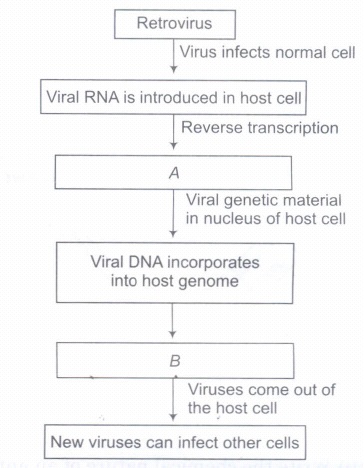
In the given flow diagram, the replication of retrovirus in a host is shown. Observe and answer the following questions.
(a) fill in (A) and (B)
b) Why is the virus called retrovirus?
(c) Can the infected cell survive, while viruses are being replicated and released?
5.
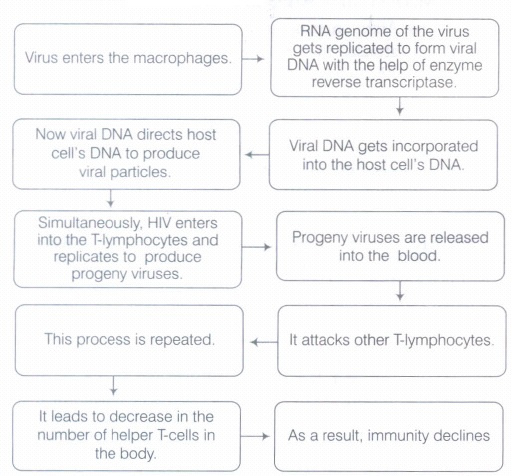
Explain the process of replication of a retrovirus after it gains entry into human body.
6.
(a) Why is Bacillus thuringiensis considered suitable for developing GM plant?
(b) Explain how it has been used to develop Gm crops.
7.
(a) Name the source plant of heroin drug. How is it obtained from the plant?
(b) Write the effects of heroin on the human body.
8.
Classify the following diseases under the headings 'transmissible' and 'non-transmissible'. Lung cancer, whooping cough, rickets, arthritis, appendicitis, food poisoning, tuberculosis, measles, diabetes, anaemia, syphilis, influenza, AIDS, coronary heart disease and haemophilia.
9.
Write down 4 important resemblances between apes and humans.
10.
Gene therapy is an attempt to correct a genetic defect by providing a normal gene into the individual. By this, the normal function can be restored. An alternate method would be to provide the gene product (protein/enzyme) known as enzyme replacement therapy. It would also restore the function. Which in your opinion is a better option? Give reason for your answer.
11.
Biomass is a more meaningful measure of population size. Explain with an example.
12.
Mention the characteristic symptoms of Dengue fever. How is the disease transmitted to others?
13.
Explain by taking three different examples how do certain organisms pull through the adverse conditions when unable in migrate under stressful period
14.
Trace the life cycle of Plasmodium in humans from the stage of entry until it is picked up by the female Anopheles.
15.
How does the HIV breakdown the immune system of the AIDS patient?
16.
What is mass extinction?
17.
The evolutionary story of moths in England during industrialization reveals, that "evolution is apparently reversible". Clarify this statement.
18.
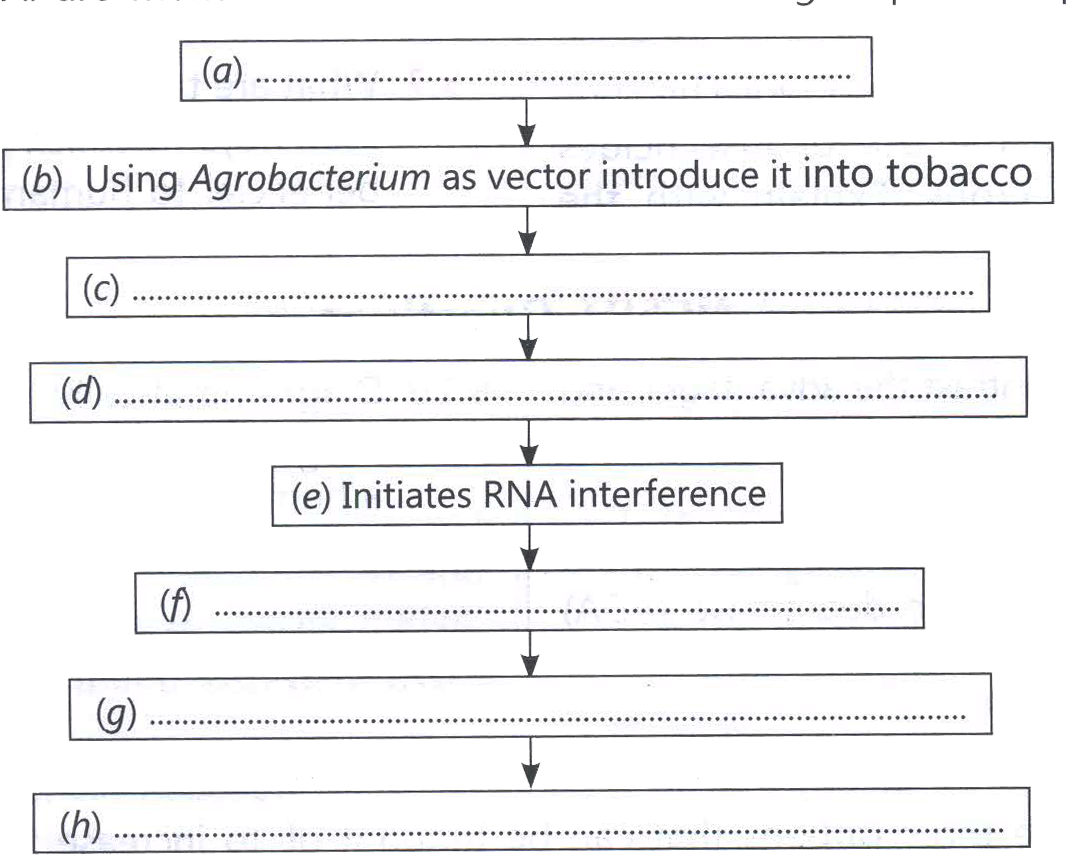
Two of the steps involved in producing nematode resistant tobacco plants based on the process of RNAi are mentioned below. Write the missing steps in its proper sequence.
19.
20.
21.
22.
23.
24.
According to Darwin, evolution is
a slow, sudden and discontinuous process.
a slow and discontinuous process.
a sudden but discontinuous process
a slow, gradual and continuous process
25.
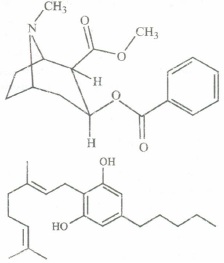
Identify the molecules (A) and (B) shown below and select the right option giving their source and use.
| Molecule | Source | Use |
| A-Cocaine | Erythroxylum coca | Accelerates the transport of dopamine |
| Molecule | Source | Use |
| B-Heroin | Cannabis sativa | Depressant and slows down body functions |
| Molecule | Source | Use |
| B-Cannabinoid | Atropa belladonna | Produces hallucinations |
| Molecule | Source | Use |
| A-Morphine | Papaver somniferum | Sedative and pain killer |
26.
The letter T in T-lymphocyte refers to:
Thymus
Thyroid
Thalamus
Tonsil
27.
A health disorder that results from the deficiency of thyroxine in adults and characterized by (i) a low metabolic rate (ii) increase in body weight and (iii) tendency to retain water in tissue is:
Cretinism
Hypothyroidism
Simple goitre
Myxoedema
28.
The first clinical gene therapy was given for treating
diabetes mellitus
chicken pox
rheumatoid arthritis
adenosine deaminase deficiency
29.
The scientific name of Asian Tiger mosquito is
Aedes aegypti
Aedes albopictus
Aedes taeniorhychus
Aedes albolibeatus
30.
Neurasthenia refers to
Undue concern about health
Traumatic experience like rape
Disorder of sensory perception
Mental inability to concentrate on or enjoy things
A mood upswing
31.
Aspirin is a/an
Antibiotic
Antipyretic
Antiseptic
None of these
32.
Assertion: Organs of pig such as heart, pancreas, etc., for human use can be grown through transgenic animals.
Reason : Transgenic pigs show improved growth and meat production.
Codes :
(a) Both assertion and reason are true and reason is the correct explanation of assertion.
(b) Both assertion and reason are true but reason is not the correct explanation of assertion.
(c) Assertion is true but reason is false.
(d) Both assertion and reason are false
33.
Assertion: Predation and parasitism are considered to be negative interactions.
Reason: Predators and parasites limit the population of their host species.
Codes:
(a) Both assertion and reason are true and reason is the correct explanation of assertion.
(b) Both assertion and reason are true but reason is not the correct explanation of assertion.
(c) Assertion is true but reason is false.
(d) Both assertion and reason are false.
34.
Assertion: Mucous membrane immobilises the micro-organisms in the body.
Reason: Microorganisms and dust particles entering the respiratory tract are trapped in the mucus.
Codes:
(a) Both assertion and reason are true and reason is the correct explanation of assertion.
(b) Both assertion and reason are true but reason is not the correct explanation of assertion.
(c) Assertion is true but reason is false.
(d) Both assertion and reason are false.
35.
The graph given below represents yields of both Bt and non-Bt cotton in China during a time span of eight years.
Study the graph and answer the following questions.
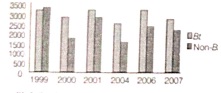
(i) Which of the above given years show the maximum difference between growth of Bt and non-Bt cotton?
(ii)The bar representing Bt cotton is always longer than that representing non-Bt cotton. Give reason.
(iii) Is the transgenic variety of cotton still in use? What benefits have the farmers growing this variety gained?
or
(iii) How is the conventional variety of cotton different from Bt cotton variety?
36.
Observe the type of plant shown below and answer the questions that follows.
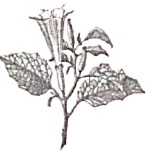
(i) A type of drug is obtained from the plant whose one flowering branch is shown above.
Choose the correct statement(s) regarding the figure.
I. It is a hallucinogen.
II. It is a stimulant.
III. It produces euphoria and increased energy.
IV. It induced behavioral abnormalities by changing thoughts, feelings and perceptions. Codes
| (a) I and III | (b) I, II and IV |
| (c) I and IV | (d) I, II, III and IV |
(ii) The diagram shown above represents the flowering branch of which plant?
| (a) Cannabis sativa | (b) Datura |
| (c) Opium poppy | (d) None of the above |
(ii) Which of the following is generally taken via oral route?
| (a) Heroin | (b) Marijuana |
| (c) Smack | (d) Both (a) and (b) |
(iv) Drugs that are normally used as medicines to help the patients cope with mental illness are
| (a) barbiturates | (b) amphetamines |
| (c) benzodiazepines | (d) All of the above |
(v) Nicotine intake stimulates the release of hormones known as ______.
(a) adrenaline and nor-adrenaline
(b) thyroxine and para thyroxine
(c) oestrogen and progesterone
(d) All of the above
1.
Definition
Divergent evolution is a type of evolution where similar body structures have evolved to perform different functions based on the need of the organism.
Cause/driving force
Due to the presence of different environments, certain body parts of organisms have modified their functions so that they can adapt to these habitats. These body parts are called homologous organs as they have similar body structure but different functions.
Significance
Divergent evolution indicates that the organisms have a common ancestor but they develop different characteristics (due to the changing environment) giving rise to new species.
Examples
In animals :
The forelimbs of Whales, Bats, Cheetahs and Humans have a similar bone structure (contain humerus, radius, ulna, carpels, phalanges) but they perform different functions. In whales it is used for swimming, Bats use it for flying, Cheetahs for running and Humans for different functions.
The hearts in various vertebrates (fishes, amphibians, reptiles, birds, and mammals) have similar structure but vary in the number of chambers they have due to diverse habitats and energy requirements.
In plants :
The thorns of Bougainvillea and the tendrils of Cucurbita are modified branches i.e. they have the same basic structure and common ancestor but the functions are different. The thorns are used for protection and the tendrils are used as support to the plant.
2.
(a) Cotton bollworm attacks cotton crops and causes lot of damage to the crop.
Bt cotton plant contains the gene coding for Bt toxin which is produced by Bacillus thuringiensis. The toxin is coded by a gene Cry IAc named cry. Bacillus Thuringiensis forms protein crystals during a particular phase of their growth.
These crystals contain a toxic insecticidal protein. The Bt toxin protein exists as inactive protoxin but once an insect ingests the inactive toxin, it is converted into an active form of toxin due to alkaline pH of gut which solubilise the crystals.
The activated toxin binds to the surface of midgut epithelial cells and create pores that cause cell swelling and lysis and eventually causes death of insect.
(b) Cry IAb codes for proteins that control corn borer.
3.
Analogy and homology of structures indicate the evidences of evolution from comparative study of morphology and anatomy of form, structure, relative position of different organs and their functions. Analogy indicates that similar environmental conditions and habitat result in the selection of similar adaptive features in different groups of organisms towards the similar function.
This shows the evolution of similar functional structures from unrelated organs. This is the result of convergent evolution.
Homology includes the organs having similar structure origin and development, developed to have different forms so as to perform different functions in different groups of organisations. This phenomenon of producing functionally different forms from structurally similar organs is the result of divergent evolution. It indicates towards the common ancestory.
4.
(a)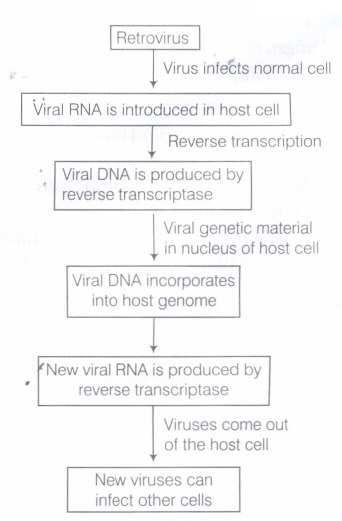
(b) The virus is called retro virus because its genetic material is RNA that is transcribed to DNA using enzyme reverse transciptase.
(c) Yes, the infected cell can survive, while viruses are being replicated and released.
5.
The process by which retrovirus gains entry into human host body or the mechanism by which AIDS virus causes immunodeficiency is as follows:
6.
Bacillus thuringiens· :
(a) This bacterium produces a protein, which is toxic to he larvae of insects like bollworm, budworm, flies, bettles,etc.
Bt-toxin gene has been cloned from the bacteria and been expressed in plants to provide resistance to insects without the need for chemical insecticides.
(b) The gene (cry) coding for the protein has been isolated using restriction enzymes.
They are cloned in the vectors and then introduced into a number of crop plants like cotton, tomato, corn, rice, etc.
There are a number of different forms of the gene, that code for insect-specific Cry proteins, e.g., crylAc and cryllAb control cotton bollworm.
crylAb controls corn borer.
The transgenic plants (called as Bt corn, Bt rice, Bt cotton, etc.) produce the protein in their cells and express the insect/pest resistance.
7.
(a) The source plant of heroin isPapaver somniferum (opium poppy).
(i) Morphine is extracted from the latex of poppy plant and by acetylation of morphine, heroin is obtained.
(b) Heroin is a depressant and slows down the body functions.
8.
Transmissible-Whooping cough, tuberculosis, measles, syphilis, influenza. All others are non-transmissible diseases.
9.
(i) Large head, mobile neck, short trunk with broad chest, long limbs;
(ii) large, highly convoluted brain;
(iii) well developed facial muscles to express emotions; and
(iv) lack of tail.
10.
Gene therapy would be a better option because it has the potential to completely cure the patient.
11.
(i) If the population is huge, total number is not an easily adoptable measure as counting takes a very long time.
(ii) For some ecological investigations, there is no need to know the absolute population densities.
12.
Symptoms of dengue fever:
(i) fever
(ii) headache
(iii) muscle and joints pain
(iv) characteristic skin rashes
(v) decrease in platelet count in severe cases.
The disease is transmitted by Aedes mosquito.
13.
Hibernation-winter sleep to escape in time e.g., bears.
Aestivation-summer sleep to avoid heat and desiccation, e.g. snails/fish
Diapause-suspended development/activity, e.g. zooplanktons.
Spore formation-to tide over unfavourable conditions, e.g. fungi/bacteria/lower plants.
Dormancy-By reducing metabolic activity, e.g. seeds
(any three with corresponding examples)
14.
The parasite that causes malignant malaria in humans is Plasmodium falciparum. The sporozoites of Plasmodium enter the human body, when a female Anopheles mosquito bites a healthy person.
Life cycle of Plasmodium in human :
(i) When the mosquito bites a man, sporozoites present in the salivary glands of female Anopheles mosquito are injected into the blood of the man
(ii) From the human blood, sporozoites enter the liver cells and grow in size to become a rounded schizont called cryptozoite. The latter divides to form cryptomerozoites.
(iii) The crypto-merozoite enters the human RBCs, and meta-cryptozoites are formed. The metacryptozoites divide to form meta-cryptomerozoites
(iv) In RBC, meta-cryptomerozoite becomes a rounded disc-like young trophozoite, which undergoes mitotic division to form multinucleate organisms, which give rise to merozoites
(v) Some erythrocytic merozoites enter fresh RBCs and form rounded gametocytes. When female Anopheles mosquito sucks the blood of human, gametocytes enter the stomach of the mosquito
15.
Mechanism of AIDS infection involves.
(i) After entering into the body of a person, the virus attacks the macrophages. Inside macrophages, the RNA genome of the virus replicates to form viral DNA with the help of enzyme reverse trancsriptase.
(ii) The viral DNA gets integrated into the host cell's DNA and use the raw material and infected cell machinery to produce virus particles.
(iii) The macrophages continue to produce virus particles and act, like a HIV factory
(iv) Simultaneously, virus enters the helper T-lymphocytes (TH). Where also, it replicats and forms progeny viruses.
(v) Progeny viruses released in the blod, attack the other helper T-lymphocytes, resulting in progressive decrease in their number in infected person. With the lack of T-lymphocytes, B-lymphocytes do not produce antibodies to encounter the pathogens/ antigens.
(iv) Infected person becomes so immunodeficient that he/she is unable to protect himself/herself against any infection/pathogen such as Mycobacterium, viruses and even parasites like Toxoplasma.
16.
Mass extinction: There have been some episodes of large groups of plants and animals, becoming extinct over a relatively short span of time. Such episodes are called mass extinction. The most recent mass extinction took place about sixty million yeras ago, when the age of dinosaurs came to an abrupt end.
17.
With the industrial growth in 1920, the white-winged grey-coloured Biston betularia was rapidly replaced by a dark-coloured melanic Biston carbonaria as the later had more chances of survival and favoured by Natural selection. But after 1956, the coal was rapidly replaced by oil and electricity as energy source in the industries which reduced soot deposition. So the light coloured moth is again replacing the dark-coloured moth by reverse evolution.
18.
(a) Isolation of nematode-specific gene.
(c) Production of sense and anti-sense RNA in the host.
(d) Formation of ds RNA (as the sense and anti-sense RNA are complementary to each other). if Silencing of specific mRNA of the nematode.
(g) Host expresses the interfering RNA.
(h) Parasite cannot survive and host (tobacco) plant is protected.
19.
(c)
20.
(b)
21.
(b)
22.
(b)
23.
(d)
24.
(d)
a slow, gradual and continuous process
25.
(d)
| Molecule | Source | Use |
| A-Morphine | Papaver somniferum | Sedative and pain killer |
26.
(a)
Thymus
27.
(d)
Myxoedema
28.
(d)
adenosine deaminase deficiency
29.
(b)
Aedes albopictus
30.
(d)
Mental inability to concentrate on or enjoy things
31.
(b)
Antipyretic
32.
(b) Both assertion and reason are true but reason is not the correct explanation of assertion.
33.
(a): Predation and parasitism are considered to be negative interactions, because in both of these interactions one species gains and the other suffers. Predation is the interaction between species involving killing and consumption of prey. The species which eats the other is called the predator, and the one consumed by other is termed as prey. Predation is commonly illustrated by the herbivore-carnivore interaction.
Parasitism is the interaction in which the species smaller in size (the parasite) lives in or on the larger species (the host) from which it obtains food and shelter. Parasites like leeches, tick, lice, mites feed on the body fluids of the hosts. Parasites, like the predators limit the population of the host species. Parasites are generally host- specific, and do not have choice or alternatives like predators. Parasites are smaller in size and have higher biotic/reproductive potential compared to the predators. Parasites have poor means of dispersal and require specialised structures to reach or invade the host. Predators, on the other hand, are quite mobile and capable of capturing the prey.
34.
(a): Innate immunity is non-specific type of defence, that is accomplished by providing different types of barriers to the entry of the foreign agents into our body. Mucus coating of the epithelium lining in the respiratory, gastrointestinal and urogenital tracts traps microbes and prevents their entry in our body.
35.
(i) The year 2000 shows the maximum difference (1100 kg/hect) between growth of Bt and non-Bt cotton crop.
(ii) This is because Bt cotton crop has provided much benefits not only in terms of quantity, but also in terms of quality. Thus, it has become the first choice for farmers growing cotton in their fields.
(iii) Yes, the transgenic variety of cotton crop is still in use. In fact, the genetically modified variety of cotton is preferred over conventional cotton because of benefits like
(a) Increased Pest Resistance : This results in enhancement of crop quality.
(b) Higher yield due to increased crop resistance,the crop yield is also enhanced.
36.
(i) (d)
(ii) (b)
(iii) (b)
(iv) (d)
(v) (a)

12th Standard CBSE Syllabus & Materials
12th Standard CBSE
CBSE 12th Computer Science Python Revision Tour I - New Previous year Question Papers Study Material - QB365 Set A
NEW12th Standard CBSE
CBSE 12th Business Studies Planning Important Questions And Answers Study Material - QB365 Set A
NEW12th Standard CBSE
CBSE 12th Business Studies Business Environment Important Questions And Answers Study Material - QB365 Set A
NEW12th Standard CBSE
CBSE 12th Business Studies Principles of Management Important Questions And Answers Study Material - QB365 Set A



NCERT Books

Syllabus

Exam Pattern

Sample Question Papers

Previous year Question Papers

Important Notes

MCQ Practice test

NCERT Exemplers

Case study Questions

Image Based Questions

Passage based Questions

HOT Questions

Value Based Questions

Model Questions Papers
NCERT ( Book Back ) Questions

Assertion and Reason
Important Questions And Answers

CBSE 12th Standard CBSE Subjects
CBSE Standards








