
 100% FREE ACCESS
12th Standard CBSE Syllabus & Materials
12th Standard CBSE
CBSE 12th Economics Government Budget and the Economy Previous year Question Papers Study Material - QB365 Set A
NEW12th Standard CBSE
CBSE 12th Computer Science Interface Python with MySQL - New Previous year Question Papers Study Material - QB365 Set A
NEW12th Standard CBSE
CBSE 12th Computer Science Database Concept - New Previous year Question Papers Study Material - QB365 Set A
NEW12th Standard CBSE
CBSE 12th Computer Science Data Communication - New Previous year Question Papers Study Material - QB365 Set A
NEW12th Standard CBSE
CBSE 12th Computer Science Data Structures - New Previous year Question Papers Study Material - QB365 Set A
NEW12th Standard CBSE
CBSE 12th Computer Science Functions - New Previous year Question Papers Study Material - QB365 Set A

Published on: 25/10/2025
Download CBSE Class 12th Standard CBSE Biology question papers, sample papers, important questions, and previous year solved papers in PDF format. Get free study materials, NCERT solutions, and exam preparation resources for Class 12th Standard CBSE Biology
Questions + Answers key
Take MCQ Biology Test
1.
Large quantities of sewage are generated every day in cities as well as in towns and are treated in Sewage Treatment Plants (STPs) to make them less polluting. Given below is the flow diagram of stages of STP.
Study the flow diagram and answer the questions that follow
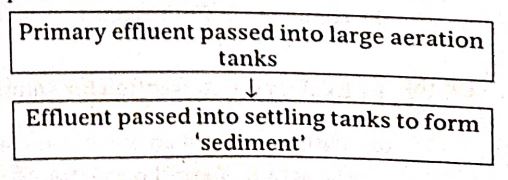
(i) (1) Why is primary effluent passed into large aeration tanks?
(2) What is the 'sediment' formed, referred to as? Mention its significance.
(3) Explain the final step in the settling tank before the treated effluent is released into water bodies.
(iii) Name any two organisms commonly used as biofertilisers, belonging to different kingdoms Write how each one acts as a biofertiliser.
2.
State which of the following are incorrect along with proper explanation to your answer.
(i) Alcohol precedes adolescence.
(ii) LSD is a hallucinogen.
(iii) Brown sugar is heroin.
(iv) Cocaine is obtained from Thea sinensis.
(v) Hallucinogens are called vision producing drugs.
3.
Enumerate the factors which are necessary to maintain good health.
4.
(a)association leads to nitrogen fixation in root nodules.
(b) Describe the steps in the formation of root nodules and name the two plant hormones that promote cell division for nodule formation. Which two physiological processes provide the FAD and ATP required for fixation of atmospheric nitrogen ?
5.
Explain the process of sewage water treatment before it can be discharged into natural water bodies. Why is this treatment essential?
6.
Anukool is a bag businessman in Delhi, but belongs to a small village. He went to his village during Christmas holiday. He was very disturbed to see women still using cowdungs cakes to prepare food there. he decided to set up a biogas plant so, that people can use gas obtained from it for cooking, The villagers were very thankful to Anukool for his valuable help.
(i) What is biogas?
(ii) What are the uses of biogas?
(iii) Name some microorganisms involved in biogas production.
(iv) What are the values shown by Anukool?
7.
Answer the following questions:
(a) How are the cancer cells different from normals cells?
(b) Pick out correct carcinogens out of the following :
Asbestos, infra red rays, arsenic, polythene, casein, caffein, tobacco smoke, Gamma rays.
(c) Write down three methods (write full forms wherever required) to detect cancer of internal organs.
8.
Rahul was not getting a good yield from the fields but his neighbours used to apply fertilizers to get higher yields of different crops.He consulted an agricultural scientist, living in the neighbouring town, to suggest some cheap and eco-friendly method to boost crop production.The scientist suggested him to use biofertilizers.
(i) What are bio fertilisers?
(ii) Name two examples of bio fertilisers.
(iii) Why did scientist advise Rahul to use bio fertilisers?
9.
A. Chemical________ and ________ are the source of widespread pollution.
B. Spores of Bacillus________ . produce insecticidal________ protein.
C. Biofertilisers promote plant growth and protect plants from soil ________
D.Mycorrhizae help insolubilisation of ________ which is present in the soil in the insoluble forms.
E. Rhizobia form root ________ in________ crops and some ________ forms symbiotic association with the fern Azolla.
F. Different varieties of cheese are known by their characteristic ________
G.Single cell protein (SCP) provides a valuable________ rich supplement in ________ diet.
H.The sewage water is treated till the BOD is found to be________
I. The bacteria responsible for production of biogas are collectively called________
J.________ grow in milk and convert it to curd.
10.
(a) Cancer is one of the most dreaded disease of humans.Explain 'Contact inhibition' and 'Metastasis' with respect to the disease.
(b)Name the group of genes which have been identified in normal cells that could lead to cancer and how they do so?
(c) Name any two techniques which are useful to detect cancers of internal organs.
(d)Why are cancer patients often given \(\alpha \) interferon as part of the treatment?
11.
Write the source and the effect on the human body of the following drugs:(i)Morphine (ii) Cocaine (iii) Marijuana
12.
Give an account of following diseases
(i) Ascariasis
(ii) Filariasis
(iii) Ringworms
13.
What is Pulse Polio Programme of Government of India? What is OPV? Why is it that India is yet to eradicate Pollio.
14.
Ganga has recently been declared the national river. Discuss the implication with respect to pollution of this river.
15.
Describe the different methods of treatment of cancer.
16.
Describe the asexual and sexual phases of life cycle of Plasmodium that causes malaria in humans.
17.
Match the items in column 'A' and column 'B' and choose correct answer
| Column 'A' | Column 'B' |
| (i) Lady bird | (a) Methanobacterium |
| (ii) Mycorrhiza | (b) Trichoderma |
| (iii) Biological control | (c) Aphids |
| (iv) Bio-gas | (d) Glomus |
(i)-(b), (ii)-(d), (iii)-(c), (iv)-(a)
(i)-(c), (ii)-(d), (iii)-(b), (iv)-(a)
(i)-(d), (ii)-(a), (iii)-(b), (iv)-(c)
(i)-(c), (ii)-(b), (iii)-(a), (iv)-(d)
18.
Methanogens do not produce
oxygen
methane
hydrogen sulfide
carbon dioxide
19.
Which of the following is dipteran?
Tobacco budworm
Armyworm
Beetle
Mosquito
20.
Which one of the following is not used as a biopesticide?
Trichoderma harzianum
Nuclear polyhedrosis virus (NPV)
Xanthomonas campestris
Bacillus thuringiensis
21.
Methanogens, growing anaerobically on cellulosic material, produce
Methane
Methane and carbon dioxide
Methane and hydrogen
Methane, carbon dioxide and hydrogen.
22.
Trichoderma harzianum has proved a useful microorganism for
Gane transfer in higher plants
Biological control of soil-borne plant pathogens
Bioremediation of contaminated soils
Reclamation of wastelands
23.
Which of the following is maintained for optimum production of vinegar?
Anaerobic condition
Temperature of \(65^{ \circ }C\)
Aerobic condition
Microaerophilic condition
24.
Lactic acid is formed by the process of
Actinomycetes fungi
Rhizobium
Azospirillum
None of these
25.
Bacillus thuringiensis (Bt) strains have been used for designing novel
Biofertilizers
Bio-metallurgical techniques
Bio-mineralization processes
Bio-insecticidal plants
26.
Which of the following is included in biopesticide?
Viruses and bacteria
Viruses, bacteria and fungi
Viruses, bacteria, fungi, protozoa and mites
Viruses, bacteria, fungi and protozoa
1.
1. The primary effluent in passed into large aeration tank for aerobic digestion of effluent by flocs masses of bacteria associated with fungi in a mesh like structures to decrease its BOD by digesting the organic matter in it.
2. 'Sediment' formed is referred to as activated sludge. A part of this is pumped back into the aeration tank to serve as the inoculum.
3. The final step in the settling tank is anaerobic digestion by fungi and bacteria in anaerobic sludge digesters. After which,the treated effluent is generally released into natural water bodies.
(ii) Rhizobium fixes atmospheric nitrogen into plant usable organic forms by forming symbiotic association with legumes.
Azospirillum fixes atmospheric nitrogen while free living in the soil and enriching the nitrogen content of soil.
2.
3.
The factors necessary to maintain good health are:
(i) Balanced diet
(ii) Clean food and drinking water.
(iii) Personal hygiene.
(iv) Regular exercise/yoga and relaxation.
(v) Awareness about diseases, their dispersal and effect on our body.
(vi) Vaccination/immunisation against infectious diseases.
(vii) Proper disposal of wastes/excreta.
4.
(a) Leguminous plant and nitrogen-fixing bacteria, e.g., chickpea and Rhizobium of Leguminosae or Fabaceae plants and nitrogen fixing-bacteria
(b) Steps in the formation of root nodules:
(i) Root hair of the leguminous plant curls upon contact with nitrogen fixing bacterium, which secretes chemicals.
(ii) Nitrogen-fixing bacteria proliferate withincurled root hair.
(iii)The plant responds by forming an infection thread of the plasma membrane, which grows inward from the infected cell of the host, separating it from the rest of the plant.
(iv) Cell division is stimulated in the infected tissue and more bacteria invade the newly formed cells, and a nodule is formed. Auxin from leguminous plant cells and cytokinin from bacteria help in this cell division.
Physiological processes : Photosynthesis and respiration provide FAD and ATP for fixation of atmospheric nitrogen.
5.
The process of sewage water treatment before being discharged into natural water bodies.
1. Primary treatment: These treatment steps involve physical removal of particles from the sewage through filtration and sedimentation. These are removed in stages; initially, floating debris is removed by sequential filtration. Then the grit (soil and small pebbles) are removed by sedimentation. All solids that settle form the primary sludge, and the supernatant forms the effluent. The effluent from the primary settling tank is taken for.
2. Secondary treatment: During secondary treatment, the primary effluent is passed into large aeration tanks. Air is also passed into these tanks and agitated. This enables the growth of aerobic microbes into flocs. While growing, the bacteria consume majority of the organic matter present in the effluent. This causes a significant reduction in the biochemical oxygen demand (BOD) of the effluent. Essential to control pollution in natural water bodies, to check water borne diseases/pathogenic organism.
The sewage treatment is essential before water is released into water bodies as sewage present in water causes water pollution and as a consequence, incidence
of water borne diseases increases.
6.
(i) Biogas is a mixture of gases produced from degradable organic matter by activity of microorganisms.
(ii) It is used as a fuel for heating, cooking. lighting, power for irrigation, etc.
(iii) Microorganisms involved are methanogens such as methanobacterium.
(iv) Anukool is helpful, intelligent, has human values and care for people.
7.
(a)
| Cancer cells | Normal cells |
| 1. They do not undergo differentiation. | 1. They undergo differentiation |
| 2. Cancer cells undergo uncontrolled divisions | 2. Cell division are regulated |
| 3. These cells do not require extracellular growth factors. | 3. These cells require extracellular growth factors |
| 4. Cells do not remain adhered. | 4. Cells remain adhered to one another |
| 5. Cell death is inhibited. | 5. These cells have finite life span. |
| 6. These tend fo form tumour | 6. Tumours are not formed |
(b) The carcinogens are asbestos, gamma rays, tobacco smoke and arsenic.
(c) Detection and diagnosis of cancer depends upon histological features of malignant structure.
(i) Biopsy of bone marrow and abnormal count of WBCs is done in leukemia.
(ii) Pap test (cytological staining) is used for detecting cancer of cervix and other genital tract parts.
(iii) Radiography, CT scan (Computed Tomography), Magnetic Resonance Imaging (MRI scan) are useful technique to detect cancer of internal organs.
8.
(i) Biofertilisers are the microorganisms which bring about soil nutrient enrichment, maximise ecological benefits and minimise environmental hazards.
(ii) Nostoc, Anabaena.
(iii) The scientist was concerned about the clean environment and, therefore, he suggested Rahul to use the ecofriendly technique.
9.
A.fertilisers, pesticides;
B. thuringienss, Cry;
C. pathogens;
D. phosphorus;
E. nodules, leguminous, cyanobacteria;
F. texture;
G.protein, human;
H. low;
I. methanogens
J. Lactic acid bacteria
10.
(a) (i) Normal cells whow a property celled contact inhibition by virtue of which contact with other cells inhibits their uncontrolled growth.Cancer cells appear to have lost this property and as result continue to divide to give masses of cells called tumours.
(ii) Metastasis: Cancerous cells sloughed off from tumours reach distant sites through blood or other body fluids and start a tumour there.This property is called metastasis.It is the most fearsome property of malignant tumours.
(b) (i) Viral oncogenes
(ii) Cellular oncogenes (C-onc) or proto-oncogenes when activated under certain conditions, whether could head to oncogenic transfermation of the cells.
(c) Technique like radiography (use of X-rays),CT (Compiled Tomography) and MRI (magnetic Resonance Imaging are useful to detect cancer of internal organs.
(d) \(\alpha \)-interferons are biological response modifiers are given to cancer patients.These substances activate immune system and help in destroy the tumour.
11.
| Name of drug | Source | Effects on human body |
| 1.Morphine | Opium plant |
1.Depressive respiratory centre. |
| 2.Cocaine | Natural coca alkaloid obtained from Erythroxylon coca |
1.It is powerful stimulation of central nervous system(CNS) |
| 3.Marijuana | Direct Flowers and top leaves of female plant of Canabis sativa |
1.It causes psychosis |
12.
(i) Ascariasis
Cause. It is caused by Ascaris lumbricoides.(round worm).
Symptoms.Its symptoms include:
(a) Blockage of intestinal passage,
(b)Anaemia,
(c)Abdominal/muscular pain,
(d)Internal bleeding,
(e)Nausea and headache.
Modes of transmission. Infection is through contaminated vegetables, fruits and water as eggs of parasite excreted by the infected persons contaminate soil, plants and water
(ii) Filariasis/Elephantiasis
Cause. It is caused by wuchereria bancrofti and wuchereria malayi(filarial worms)
They normally cause inflammation of the organs in which they live for many years.
They normally affect the lymph vessels of the lower limbs (causing them to swell like that of an elephant, hence called elephantiasis).
Genital organs may also be affected leading to gross deformation.
Modes of transmission. The female culex mosquito is the vector.
(iii)Ringworms
Cause. These are caused by fungi like microsporum, Epidermophyton and Trichophyton
Symptoms. The symptoms include
(i) dry scaly lesions on skins, nails and scalp.
(ii)lesions are accompanied by itching.
Modes of transmission. Ringworms are generally acquired from soil or by direct contact with the contaminated articles used by the infected persons.
13.
Pulse Polio Programme was started in 1978.Pulse Polio programme is the administration of oral Polio vaccine at regular intervals to the children under the age of five.Government provides vaccine free of cost.Many NGOs also participate with a mission to make India free of polio disease OPV is the vaccine given orally.The project 'Fight poliomyelitis' through a large cycle vaccination programme and monitoring for polio cases.F Due to this project, on march 27,2014 World Health Organization declared India a polio free country since no cause of wild polio had been reported.
14.
MOEF of Government of India has initiated the Yamuna Action Plan and Ganga Action plan for saving Yamuna and Ganga rivers respectively.
Ganga Action Plan:
1.Due to increased urbanisation and industrialisation there is a huge quantity of sewage produced; but there are not enough sewage treatments plants and hence the untreated sewage is let into major rivers.
2. The government has planned to build a number of sewage treatment plants, because the sewage and effluents from the areas nearby Ganga rivers can be treated before they are let into the river.
3. The objective of Ganga Action Plan is to save the river from pollution.
Yamuna Action plan :
In order to protect the major rivers of India from sewage pollution, the Ministry of Environment and Forests has initiated development of sewage treatment plants under the National River Conservation Authority, e.g., Ganga Action Plan and Yamuna Action Plan. Industries contribute chemical effluents to the river's pollution load and the toxicity kills aquatic animals in large sections of the river.
15.
Treatment of cancer:
The following methods (one or in combination) can help to treat cancer.
(i) Surgery
The tumour cells are surgically removed to reduce the load of cancerous cell.
(ii) Radiotheraphy
The tumour cells are irradiated wholly (but taking care of the surrounding normal cells) with safe doses of radiations.
(iii) Chemotherapy
Certain drugs are used to kill the cancerous cells,but majority of the drugs have side effects like hair fall,anaemia,etc.
(iv) Immunotherapy
This involves the use of biological response-modifiers,like alpha-interferon,which activate the immune system and help in destroying the tumour.
16.
Asexual Phase
It occurs in the human host. The sporozoites enter the human body through the bite of an infected female Anopheles mosquito.
They reach the liver through blood and multiply within the liver cells.
Such liver cells burst and release the parasite into blood.
The parasite enters RBCs, multiply in them and cause their rupture.
The rupture of RBCs is associated with the release of a toxin, called haemozoin, which is responsible for the chill/shivering and the high temperature (fever) of the body. Sexual Phase
It starts with the formation of gametocytes in the RBCs of man.
The parasite then enters the female Anopheles mosquito, along with the blood when it bites the infected person.
Further development occurs in the stomach wall of mosquito.
The gametes fuse to form a zygote. The zygote undergoes further development to form sporozoites.
Sporozoites are transported to and stored in the salivary glands of the mosquito and are transferred to a human body during the bite of the mosquito.
17.
(b)
(i)-(c), (ii)-(d), (iii)-(b), (iv)-(a)
18.
(a)
oxygen
19.
(d)
Mosquito
20.
(c)
Xanthomonas campestris
21.
(d)
Methane, carbon dioxide and hydrogen.
22.
(b)
Biological control of soil-borne plant pathogens
23.
(a)
Anaerobic condition
24.
(a)
Actinomycetes fungi
25.
(d)
Bio-insecticidal plants
26.
(c)
Viruses, bacteria, fungi, protozoa and mites

12th Standard CBSE Syllabus & Materials
12th Standard CBSE
CBSE 12th Computer Science Python Revision Tour I - New Previous year Question Papers Study Material - QB365 Set A
NEW12th Standard CBSE
CBSE 12th Business Studies Planning Important Questions And Answers Study Material - QB365 Set A
NEW12th Standard CBSE
CBSE 12th Business Studies Business Environment Important Questions And Answers Study Material - QB365 Set A
NEW12th Standard CBSE
CBSE 12th Business Studies Principles of Management Important Questions And Answers Study Material - QB365 Set A



NCERT Books

Syllabus

Exam Pattern

Sample Question Papers

Previous year Question Papers

Important Notes

MCQ Practice test

NCERT Exemplers

Case study Questions

Image Based Questions

Passage based Questions

HOT Questions

Value Based Questions

Model Questions Papers
NCERT ( Book Back ) Questions

Assertion and Reason
Important Questions And Answers

CBSE 12th Standard CBSE Subjects
CBSE Standards








