
 100% FREE ACCESS
12th Standard CBSE Syllabus & Materials
12th Standard CBSE
CBSE 12th Economics Government Budget and the Economy Previous year Question Papers Study Material - QB365 Set A
NEW12th Standard CBSE
CBSE 12th Computer Science Interface Python with MySQL - New Previous year Question Papers Study Material - QB365 Set A
NEW12th Standard CBSE
CBSE 12th Computer Science Database Concept - New Previous year Question Papers Study Material - QB365 Set A
NEW12th Standard CBSE
CBSE 12th Computer Science Data Communication - New Previous year Question Papers Study Material - QB365 Set A
NEW12th Standard CBSE
CBSE 12th Computer Science Data Structures - New Previous year Question Papers Study Material - QB365 Set A
NEW12th Standard CBSE
CBSE 12th Computer Science Functions - New Previous year Question Papers Study Material - QB365 Set A

Published on: 17/10/2025
Download CBSE Class 12th Standard CBSE Biology question papers, sample papers, important questions, and previous year solved papers in PDF format. Get free study materials, NCERT solutions, and exam preparation resources for Class 12th Standard CBSE Biology
Questions + Answers key
Take MCQ Biology Test
1.
Write the function of RNA polymerase II.
2.
Name the enzyme and the direction in which it catalyses the polymerisation of ribonucleotides.
3.
What is a nucleoid?
4.
In which position is the phosphate group linked to a nucleosid? Name the linkage too.
5.
Name any two hormones found in the blood of a pregnant female only.
6.
How are different varieties of pollen grains stored for long period of time in pollen banks?
7.
Which one is removed during splicing-introns or exons?
8.
The plant Yucca and moth cannot complete their life cycle without each other. Why?
9.
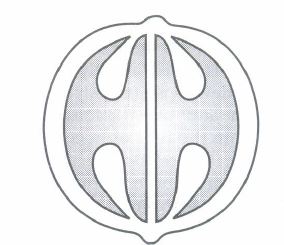
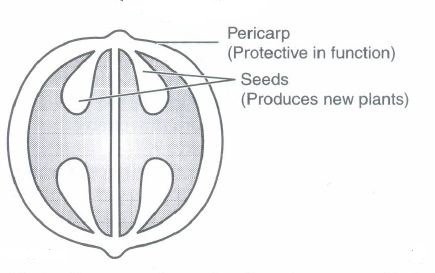
In the following figure of a fruit, label the part that is protective in function and the part that is responsible for producing new plants
10.
PCR requires very high temperature conditions where most of the enzymes get denatured. How was this problem resolved in a PCR ?
11.
State the function of trophoblast in human embryo.
12.
Give the term used for the age at which the reproductive organs become functional?
13.
Why are pollen grains produced in enormous quantity in Maize?
14.
What will happen if the fallopian tubes are partially blocked and the ovulated eggs are prevented from reaching the uterus?
15.
When was the Human Genome Project launched and when was it completed?
16.
In some viruses DNA is synthesised using RNA template. What term is given to such a DNA?
17.
What is the disadvantage of continued self-pollination in plants?
18.
Name the tallest flower.
19.
Why is the middle piece of human sperm considered as 'powerhouse of the sperm'?
20.
Name the protective substance present in the pollen envelope to tide over adverse conditions.
21.
22.
23.
24.
25.
26.
27.
28.
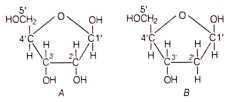
Observe structures A and B given below. Which of the following statements are correct?
A is having 2-OH group which makes it less reactive and structurally stable, whereas Bis having 2-H group which makes it more reactive and unstable
A is having 2-OH group which makes it more reactive and structurally unstable, whereas Bis having 2-H group which makes it less reactive and structurally stable
A and B both have-OH groups which make it more reactive and structurally stable
A and B both are having-OH groups which make it less reactive and structurally stable
29.
The net electric charge on DNA and histone, is
positive, negative
negative, positive
negative, negative
positive, positive.
30.
In the lac operon of E.coli, the i gene codes for
inducer
repressor
lactase
\(\beta\)-galactosidase
31.
The cell which undergoes meiosis I during spermatogenes, is the
spermatogonium
spermatid
primary spermatocyte
secondary spermatocyte
32.
Match the terms in Column I with the descriptions in Column II.
| Column I | Column II |
| A. Syncarpous ovary |
1. Occurrence of more than one embryo in a seed |
| B. Polyembryony | 2.Carpels in a flower are fused together |
| C. Apomixis | 3. Removal of stamens from the bisexual flower bud |
| D. Emasculation | 4. Formation of seeds without fertilisation. |
| 5. Development of ovary into fruit without fertilisation. |
A - 4, B - 1, C - 2, D - 3
A - 2, B - 1, C - 4, D - 3
A - 2, B - 4, C - 1, D - 3
A - 3, B - 1, C - 4, D - 2
33.
PCR and Restriction Fragment Length polymorphism are the methods for:
Study of enzymes
Genetic transformation
DNA sequencing
Genetic fingerprinting
34.
Which one of the following palindromic base sequences in DNA can be easily cut at about the middle by some particular restriction enzyme.
5' CACGTA 3';3' CTCAGT 5'
5' CGTTCG 3';3' ATGGTA 5'
5' GATATC 3';3' CTACTA 5'
5' GAATTC 3';CTTAAG 5'
35.
Nitrogenous bases present present in DNA
Adenine Guanine Cytosine, Thiamine
Adenine Guanine Cytosine Uracil
Adenine Thiamine Uracil
Guanine and Uracil
36.
Which one of the following statements is wrong?
When pollen is shed at two-celled stage, double fertilization does not take place
Vegetative cell is larger than generative cell
pollen grains in some plants remain viable for months
Intine is made up of cellulose and pectin
37.
An organic substance that can withstand environmental extremes and cannot be degraded by any enzyme is:
Cuticle
Sporopollenin
Lignin
Cellulose
38.
Selaginella and Salvinia are considered to represent a significant step towards evolution of seed habit because
female gametophyte is free and gets dispersed like seeds
female gametophyte lacks archegonia
megaspores posses endosperm and embryo surrounded by seed coat
embryo develop in female gametophyte which is retained on the parent sporophyte
39.
In DNA replication, leading strand replicates in
5' ------>3' direction continuously
3'------>5' direction continuously
5'----->3' directiom discontinuosly
3,------->5' direction discontinuously
40.
Termination / Stop codons do not have any tRNAs
41.
If a double-stranded DNA contains 20% cytosine, it will have 20% guanine in it.
42.
VNTR belongs to a class of satellite DNA, called microsatellite.
43.
The process of translation of mRNA begins, when the mRNA encounters the large subunit of ribosome.
44.
Polycistronic mRNA is generaUy found in eukaryotes.
45.
Relaxin is the hormone secreted by the placenta.
46.
The finger-like projections that appear on the trophoblast following implantation, are called chorionic villi.
47.
Oxytocin, necessary for parturition, is secreted by the fully-developed foetus and the placenta.
48.
Meiosis does not occur in the organisms showing haplontic life cycle.
49.
Embryo sac ⇾ Nucellus ⇾ Integuments, is the correct sequence of parts in the ovule of an angiosperms.
50.
Sepals and petals or perianth are inconspicuous in entomophilous flowers.
1.
()
It transcribes hnRNA, the precursor of mRNA, in eukaryotes.
2.
()
(i) DNA-dependent RNA-polymerase.
(ii) 5' ➝ 3' direction.
3.
()
Nucleoid is the region in prokaryotic cells where DNA is organised as large loops held by some positively charged proteins.
4.
()
1. A phosphate group is linked to the 5' -OH of a nucleoside.
2. Phosphoester linkage
5.
()
Relaxin and human chorionic gonadotropin.
6.
()
The pollen grains can be stored for years in liquid nitrogen (-196°C) in pollen banks and used for crop breeding programmes.
7.
()
Introns.
8.
()
The moth deposits its eggs in locule of ovary and flower, in turn, gets pollinated by the moth.
9.
()
10.
()
The use of a thermostable DNA polymerase Thermus aquaticus which remain active during the high temperature induced denaturation of double stranded DNA.
11.
()
Trophoblast forms chorionic villi, which become part of the placenta.
12.
()
Puberty
13.
()
Maize plants are pollinated by wind (Anemophilous) and it is the property of wind pollinated flowers to produce enormous quantity of small pollen grains to ensure pollination.
14.
()
Fertilisation may take place but the zygote may develop in the tube instead of uterus.
15.
()
HGP was launched in 1990 and it was completed in 2003.
16.
()
Complementary DNA (cDNA)
17.
()
Continued self-pollination results in homozygosity and inbreeding depression.
18.
()
Flowers of Amorphopallus (6-feet in height).
19.
()
Middle piece contains numerous mito-chondria,which produce energy for the movement of sperm for the movement of sperm for fertilisation;so it is called the power house.
20.
()
Sporopollenin.
21.
(c)
22.
(b)
23.
(c)
24.
(d)
25.
(b)
26.
(b)
27.
(c)
28.
(b)
A is having 2-OH group which makes it more reactive and structurally unstable, whereas Bis having 2-H group which makes it less reactive and structurally stable
29.
(b)
negative, positive
30.
(b)
repressor
31.
(c)
primary spermatocyte
32.
(b)
A - 2, B - 1, C - 4, D - 3
33.
(d)
Genetic fingerprinting
34.
(d)
5' GAATTC 3';CTTAAG 5'
35.
(a)
Adenine Guanine Cytosine, Thiamine
36.
(c)
pollen grains in some plants remain viable for months
37.
(b)
Sporopollenin
38.
(d)
embryo develop in female gametophyte which is retained on the parent sporophyte
39.
(a)
5' ------>3' direction continuously
40.
(a)
41.
(a)
42.
(b)
43.
(b)
44.
(b)
45.
(b)
46.
(a)
47.
(b)
48.
(b)
49.
(a)
50.
(b)

12th Standard CBSE Syllabus & Materials
12th Standard CBSE
CBSE 12th Computer Science Python Revision Tour I - New Previous year Question Papers Study Material - QB365 Set A
NEW12th Standard CBSE
CBSE 12th Business Studies Planning Important Questions And Answers Study Material - QB365 Set A
NEW12th Standard CBSE
CBSE 12th Business Studies Business Environment Important Questions And Answers Study Material - QB365 Set A
NEW12th Standard CBSE
CBSE 12th Business Studies Principles of Management Important Questions And Answers Study Material - QB365 Set A



NCERT Books

Syllabus

Exam Pattern

Sample Question Papers

Previous year Question Papers

Important Notes

MCQ Practice test

NCERT Exemplers

Case study Questions

Image Based Questions

Passage based Questions

HOT Questions

Value Based Questions

Model Questions Papers
NCERT ( Book Back ) Questions

Assertion and Reason
Important Questions And Answers

CBSE 12th Standard CBSE Subjects
CBSE Standards








