
 100% FREE ACCESS
12th Standard CBSE Syllabus & Materials
12th Standard CBSE
CBSE 12th Economics Government Budget and the Economy Previous year Question Papers Study Material - QB365 Set A
NEW12th Standard CBSE
CBSE 12th Computer Science Interface Python with MySQL - New Previous year Question Papers Study Material - QB365 Set A
NEW12th Standard CBSE
CBSE 12th Computer Science Database Concept - New Previous year Question Papers Study Material - QB365 Set A
NEW12th Standard CBSE
CBSE 12th Computer Science Data Communication - New Previous year Question Papers Study Material - QB365 Set A
NEW12th Standard CBSE
CBSE 12th Computer Science Data Structures - New Previous year Question Papers Study Material - QB365 Set A
NEW12th Standard CBSE
CBSE 12th Computer Science Functions - New Previous year Question Papers Study Material - QB365 Set A

Published on: 06/09/2019
Polymers
Download CBSE Class 12th Standard CBSE Chemistry question papers, sample papers, important questions, and previous year solved papers in PDF format. Get free study materials, NCERT solutions, and exam preparation resources for Class 12th Standard CBSE Chemistry
Questions + Answers key
Take MCQ Chemistry Test
1.
Which of the following polymers soften on heating and harden on cooling? What are the polymers with this property collectively called? What are the structural similarities between such polymers Bakelite, urea-formaldehyde resin, polythene, polyvinyl, polystyrene.
2.
What are high and low density polythenes?
3.
What is the repeating unit in the condensation polymer obtained by combining HO2CCH2CH2COOH (succinic acid) and H2NCH2CH2NH2 (ethylenediamine).
4.
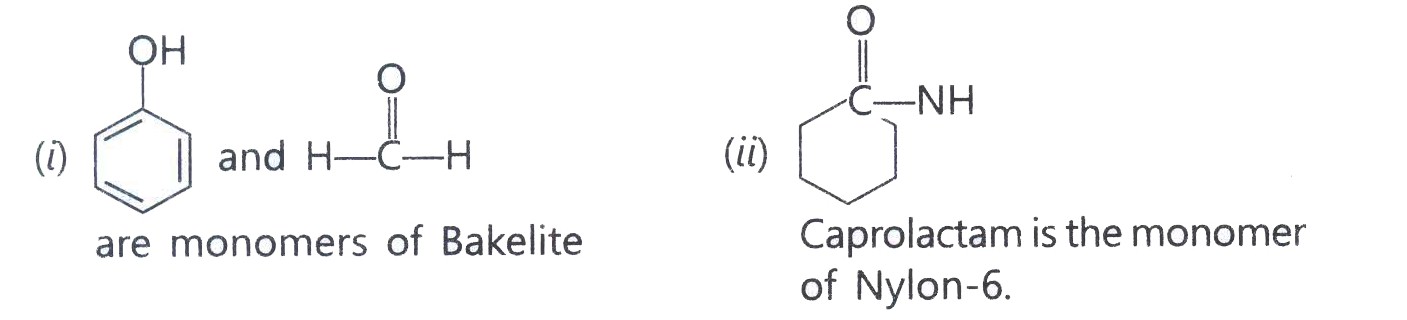
Draw the structures of the monomers of the following polymers :
(i) Bakelite
(ii) Nylon-6
5.
What are polymers ?
6.
Classify the following as addition and condensation polymers : Terylene, Bakelite, Polyvinyl chloride, polythene.
7.
Can enzyme be called a polymer ?
8.
Why should one always use purest monomer' in free radical polymerisation ?
9.
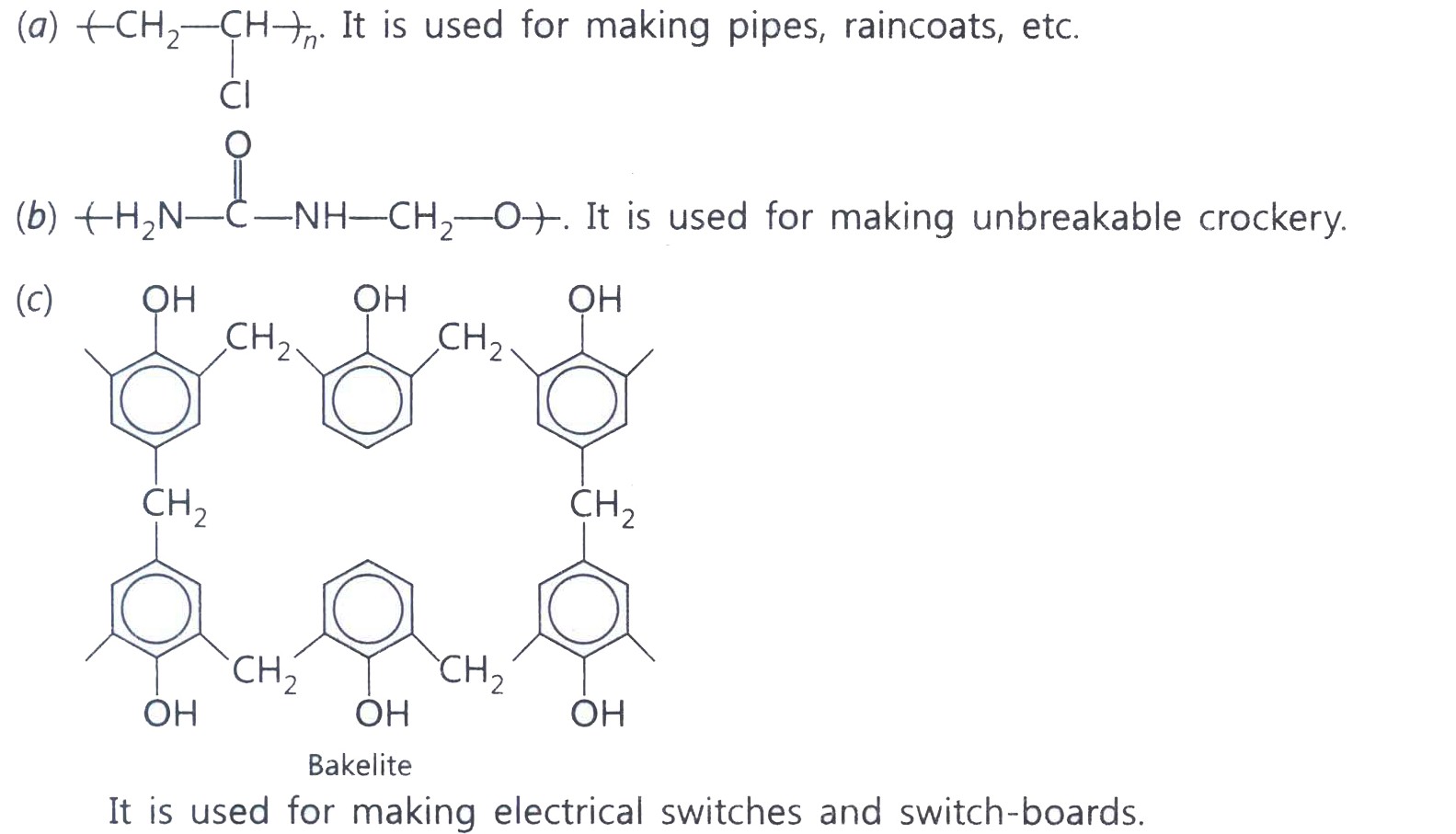
Write the (i) structure and (ii) one use of each of the following polymers:
(a) PVC
(b) Urea-formaldehyde resin
(c) Bakelite
10.
What are biodegradable polymers ? Give an example of such a polymer and mention its uses.
11.
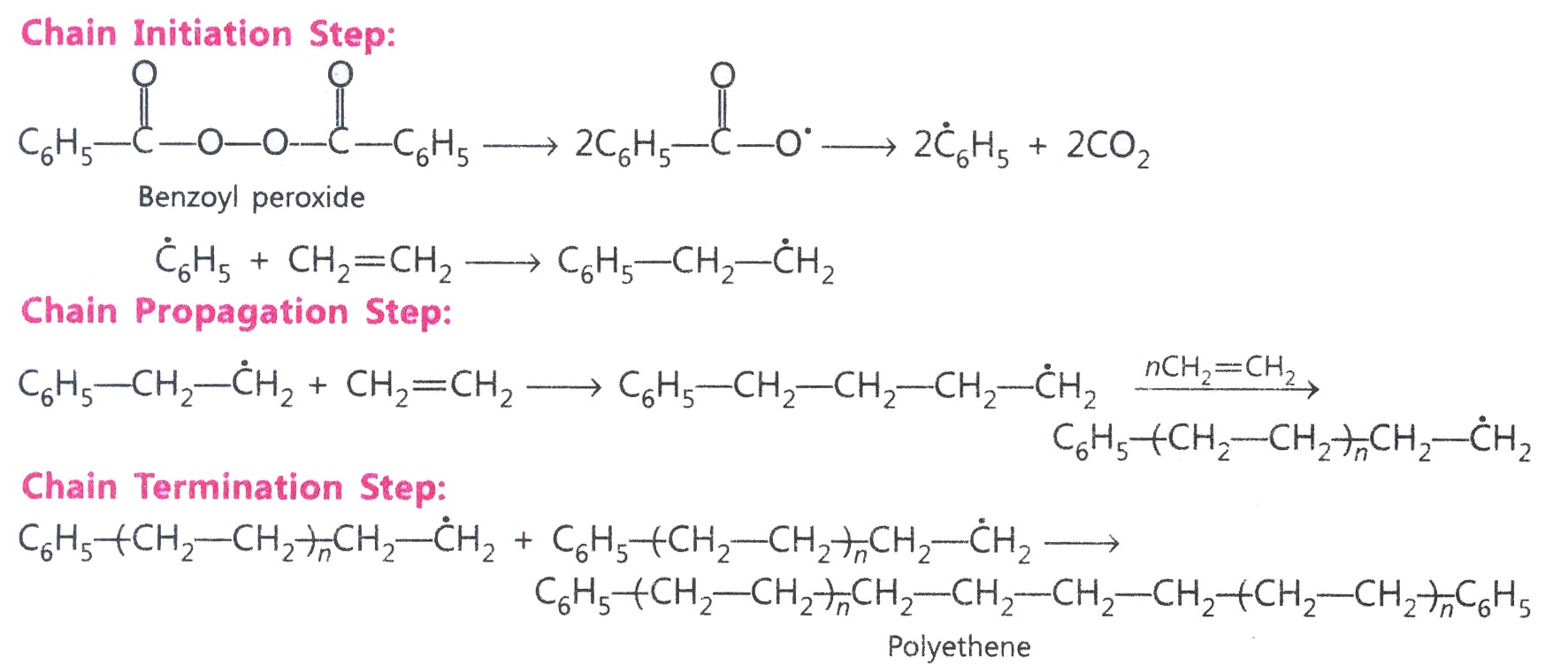
Write the free radical mechanism for the polymerisation of ethene.
12.
Which of the following statements is not true about low density polythene?
Tough
Hard
Poor conductor of electricity
Highly branched structure
13.
Which of the following is biodegradable polymer of polyamide class?
Dextron
Nylon-2-Nylon-6
Nylon-6,6
PHB V
14.
Natural rubber is a polymer of
butadiene
ethylene
isoprene
neoprene
15.
Which of the following is a branched polymer?
Low density polythene
Polyester
Nylon
PVC
16.
Rayon is a
natural polymer
semi - synthetic
synthetic polymer
none of these
17.
Nylon 6 is obtained by polymerization of..............
18.
.......... is obtained by polymerization of .............. and is used for making non-stick utensils.
19.
Melamine-formaldehyde resin
20.
Low density polythene
21.
Bakelite
22.
Copolymer of 1,3-butaiene and acrylonitrile
23.
Polyester of glycol and terephthalic acid
24.
Polymers are giant molecules having very high molecular masses. Several of them occur in nature and find a variety of applications in our daily life and industry. Cellulose, starch, proteins, rubber etc. are some examples of natural polymers. Now answer the following questions:
(i)Does use of natural polymer cause pollution problems?
(ii) Name an inorganic natural polymer which is quite abundant in nature.
(iii) Name three polymers which are used in textile industry.
(iv) In what form is natural rubber usually used in rubber industry?
25.
After the ban on plastic bags, students of a school decided to make people aware of the harmful effects of plastic bags on the environment and Yamuna River. To make the awareness more impactful, they organised a rally by partnering with other schools and distributed paper bags to vegetable vendors, shopkeepers and departmental stores. All the students pledged not to use polythene bags in the future to save the Yamuna River.
After reading the above passage, answer the following questions:
(i) What values are shown by the students?
(ii) What are bio-degradable polymers ? Give one example.
(iii) Is polyethene a condensation or an addition polymer?
1.
Polythene, polyvinyl and polystyrene soften on heating and harden on cooling. Such polymers are called thermoplastic polymers. These possess intermolecular forces of attraction whose strength lies between strength of intermolecular forces of elastomers and. fibers. These polymers are linear or slightly.
2.
High-density polythene is obtained by coordination polymerization while low-density polythene is obtained by free radical polymerization. High-density polyethene has linear structure while low-density polythene has branched chain structure. High-density polythene has greater toughness, hardness and tensile strength than low-density polyethene. Therefore, high-density polyethene is used for making buckets, tubs, containers, household pipes, etc. while low-density polythene is mainly used as a packaging material (in form of thin films and bags), as insulation for electrical wires and cables and also for the manufacture of flexible pipes and squeeze bottles
3.
The repeating structural unit is obtained by condensing at both ends of both the bifunctional molecules,
i.e., succinic acid (HOOCCH2CH2COOH) and ethylenediamine with the elimination of water molecules,
i.e., -OCCH2CH2CO-NHCH2CH2NH-
4.
5.
Those molecules which are formed from large number of small molecules (monomers) under specific conditions of temperature and pressure are called polymers.
6.
Addition polymers : Polyvinyl chloride, Polythene.
7.
()
Yes. Enzymes are biocatalyst which are proteins, polymers of amino acids.
8.
It is because even the traces of certain impurities, which can act as chain transfer agent (or inhibitor can interfere with the original polymerisation chain reaction. Hence, monomers should be free from all impurities, particularly inhibitors (or chain tranfer agents) like CC 4,CBr 4, amines, phenols, quinones etc .
9.
10.
Biodegradable polymers: Those polymers which are biodegradable, i.e. decomposed by microorganisms and do not create water pollution, e.g. PHBV.
Poly (Glycolic acid) and Poly (Lactic acid) are biodegradable polymers such as sutures.Dextron was the first bioabsorbable suture made from biodegradable polyester for post operative stiches
11.
12.
(d)
Highly branched structure
13.
(b)
Nylon-2-Nylon-6
14.
(c)
isoprene
15.
(a)
Low density polythene
16.
(b)
semi - synthetic
17.
()
caprolactam
18.
()
Teflon,tetrafluioroethene
19.
()
Unbreakable crockery
20.
()
Squeeze bottles
21.
()
Electrical switches
22.
()
Dacron
23.
()
Buna-N
24.
(i) Natural polymers are biodegradable and therefore do not accumulate in the environment. Hence, the use of natural polymers in our daily life is safe from pollution point of view. 1
(ii) Silicates are natural inorganic polymers and are quite abundant in nature.
(iii) Cotton, wool and natural silk are abundantly used in textile industry.
(iv) Natural rubber is a gummy material with poor elasticity and has no cross links. Therefore, it gets permanently.-Aeformed on being stretched. To improve it vulcanization process is followed. For most of the purpose, it is used in the vulcanized form.
25.
(i) From the given passage, we can conclude that the students show awareness about the environment.
(ii) A polymer that can be decomposed by microorganisms within a definite period of time so that the polymer or its degraded product does not cause any harm to the environment, is called a bio-degradable polymer. For example, poly- \(\beta\)- hydroxybutyrate-co-\(\beta\)-hydroxy valerate.
(iii) Polythene is an addition polymer that is formed by the addition of ethene molecules.

12th Standard CBSE Syllabus & Materials
12th Standard CBSE
CBSE 12th Computer Science Python Revision Tour I - New Previous year Question Papers Study Material - QB365 Set A
NEW12th Standard CBSE
CBSE 12th Business Studies Planning Important Questions And Answers Study Material - QB365 Set A
NEW12th Standard CBSE
CBSE 12th Business Studies Business Environment Important Questions And Answers Study Material - QB365 Set A
NEW12th Standard CBSE
CBSE 12th Business Studies Principles of Management Important Questions And Answers Study Material - QB365 Set A



CBSE 12th Standard CBSE Subjects
CBSE Standards










