
 100% FREE ACCESS
12th Standard CBSE Syllabus & Materials
12th Standard CBSE
CBSE 12th Economics Government Budget and the Economy Previous year Question Papers Study Material - QB365 Set A
NEW12th Standard CBSE
CBSE 12th Computer Science Interface Python with MySQL - New Previous year Question Papers Study Material - QB365 Set A
NEW12th Standard CBSE
CBSE 12th Computer Science Database Concept - New Previous year Question Papers Study Material - QB365 Set A
NEW12th Standard CBSE
CBSE 12th Computer Science Data Communication - New Previous year Question Papers Study Material - QB365 Set A
NEW12th Standard CBSE
CBSE 12th Computer Science Data Structures - New Previous year Question Papers Study Material - QB365 Set A
NEW12th Standard CBSE
CBSE 12th Computer Science Functions - New Previous year Question Papers Study Material - QB365 Set A

Published on: 28/07/2019
The Theory of the Firm under Perfect Competition
Download CBSE Class 12th Standard CBSE undefined question papers, sample papers, important questions, and previous year solved papers in PDF format. Get free study materials, NCERT solutions, and exam preparation resources for Class 12th Standard CBSE undefined
Questions + Answers key
Take MCQ Biology Test
1.
What are the characteristics of a perfectly competitive market?
2.
Explain feature 'large number of sellers and buyers' of a perfect competitive market.
3.
Why is firm price taker in the market under perfect competition?
4.
Explain what happens to losses in the long run if the firms are free to leave the industry.
5.
Explain what happens to profits in the long run if the firms are free to entry the industry.
6.
Mention three features of perfect competition.
7.
What is the relation between market price and average revenue of a price-taking firm?
8.
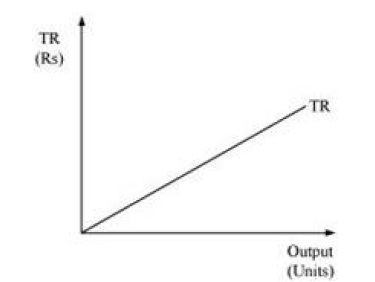
Why is the total revenue curve of price-taking firm an upward sloping straight line? Why does the curve pass through the origin?
9.
What is the 'price line'?
10.
How are the total revenue of a firm, market price and the quantity sold by the firm related to each other?
11.
Name the characteristics which make monopolistic competition different from the perfect competition.
12.
Define perfect competition.
13.
In which market form, AR and MR of a firm always equal?
14.
In which market form are the products homogeneous?
15.
Under which market form, a firm is a price taker?
16.
Break-even point is defined as a situation when__________.
17.
Profit of a producer is calculated by taking the difference between its Total Cost and __________.
18.
Long period is a time period when all factors are___________.
19.
________________ creates utility.
20.
The main objective of producer is ____________.
21.
The necessary conditions of firm's equilibrium are (i) MR=MC and (ii) MC is rising.
22.
Break-even point is defined as a situation when TR>TC.
23.
Shut-down point is defined as a situation when TR=TVC.
24.
In perfect competition, equilibrium is determined at point where MR>MC.
25.
Shut-down point means shutting down the firm.
26.
Which among the following is the cause of extension and contraction in supply?
Technological change.
Change in input price
Change in the price of commodity
All of these
27.
From where can we define the slope of the MR curve?
TR curve
AR curve
TC curve
MC curve
28.
Which among the following is the method of working out producer's equilibrium?
TR-TC method
MR-MC method
Isoquant Curve method
All of these
29.
In the situation of producers equilibrium, MR is __________ to MC.
More
Less
Negative
Equal
30.
Producing maximum with minimum cost is known as ___________.
consumer equilibrium
Producer's equilibrium
Profit
Loss
1.
Following are the characteristics of a perfectly competitive market
(i) Very Large Number of Buyers and Sellers: There is such a large number of buyers and sellers that none them is in a position to influence the price in the market. The price of a good is determined by the whole industry, that is, by the combined actions of all the sellers and buyers. The firms are, therefore, called price-takers under perfect competition.
(ii) Homogeneous Goods: The goods sold in the market are homogeneous or identical in every aspect like quality, size, design, colour, etc. The goods are perfect substitutes of one another. As a result, no buyer has reasons to be attached to a particular firm. No seller can charge a higher price otherwise he will lose his customers.
(iii) Free Entry and Exit: Buyers and sellers (firms) are free to enter or leave the market at any time they like. Large profits will induce the new firms to enter the industry; whereas losses will compel ~ inefficient firms to leave the industry.
(iv) Perfect Knowledge: Buyers and sellers have perfect knowledge about the prices and costs of the goods in different parts of the market. Evidently,this leads to ~mergence of uniform price of the product since no seller can afford to charge a price higher than. the prevailing one otherwise he . will lose all his customers to his competitors.
(v) Absence of Transport Cost: Under prefect competition, it is assumed that different firms work so close to each other that there is no transport cost for customers.
(vi) Perfect Mobility: There is a free and complete mobility of factors of production. They are free to enter any industry, if considered profitable and leave any industry when remuneration is inadequate.Similarly, there is a perfect mobility of goods.
2.
There is such large number of buyers and sellers that none of them is in a position to influence the price in the market. Each buyer purchases only a small fraction of the total purchases in the market and is not in a position to influence the price of the good by restricting his purchase. Likewise, each seller produces only a small fraction of the total output in the market and is not in a position to influence the price of the good by withdrawing. The price of a good is determined by the whole industry, that is, by the combined actions of all the sellers and buyers.
3.
Perfect competition is a market situation in which a large number of sellers sell homogeneous product with free entry and exit conditions. The price of the product under perfect competition is determined in the industry by the market forces of demand and supply. An individual firm is merely a price taker and not a price maker. The presence of large number of sellers offering homogeneous product forces the perfectly competitive firms to charge a uniform price.
4.
The freedom to entry and exit ensures that the firms earn just the normal profits in the long-run. If the existing firms are incurring losses, the incompetent firms will start leaving the market. As a result, the supply will fall and the price goes up. The price will continue to rise till the losses are wiped out and firms are just earning normal profits.
5.
The freedom to entry and exit ensures that the firms earn just the normal profits in the long run. If the existing firms earn above-normal profits, new firms will enter the industry. This will raise the supply and bring the price down. The profits will fall till each firm is once again earning only the normal profits.
6.
Following are the three main features of perfect competition:
(i) There are a large number of buyers and sellers in the market.
(ii) The products sold by each firm are homogeneous or identical.
(iii) There is free entry and exit of firms.
7.
Average Revenue is defined as the revenue per unit of the output sold. It is expressed as the ratio between total revenue and the output sold.
\(\mathrm{AR}=\frac{\mathrm{TR}}{Q}\)
We know that
TR = P x Q
\(\mathrm{AR}=\frac{P \times Q}{Q}\)
AR = P
Thus, the market price and the average revenue are the same for a perfect competitive firm.
8.
The total revenue curve for a firm in a perfectly competitive market is an upward sloping curve because the price or AR remains constant and MR is also equal to AR. Thus, TR can only be influenced by altering the output sold, as the price remains constant. The increase in TR is in the same proportion as the increase in the output sold.
The curve passes through the origin, which implies that no matter what the price level is, if the output sold is zero, TR will also be zero.
9.
Price line is the graphical representation of the relationship between output and price, with x- axis denoting the output and y-axis denoting the price. For a perfectly competitive firm, price line and demand curve are the same.
10.
Total revenue is defined as the total sales proceeds of a producer by selling corresponding level of output. In other words, it is defined as price times the quantity of output sold.
Total Revenue = Price × Quantity of output sold
TR = P x Q
TR = PQ
In a perfectly competitive market, the market price is given, i.e., a firm acts as a price taker and cannot influence the price. Hence, a particular firm can influence its TR by altering the quantity of output sold.
11.
()
The characteristic of homogeneous product makes monopolistic competition different from perfect competition.
12.
()
Perfect competition is a market situation in which a large number of sellers sell homogeneous product with free entry and exit conditions.
13.
()
AR and MR of a firm are always equal under perfect competition.
14.
()
The products are homogeneous in the perfectly competitive market form.
15.
()
A firm is a price taker under perfectly competitive market form.
16.
()
TR = TC
17.
()
Total revenue
18.
()
Variable
19.
()
Producer
20.
()
Profit maximisation
21.
(a)
22.
(b)
23.
(a)
24.
(b)
25.
(a)
26.
(c)
Change in the price of commodity
27.
(a)
TR curve
28.
(d)
All of these
29.
(d)
Equal
30.
(b)
Producer's equilibrium

12th Standard CBSE Syllabus & Materials
12th Standard CBSE
CBSE 12th Computer Science Python Revision Tour I - New Previous year Question Papers Study Material - QB365 Set A
NEW12th Standard CBSE
CBSE 12th Business Studies Planning Important Questions And Answers Study Material - QB365 Set A
NEW12th Standard CBSE
CBSE 12th Business Studies Business Environment Important Questions And Answers Study Material - QB365 Set A
NEW12th Standard CBSE
CBSE 12th Business Studies Principles of Management Important Questions And Answers Study Material - QB365 Set A



CBSE 12th Standard CBSE Subjects
CBSE Standards











