
 100% FREE ACCESS
12th Standard CBSE Syllabus & Materials
12th Standard CBSE
CBSE 12th Economics Government Budget and the Economy Previous year Question Papers Study Material - QB365 Set A
NEW12th Standard CBSE
CBSE 12th Computer Science Interface Python with MySQL - New Previous year Question Papers Study Material - QB365 Set A
NEW12th Standard CBSE
CBSE 12th Computer Science Database Concept - New Previous year Question Papers Study Material - QB365 Set A
NEW12th Standard CBSE
CBSE 12th Computer Science Data Communication - New Previous year Question Papers Study Material - QB365 Set A
NEW12th Standard CBSE
CBSE 12th Computer Science Data Structures - New Previous year Question Papers Study Material - QB365 Set A
NEW12th Standard CBSE
CBSE 12th Computer Science Functions - New Previous year Question Papers Study Material - QB365 Set A

Published on: 25/10/2025
Download CBSE Class 12th Standard CBSE Chemistry question papers, sample papers, important questions, and previous year solved papers in PDF format. Get free study materials, NCERT solutions, and exam preparation resources for Class 12th Standard CBSE Chemistry
Questions + Answers key
Take MCQ Chemistry Test
1.
A compond (X) with the molecular formula C3H8O can be oxidised to another compound (Y) whose molecular formula is C3H6O2. The compound (X) may be
CH3CH2 - O - CH3
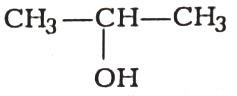
CH3 - CH2 - CH2 - OH
CH3 - CH2 - CHO
2.
Dilution affects both conductivity as well as molar conductivity. Effect of dilution on both is as follows:
Both increase with dilution.
Both decreases with dilution
Conductivity increases whereas molar conductivity decreases on dilution.
Conductivity decreases whereas molar conductivity increases on dilution.
3.
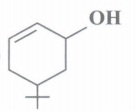
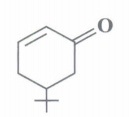
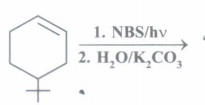 'X' is

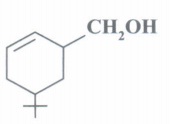
4.
The number of moles of KMnO4 that will be needed to react with one mole of SO32- in acidic solution.
1
3/5
4/5
2/5
5.
When acidified K2Cr2O7solution is added to Sn2+ salt then Sn 2+changes to
Sn
Sn3+
Sn4+
Sn+
6.
Consider the following statements in respect of lanthanides :
1. The basic strength of hydroxides of lanthanides increases from La (OH)3 to Lu(OH)3.
2. The lanthanide ions Lu3+,Yb2+ and Ce4+ are diamagnetic.
Which of the statement(s) given above is/ are correct ?
1 only
2 only
both 1 and 2
Neither 1 nor 2
7.
The atomic number of cerium (Ce) is 58. The correct electronic configuration of Ce3+ ion is
\([Xe]{ 4f }^{ 1 }\)
\([Xe]{ 4f }^{ 1 }\)
\([Xe]{ 4f }^{ 13 }\)
\([Xe]{ 4d }^{ 1 }\)
8.
In acidic medium, \({ MnO }_{ 4 }^{ 2- }\)
disproportionates to MnO2 and \({ MnO }_{ 4 }^{ - }\)
is oxidized to \({ MnO }_{ 4 }^{ - }\)
is reduced to MnO2
is reduced to Mn2+
9.
Which of the following compounds will give a yellow precipitate with iodine and alkali?
Acetophenone
Methyl acetate
Acetamide
2-Hydroxypropane
10.
2-Methyl-2-propanol may be prepared by reacting methylmagnesium iodide with
propanone
ethyl ethanoate
ethanal
ethylene oxide
11.
Among the following sets of reactants which one produces anisole?
CH3CHO; RMgX
C6H5OH; CH3I
C6H5OH; neutral FeCl3
C6H5CH3; CH3COCl; AlCl3
12.
Products obtained when HI reacts with isopropyl methyl ether at 373 K are
isopropyl iodide and methyl alcihol
isopropyl alcohol and methyl iodide
isopropyl iodide and water
methyl iodide and water
13.
If the E0cell for a given reaction has a negative value, then which of the following gives the correct relationships for the values of \({ \Delta G }^{ 0 }\) and Keq ?
\({ \Delta G }^{ 0 }>0;{ K }_{ eq }<1\)
\({ \Delta G }^{ 0 }>0;{ K }_{ eq }>1\)
\({ \Delta G }^{ 0 }<0;{ K }_{ eq }>1\)
\({ \Delta G }^{ 0 }<0;{ K }_{ eq }<1\)
14.
The e.m.f. of the cell Zn | Zn2+ (0.01 M) || Fe2+ (0.001 M) | Fe at 298 K is 0.2905 volt. Then the value of equilibrium constant for the cell reaction is
\(\frac { 0.32 }{ { e }^{ 0.0295 } } \)
\(\frac { 0.32 }{ { 10 }^{ 0.0295 } } \)
\(\frac { 0.26 }{ { 10 }^{ 0.0295 } } \)
\(\frac { 0.32 }{ { 10 }^{ 0.0591 } } \)
15.
When measured against a standard calomel electrode, an electrode is found to have a standard reduction potential of 0.100 V. If standard reduction potential of calomel electrode is + 0.244 V and it acts as anode, the standard electrode potential of the same electrode against standard hydrogen electrode will be
- 0.144 V
+ 0.100 V
- 0.344 V
- 0.100 V
16.
Electrolysis of dilute aqueous NaCl solution was carried out by passing 10 milli ampere current. The time required to liberate 0.01 mol of H2 gas at the cathode is (1 Faraday = 96500 C mol-1)
9.65 x 10⁴ sec
19.3 x 10⁴ sec
28.95 x 10⁴ sec
38.6 x 10⁴ sec
17.
Which of the following is not a transition element ?
Zn
Ru
Ag
Pb
18.
What will happen during the electrolysis of aqueous solution of CuSO4 by using platinum electrodes?
Copper will deposit at cathode
Copper will deposit at anode
Oxygen will be released at anode
Copper will dissolve at anode
19.
What will be the e.m.f of the given cell ? Pt | H2 (P1) | H+ (aq) | H2 (P2) | Pt
\(\frac { RT }{ F } In\frac { { P }_{ 1 } }{ { P }_{ 2 } } \)
\(\frac { RT }{ 2F } In\frac { { P }_{ 1 } }{ { P }_{ 2 } } \)
\(\frac { RT }{ F } In\frac { { P }_{ 2 } }{ { P }_{ 1} } \)
none of these
20.
A dilute aqueous solution of Na2 SO4 is electrolysed using platinum electrodes. The products at the anode and cathode are
O2 , H2
SO2 , Na
O2 , Na
S2 O82- , H2
21.
22.
23.
24.
25.
Assertion: Zinc can be used while copper cannot be used in the recovery of Ag from the complex [Ag(CN)2 ] – .
Reason: Zinc is a powerful reducing agent than copper.
Codes:
(a) If both assertion and reason are true and reason is the correct explanation of assertion.
(b) If both assertion and reason are true, but reason is not the correct explanation of assertion.
(c) If assertion is true, but reason is false.
(d) If both assertion and reason are false
26.
Assertion (A) : Conductivity decreases with decrease in concentration of electrolyte.
Reason (R) : Number of ions per unit volume that carry the current in a solution decreases on dilution.
(a) Both (A) and (R) are correct and (R) is the correct explanation of (A).
(b) Both (A) and (R) are correct but (R) is not the correct explanation of (A).
(c) (A) is correct and (R) is incorrect.
(d) (A) is incorrect but (R) is correct.
27.
Assertion (A) C2H5OH is a weaker base than phenol but is a stronger nucleophile than phenol.
Reason (R) In phenol the lone pair of electrons or oxygen is withdrawn towards the ring due to resonance.
(a) Both (A) and (R) are correct, (R) is the correct explanation of (A).
(b) Both (A) and (R) are correct, (R) is not the correct explanation of (A).
(c) (A) is correct; (R) is incorrect.
(d) (A) is incorrect; (R) is correct.
28.
Assertion (A) : Copper is a non-transition element.
Reason (R) : Copper has completely filled d-otrbitals in its ground state.
(a) Both (A) and (R) are correct, (R) is the correct explanation of (A).
(b) Both (A) and (R) are correct, (R) is not the correct explanation of (A).
(c) (A) is correct; (R) is incorrect.
(d) (A) is incorrect; (R) is correct
29.
Assertion (A) p-methoxyphenol is a stronger acid than p-nitrophenol.
Reason (R) Methoxy group shows + I effect whereas nitro group shows -I effect.
(a) Both Assertion (A) and Reason (R) are true and Reason (R) is the correct explanation of Assertion (A).
(b) Both Assertion (A) and Reason (R) are true, but Reason (R) is not the correct explanation of Assertion (A).
(c) Assertion (A) is true, but Reason (R) is false.
(d) Asserton (A) is false, but Reason (R) is true.
30.
Assertion(A) Zr and HF are of almost similar atomic radii.
Reason (R) This is due to lanthanoid contraction.
(a) Both Assertion (A) and Reason (R) are true and Reason (R) is the correct explanation of Assertion (A).
(b) Both Assertion (A) and Reason (R) are true, but Reason (R) is not the correct explanation of Assertion (A).
(c) Assertion (A) is true, but Reason (R) is false.
(d) Asserton (A) is false, but Reason (R) is true.
31.
Assertion : Copper sulphate can be stored in zinc vessel.
Reason : Zinc is less reactive than copper.
Codes :
(a) Assertion and reason both are correct statements and reason is correct explanation for assertion.
(b) Assertion and reason both are correct statements but reason is not correct explanation for assertion.
(c) Assertion is correct statement but reason is wrong statement.
(d) Assertion is wrong statement but reason is correct statement.
32.
Assertion: ECell should have a positive value for the cell to function.
Reason: Ecathode < Eanode
codes :
(a) Assertion and reason both are correct statements and reason is correct explanation for assertion.
(b) Assertion and reason both are correct statements but reason is not correct explanation for assertion.
(c) Assertion is correct statement but reason is wrong statement.
(d) Assertion is wrong statement but reason is correct statement.
33.
Assertion: Boiling points of alcohols are lower than hydrocarbons.
Reason: Among isomeric alcohols, boiling point decreases in the order: 1°> 2° > 3°.
Codes:
(a) Assertion and reason both are correct statements and reason is correct explanation for assertion.
(b) Assertion and reason both are correct statements but reason is not correct explanation for assertion.
(c) Assertion is correct statement but reason is wrong statement.
(d) Assertion is wrong statement but reason is correct statement.
34.
Assertion : If standard reduction potential for the reaction,
\(\mathrm{Ag}^{+}+e^{-} \rightarrow \mathrm{Ag}\) is 0.80 volt, then for the reaction
\(2 \mathrm{Ag}^{+}+2 e^{-} \rightarrow 2 \mathrm{Ag}\) it will be 1.60 volt.
Reason : If concentration of Ag+ ions is doubled, the standard electrode potential remains same .
Codes :
(a) Assertion and reason both are correct statements and reason is correct explanation for assertion.
(b) Assertion and reason both are correct statements but reason is not correct explanation for assertion.
(c) Assertion is correct statement but reason is wrong statement.
(d) Assertion is wrong statement but reason is correct statement.
35.
Assertion : If \(\lambda^{0}{ }_{\mathrm{Na}^{+}}\) and \(\lambda^{0}{ }_{\mathrm{Cl}^{-}}\) are molar limiting conductivities of the sodium and chloride ions respectively, then the limiting molar conductivity for sodium chloride is given by the equation, \(\Lambda_{\mathrm{NaCl}}^{\circ}=\lambda_{\mathrm{Na}^{+}}^{\circ}+\lambda_{\mathrm{Cl}^{-}}^{\circ}\)
Reason : This is according to Kohlrausch law of independent migration of ions.
Codes :
(a) Assertion and reason both are correct statements and reason is correct explanation for assertion.
(b) Assertion and reason both are correct statements but reason is not correct explanation for assertion.
(c) Assertion is correct statement but reason is wrong statement.
(d) Assertion is wrong statement but reason is correct statement.
36.
Assertion : Molar conductivity of a weak electrolyte at infinite dilution cannot be determined experimentally.
Reason : Kohlrausch law helps tofind the molar conductivity of a weak electrolyte at infinite dilution.
Codes :
(a) Assertion and reason both are correct statements and reason is correct explanation for assertion.
(b) Assertion and reason both are correct statements but reason is not correct explanation for assertion.
(c) Assertion is correct statement but reason is wrong statement.
(d) Assertion is wrong statement but reason is correct statement.
37.
Assertion: Zinc is used in the galvanisation of iron.
Reason: Its coating on iron articles increases their life by protecting them from rusting.
Codes:
(a) Assertion and reason both are correct statements and reason is correct explanation for assertion.
(b) Assertion and reason both are correct statements but reason is not correct explanation for assertion.
(c) Assertion is correct statement but reason is wrong statement.
(d) Assertion is wrong statement but reason is correct statement.
38.
In the following questions. an Assertion (A) is followed by a corresponding Reason (R) Use the following keys to choose the appropriate answer.
Assertion (A) Alcohols and phenols are soluble in water.
Reason (R) There occurs a dipole-dipole interaction of OH group of alcohol and phenol with water molecules which is responsible for their solubility in water.
Codes:
(a) Both (A) and (R) are correct, (R) is the correct explanation of (A).
(b) Both (A) and (R) are correct, (R) is not the correct explanation of (A).
(c) (A) is correct; (R) is incorrect.
(d) (A) is incorrect; (R) is correct.
39.
In the following questions an Assertion (A) is followed by a corresponding Reason (R) Use the following keys to choose the appropriate answer.
Assertion (A) La(OH)2 is more basic than La(OH)3.
Reason (R) The basic character of oxides and hydroxides decrease from La(OH)2 to La(OH)3.
Codes:
(a) Both (A) and (R) are correct, (R) is the correct explanation of (A).
(b) Both (A) and (R) are correct, (R) is not the correct explanation of (A).
(c) (A) is correct; (R) is incorrect.
(d) (A) is incorrect; (R) is correct.
40.
In the following questions.an Assertion (A) is followed by a corresponding Reason (R) Use the following keys to choose the appropriate answer.
Assertion (A) Conductivity always increases with decrease in concentration for strong and weak electrolytes.
Reason (R) Number of ions per unit volume decreases on dilution.
Codes:
(a) Both (A) and (R) are correct, (R) is the correct explanation of (A).
(b) Both (A) and (R) are correct, (R) is not the correct explanation of (A).
(c) (A) is correct; (R) is incorrect.
(d) (A) is incorrect; (R) is correct.
1.
(c)
CH3 - CH2 - CH2 - OH
2.
(d)
Conductivity decreases whereas molar conductivity increases on dilution.
3.
(b)
4.
(d)
2/5
5.
(c)
Sn4+
6.
(b)
2 only
7.
(a)
\([Xe]{ 4f }^{ 1 }\)
8.
(a)
disproportionates to MnO2 and \({ MnO }_{ 4 }^{ - }\)
9.
(d)
2-Hydroxypropane
10.
(a)
propanone
11.
(b)
C6H5OH; CH3I
12.
(b)
isopropyl alcohol and methyl iodide
13.
(a)
\({ \Delta G }^{ 0 }>0;{ K }_{ eq }<1\)
14.
(b)
\(\frac { 0.32 }{ { 10 }^{ 0.0295 } } \)
15.
(b)
+ 0.100 V
16.
(b)
19.3 x 10⁴ sec
17.
(d)
Pb
18.
(a)
Copper will deposit at cathode
19.
(b)
\(\frac { RT }{ 2F } In\frac { { P }_{ 1 } }{ { P }_{ 2 } } \)
20.
(a)
O2 , H2
21.
22.
23.
24.
25.
(a) If both assertion and reason are true and reason is the correct explanation of assertion.
Explanation:
Zinc is used in the recovery of Ag from the complex [Ag(CN)2]– whereas copper is not used because zinc is more powerful reducing agent than copper. Thus, both assertion and reason are true and reason is the correct explanation of assertion.
26.
(a) Both (A) and (R) are correct and (R) is the correct explanation of (A).
27.
(d) C2H5OH is a weaker acid than phenol as in phenol the lone pair of electrons on oxygen is withdrawn towards the ring due to resonance, leaving oxygen with a positive charge thus increasing acidity.
28.
(a) Both (A) and (R) are correct, (R) is the correct explanation of (A).
29.
(d) p-nitrophenol is more acidic than p-methoxyphenol. This is because the nitro group is an electron-withdrawing group, which stabilises the phenoxide ion formed when the phenol losses a proton, making it easier for the phenol to donate a proton and thus increasing its acidity.
Hence, Assertion (A) is false but Reason (R) is true.
30.
(a) Both (A) and (R) are true and (R) is the correct explanation of the (A).
31.
(d) Assertion is wrong statement but reason is correct statement.
32.
(c) Assertion is correct statement but reason is wrong statement.
33.
(d): Alcohols undergo intermolecular H-bonding and hence, their boiling points are higher than those of hydrocarbons.
Among isomeric alcohols, boiling point decreases in the order: 1° > 2° > 3°.
34.
(d) : Standard reduction potential of an electrode has a fixed value
35.
(a) : According to Kohlrausch law, "limiting molar conductivity of an electrolyte can be represented as the sum of the individual contributions of the anion and cation of the electrolyte".
36.
(b) : In the plot of molar conductivity versus concentration, the extrapolation to zero concentration is not possible.
37.
(a): Zinc has no action of air or water on it and thus, its coating on iron articles increase their life by protecting them from rusting.
38.
(c) Solubility of alcohols and phenols in water is due to their ability to form hydrogen bonds with water molecules.
The solubility decreases with increase in size of the alkyl/aryl groups. Several lower molecular mass alcohols are miscible with water in all proportions. Hence, (A) is correct but (R) is incorrect.
39.
(b) La(OH)3 is more basic than La(OH)3. Due to lanthanoid contraction the size of lanthanoid ions decreases regularly with increase in atomic size. As a result of decrease in size their covalent character between lanthanoid ions and OH- ions increase from La+3 to Lu +3. Therefore, the basic character of hydroxide decrease from La(OH)3 to La(OH)3, Thus, Both (A) and (R) are correct but (R) is not the correct explanation of (A).
40.
(d) Conductivity always decreases with decrease in concentration for weak and strong electrolytes. This is explained by the decrease in the number of ions per unit volume that carry current in solution on dilution. Thus, (A)is incorrect but (R)is correct.

12th Standard CBSE Syllabus & Materials
12th Standard CBSE
CBSE 12th Computer Science Python Revision Tour I - New Previous year Question Papers Study Material - QB365 Set A
NEW12th Standard CBSE
CBSE 12th Business Studies Planning Important Questions And Answers Study Material - QB365 Set A
NEW12th Standard CBSE
CBSE 12th Business Studies Business Environment Important Questions And Answers Study Material - QB365 Set A
NEW12th Standard CBSE
CBSE 12th Business Studies Principles of Management Important Questions And Answers Study Material - QB365 Set A



NCERT Books

Syllabus

Exam Pattern

Sample Question Papers

Previous year Question Papers

Important Notes

MCQ Practice test

NCERT Exemplers

Case study Questions

Image Based Questions

Passage based Questions

HOT Questions

Value Based Questions

Model Questions Papers
NCERT ( Book Back ) Questions

Assertion and Reason
Important Questions And Answers

CBSE 12th Standard CBSE Subjects
CBSE Standards








