
 100% FREE ACCESS
12th Standard CBSE Syllabus & Materials
12th Standard CBSE
CBSE 12th Economics Government Budget and the Economy Previous year Question Papers Study Material - QB365 Set A
NEW12th Standard CBSE
CBSE 12th Computer Science Interface Python with MySQL - New Previous year Question Papers Study Material - QB365 Set A
NEW12th Standard CBSE
CBSE 12th Computer Science Database Concept - New Previous year Question Papers Study Material - QB365 Set A
NEW12th Standard CBSE
CBSE 12th Computer Science Data Communication - New Previous year Question Papers Study Material - QB365 Set A
NEW12th Standard CBSE
CBSE 12th Computer Science Data Structures - New Previous year Question Papers Study Material - QB365 Set A
NEW12th Standard CBSE
CBSE 12th Computer Science Functions - New Previous year Question Papers Study Material - QB365 Set A

Published on: 25/10/2025
Download CBSE Class 12th Standard CBSE Chemistry question papers, sample papers, important questions, and previous year solved papers in PDF format. Get free study materials, NCERT solutions, and exam preparation resources for Class 12th Standard CBSE Chemistry
Questions + Answers key
Take MCQ Chemistry Test
1.
Compounds A and C in the following reaction are

identical
positional isomers
functional isomers
optical isomers
2.
In Arrhenius plot of Ink Vs \(\frac{1}{\mathrm{~T}}\) is a linear plot obtained with slope of -2 x 10⁴ k. Ea of reaction in kJ mol -1.
83
166
249
332 kJ mol -1
3.
Which of the following is affected by catalyst?
\(\triangle\)H
\(\triangle\)S
\(\triangle\)G
Ea
4.
Ethyne + H2O  Product formed in the given reaction is
benzaldehyde
acetaldehyde
ethanoic acid
ethanoyl chloride
5.
Which of the following compounds is most reactive towards nucleophilic addition reactions?
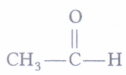
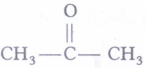
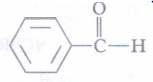
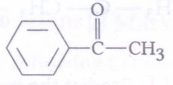
6.
Addition of water to butyne occurs in acidic medium and in the presence of Hg2+ ions as a catalyst. The product formed is
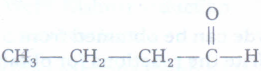
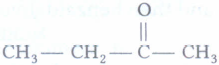
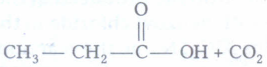
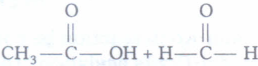
7.
Which of the following compounds will give butanone on oxidation with alkaline KMnO4 solution?
Butan - I - oI
Butan - 2 - ol
Both of these
None of these
8.
Which of the following reagents are used for detecting the presence of carbonyl group ?
NH2OH
NH2NH2
H2NCONHNH2.HCI
C6H5NHNH2.HCI
9.
The distinguishing test between methanoic acid and ethanoic acid is
Tollens' test
sodium bicarbonate test
Litmus test
esterification test
10.
When CH2 = CH _ COOH is reduced with LiAIH4 the compound obtained will be
CH3 _ CH2 _ CHO
CH3 _ CH2 _ COOH
CH2 = CH _ CH2OH
CH3 _ CH2 _ COOH
11.
Methyl benzoate can ve prepared by
C6H5COOH + CH3OH \(\xrightarrow {H^{+}}\)
C6H5COCI+ CH3OH \(\xrightarrow {Pyridine}\)
C6H5COOH + CH3N2 \(\longrightarrow \)
All the above methods
12.
Sodium ethoxide reacts with ethanoyl chloride. The compound that is produced in the above reaction is
2-butanone
ethyl chloride
ethyl ethanoate
diethyl ether
13.
The correct increasing order of the acid strength of benzoic acid (I), 4-nitrobenzoic acid (II),3, 4-finitrobenzonic acid (III) and 4-methoxybenzoic acid (IV) is
I < II < III < IV
II < I < IV < III
IV < I < II < III
IV < II < I < III
I < IV < II < III
14.
Which of the following is the industrial method of preparation of acetaldeyde ?
CH3CN \(\xrightarrow [ HCI ]{ Sn{ CI }_{ 2 } } \) CH3CH = NH \(\xrightarrow {H_3O^{+}}\)
CH3COCI + H2 \(\xrightarrow [ BaSO_4 ]{Pd } \) CH3CHO + HCI
CH2 = CH2 + H2O \(\xrightarrow {Pd ^{2+}}\)
All of the above.
15.
Kinetics of the reaction A (g) \(\longrightarrow\) 2 B (g) + C (g) is followed by measuring the total pressure at different times. It is given that
Initial pressure of A = 0.5 atm.
Total pressure of A after 2 hours = 0.7 atm
Rate constant of the reaction = 1 \(\times 10 ^{-3}s^{-1}\)
What is the rate of reaction \(-\frac {d[A]}{dt}\) when the total pressure is 0.7 atm?
2.0 \(\times 10^{-4}M s^{-1}\)
4.0\(\times 10^{-4}M s^{-1}\)
5.0\(\times 10^{-4}M s^{-1}\)
7.0\(\times 10^{-4}M s^{-1}\)
16.
According to Maxwell Boltzmann distribution of energy, ....... .
the fraction of molecules with most probable kinetic energy decreases at higher temperatures
the fraction of molecules with most probable kinetic energy increases at higher temperatures
most probable kinetic energyincreases at higher temperatures
most probable kinetic energy decreasesat higher temperatures.
17.
75% of the first order reaction was completed in 32 min. 50% of the reaction was completed in
24 min
8 min
16 min
4 min
18.
The rate of a chemical reaction doubles for every 10oC rise of temperature. If the temperature is raised by 50oC, the rate the reaction increses by about :
24 times
32 times
64 times
10 times
19.
A first order reaction has a half-life period of 34.65 seconds. Its rate constant is
2 \(\times 10\) -2 sec-1
4 \(\times 10\) -4 sec-1
20 sec-1
2 \(\times 10\) -4 sec-1
20.
In a reaction \(\longrightarrow\) B, the rate of reaction increases two times on increasing the concentration of the reactant four times, then order of reaction is
0
2
1/2
4
21.
22.
23.
24.
25.
Assertion: Ketones have a low boiling point compared to corresponding alcohols.
Reason: Ketones from intermolecular hydrogen bonding with alcohols.
Codes:
(a) If both assertion and reason are true and the reason is the correct explanation of the assertion.
(b) If both assertion and reason are true but the reason is not the correct explanation of the assertion.
(c) If the assertion is true but the reason is false.
(d) If the assertion is false but the reason is true.
(e) If the assertion and reason both are false
26.
Assertion: Isobutanal does not give an iodoform test.
Reason: It does not have ∝-hydrogen.
Codes:
(a) If both assertion and reason are true and the reason is the correct explanation of the assertion.
(b) If both assertion and reason are true but the reason is not the correct explanation of the assertion.
(c) If the assertion is true but the reason is false.
(d) If the assertion is false but the reason is true.
(e) If the assertion and reason both are false
27.
Assertion: Acetaldehyde on treatment with alkaline gives aldol.
Reason: Acetaldehyde molecules contain a hydrogen atom.
Codes:
(a) If both assertion and reason are true and the reason is the correct explanation of the assertion.
(b) If both assertion and reason are true but the reason is not the correct explanation of the assertion.
(c) If the assertion is true but the reason is false.
(d) If the assertion is false but the reason is true.
(e) If the assertion and reason both are false
28.
29.
Assertion (A) : Hydrolysis of an ester follows first order kinetics.
Reason (R) : Concentration of water remains nearly constant during the course of the reaction.
(a) Both Assertion and Reason are correct, Reason is the correct explanation of Assertion.
(b) Both Assertion and Reason are correct, Reason is not the correct explanation of Assertion.
(c) Assertion is correct; Reason is incorrect.
(d) Assertion is incorrect; Reason is correct.
30.
Assertion (A) Aromatic carboxylic groups do not undergo Friedel- Crafts reaction.
Reason (R) Carboxyl group is deactivating and the catalyst aluminium chloride gets bonded to the carboxyl group.
(a) Both (A) and (R) are correct and (R) is the correct explanation of (A).
(b) Both (A) and (R) are correct but (R) is not the correct explanation of (A).
(c) (A) is correct but (R) is incorrect.
(d) (A) is incorrect but (R) is correct.
31.
Assertion (A) p-methoxyphenol is a stronger acid than m-methoxyphenol. Reason (R) Methoxy group exerts + R effect at both ortho and para position.
(a) Both Assertion (A) and Reason (R) are true and Reason (R) is the correct explanation of the Assertion (A).
(b) Both Assertion (A) and Reason (R) are true, but Reason (R) is not the correct explanation of Assertion (A).
(c) Assertion (A) is true, but Reason (R) is false.
(d) Assertion (A) is false, but Reason (R) is true.
32.
In the following questions a statement of assertion followed by a statement of reason is given.
Assertion: All collision of reactant molecules lead to product formation.
Reason: Only those collisions in which molecules have correct orientation and sufficient kinetic energy lead to compound formation .
Codes:
(a) Both assertion and reason are correct and the reason is correct explanation of assertion.
(b) Both assertion and reason are correct but reason does not explain assertion.
(c) Assertion is correct but reason is incorrect,
(d) Both assertion and reason are incorrect.
(e) Assertion is incorrect but reason is correct.
33.
Assertion: During reaction of carboxylic acids with NaHCO3, the CO2 evolved comes from carboxylic acid and not from NaHCO3.
Reason: Carbonic acid is a weaker acid than carboxylic acid.
Codes:
(a) Assertion and reason both are correct statements and reason is correct explanation for assertion.
(b) Assertion and reason both are correct statements but reason is not correct explanation for assertion.
(c) Assertion is correct statement but reason is wrong statement.
(d) Assertion is wrong statement but reason is correct statement.
34.
Assertion: Acetic acid in vapour state shows a molecular mass of 120.
Reason: It undergoes intermolecular hydrogen bonding.
Codes:
(a) Assertion and reason both are correct statements and reason is correct explanation for assertion.
(b) Assertion and reason both are correct statements but reason is not correct explanation for assertion.
(c) Assertion is correct statement but reason is wrong statement.
(d) Assertion is wrong statement but reason is correct statement.
35.
Assertion: Lower aldehydes and ketones are soluble in water but the solubility decreases as the molecular mass increases.
Reason: Distinction between aldehydes and ketones can be done by Tollens test.
Codes:
(a) Assertion and reason both are correct statements and reason is correct explanation for assertion.
(b) Assertion and reason both are correct statements but reason is not correct explanation for assertion.
(c) Assertion is correct statement but reason is wrong statement.
(d) Assertion is wrong statement but reason is correct statement.
36.
Assertion: NaHSO3 is used for the purification of carbonyl compounds.
Reason: They are used in the blending of perfumes and flavouring agents.
Codes
(a) Assertion and reason both are correct statements and reason is correct explanation for assertion.
(b) Assertion and reason both are correct statements but reason is not correct explanation for assertion.
(c) Assertion is correct statement but reason is wrong statement.
(d) Assertion is wrong statement but reason is correct statement.
37.
Assertion : The decomposition of NH3 on finely divided platinum surface is first order when the concentration is low, however at higher concentration, the reaction becomes zero order.
Reason : In first order reaction, the rate of reaction is proportional to the first power of the concentration of the reactant
Codes :
(a) Assertion and reason both are correct statements and reason is correct explanation for assertion.
(b) Assertion and reason both are correct statements but reason is not correct explanation for assertion.
(c) Assertion is correct statement but reason is wrong statement.
(d) Assertion is wrong statement but reason is correct statement.
38.
Assertion : The rate of the reaction is the rate of change of concentration of a reactant or a product.
Reason : Rate of reaction remains constant during the complete reaction.
Codes :
(a) Assertion and reason both are correct statements and reason is correct explanation for assertion.
(b) Assertion and reason both are correct statements but reason is not correct explanation for assertion.
(c) Assertion is correct statement but reason is wrong statement.
(d) Assertion is wrong statement but reason is correct statement.
39.
In the following questions. an Assertion (A) is followed by a corresponding Reason (R) Use the following keys to choose the appropriate answer.
Assertion (A) Order of reaction can be zero or fractional.
Reason (R) We cannot determine order from balanced chemical equation.
Codes:
(a) Both (A) and (R) are correct, (R) is the correct explanation of (A).
(b) Both (A) and (R) are correct, (R) is not the correct explanation of (A).
(c) (A) is correct; (R) is incorrect.
(d) (A) is incorrect; (R) is correct.
40.
In the following questions. an Assertion (A) is followed by a corresponding Reason (R) Use the following keys to choose the appropriate answer.
Assertion (A) A positive catalyst increases the rate of reaction.
Reason (R) A catalyst increases the rate of reaction by making available a new and more efficient mechanism.
Codes:
(a) Both (A) and (R) are correct, (R) is the correct explanation of (A).
(b) Both (A) and (R) are correct, (R) is not the correct explanation of (A).
(c) (A) is correct; (R) is incorrect.
(d) (A) is incorrect; (R) is correct.
1.
(b)
positional isomers
2.
(b)
166
3.
(d)
Ea
4.
(b)
acetaldehyde
5.
(a)
6.
(b)
7.
(b)
Butan - 2 - ol
8.
(c)
H2NCONHNH2.HCI
9.
(a)
Tollens' test
10.
(c)
CH2 = CH _ CH2OH
11.
(d)
All the above methods
12.
(c)
ethyl ethanoate
13.
(c)
IV < I < II < III
14.
(c)
CH2 = CH2 + H2O \(\xrightarrow {Pd ^{2+}}\)
15.
(b)
4.0\(\times 10^{-4}M s^{-1}\)
16.
(a)
the fraction of molecules with most probable kinetic energy decreases at higher temperatures
17.
(c) : 75% of reaction is completed in two half-lived i.e., 2 \(\times\) t 12 = 32 min or t 1/2 = 16 min
18.
(b)
32 times
19.
(a) : \(k = \frac {0.693}{t/2}= \frac {0.693}{34.65}s^{-1} = 2 \times 10^{-2}\)s-1
20.
(c) : (i) r = k \(a ^ { \alpha}\) (ii) 2 r = k (4 a) \(\alpha\) dividing (ii) by (i), 4 \(\alpha\)= 2 or 2 \(\alpha\)= 1/2
21.
22.
23.
24.
25.
(b) If both assertion and reason are true but the reason is not the correct explanation of the assertion.
26.
(c) If the assertion is true but the reason is false.
27.
(a) If both assertion and reason are true and the reason is the correct explanation of the assertion.
28.
29.
(a) (a) Both Assertion and Reason are correct, Reason is the correct explanation of Assertion.
Consider the hydrolysis of an ester
\( \mathrm{CH}_3 \mathrm{COOC}_2 \mathrm{H}_5+\mathrm{H}_2 \mathrm{O} \longrightarrow \mathrm{CH}_3 \mathrm{COOH}+\mathrm{C}_2 \mathrm{H}_5 \mathrm{OH}\)
\(\text { Rate }=k\left[\mathrm{CH}_3 \mathrm{COOC}_2 \mathrm{H}_5\right]\left[\mathrm{H}_2 \mathrm{O}\right] \)
Hydrolysis of an ester follows first order because the concentration of water, \(\left[\mathrm{H}_2 \mathrm{O}\right]\) remains nearly constant and the change in the concentration of acid will result in very negligible change in the concentration of \(\mathrm{H}^{+} / \mathrm{OH}^{-}\)ion during the course of the reaction.
Thus, both (A) and (R) are correct and (R) is the correct explanation of (A).
30.
(a) Aromatic carboxylic groups do not undergo Friedel-Crafts reaction because carboxyl group is deactivating and the catalyst aluminium chloride gets bonded to the carboxyl group.
31.
(d) Methoxy group exerts -I effect at m-position and +R effect at p-position thereby make m-methoxyphenol a stronger acid than p-methoxyphenol.
Hence, Assertion (A) is false but Reason (R) is true.
32.
(e) Assertion is incorrect but reason is correct. All collisions are never effective.
33.
(d): During reaction of carboxylic acids with NaHCO3, CO2 evolved comes from NaHCO3. Carboxylic acid is a stronger acid than carbonic acid.
34.
(a) : Assertion and reason both are correct statements and reason is correct explanation for assertion.
35.
(b): Lower aldehydes and ketones are soluble in water due to polar effect of C = O group which makes hydrogen bonds with water molecules. As the size of the aldehydes and ketones increases the hydrophobic part i.e., alkyl chain increases which weakens the H-bond formations with H2O molecules and decreases the solubility.
36.
(b): Carbonyl compounds form solid additive products with NaHSO3 which are separated out. The solid bisulphites of carbonyl compounds on hydrolysis with dilute acid regenerate original carbonyl compounds and thus, this property is used for the purification of carbonyl compounds as well as for their separation.
37.
(b) : In a heterogeneous system, the reactant is absorbed on the surface of a solid catalyst. The fraction of the surface of the catalyst covered by the reactant is proportional to its concentration at low values and the rate of reaction is first order. However at higher concentration, the surface of catalyst is fully covered and the reaction rate becomes independent of concentration and it becomes zero order reaction.
38.
(c) : Rate of reaction does not remain constant during the complete reaction because rate depends upon the concentration of reactants which decreases with time
39.
(b) Order of reaction can be zero or fractional as order of reaction is directly related to sum of power of reactants. Hence, both (A) and (R) are correct and (R) is the correct explanation of (A).
40.
(a) A positive catalyst increases rate of reaction by making a new and more efficient mechanism. Thus, both (A) and (R) are correct and (R) is the correct explanation of (A).

12th Standard CBSE Syllabus & Materials
12th Standard CBSE
CBSE 12th Computer Science Python Revision Tour I - New Previous year Question Papers Study Material - QB365 Set A
NEW12th Standard CBSE
CBSE 12th Business Studies Planning Important Questions And Answers Study Material - QB365 Set A
NEW12th Standard CBSE
CBSE 12th Business Studies Business Environment Important Questions And Answers Study Material - QB365 Set A
NEW12th Standard CBSE
CBSE 12th Business Studies Principles of Management Important Questions And Answers Study Material - QB365 Set A



NCERT Books

Syllabus

Exam Pattern

Sample Question Papers

Previous year Question Papers

Important Notes

MCQ Practice test

NCERT Exemplers

Case study Questions

Image Based Questions

Passage based Questions

HOT Questions

Value Based Questions

Model Questions Papers
NCERT ( Book Back ) Questions

Assertion and Reason
Important Questions And Answers

CBSE 12th Standard CBSE Subjects
CBSE Standards








