
 100% FREE ACCESS
12th Standard CBSE Syllabus & Materials
12th Standard CBSE
CBSE 12th Economics Government Budget and the Economy Previous year Question Papers Study Material - QB365 Set A
NEW12th Standard CBSE
CBSE 12th Computer Science Interface Python with MySQL - New Previous year Question Papers Study Material - QB365 Set A
NEW12th Standard CBSE
CBSE 12th Computer Science Database Concept - New Previous year Question Papers Study Material - QB365 Set A
NEW12th Standard CBSE
CBSE 12th Computer Science Data Communication - New Previous year Question Papers Study Material - QB365 Set A
NEW12th Standard CBSE
CBSE 12th Computer Science Data Structures - New Previous year Question Papers Study Material - QB365 Set A
NEW12th Standard CBSE
CBSE 12th Computer Science Functions - New Previous year Question Papers Study Material - QB365 Set A

Published on: 25/10/2025
Download CBSE Class 12th Standard CBSE Chemistry question papers, sample papers, important questions, and previous year solved papers in PDF format. Get free study materials, NCERT solutions, and exam preparation resources for Class 12th Standard CBSE Chemistry
Questions + Answers key
Take MCQ Chemistry Test
1.
For the reaction A + 2B \(\rightarrow\) C + D. The order of the reaction is
1 with respect to A
2 with respect to B
can't be predicted as order is determined experimentally.
3
2.
Consider Fig. and mark the correct option.
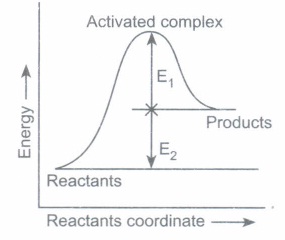
Activation energy of forward reaction is E1 + E2 and product is less stable than reactant.
Activation energy of forward reaction is E1 + E2 and product is more stable than reactant.
Activation energy of both forward and backward reaction is E1 + E2 and reactant is more stable than product.
Activation energy of backward reaction is E1 and product is more stable than reactant.
3.
In the first order reaction the concentration of reactant decreases from 0.6 M to 0.3 M in 30 minutes. The time taken for the concentration to change from 0.1 M to 0.025 M:
60 min
30 min
15 min
50 min
4.
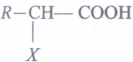
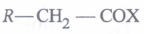
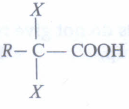
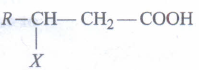
The product formed during Hell - Volhard - Zelinsky reaction is
5.
Select the acid(s) which cannot be prepared by Grignard reagent?
Acetic acid
Succinic acid
Formic acid
All of these
6.
Select the reagent for the given conversion.
\(\mathrm{CH}_{3}\left(\mathrm{CH}_{2}\right)_{8} \mathrm{CH}_{2} \mathrm{OH} \longrightarrow \mathrm{CH}_{3}\left(\mathrm{CH}_{2}\right)_{8} \mathrm{COOH}\)
KMnO4 in acidic,neutral, alkaline media
K2Cr2O7 in acidic media
CrO3 in acidic media
All of the above
7.
For a hypothetical reaction, R ⟶products; rate = -k[R]. The negative sign used in the rate expression indicates.
decrease in the concentration of reactants with time
decrease in the rate with time
reaction is reversible
None of the above
8.
Find the order of the reaction whose rate constant is 2.5 x 10⁻² min-1
zero
three
two
one
9.
Which of the following compounds will give butanone on oxidation with alkaline KMnO4 solution?
Butan - I - oI
Butan - 2 - ol
Both of these
None of these
10.
The correct order of increasing acidic strength is ________________.
Phenol
Ethanol
Ethanol
Chloroacetic acid
11.
A liquid was mixed with ethanol and a drop of concentrated H2SO4 was added. A compound with a fruity smell was formed. The liquid was
HCHO
CH3COCH3
CH3COOH
CH3OH
12.
Which of the following presents the correct order of the activity in the given compounds?
FCH2COOH > CICH2COOH > BrCH2COOH > CH3COOH
CH3COOH > BrCH2COOH > CICH2COOH > FCH2COOH
FCH2COOH > CICH2COOH > BrCH2COOH > CICH2COOH
BrCH2COOH > CICH2COOH > FCH2COOH > CH3COOH
13.
Phenol \(\xrightarrow [ dust ]{ Zn } X\xrightarrow [ Anhyd.AI{ CI }_{ 3 } ]{ { CH }_{ 3 }CI } Y\xrightarrow [ KM{ nO }_{ 4 } ]{ Alk. } Z,\) The product Z is
benzaldehyde
benzoic acid
benzene
toluene
14.
If the enolate ion combines with the carbonyl group of an ester, we get
aldol
\(\alpha ,\beta\) - unstaurated ester
\(\beta\) - ketoaldehyde
acid
15.
A compound of molecular formula CH 100% (A) reacts with Tollens' reagent to give silver mirror but does not undergo aldol condensation. The compound A is
3-pentanone
2,2-dimethylpropanal
3-hydroxy-2-pentene
3-methyllbutanone
16.
By which one of the following reactions ketones cannot prepared ?
Hydration of alkynes
Hydrolysis of gem-dihalides
Dry distillation of calcium carboxylates
Stephen's reaction
Ozonolysis of appropriately substituted alkenes
17.
The compound that does not undergo Cannizzaro reaction is
formaldehyde
acetaldehyde
benzaldehyde
trimethylacetaldehyde
18.
H2O2 is formed in the upper atmosphere through the following mechanism
H2O + (O) \(\longrightarrow\) 2OH \(\longrightarrow\) H2O2
The overall enthalpy change and activation energy for the forward reaction are 72 kJ mol-1 and 77 kJ mol-1 respectively. The activation energy for the decomposition of H2O2 to give back H2O and (O) will be
5 kJ mol-1
-5 kJ mol-1
149 kJ mol-1
-149 kJ mol-1
19.
Which of the following statements are applicable to a balanced chemical equation of an elementary reaction ?
Order is same as molecularity
Order is less than the molecularity
Order is grater than the molecularity
Molecularity can never be zero.
20.
The rate constant, the activation energy and the Arrchenius parameter of a chemical reaction at 25oC are 3.0 \(\times\) 10 -4s-1 ,104.4 kJ mol-1, and 6.0 \(\times\) 1014 s-1 respectively. The value of the rate constant as T \(\longrightarrow\) \(\infty \) is
2.0 \(\times 10^{18} s^{-1}\)
6.0 \(\times 10^{14} s^{-1}\)
Infinity
3.6\(\times 10^{30} s^{-1}\)
21.
22.
Assertion: Aldol condensation can be catalyzed both by acids and bases.
Reason: b-Hydroxy aldehydes or ketones readily undergo acid-catalyzed dehydration.
Codes:
(a) If both assertion and reason are true and the reason is the correct explanation of the assertion.
(b) If both assertion and reason are true but the reason is not the correct explanation of the assertion.
(c) If the assertion is true but the reason is false.
(d) If the assertion is false but the reason is true.
(e) If the assertion and reason both are false
23.
Assertion: Isobutanal does not give an iodoform test.
Reason: It does not have ∝-hydrogen.
Codes:
(a) If both assertion and reason are true and the reason is the correct explanation of the assertion.
(b) If both assertion and reason are true but the reason is not the correct explanation of the assertion.
(c) If the assertion is true but the reason is false.
(d) If the assertion is false but the reason is true.
(e) If the assertion and reason both are false
24.
Assertion: Aldehydes undergo aldol condensation only if it has α-hydrogen.
Reason: The ∝-hydrogen in aldehydes are acidic in nature because the anion formed by the loss of the ∝-hydrogen is resonance stabilized.
Codes:
(a) If both assertion and reason are true and the reason is the correct explanation of the assertion.
(b) If both assertion and reason are true but the reason is not the correct explanation of the assertion.
(c) If the assertion is true but the reason is false.
(d) If the assertion is false but the reason is true.
(e) If the assertion and reason both are false
25.
Assertion: Benzaldehyde resists nucleophilic addition in comparison with Ethanal
Reason: The Phenyl group in benzaldehyde is too bulky and therefore prevents the attack of Nucleophile.
Codes:
(a) If both assertion and reason are true and the reason is the correct explanation of the assertion.
(b) If both assertion and reason are true but the reason is not the correct explanation of the assertion.
(c) If the assertion is true but the reason is false.
(d) If the assertion is false but the reason is true.
(e) If the assertion and reason both are false
26.
27.
28.
Assertion (A) : Hydrolysis of an ester follows first order kinetics.
Reason (R) : Concentration of water remains nearly constant during the course of the reaction.
(a) Both Assertion and Reason are correct, Reason is the correct explanation of Assertion.
(b) Both Assertion and Reason are correct, Reason is not the correct explanation of Assertion.
(c) Assertion is correct; Reason is incorrect.
(d) Assertion is incorrect; Reason is correct.
29.
In the following questions a statement of assertion followed by a statement of reason is given.
Assertion: All collision of reactant molecules lead to product formation.
Reason: Only those collisions in which molecules have correct orientation and sufficient kinetic energy lead to compound formation .
Codes:
(a) Both assertion and reason are correct and the reason is correct explanation of assertion.
(b) Both assertion and reason are correct but reason does not explain assertion.
(c) Assertion is correct but reason is incorrect,
(d) Both assertion and reason are incorrect.
(e) Assertion is incorrect but reason is correct.
30.
Assertion: Aromatic aldehydes and formaldehyde undergo Cannizzaro reaction.
Reason: Aromatic aldehydes are almost as reactive as formaldehyde.
Codes:
(a) Assertion and reason both are correct statements and reason is correct explanation for assertion.
(b) Assertion and reason both are correct statements but reason is not correct explanation for assertion.
(c) Assertion is correct statement but reason is wrong statement.
(d) Assertion is wrong statement but reason is correct statement.
31.
Assertion: \(\alpha\)-Hydrogen atoms in aldehydes and ketones are acidic.
Reason: The anion left after the removal of a-hydrogen is stabilised by inductive effect.
Codes:
(a) Assertion and reason both are correct statements and reason is correct explanation for assertion.
(b) Assertion and reason both are correct statements but reason is not correct explanation for assertion.
(c) Assertion is correct statement but reason is wrong statement.
(d) Assertion is wrong statement but reason is correct statement.
32.
Assertion: Benzaldehyde undergoes aldol condensation.
Reason: Aldehydes having a- hydrogen atom undergo aldol condensation.
Codes:
(a) Assertion and reason both are correct statements and reason is correct explanation for assertion.
(b) Assertion and reason both are correct statements but reason is not correct explanation for assertion.
(c) Assertion is correct statement but reason is wrong statement.
(d) Assertion is wrong statement but reason is correct statement.
33.
Assertion: m-Chlorobenzoic acid is a stronger acid than p-chlorobenzoic acid.
Reason: In m-chlorobenzoic acid both - I-effect and +R-effect of CI operate but in p-chlorobenzoic acid only +R-effect of Cl operates.
Codes:
(a) Assertion and reason both are correct statements and reason is correct explanation for assertion.
(b) Assertion and reason both are correct statements but reason is not correct explanation for assertion.
(c) Assertion is correct statement but reason is wrong statement.
(d) Assertion is wrong statement but reason is correct statement.
34.
Assertion: Boiling point of aldehydes lie in between parent alkanes and corresponding alcohols.
Reason: Aldehydes cannot form intermolecular hydrogen bonds like alcohols.
Codes:
(a) Assertion and reason both are correct statements and reason is correct explanation for assertion.
(b) Assertion and reason both are correct statements but reason is not correct explanation for assertion.
(c) Assertion is correct statement but reason is wrong statement.
(d) Assertion is wrong statement but reason is correct statement.
35.
Assertion: Cross aldol condensation of ethanal and prop anal gives a mixture of four products.
Reason: Ethanal and propanal, both contain a-hydrogen atom.
Codes:
(a) Assertion and reason both are correct statements and reason is correct explanation for assertion.
(b) Assertion and reason both are correct statements but reason is not correct explanation for assertion.
(c) Assertion is correct statement but reason is wrong statement.
(d) Assertion is wrong statement but reason is correct statement.
36.
Assertion : Rate of reaction can be expressed as rate of change in partial pressure of the gaseous reactants or products.
Reason : Partial pressure of a gas is equal to its concentration.
Codes :
(a) Assertion and reason both are correct statements and reason is correct explanation for assertion.
(b) Assertion and reason both are correct statements but reason is not correct explanation for assertion.
(c) Assertion is correct statement but reason is wrong statement.
(d) Assertion is wrong statement but reason is correct statement.
37.
In the following questions. an Assertion (A) is followed by a corresponding Reason (R) Use the following keys to choose the appropriate answer.
Assertion (A) Carboxylic acids have higher boiling liquids than aldehydes, ketones and even alcohols of comparable molecular masses.
Reason (R) More extensive association of carboxylic acid molecules through intermolecular hydrogen bonding is responsible for the high boiling point of carboxylic acid.
Codes:
(a) Both (A) and (R) are correct, (R) is the correct explanation of (A).
(b) Both (A) and (R) are correct, (R) is not the correct explanation of (A). .
(c) (A) is correct; (R) is incorrect.
(d) (A) is incorrect; (R) is correct.
38.
In the following questions. an Assertion (A) is followed by a corresponding Reason (R) Use the following keys to choose the appropriate answer.
Assertion (A) \(\alpha\)-hydrogen atoms of carbonyl compounds are acidic.
Reason (R) The strong electron releasing effect of the carbonyl group make the stabilisation of the conjugate base by the resonance.
Codes:
(a) Both (A) and (R) are correct, (R) is the correct explanation of (A).
(b) Both (A) and (R) are correct, (R) is not the correct explanation of (A). .
(c) (A) is correct; (R) is incorrect.
(d) (A) is incorrect; (R) is correct.
39.
In the following questions. an Assertion (A) is followed by a corresponding Reason (R) Use the following keys to choose the appropriate answer.
Assertion (A) A positive catalyst increases the rate of reaction.
Reason (R) A catalyst increases the rate of reaction by making available a new and more efficient mechanism.
Codes:
(a) Both (A) and (R) are correct, (R) is the correct explanation of (A).
(b) Both (A) and (R) are correct, (R) is not the correct explanation of (A).
(c) (A) is correct; (R) is incorrect.
(d) (A) is incorrect; (R) is correct.
40.
In the following questions. an Assertion (A) is followed by a corresponding Reason (R) Use the following keys to choose the appropriate answer.
Assertion (A) Decomposition of gaseous ammonia on a hot platinum surface is a zero order reaction at high pressure.
Reason (R) At high pressure, the metal surface gets saturated with gas molecules.
Codes:
(a) Both (A) and (R) are correct, (R) is the correct explanation of (A).
(b) Both (A) and (R) are correct, (R) is not the correct explanation of (A).
(c) (A) is correct; (R) is incorrect.
(d) (A) is incorrect; (R) is correct.
1.
(c)
can't be predicted as order is determined experimentally.
2.
(a)
Activation energy of forward reaction is E1 + E2 and product is less stable than reactant.
3.
(a)
60 min
4.
(a)
5.
(d)
All of these
6.
(d)
All of the above
7.
(a)
decrease in the concentration of reactants with time
8.
(d)
one
9.
(b)
Butan - 2 - ol
10.
(c)
Ethanol
11.
(c)
CH3COOH
12.
(a)
FCH2COOH > CICH2COOH > BrCH2COOH > CH3COOH
13.
(b)
benzoic acid
14.
(c)
\(\beta\) - ketoaldehyde
15.
(b)
2,2-dimethylpropanal
16.
(d)
Stephen's reaction
17.
acetaldehyde contains \(\alpha \)- hydrogens and hence does not undergo aldol condensation
18.
(a)
5 kJ mol-1
19.
(b)
Order is less than the molecularity
20.
(b) : k = A e -Ea/RT . As T \(\longrightarrow\) \(\infty \) , k = A = 6.0 \(\times\) 1014 s-1
21.
22.
(b) If both assertion and reason are true but the reason is not the correct explanation of the assertion.
23.
(c) If the assertion is true but the reason is false.
24.
(a) If both assertion and reason are true and the reason is the correct explanation of the assertion.
25.
(c) If the assertion is true but the reason is false.
26.
27.
28.
(a) (a) Both Assertion and Reason are correct, Reason is the correct explanation of Assertion.
Consider the hydrolysis of an ester
\( \mathrm{CH}_3 \mathrm{COOC}_2 \mathrm{H}_5+\mathrm{H}_2 \mathrm{O} \longrightarrow \mathrm{CH}_3 \mathrm{COOH}+\mathrm{C}_2 \mathrm{H}_5 \mathrm{OH}\)
\(\text { Rate }=k\left[\mathrm{CH}_3 \mathrm{COOC}_2 \mathrm{H}_5\right]\left[\mathrm{H}_2 \mathrm{O}\right] \)
Hydrolysis of an ester follows first order because the concentration of water, \(\left[\mathrm{H}_2 \mathrm{O}\right]\) remains nearly constant and the change in the concentration of acid will result in very negligible change in the concentration of \(\mathrm{H}^{+} / \mathrm{OH}^{-}\)ion during the course of the reaction.
Thus, both (A) and (R) are correct and (R) is the correct explanation of (A).
29.
(e) Assertion is incorrect but reason is correct. All collisions are never effective.
30.
(c): Aromatic aldehydes and formaldehyde do not contain \(\alpha\)- hydrogen and thus undergo Cannizzaro reaction. Formaldehyde is more reactive than aromatic aldehydes.
31.
(c): The anion left after the removal of \(\alpha\)-hydrogen is stabilized by resonance effect.
32.
(d): Aldehydes having a methyl or methylene group in the a-position or more correctly having atleast one hydrogen atom in the \(\alpha\)-position undergo dimerisation in presence of a base at low temperature to form \(\beta\)-hydroxy aldehydes called aldols. As benzaldehyde does not have any \(\alpha\)-hydrogen hence it does not undergoes aldol condensation.
33.
(c) : In p-chlorobenzoic acid, both +R and -1 effect operate together but in m-chlorobenzoic acid only -I effect operates. Therefore, m-chlorobenzoic acid is a stronger acid than p-chlorobenzoic acid.
34.
(b): Aldehydes have higher molecular weight than parent alkanes as well as polarity in aldehydes shows higher boiling point than parent alkanes. Aldehydes do not have any hydrogen atom attached directly to the oxygen so they cannot form hydrogen bond with each other.
35.
(a) Assertion and reason both are correct statements and reason is correct explanation for assertion.
36.
(c) : For a gaseous reaction at constant T, concentration is directly proportional to the partial pressure of the species. Thus, the rate of reaction can be expressed in terms of partial pressure for gaseous reactants or products.
37.
(a) Carboxylic acids are higher boiling liquids than aldehydes, ketones and even alcohols of comparable molecular masses. This is due to more extensive association of carboxylic acid molecules through intermolecular hydrogen bonding. Hence, both (A) and (R) are correct and (R) is the correct explanation of (A).
38.
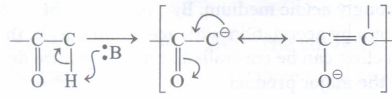
(c) The acidity of \(\alpha\)-hydrogen atoms of carbonyl compounds is due to the strong electron withdrawing effect of the carbonyl group and resonance stabilisation of the conjugate base.
Hence, (A) is correct but (R) is incorrect.
39.
(a) A positive catalyst increases rate of reaction by making a new and more efficient mechanism. Thus, both (A) and (R) are correct and (R) is the correct explanation of (A).
40.
(a) It is a zero order reaction at high pressure.
\( 2 \mathrm{NH}_{3}(g) \frac{1130 \mathrm{~K}}{\mathrm{Pt} \text { catalyst }} \mathrm{N}_{2}(g)+3 \mathrm{H}_{2}(\mathrm{~g}) \)
\(\text { Rate }=k\left[\mathrm{NH}_{3}\right]^{0}=k\)
In this reaction, Pt acts as a catalyst the metal surface gets saturated with gas molecules at high pressure. Thus, a further change in reaction conditions does not alter the amount of ammonia on the surface of the catalyst making rate of the reaction independent of its concentration. Thus, both (A) and (R) are correct and (R) is the correct explanation of (A).

12th Standard CBSE Syllabus & Materials
12th Standard CBSE
CBSE 12th Computer Science Python Revision Tour I - New Previous year Question Papers Study Material - QB365 Set A
NEW12th Standard CBSE
CBSE 12th Business Studies Planning Important Questions And Answers Study Material - QB365 Set A
NEW12th Standard CBSE
CBSE 12th Business Studies Business Environment Important Questions And Answers Study Material - QB365 Set A
NEW12th Standard CBSE
CBSE 12th Business Studies Principles of Management Important Questions And Answers Study Material - QB365 Set A



NCERT Books

Syllabus

Exam Pattern

Sample Question Papers

Previous year Question Papers

Important Notes

MCQ Practice test

NCERT Exemplers

Case study Questions

Image Based Questions

Passage based Questions

HOT Questions

Value Based Questions

Model Questions Papers
NCERT ( Book Back ) Questions

Assertion and Reason
Important Questions And Answers

CBSE 12th Standard CBSE Subjects
CBSE Standards








