
 100% FREE ACCESS
12th Standard CBSE Syllabus & Materials
12th Standard CBSE
CBSE 12th Economics Government Budget and the Economy Previous year Question Papers Study Material - QB365 Set A
NEW12th Standard CBSE
CBSE 12th Computer Science Interface Python with MySQL - New Previous year Question Papers Study Material - QB365 Set A
NEW12th Standard CBSE
CBSE 12th Computer Science Database Concept - New Previous year Question Papers Study Material - QB365 Set A
NEW12th Standard CBSE
CBSE 12th Computer Science Data Communication - New Previous year Question Papers Study Material - QB365 Set A
NEW12th Standard CBSE
CBSE 12th Computer Science Data Structures - New Previous year Question Papers Study Material - QB365 Set A
NEW12th Standard CBSE
CBSE 12th Computer Science Functions - New Previous year Question Papers Study Material - QB365 Set A

Published on: 25/10/2025
Download CBSE Class 12th Standard CBSE Chemistry question papers, sample papers, important questions, and previous year solved papers in PDF format. Get free study materials, NCERT solutions, and exam preparation resources for Class 12th Standard CBSE Chemistry
Questions + Answers key
Take MCQ Chemistry Test
1.
Among the following which is the strongest base?
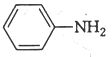
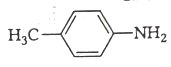
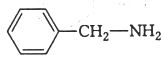
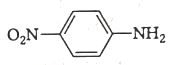
2.
Auto-oxidation of chloroform in air and light produces a poisonous gas known as
phosphine
mustard gas
phosgene
tear gas
3.
The correct name of the given reaction is \(\mathrm{Ar}-\mathrm{N}_2^{+} \mathrm{X}^{-} \xrightarrow{\mathrm{CuCN} / \mathrm{KCN}} \mathrm{Ar}-\mathrm{CN}+\mathrm{N}_2\)
Sandmeyer's reaction
Gabriel phthalimide synthesis
Carbylamine reaction
Hofmann bromamide degradation reaction
4.
Which of the following reactions belong to electrophilic aromatic substitution?
Bromination of acetanilide
Coupling reaction of aryldiazonium salts
Diazotisation of aniline
Acylation of aniline
5.
The most reactive amine towards dilute hydrochloric acid is ___________
CH3 - NH2
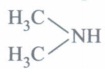
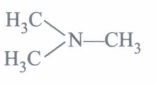
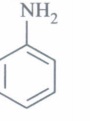
6.
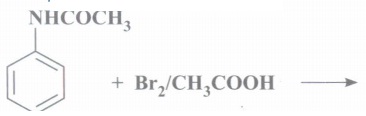
The product of the following reaction is ___________
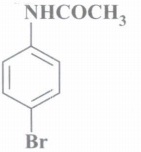
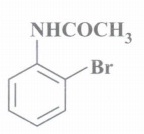
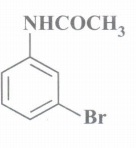
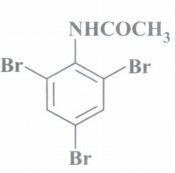
7.
Which of the following cannot be prepared by Sandmeyer's reaction?
Chlorobenzene
Bromobenzene
lodobenzene
Fluorobenzene
8.
The order of basic strength of amines in aqueous solution is
(CH3)3N > (CH3)2NH > CH3NH2 > NH3
CH3NH2 > (CH3)2 NH > (CH3)3 > H3
NH3 > (CH3)3N > (CH3)2NH > CH3NH2
(CH3)2NH > CH3NH2 > (CH3)3N > NH3
9.

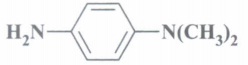
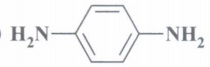
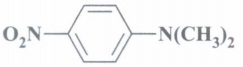
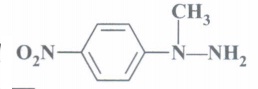
10.
Which one of the following can be prepared by Gabriel phthalimide synthesis?
Aniline
o-Toluidine
Benzylamine
N-Methyl ethanamine
11.
Among (CH3)3N  and CH3 CN, the electro negativity in the order
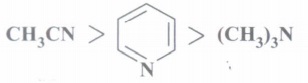
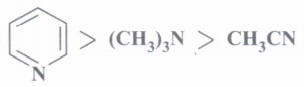
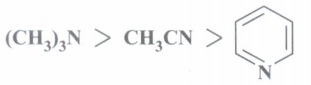
all have same
12.
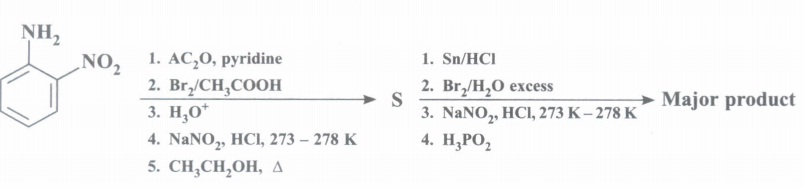
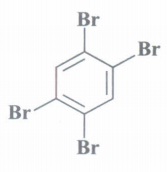
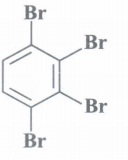
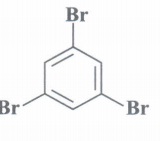
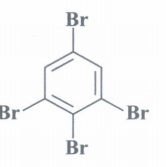
13.
In the reaction C6H5CONH2 \(\xrightarrow[{\triangle }]{Br_2+KOH}\)Major product A is
C6H6
C6H5CHO
C6H5NH2
C6H5COOKI
14.
Which of the following compound will not undergo azo coupling reaction with benzene diazonium chloride?
Aniline
Phenol
Anisole
Nitrobenzene
15.
Which of the following amine will form stable diazonium salt at 273-278K?
C2H5NH2
C6H5NH2
C6H5CH2NH2
C6H5N(CH3)2
16.
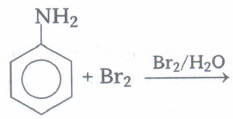
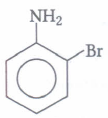
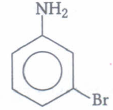
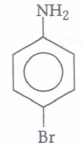
Which of the following products is formed in the given reaction?
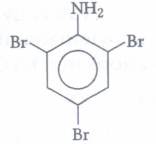
17.
-NH2 group in the aniline is activating group and proceed reaction at
only para position
only ortho position
meta position
Both (a) and (b)
18.
Name the product(s) formed during the reaction of primary aliphatic amines with nitrous acid at room temperature?
\(\begin{equation} R \mathrm{~N}_{2}^{+} \mathrm{Cl^-} \end{equation}\)
ROH
Both (a) and (b)
None of the above
19.
Choose the correct order of the boiling point of amines.
Primary> secondary> tertiary
Secondary > tertiary > primary
Tertiary>primary > secondary
Tertiary> secondary> primary
20.
IUPAC name of H2N - CH2 - CH2 - NH2 is
ethane-1, 3-diamine
ethane-1, 2-diarnine
ethyn-1 , 2, diamine
ethen-1, 2, diamine
21.
Which of the following will be the most stable diazonium salt, \({ RN }_{ 2 }^{ + }{ X }^{ - }\) ?
\(CH_{ 3 }{ N }_{ 2 }^{ + }{ X }^{ - }\)
\({ C }_{ 6 }H_{ 5 }{ N }_{ 2 }^{ + }{ X }^{ - }\)
\(CH_{ 3 }{ CH }_{ 2 }{ N }_{ 2 }^{ + }{ X }^{ - }\)
\({ C }_{ 6 }H_{ 5 }{ CH }_{ 2 }{ N }_{ 2 }^{ + }{ X }^{ - }\)
22.
In the diazotisation of arylamine, the use of nitrous acid
suppresses hydrolysis of phenol
is a source of electropholic nitrosonium ion
neutralise the base liberated
all of the above
23.
Which of the following diazonium salt is most stable?
p-Nitrobenzenediazonium chloride
2, 4-Dinitrobenzenediazonium chloride
2, 4, 6-Trinitrobenzenediazonium chloride
p-Methoxybenzenediazonium chloride
24.
Which of the following statements about primary amines is 'False' ?
Alkylamines are stronger base than ammonia.
Alkylamines are stronger bases than arylamines
Alkylamines react with nitrous acid to produce alcohols
Arylamines react with nitrous acid to produce pheols
25.
Which one of the following amines forms a non-acidic and alkali insoluble product with p-toluene sulphonyl chloride?
Tertiary butylamine
n-Butylamine
Isobutylamine
Diethylamine
N, N-Dimethylethylamine
26.
In the chemical reaction, CH3CH2NH2+CHCI3+3 KOH \(\longrightarrow \) (A) + (B) + 3 H2O. The compopund (A) and (B) are respectively.
C2H5NC and 3 KCI
C2H5CN and 3 KCI
CH3CH2CONH2 and 3 KCI
C2H5NC and K2CO3
27.
On heating an aliphatic primary amine with chloroform and ethanolic potassium hydroxide, the organic compound formed is
alkyl isocyanide
an alkanol
an alkanediol
an alkyl cyanide
28.
The strongest base in aqueous solution among the following amines is
N, N-diethylethanamine
N-ethylethanamine
N-methylmethanamine
ethanamine
phenylmethanamine
29.
Considering the basic strength of amines in aqueous solution, which one has the smallest pKb value?
C6H5NH2
(CH3)2NH
CH3NH2
(CH3)3N
30.
Which of the following is the correct decreasing order of basicity os amines in gaseous phase?
(CH3)2NH > CH3NH2 > (CH3)3N > NH3
(CH3)3N > (CH3)2NH > CH3NH2 > NH3
(CH3)2NH > (CH3)3N > CH3NH2 > NH3
(CH3)3N > CH3NH2 > (CH3)2NH > NH3
31.
The correct order of basic strength of CH3NH2(I), (CH3)2NH(II), (CH3)3N(III), C6H5CH2NH2(IV) in gaseous phase is
IV < III < II < I
IV < III < I < II
I < II < III < IV
IV < I < II < III
32.
Mendius reduction converts an alkyl cyanide to
a primary amine
an aldehyde
a ketone
an oxime
33.
m-Bromoaniline can be prepared by
\({ C }_{ 6 }{ H }_{ 6 }\quad \overset { { HNO }_{ 3 } }{ \underset { { H }_{ 2 }{ SO }_{ 4 } }{ \longrightarrow } } \quad \overset { 1.Sn-HCI }{ \underset { { 2.NaOH,H }_{ 2 }O }{ \longrightarrow } } \quad \overset { { Br }_{ 2 } }{ \underset { H_{ 2 }O }{ \longrightarrow } } \)
\({ C }_{ 6 }{ H }_{ 6 }\ \overset { { Br }_{ 2 } }{ \underset { { FeBr }_{ 3 } }{ \longrightarrow } } \quad \overset { { HNO }_{ 3 } }{ \underset { H_{ 2 }{ SO }_{ 4 } }{ \longrightarrow } } \quad \overset { { H }_{ 2 } }{ \underset { Pt }{ \longrightarrow } } \)
\(m-Br{ C }_{ 6 }{ H }_{ 4 }COOH\ \overset{ SOCI_{ 2 } }{ \longrightarrow } \quad \overset { NH_{ 3 } }{ \longrightarrow } \quad \overset { Br_{ 2 },NaOH }{ \longrightarrow } \)
\({ C }_{ 6 }{ H }_{ 5 }{ NH }_{ 2 }\quad \overset { { NaNO }_{ 2 },HCI }{ \underset { { Cu }_{ 2 }Br_{ 2 } }{ \longrightarrow } } \overset { SOCI_{ 2 } }{ \longrightarrow } \quad \overset { NaNH_{ 2 } }{ \longrightarrow } \)
34.
Anorganic compound A upon reacting with NH3 gives B. On heating, B gives C. C in presence of KOH reacts with Br2 to give CH3CH2NH2. A is
CH3CH2COOH
CH3COOH
CH3CH2CH2COOH
\({ CH }_{ 3 }-\underset { \underset { { CH }_{ 3 } }{ | } }{ CH } -COOH\)
35.
One of the followng amides will not undergo Hofmann bromamide reaction:
CH3CONHCH3
CH3CH2CONH2
CH2CONH2
C6H5CONH2
36.
Method by which aniline cannot be prepared is
degradation of benzamide with bromine in alkaline solution
reduction of nitrobenzene with H2/Pd in ethanol
potassium salt of phthalimide treated with chlorobenzene followed by hydrolysis with aqueous NaOH solution.
hydrolysis of phenylisocyanide with acidic solution
37.
In the given set of reactions: \(2-Bromopropane\overset { alc.AgCN }{ \underset { heat }{ \longrightarrow } } X\overset { LiAIH_{ 4 } }{ \longrightarrow } Y\) . The IUPAC name of the product Y is
N-isopropylmethanamine
N-methylpropan-2-amine
N-methylpropanamine
butan-2-amine
38.
The electrolytic reduction of nitrobenzene in strongly acidic medium produces.
azobenzene
aniline
p-aminophenol
azoxybenzene
39.
Reduction of aromatic nitro compounds using Fe and HCI gives............................ .
aromatic oxime
aromatic hydrocarbon
aromatic primary amine
aromatic amide
40.
In the nitration of benzene using a mixture of conc. H2SO4 and conc.HNO3, the species which initiates the reaction is......................... .
NO2
NO+
\({ NO }_{ 2 }^{ + }\)
\({ NO }_{ 2 }^{ - }\)
41.
The best reagent for converting, 2-phenylpropanamide into 1-phenylethanamine is.................................. .
excess H2/Pt
NaOH/Br2
NaBH4/methanol
LiAIH4/ether
42.
Amongst the given set of reactants, the most appropriate for preparing \({2}^{ \circ }\) amine is............................. .
\({ 2 }^{ \circ }\) R-Br + NH3
\({ 2 }^{ \circ }\) R-Br+NaCN followed by H2/Pt
\({ 1 }^{ \circ }\) R-NH2+RCHO followed by H2/Pt
\({ 1 }^{ \circ }\) R-Br (2 mol) + potassium phthalimide followed by H3O+/heat
43.
In order to prepare a \({ 1 }^{ \circ }\) amine from an alkyl halide with simultaneous addition of one -CH2 group in the carbon chain, the reagent used as source of nitrogen is ___________ .
Sodium amide, NaNH2
Sodium azide, NaN3
Potassium cyanide, KCN
Potassium phthalimide, C6H6(CO)2N-K+
44.
Benzylamine may be alkylated as shown in the following equation:
C6H5CH2NH2+R-X \(\longrightarrow \) C6H5CH2NHR
Which of the following alkyl halides is best suited for this reaction through SN 1 mechanism?
CH3Br
C6H5Br
C6H5CH2Br
C2H5Br
45.
The correct IUPAC name for CH2=CHCH2NHCH3 is
Allylmethylamine
2-amino-4-pentene
4-aminopent-1-ene
N-methylprop-2-en-1-amine
46.
In the following reaction, X is \(X\overset { Bromination }{ \longrightarrow } Y\overset { NaNO_{ 2 }\quad /HCI }{ \longrightarrow } Z\overset { Boiling }{ \underset { { C }_{ 2 }{ H }_{ 5 }OH }{ \longrightarrow } } Tribromobenzene\)
Benzoic acid
Salicylic acid
Phenol
Aniline
47.
When aniline is heated with conc.H2SO4 at 455-475 K, it forms:
Aniline hydrogen sulphate
m-Aminobenzensulphonic acid
Benzenesulphonic acid
Sulphanilic acid
48.
Ethylamine on heating with CS2 in presence of HgCl2 forms
\({ C }_{ 2 }{ H }_{ 5 }NCS\)
\(\left( { C }_{ 2 }{ H }_{ 5 } \right) _{ 2 }S\)
\(\left( { C }_{ 2 }{ H }_{ 5 } \right) _{ 2 }CS\)
\({ C }_{ 2 }{ H }_{ 5 }\left( CS \right) _{ 2 }\)
49.
\({ CH }_{ 3 }{ CH }_{ 2 }\overset { Aq.KOH }{ \underset { \triangle }{ \longrightarrow } } A\overset { KMnO_{ 4 }\quad /\quad { H }^{ + } }{ \underset { \triangle }{ \longrightarrow } } B\overset { N{ H }_{ 3 } }{ \underset { \triangle }{ \longrightarrow } } C\overset { B{ r }_{ 2 } }{ \underset { Alkali }{ \longrightarrow } } D;D\quad is\)
\({ CH }_{ 3 }Br\)
\({ CH }_{ 3 }CONH_{ 2 }\)
\({ CH }_{ 3 }NH_{ 2 }\)
\({ CH }Br_{ 3 }\)
50.
C6H5CONHCH3 can be converted into C6H5CH2NHCH3 by
NaBH4
H2-Pd/C
LIAIH4
Zn-Hg/HCI
1.
(c)
2.
(c)
phosgene
3.
(a)
Sandmeyer's reaction
4.
(a)
Bromination of acetanilide
5.
(b)
6.
(a)
7.
(c)
lodobenzene
8.
(d)
(CH3)2NH > CH3NH2 > (CH3)3N > NH3
9.
(a)
10.
(c)
Benzylamine
11.
(a)
12.
(d)
13.
(b)
C6H5CHO
14.
(d)
Nitrobenzene
15.
(b)
C6H5NH2
16.
(d)
17.
(d)
Both (a) and (b)
18.
(b)
ROH
19.
(a)
Primary> secondary> tertiary
20.
(b)
ethane-1, 2-diarnine
21.
Due to delocalization of the +ve charge on the benzene ring, aromatic diazonium salts are more satble, i.e., option (b) is correct.
22.
(b)
is a source of electropholic nitrosonium ion
23.
Electron donating groups increase the stability of diazonium cations by dispersing the +ve charge on the N-atom.
24.
Arylamines react with NHO2 to form diazonium salts.
25.
(d)
Diethylamine
26.
(a)
C2H5NC and 3 KCI
27.
In carbylamine reaction, alkyl isocyanides are formed.
28.
Amines are stronger bases than amines followed by amines. Further, among amines, (C2H5)2NH is more basic than (CH3)2NH due to stronger +I-effect of the CH3CH2 over CH3 group. Thus, option (b) is correct.
29.
A strongest base has the smallest pKb, i.e. option (b) is correct.
30.
In the gaseous phase, basicity increases as the +I effect of the alkyl groups increases. Thus, option (b) is correct.
31.
In the gaseous phase, basicity increases as the + I-effect of the alkyl groups increases, i.e., CH3NH2(I) < (CH3)2 NH < (CH3)3 N (III). However, due to -I-effect of the CH- group, CHCHNH (IV) is even a weaker base than CHNH (I). Thus, the overall, basic character increases in the order : IV < I < II < III.
32.
(a)
a primary amine
33.
(c)
\(m-Br{ C }_{ 6 }{ H }_{ 4 }COOH\ \overset{ SOCI_{ 2 } }{ \longrightarrow } \quad \overset { NH_{ 3 } }{ \longrightarrow } \quad \overset { Br_{ 2 },NaOH }{ \longrightarrow } \)
34.
(a)
CH3CH2COOH
35.
Only \({ 1 }^{ \circ }\) amides undergo Hofmann bromamide reaction. CH3CONHCH3 being a \({ 2 }^{ \circ }\) amide a does not undergo this reaction.
36.
Aniline cannot be prepared by Gabriel phthalimide method because chlorobenzene (i.e.,aryl halide) does not undergo nucleophilic substitution reaction with potassium phthalimide in aqueous NaOH solution.
37.
(b)
N-methylpropan-2-amine
38.
Electrolytic reduction of nitrobenzene in strongly acidic medium gives p-aminophenol.
39.
(c)
aromatic primary amine
40.
(c)
\({ NO }_{ 2 }^{ + }\)
41.
(b)
NaOH/Br2
42.
\(R-{ NH }_{ 2 }+RCHO\overset { Reductive }{ \underset { amination }{ \longrightarrow } } \quad \left[ R-N=CHR \right] \overset { { H }_{ 2 }/Pt }{ \longrightarrow } \underset { { 2 }^{ \circ }Amine }{ R-NH-{ CH }_{ 2 }R } \)
43.
(c)
Potassium cyanide, KCN
44.
Since C6H5CH2Br on ionization gives a resonance stabilized benzyl carbocation \(\left( { C }_{ 6 }{ H }_{ 5 }{ CH }_{ 2 }^{ + } \right) \) , therefore, C6H5CH2Br is best suited for SN1 reaction.
45.
\(\overset { 3 }{ C } { H }_{ 2 }=\overset { 2 }{ C } H\overset { 1 }{ C } { H }_{ 2 }NHCH_{ 3 }\quad N-Methylprop-2-en-1\quad amine\)
46.
(d)
Aniline
47.
(d)
Sulphanilic acid
48.
(a)
\({ C }_{ 2 }{ H }_{ 5 }NCS\)
49.
(c)
\({ CH }_{ 3 }NH_{ 2 }\)
50.
(c)
LIAIH4

12th Standard CBSE Syllabus & Materials
12th Standard CBSE
CBSE 12th Computer Science Python Revision Tour I - New Previous year Question Papers Study Material - QB365 Set A
NEW12th Standard CBSE
CBSE 12th Business Studies Planning Important Questions And Answers Study Material - QB365 Set A
NEW12th Standard CBSE
CBSE 12th Business Studies Business Environment Important Questions And Answers Study Material - QB365 Set A
NEW12th Standard CBSE
CBSE 12th Business Studies Principles of Management Important Questions And Answers Study Material - QB365 Set A



NCERT Books

Syllabus

Exam Pattern

Sample Question Papers

Previous year Question Papers

Important Notes

MCQ Practice test

NCERT Exemplers

Case study Questions

Image Based Questions

Passage based Questions

HOT Questions

Value Based Questions

Model Questions Papers
NCERT ( Book Back ) Questions

Assertion and Reason
Important Questions And Answers

CBSE 12th Standard CBSE Subjects
CBSE Standards








