
 100% FREE ACCESS
12th Standard CBSE Syllabus & Materials
12th Standard CBSE
CBSE 12th Economics Government Budget and the Economy Previous year Question Papers Study Material - QB365 Set A
NEW12th Standard CBSE
CBSE 12th Computer Science Interface Python with MySQL - New Previous year Question Papers Study Material - QB365 Set A
NEW12th Standard CBSE
CBSE 12th Computer Science Database Concept - New Previous year Question Papers Study Material - QB365 Set A
NEW12th Standard CBSE
CBSE 12th Computer Science Data Communication - New Previous year Question Papers Study Material - QB365 Set A
NEW12th Standard CBSE
CBSE 12th Computer Science Data Structures - New Previous year Question Papers Study Material - QB365 Set A
NEW12th Standard CBSE
CBSE 12th Computer Science Functions - New Previous year Question Papers Study Material - QB365 Set A

Published on: 25/10/2025
Download CBSE Class 12th Standard CBSE Chemistry question papers, sample papers, important questions, and previous year solved papers in PDF format. Get free study materials, NCERT solutions, and exam preparation resources for Class 12th Standard CBSE Chemistry
Questions + Answers key
Take MCQ Chemistry Test
1.
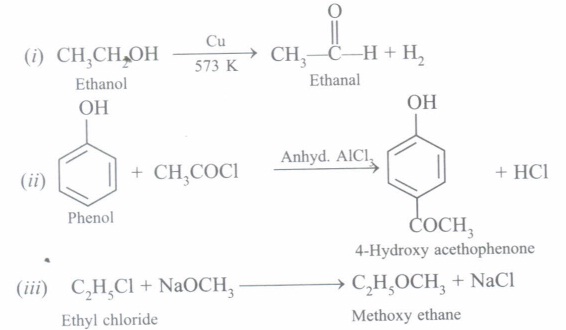
What happens when:
(i) Ethanol is treated with Cu at 573 K.
(ii) Phenol is treated with CH3COCl / anhydrous AlCl3.
(iii) Ethyl chloride is treated with NaOCH3?
2.
Which one of the following has the highest dipole moment?
(i) CH2Cl2
(ii) CHCl3
(iii) CCl4
3.
Write the important structural and functional differences between DNA and RNA
4.
Calculate the equilibrium constant for the reaction at 298 K:
4 Br- + O2 + 4 H+ \(\longrightarrow\) 2 Br2 + 2 H2O . Given that E0 cell = 0.16 V.
5.
What happens when:
(i) An aqueous solution of sodium acetate is electrolysed?
(ii) Calcium acetate is dry distilled?
(iii) Sodium benzoate is heated with soda lime?
6.
The reaction between A and B is first order with respect to A and zero order with respect to B. Fill in the blanks in the following table:
| Experiment | [A]/mol L-1 | [B]/mol L-1 | Initial rate in mol L-1 min-1 |
| I | 0.1 | 0.1 | 2.0 \(\times\) 10-2 |
| II | ----- | 0.2 | 4.0 \(\times\) 10-2 |
| III | 0.4 | 0.4 | ----- |
| IV | ----- | 0.2 | 2.0 \(\times\) 10-2 |
7.
An aqueous solution of 3.12 g of BaCl2 in 250 g of water is found to boil at 100.0832oC. Calculate the degree of dissociation of BaCl2. [K b (H2O) = 0.52 K/m.]
8.
Arrange the following:
(i) In decreasing order of the pKb values:
C2H5NH2, C6H5NHCH3, (C2H5)2NH and C6H5NH2
(ii) In increasing order of basic strength:
C6H5NH2, C6H5N(CH3)2,(C2H5)2NH and CH3NH2
(iii) In increasing order of basic strength:
(a) Aniline, p-nitroaniline and p-toluidine
(b) C6H5NH2, C6H5NHCH3, C6H5CH2NH2.
(iv) In decreasing order of basic strength in gas phase:
C2H5NH2, (C2H5)2NH, (C2H5)3N and NH3
(v) In increasing order of boiling point:
C2H5OH, (CH3)2NH, C2H5NH2
(vi) In increasing order of solubility in water:
C6H5NH2, (C2H5)2NH, C2H5NH2.
9.
Write down the number of 3d electrons in each of the following ions: Ti2+, V2+, Cr3+, Mn2+, Fe2+, Fe3+, Co2+, Ni2+ and Cu2+. Indicate how would you expect the five 3d orbitals to be occupied for these hydrated ions (octahedral).
10.
Explain how rusting of iron is envisaged as setting up of an electrochemical cell.
11.
Name the compound with molecular formula C7H8O which on treatment with Br2 water, readily gives a precipitate of C7H5OBr3.
12.
Explain the following terms:
(i) Rate constant (k)
13.
Deficiency of which vitamin causes beri-beri and pain in joints ?
14.
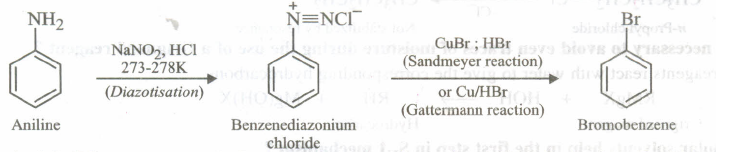
How will you prepare bromobenzene from aniline ?
15.
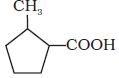
Give the IUPAC names of the following compounds:
(i) Ph CH2CH2COOH
(ii) (CH3)2C=CHCOOH
(iii)
(iv)
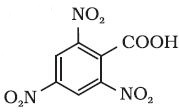
16.
Which of the following is a polysaccharide?
Glucose
Maltose
Glycogen
Lactose
17.
THe electrophile involved in Riemer-Tiemann reaction of phenol with CHCI3 in presence of NaOH is
:CCl 2
\(\stackrel{\ominus}{C} C_{3}\)
\(\stackrel{\oplus}{\mathrm{CHO}} \)
\(\stackrel{\oplus}{\mathrm{C}} \mathrm{HCl}_{2}\)
18.
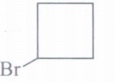
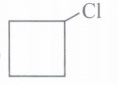
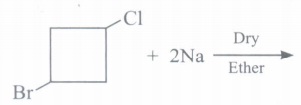 'X', X is


19.
The complex ion having minimum magnitude of \(\triangle\)o(CFSE) is
[CO(NH3)6]3+
[Cr(H2O)6]3+
[Cr(CN)6]3-
[CoCl6]3-
20.
Efficiency of fuel cell is equal
\(\frac{\Delta \mathrm{G}}{\Delta \mathrm{S}}\)
\(\frac{\Delta \mathrm{G}}{\Delta \mathrm{H}}\)
\(\frac{\Delta \mathrm{S}}{\Delta \mathrm{G}}\)
\(\frac{\Delta \mathrm{H}}{\Delta \mathrm{G}}\)
21.
4L of 0.02 M aqueous solution of NaCI was diluted by adding one litre of water. The molality of the resultant solution is ________________.
0.004
0.008
0.012
0.016
22.
Name the product(s) formed during the reaction of primary aliphatic amines with nitrous acid at room temperature?
\(\begin{equation} R \mathrm{~N}_{2}^{+} \mathrm{Cl^-} \end{equation}\)
ROH
Both (a) and (b)
None of the above
23.
Consider the following statements
(I) La(OH)3 is least basic among hydroxides of lanthanides
(II) Zi4+ and Hf4+ possess almost the same ionic radii
(III) Ce4+ can act as an oxidizing agent
Which of the above is/are true ?
(I) and (III)
(II) and (III)
(II) only
(I) and (II)
(I) only
24.
In chromite ore, the oxidation number of iron and chromium are respectively
+3, +2
+3, +6
+2, +6
+2, +3
25.
If the enolate ion combines with the carbonyl group of an ester, we get
aldol
\(\alpha ,\beta\) - unstaurated ester
\(\beta\) - ketoaldehyde
acid
26.
The correct order of basic strength is
H2O<OH-<CH3O-
CH3OH<H2O<CH3O-<OH-
H2O<CH3OH<OH-<CH3O-
OH-H2O<CH3O-<CH3OH
27.
Zn gives H2 gas with H2SO4 and HCl but not with HNO3 because
Zn acts as oxidizing agent when reacts with HNO3
HNO3 is weaker acid than H2SO4 and HCl
In electrochemical series, Zn is above hydrogen
NO3- is reduced in preference to hydronium ion
28.
Which of the following possesses highest melting point?
Chlorobenzene
o-Dichlorobenzene
m-Dichlorobenzene
p-Dichlorobenzene
29.
The non-existent metal carbonyl among the following is
Cr(CO)6
Mn(CO)5
Ni(CO)4
Fe(CO)5
30.
For the first order reaction
2 N2O5 (g) \(\longrightarrow\) 4 NO2 (g) + O2 (g)
the concentration of the reactant decreases exponentially with time
the half-life of the reaction decreses with increases temperature
the half-life of the reaction depends on the initial concentration of the reactant
the reaction proceeds to 99/6% completion in eight half-duration
31.
The system that forms maximum boiling azeotrope is
carbon disulphide-acetone
benzene-tolune
acetone-chloroform
n-hexane-n-heptane
32.
Read the passage given below and answer the following questions:
The phenomenon of the flow of solvent through a semipermeable membrane from pure solvent to the solution is called osmosis.
Sometimes a pressure is applied to stop the process of osmosis, this is known as osmotic pressure. It is denoted by \(\pi \). Osmotic pressure is expressed as: \(\pi \) = CRT
Since, osmotic pressure depends upon the molar concentration of solution, therefore it is a colligative property.
In these questions (i-iv), a statement of assertion followed by a statement of reason is given. Choose the correct answer out of the following choices.
(a) Assertion and reason both are correct statements and reason is correct explanation for assertion.
(b) Assertion and reason both are correct statements but reason is not correct explanation for assertion.
(c) Assertion is correct statement but reason is wrong statement.
(d) Assertion is wrong statement but reason is correct statement.
(i) Assertion: If red blood cells were removed from the body and placed in pure water, pressure inside the cells increases.
Reason: The concentration of salt content in the cells increases.
(ii) Assertion: When a solution is separated from the pure solvent by a semipermeable membrane, the solvent molecules pass through it from pure solvent side to the solution side.
Reason: Diffusion of solvent occurs from a region of high concentration to a region of low concentration solution.
(iii) Assertion: Two solutions having same osmotic pressure at a given temperature are called isotonic solutions.
Reason: Osmotic pressure is not a colligative property.
(iv) Assertion: The preservation of meat by salting and fruits by adding sugar protects against bacterial action.
Reason: A bacterium on salted meat or candid fruit loses water due to osmosis shrivels and ultimately dies.
33.
Read the passage given below and answer the following questions:
Arrangement of ligands in order of their ability to cause splitting Δ is called spectrochemical series. Ligands which cause large splitting (large Δ ) are called strong field ligands while those which cause small splitting (small Δ) are called weak field ligands. When strong field ligands approach metal atomlion, the value of Δo is large, so that electrons are forced to get paired up in lower energy t2g orbitals. Hence, a low-spin complex is resulted from strong field ligand. When weak field ligands approach metal atom/ion, the value of Δo is small, so that electrons enter high energy eg orbitals rather than pairing in low energy t2g orbitals. Hence, a high-spin complex is resulted from weak field ligands. Strong field ligands have tendency to form inner orbital complexes by forcing the electrons to pair up. Whereas weak field ligands have tendency to form outer orbital complex because inner electrons generally do not pair up.
In these questions (i-iv), a statement of assertion followed by a statement of reason is given. Choose the correct answer out of the following choices.
(a) Assertion and reason both are correct statements and reason is correct explanation for assertion.
(b) Assertion and reason both are correct statements but reason is not correct explanation for assertion.
(c) Assertion is correct statement but reason is wrong statement.
(d) Assertion is wrong statement but reason is correct statement.
(i) Assertion: In tetrahedral coordination entity formation, the d orbital splitting is inverted and is smaller as compared to the octahedral field splitting.
Reason: Spectrochemical series is based on the absorption of light by complexes with different ligands.
(ii) Assertion: F- ion is a weak field ligand and forms outer orbital complex.
Reason: F- ion cannot force the electrons of dz2 and dx2- y2 orbitals of the inner shell to occupy dxy, dyz and dzx orbitals of the same shell.
(iii) Assertion: The crystal field model is successful in explaining the formation, structures, colour and magnetic properties of coordination compounds.
Reason: In spectrochemical series, ligands are arranged in a series of increasing field strength.
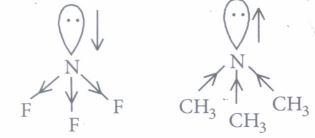
(iv) Assertion: NF3 is a weaker ligand than N(CH3)3.
Reason: NF3 ionizes to give F- ions in aqueous solution.
1.
2.
Dichloromethane has highest dipole moment among CH2Cl2, CHCl3 and CCl4. The decreasing order of dipole moments is CH2Cl2>CHCl3>CCl4. These molecules have tetrahedral geometry due to sp3 hybridization of carbon atom.In CCl4, the individual C−Cl bond dipoles cancel each other which results in zero dipole moment.
Hence, CCl4 is non polar.
3.
| S.No | DNA | RNA |
| 1 | The sugar present in DNA is 2-deoxy-D-(-)-ribose. | The sugar present in ~A is D-(-)-ribose. |
| 2 | DNA contains cytosine and thymine as pyrimidine bases. | RNA contains cytosine and uracil as pyrimidine bases. |
| 3 | DNA has double stranded u-helix structure. | RNA has single stranded \(\alpha \)-helix structure. |
| 4 | DNA molecules are very large; their molecular mass may vary from \(6\times { 10 }^{ 6 }-16-{ 10 }^{ 6 }u\) ,i.e., from six to sixteen million. | RNA molecules are much smaller with molecular mass ranging from 20,000 to 40,000 u. |
| 1. DNA has unique property of replication. | 1. RNA usually does not replicate. |
| 2. DNA controls the transmission of hereditary effects. | 2. RNA controls the synthesis of prote |
4.
6.747 \(\times\) 1010
5.
(i) \(2CH_{ 3 }COONa\overset { Electrolysis }{ \longrightarrow } 2CH_{ 3 }COO^{ - }+2Na^{ + }\)
At anode : \(2CH_{ 3 }COO^{ - }\longrightarrow \overset { CH_{ 3 } }{ \underset { CH_{ 3 } }{ | } } +2CO_{ 2 }+2e^{ - }\)
At Cathode : \(2H^++2e^-\rightarrow H_2(g)\)
(ii) \(_{ CH_{ 3 }COO }^{ CH_{ 3 }COO }{ _{ \diagup }^{ \diagdown }{ Ca } }\quad \overset { Dry }{ \underset { distillation }{ \longrightarrow } } \underset { Acetone }{ CH_{ 3 }COCH_{ 3 } } +CaCO_{ 3 }\)
(iii) \(\underset { Sodium\quad benzoate }{ C_{ 6 }H_{ 5 }COONa } +\underset { Soda\quad lime }{ NaOH(CaO) } \overset { \triangle }{ \longrightarrow } \underset { Benzene }{ C_{ 6 }H_{ 6 } } +\underset { sodium\\ carbonate }{ Na_{ 2 }CO_{ 3 } } \)
6.
\(\frac { dx }{ dt } =k{ \left[ A \right] }^{ 1 }{ \left[ B \right] }^{ 0 }\)
\(\\ From \ expt. \ I\)
\(2.0\times { 10 }^{ -2 }=k\left[ 0.1 \right] ,\)
\(k=2.0\times { 10 }^{ -1 }{ min }^{ -1 }\)
\(=0.2{ \ min }^{ -1 }=2\times { 10 }^{ -1 }{ min }^{ -1 }\)
\(In \ expt. \ II\)
\(\frac { dx }{ dt } =k{ \left[ A \right] }^{ 1 }\)
\(4\times { 10 }^{ -2 }=2\times { 10 }^{ -1 }\times \left[ A \right]\)
\(\Rightarrow \ \left[ A \right] =0.2 \ mol \ { L }^{ -1 }\)
\(In \ expt. \ III\)
\(Rate=\frac { dx }{ dt } =k{ \left[ A \right] }\)
\( =1.2\times 0.4\)
\(=8\times { 10 }^{ -2 }mol \ { L }^{ -1 }{ min }^{ -1 }\)
\(In \ expt.IV\)
\(2.0\times { 10 }^{ -2 }=0.2\times \left[ A \right]\)
\(\left[ A \right] =0.1mol \ { L }^{ -1 }\)
7.
ΔTb = 100.0832 - 100.0 = 0.0832°C,
Kb = 0.52 K kg mol-1,
WA = 250 g, WB = 3.12 g,
MB = 137 + 71 = 208 9 mol-1
Now \(ΔT_b=iK_b\times{W_B\over M_B}\times{1000\over W_A}\)
⇒ \(0.0832 = i \times 0.52 \times{3.12\over4 6.489}\times{1000\over 250}\)
\(⇒ i={0.0832\times208\over 4\times3.12\times0.52}={17.30\over 6.489}=2.66\)
\(\alpha={i-1\over n-1}={2.66-1\over 3-1}={1.66\over 2}=0.83\)
Degree of dissociation (α) = 83%
8.
(i) Stronger base has lower pKb value.
C6H5NH2>C6H5NHCH3>C2H5NH2>(C2H5)2NH
(ii) Increasing order of basicity is as follows:
C6H5NH2
(iii) Increasing order of basic strength.
(a) p-nitroaniline < aniline < p-toluidine
(b) PhNH2
(iv) In decreasing order of basic strength in gas phase:
Et3N>Et2NH>EtNH2>NH3
The stabilization of conjugate acids due to hydrogen bonding is absent.
(v) Increasing order of boiling point
Me2NH
PhNH2
9.
| Metal ion | Number of d-electrons | Filling of d-orbitals |
| Ti2+ | 2 | \(t_{2 g}^{2}\) |
| V2+ | 3 | \(t_{2 g}^{3}\) |
| Cr3+ | 3 | \(t_{2 g}^{3}\) |
| Mn2+ | 5 | \(t_{g}^{3} e_{g}^{2}\) |
| Fe2+ | 6 | \(t_{2 g}^{4} e_{g}^{2}\) |
| Fe3+ | 5 | \(t_{2 g}^{3} e_{g}^{2}\) |
| CO2+ | 7 | \(t_{2 g}^{5} e_{g}^{2}\) |
| Ni2+ | 8 | \(t_{2 g}^{6} e_{g}^{2}\) |
| Cu2+ | 9 | \(t_{2 g}^{6} e_{g}^{3}\) |
10.
In process of rusting, water molecules present at the layer of iron react with oxides and get dissociated and give H+ ions
H2O + CO2 → H2CO3
H2CO3↔ 2H+ + CO32–
In present of H+ ions iron convert in Fe2+ so this part is act as anode
Reaction at anode:
Fe(s) → Fe2+(aq) + 2e–
Electron released at anodic spot move through the metals and go to another spot on the metal and reduce oxygen this spot act as cathode
Reaction at Cathode:
O2(g) + 4H+(aq) + 4e+( aq) → 2H2O(l)
The overall reaction
2Fe(s) + O2(g) + 4H+(aq) → 2H2O(l) + Fe2+(aq)
Hence, rusting of iron act as electrochemical cell.
11.
C6H5CH2OH
12.
(i) Rate constant (k): Rate constant is rate of the reaction when the concentration of reactants is unity.
13.
Vitamin B1.
14.
15.
i) PhCH2CH2COOH
3-Phenylpropanoic acid
ii) (CH3)2C = CHCOOH
3-Methylbut-2-enoic acid
iii) 2-Methylcyclopentane carboxylic acid
iv) 2,4,6-Trinitrobenzoic acid
16.
(c)
Glycogen
17.
(a)
:CCl 2
18.
(d)
19.
(d)
[CoCl6]3-
20.
(b)
\(\frac{\Delta \mathrm{G}}{\Delta \mathrm{H}}\)
21.
(d)
0.016
22.
(b)
ROH
23.
(b)
(II) and (III)
24.
(d)
+2, +3
25.
(c)
\(\beta\) - ketoaldehyde
26.
(c)
H2O<CH3OH<OH-<CH3O-
27.
(d)
NO3- is reduced in preference to hydronium ion
28.
(d)
p-Dichlorobenzene
29.
(b)
Mn(CO)5
30.
(d)
the reaction proceeds to 99/6% completion in eight half-duration
31.
Acetone-chloroform mixture shows negative deviation from Raoult's law. Hence, for a particular composition, it has lowest vapour pressure and maximum boiling point.
32.
(i) (c) :If the red blood cells are placed in pure water, pressure inside the cells increases as the water is drawn in and the cell swells.
(ii) (b)
(iii) (c) : Osmotic pressure is a colligative property
(iv) (a)
33.
(i) (b)
(ii) (a)
(iii) (b)
(iv) (c): Due to high electronegativity of F- atoms, the lone pair of N-atom in NF3 molecule cannot be ligated easily. Whereas in N(CH3)3' CH3 group is a electron releasing group, thus lone pair of N-atom in N(CH3)3 molecule can be ligated easily.
Except, nitrogen fluoride, all other halides hydrolyse in water.

12th Standard CBSE Syllabus & Materials
12th Standard CBSE
CBSE 12th Computer Science Python Revision Tour I - New Previous year Question Papers Study Material - QB365 Set A
NEW12th Standard CBSE
CBSE 12th Business Studies Planning Important Questions And Answers Study Material - QB365 Set A
NEW12th Standard CBSE
CBSE 12th Business Studies Business Environment Important Questions And Answers Study Material - QB365 Set A
NEW12th Standard CBSE
CBSE 12th Business Studies Principles of Management Important Questions And Answers Study Material - QB365 Set A



NCERT Books

Syllabus

Exam Pattern

Sample Question Papers

Previous year Question Papers

Important Notes

MCQ Practice test

NCERT Exemplers

Case study Questions

Image Based Questions

Passage based Questions

HOT Questions

Value Based Questions

Model Questions Papers
NCERT ( Book Back ) Questions

Assertion and Reason
Important Questions And Answers

CBSE 12th Standard CBSE Subjects
CBSE Standards








