
 100% FREE ACCESS
12th Standard CBSE Syllabus & Materials
12th Standard CBSE
CBSE 12th Economics Government Budget and the Economy Previous year Question Papers Study Material - QB365 Set A
NEW12th Standard CBSE
CBSE 12th Computer Science Interface Python with MySQL - New Previous year Question Papers Study Material - QB365 Set A
NEW12th Standard CBSE
CBSE 12th Computer Science Database Concept - New Previous year Question Papers Study Material - QB365 Set A
NEW12th Standard CBSE
CBSE 12th Computer Science Data Communication - New Previous year Question Papers Study Material - QB365 Set A
NEW12th Standard CBSE
CBSE 12th Computer Science Data Structures - New Previous year Question Papers Study Material - QB365 Set A
NEW12th Standard CBSE
CBSE 12th Computer Science Functions - New Previous year Question Papers Study Material - QB365 Set A

Published on: 25/10/2025
Download CBSE Class 12th Standard CBSE Chemistry question papers, sample papers, important questions, and previous year solved papers in PDF format. Get free study materials, NCERT solutions, and exam preparation resources for Class 12th Standard CBSE Chemistry
Questions + Answers key
Take MCQ Chemistry Test
1.
Compounds A and C in the following reaction are

identical
positional isomers
functional isomers
optical isomers
2.
Of the following which is the product formed when cyclohexanone undergoes aldol condensation followed by heating?
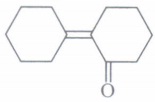
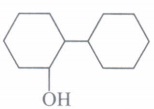
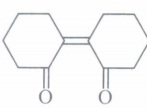
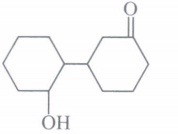
3.
In Arrhenius plot of Ink Vs \(\frac{1}{\mathrm{~T}}\) is a linear plot obtained with slope of -2 x 10⁴ k. Ea of reaction in kJ mol -1.
83
166
249
332 kJ mol -1
4.
For a reaction taking place in three steps, the overall rate constant k \(=\frac{k_{1} k_{2}}{k_{3}}\) If Ea1, Ea2 and Ea3 are the 40, 50 and 60 kJ mol-1, the overall Ea is
30
40
60
50
5.
Arrhenius equation may not be represented as
\( \ln \frac{A}{k}=\frac{E_{a}}{R T}\)
\(K=Ae^-Ea/RT\)
\(\log A=\log k+\frac{E_{\alpha}}{2303 R T}\)
\(\log k-\left(\frac{E_{a}}{R T}\right)=A\)
6.
In Clemmensen reduction, carbonyl compound is treated with _____________ .
Zinc amalgam + HCI
Sodium amalgam + HCI
Zinc amalgam + nitric acid
Sodium amalgam + HNO3
7.
Which of the following compounds will give butanone on oxidation with alkaline KMnO4 solution?
Butan - I - oI
Butan - 2 - ol
Both of these
None of these
8.
Which of the following acids on heating loses a molecule of H2O to form an \(\alpha , \beta\) - unsaturated acid ?
CH3CHOCOOH
HOCH2COOH
CH3CHOHCH2COOH
HOCH2CH2CH2COOH
9.
The correct order of decreasing acid strength of trichloroacetic (A), trifluoroacetic acid (B), benzoic acid (C) and formic acid (D) is
A > B > C > D
A > C > B > D
B > A > D > C
B > A > C > D
10.
Trichloroacetaldehyde was subjected to Cannizaro's reaction by using NaOH. The mixture and another products contains sodium trichloroacetate and other compound. The other compound is
trichloromethanol
2,2,2-trichloropropanol
chloroform
2,2,2-trichloromethanol
11.
Iodofrom test is not given by
2-pentanone
3-pentanone
ethanal
ethanol
12.
Which one of the following is reduced with zinc and hydrochloric acid to give the corresponding hydrocarbon ?
ethyl acetate
acetic acid
acetamide
butan-2-one
13.
Methyl ketones are characterized through
Tollens' reagent
Iodoform test
Schiff's reagent
Fehling's solution
14.
The chemical that undergoes self-oxidation and self-reduction in the same reaction is
benzyl alcohol
acetone
formaldehyde
acetic acid
15.
Which of the following organic compounds answers both iodoform test and Fehling's test?
Ethanal
Propanone
Ethanol
Methanol
16.
For an endothermic reaction, where \(\triangle H\) represents the enthalpy of the reaction in kJ/mol. The minimum value for the energy of activation will be
less than \(\triangle H\)
zero
more than \(\triangle H\)
equal to \(\triangle H\)
17.
For a first order reaction, the time taken to reduce the initial concentration by a factor of \(\frac {1}{4}\) is 20 minutes. The time required to reduce initial concentration by a factor of 1/16 is
20 min
10 min
80 min
40 min
5 min
18.
Which of the following statements is not correct about order of a reaction ?
The order of a reaction can be a fractional number
Order of a reaction is experimentally determined quantity.
The order of a reaction is always equal to the sum of the stoichiometric coeffecients of reactants in the balanced chemnical equation for reaction.
The order of a reaction is the sum of the powers of molar concentration of the reaction in the rate law expression.
19.
Rate constant of a reaction (k) is 175 litre2 mol-2 sec-1. What is the order of reaction?
first
second
third
zero
20.
Time required for 100 percent completion of a zero order reaction is
\(\frac {2k}{a}\)
\(\frac {a}{2k}\)
\(\frac {a}{k}\)
a k
21.
22.
23.
Assertion: Benzoic acid does not undergo Freidel Crafts reaction.
Reason: The carboxyl group in benzoic acid donates electrons into the ring through resonance
Codes:
(a) If both assertion and reason are true and the reason is the correct explanation of the assertion.
(b) If both assertion and reason are true but the reason is not the correct explanation of the assertion.
(c) If the assertion is true but the reason is false.
(d) If the assertion is false but the reason is true.
(e) If the assertion and reason both are false
24.
Assertion: Isobutanal does not give an iodoform test.
Reason: It does not have ∝-hydrogen.
Codes:
(a) If both assertion and reason are true and the reason is the correct explanation of the assertion.
(b) If both assertion and reason are true but the reason is not the correct explanation of the assertion.
(c) If the assertion is true but the reason is false.
(d) If the assertion is false but the reason is true.
(e) If the assertion and reason both are false
25.
26.
Assertion (A) Fomaldehyde is a planar molecule.
Reason (R) It contains sp2-hybridised carbon atom.
(a) Both (A) and (R) are correct and (R) is the correct explanation of (A).
(b) Both (A) and (R) are correct but (R) is not the correct explanation of(A).
(c) (A) is correct but (R) is incorrect.
(d) (A) is incorrect but (R) is correct.
27.
Assertion: The \(\alpha\)-hydrogen atom in carbonyl compounds is less acidic.
Reason: The anion formed after the loss of \(\alpha\)-hydrogen atom is resonance stabilised.
Codes:
(a) Assertion and reason both are correct and reason is correct explanation of assertion.
(b) Assertion and reason both are wrong statements.
(c) Assertion is correct but reason is wrong statement.
(d) Assertion is wrong but reason is correct statement.
(e) Assertion and reason both are correct statements but reason is not correct explanation of assertion.
28.
Assertion: Aromatic aldehydes and formaldehyde undergo Cannizzaro reaction.
Reason: Aromatic aldehydes are almost as reactive as formaldehyde.
Codes:
(a) Assertion and reason both are correct statements and reason is correct explanation for assertion.
(b) Assertion and reason both are correct statements but reason is not correct explanation for assertion.
(c) Assertion is correct statement but reason is wrong statement.
(d) Assertion is wrong statement but reason is correct statement.
29.
Assertion: Nitration of benzoic acid gives m-nitrobenzoic acid.
Reason: Carboxyl group increases the electron density at the meta-position.
Codes:
(a) Assertion and reason both are correct statements and reason is correct explanation for assertion.
(b) Assertion and reason both are correct statements but reason is not correct explanation for assertion.
(c) Assertion is correct statement but reason is wrong statement.
(d) Assertion is wrong statement but reason is correct statement.
30.
Assertion: Acetic acid in vapour state shows a molecular mass of 120.
Reason: It undergoes intermolecular hydrogen bonding.
Codes:
(a) Assertion and reason both are correct statements and reason is correct explanation for assertion.
(b) Assertion and reason both are correct statements but reason is not correct explanation for assertion.
(c) Assertion is correct statement but reason is wrong statement.
(d) Assertion is wrong statement but reason is correct statement.
31.
Assertion: Benzaldehyde undergoes aldol condensation.
Reason: Aldehydes having a- hydrogen atom undergo aldol condensation.
Codes:
(a) Assertion and reason both are correct statements and reason is correct explanation for assertion.
(b) Assertion and reason both are correct statements but reason is not correct explanation for assertion.
(c) Assertion is correct statement but reason is wrong statement.
(d) Assertion is wrong statement but reason is correct statement.
32.
Assertion: Aldol condensation can be catalysed both by acids and bases.
Reason: \(\beta\)-Hydroxy aldehydes or ketones readily undergo acid catalysed dehydration.
Codes:
(a) Assertion and reason both are correct statements and reason is correct explanation for assertion.
(b) Assertion and reason both are correct statements but reason is not correct explanation for assertion.
(c) Assertion is correct statement but reason is wrong statement.
(d) Assertion is wrong statement but reason is correct statement.
33.
Assertion : Kinetics explains the reaction mechanism.
Reason : Kinetics explains the formation of products.
Codes :
(a) Assertion and reason both are correct statements and reason is correct explanation for assertion.
(b) Assertion and reason both are correct statements but reason is not correct explanation for assertion.
(c) Assertion is correct statement but reason is wrong statement.
(d) Assertion is wrong statement but reason is correct statement.
34.
Assertion : Chemical kinetics deals with the rate of reaction, the factors affecting the rates of the reactions and the mechanism by which the reaction proceed.
Reason : Nature of reactants, concentration of reactants, products and catalyst affect the rate of reaction.
Codes :
(a) Assertion and reason both are correct statements and reason is correct explanation for assertion.
(b) Assertion and reason both are correct statements but reason is not correct explanation for assertion.
(c) Assertion is correct statement but reason is wrong statement.
(d) Assertion is wrong statement but reason is correct statement.
35.
Assertion : Hydrolysis of cane sugar is a pseudo first order reaction.
Reason : Water is present in large excess during hydrolysis.
Codes :
(a) Assertion and reason both are correct statements and reason is correct explanation for assertion.
(b) Assertion and reason both are correct statements but reason is not correct explanation for assertion.
(c) Assertion is correct statement but reason is wrong statement.
(d) Assertion is wrong statement but reason is correct statement.
36.
Assertion : For the reaction, \(2 \mathrm{~N}_{2} \mathrm{O}_{5} \rightarrow 4 \mathrm{NO}_{2}+\mathrm{O}_{2}\)
Rate = k [N2O5]
Reason : Rate of decomposition of \(\mathrm{N}_{2} \mathrm{O}_{5}\) is determined by slow step.
Codes :
(a) Assertion and reason both are correct statements and reason is correct explanation for assertion.
(b) Assertion and reason both are correct statements but reason is not correct explanation for assertion.
(c) Assertion is correct statement but reason is wrong statement.
(d) Assertion is wrong statement but reason is correct statement.
37.
Assertion : The decomposition of NH3 on finely divided platinum surface is first order when the concentration is low, however at higher concentration, the reaction becomes zero order.
Reason : In first order reaction, the rate of reaction is proportional to the first power of the concentration of the reactant
Codes :
(a) Assertion and reason both are correct statements and reason is correct explanation for assertion.
(b) Assertion and reason both are correct statements but reason is not correct explanation for assertion.
(c) Assertion is correct statement but reason is wrong statement.
(d) Assertion is wrong statement but reason is correct statement.
38.
In the following questions. an Assertion (A) is followed by a corresponding Reason (R) Use the following keys to choose the appropriate answer.
Assertion (A) Carboxylic acids have higher boiling liquids than aldehydes, ketones and even alcohols of comparable molecular masses.
Reason (R) More extensive association of carboxylic acid molecules through intermolecular hydrogen bonding is responsible for the high boiling point of carboxylic acid.
Codes:
(a) Both (A) and (R) are correct, (R) is the correct explanation of (A).
(b) Both (A) and (R) are correct, (R) is not the correct explanation of (A). .
(c) (A) is correct; (R) is incorrect.
(d) (A) is incorrect; (R) is correct.
39.
In the following questions. an Assertion (A) is followed by a corresponding Reason (R) Use the following keys to choose the appropriate answer.
Assertion (A) \(\alpha\)-hydrogen atoms of carbonyl compounds are acidic.
Reason (R) The strong electron releasing effect of the carbonyl group make the stabilisation of the conjugate base by the resonance.
Codes:
(a) Both (A) and (R) are correct, (R) is the correct explanation of (A).
(b) Both (A) and (R) are correct, (R) is not the correct explanation of (A). .
(c) (A) is correct; (R) is incorrect.
(d) (A) is incorrect; (R) is correct.
40.
In the following questions. an Assertion (A) is followed by a corresponding Reason (R) Use the following keys to choose the appropriate answer.
Assertion (A) A positive catalyst increases the rate of reaction.
Reason (R) A catalyst increases the rate of reaction by making available a new and more efficient mechanism.
Codes:
(a) Both (A) and (R) are correct, (R) is the correct explanation of (A).
(b) Both (A) and (R) are correct, (R) is not the correct explanation of (A).
(c) (A) is correct; (R) is incorrect.
(d) (A) is incorrect; (R) is correct.
1.
(b)
positional isomers
2.
(a)
3.
(b)
166
4.
(a)
30
5.
(d)
\(\log k-\left(\frac{E_{a}}{R T}\right)=A\)
6.
(a)
Zinc amalgam + HCI
7.
(b)
Butan - 2 - ol
8.
(c)
CH3CHOHCH2COOH
9.
(c)
B > A > D > C
10.
(d)
2,2,2-trichloromethanol
11.
(b)
3-pentanone
12.
(d)
butan-2-one
13.
Methyl ketones are characterized by iodoform test
14.
(c)
formaldehyde
15.
(a)
Ethanal
16.
(a)
less than \(\triangle H\)
17.
(d)
40 min
18.
(c)
The order of a reaction is always equal to the sum of the stoichiometric coeffecients of reactants in the balanced chemnical equation for reaction.
19.
(c) : On the basis of given units of k, the reactions of 3 rd order.
20.
(c)
\(\frac {a}{k}\)
21.
22.
23.
(c) If the assertion is true but the reason is false.
24.
(c) If the assertion is true but the reason is false.
25.
26.
(a) The carbon-oxygen bond is carbonyl group 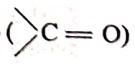 is composed of one sigma (\(\sigma\)) and one pi (\(\pi\)) bond. The carbon in carbonyl group is sp2-hybridised. Therefore, the three bonds in the carbonyl carbon are planar and trigonal with bond angle of 120°. (A) and (R) both are correct and (R) is the correct explanation of (A).
27.
(d) Assertion is wrong but reason is correct statement.
28.
(c): Aromatic aldehydes and formaldehyde do not contain \(\alpha\)- hydrogen and thus undergo Cannizzaro reaction. Formaldehyde is more reactive than aromatic aldehydes.
29.
(c): Carboxyl group only marginally decreases the electron density at m - position relative to 0 - and p - positions.
30.
(a) : Assertion and reason both are correct statements and reason is correct explanation for assertion.
31.
(d): Aldehydes having a methyl or methylene group in the a-position or more correctly having atleast one hydrogen atom in the \(\alpha\)-position undergo dimerisation in presence of a base at low temperature to form \(\beta\)-hydroxy aldehydes called aldols. As benzaldehyde does not have any \(\alpha\)-hydrogen hence it does not undergoes aldol condensation.
32.
(b): Both carbanions (formed in presence of base) and enol form (formed in presence of an acid) act as nucleophiles and hence add on the carbonyl group of aldehydes and ketones to give aldols.
33.
(a) : Kinetics deals with the reaction mechanism i.e., how the atoms rearrange themselves in the reactant molecules in a single step or a number of steps, finally leading to the product molecules.
34.
(b) Assertion and reason both are correct statements but reason is not correct explanation for assertion.
35.
(a) : Hydrolysis of cane sugar is pseudo first order reaction. Since, water is always in excess, rate of reaction does not depend appreciably on its concentration, thus it is an example of pseudo unimolecular reactions.
36.
(a) : Rate of any reaction is equal to the rate of its slowest step and here rate of given reaction = k [N2O5 ] because the slowest step has only one N2 O5 molecule involved.
37.
(b) : In a heterogeneous system, the reactant is absorbed on the surface of a solid catalyst. The fraction of the surface of the catalyst covered by the reactant is proportional to its concentration at low values and the rate of reaction is first order. However at higher concentration, the surface of catalyst is fully covered and the reaction rate becomes independent of concentration and it becomes zero order reaction.
38.
(a) Carboxylic acids are higher boiling liquids than aldehydes, ketones and even alcohols of comparable molecular masses. This is due to more extensive association of carboxylic acid molecules through intermolecular hydrogen bonding. Hence, both (A) and (R) are correct and (R) is the correct explanation of (A).
39.
(c) The acidity of \(\alpha\)-hydrogen atoms of carbonyl compounds is due to the strong electron withdrawing effect of the carbonyl group and resonance stabilisation of the conjugate base.
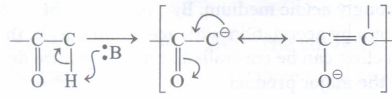
Hence, (A) is correct but (R) is incorrect.
40.
(a) A positive catalyst increases rate of reaction by making a new and more efficient mechanism. Thus, both (A) and (R) are correct and (R) is the correct explanation of (A).

12th Standard CBSE Syllabus & Materials
12th Standard CBSE
CBSE 12th Computer Science Python Revision Tour I - New Previous year Question Papers Study Material - QB365 Set A
NEW12th Standard CBSE
CBSE 12th Business Studies Planning Important Questions And Answers Study Material - QB365 Set A
NEW12th Standard CBSE
CBSE 12th Business Studies Business Environment Important Questions And Answers Study Material - QB365 Set A
NEW12th Standard CBSE
CBSE 12th Business Studies Principles of Management Important Questions And Answers Study Material - QB365 Set A



NCERT Books

Syllabus

Exam Pattern

Sample Question Papers

Previous year Question Papers

Important Notes

MCQ Practice test

NCERT Exemplers

Case study Questions

Image Based Questions

Passage based Questions

HOT Questions

Value Based Questions

Model Questions Papers
NCERT ( Book Back ) Questions

Assertion and Reason
Important Questions And Answers

CBSE 12th Standard CBSE Subjects
CBSE Standards








