
 100% FREE ACCESS
12th Standard CBSE Syllabus & Materials
12th Standard CBSE
CBSE 12th Economics Government Budget and the Economy Previous year Question Papers Study Material - QB365 Set A
NEW12th Standard CBSE
CBSE 12th Computer Science Interface Python with MySQL - New Previous year Question Papers Study Material - QB365 Set A
NEW12th Standard CBSE
CBSE 12th Computer Science Database Concept - New Previous year Question Papers Study Material - QB365 Set A
NEW12th Standard CBSE
CBSE 12th Computer Science Data Communication - New Previous year Question Papers Study Material - QB365 Set A
NEW12th Standard CBSE
CBSE 12th Computer Science Data Structures - New Previous year Question Papers Study Material - QB365 Set A
NEW12th Standard CBSE
CBSE 12th Computer Science Functions - New Previous year Question Papers Study Material - QB365 Set A

Published on: 25/10/2025
Download CBSE Class 12th Standard CBSE Chemistry question papers, sample papers, important questions, and previous year solved papers in PDF format. Get free study materials, NCERT solutions, and exam preparation resources for Class 12th Standard CBSE Chemistry
Questions + Answers key
Take MCQ Chemistry Test
1.
Arrange the following in increasing order of their boiling point:
C4H9-NH2, (C2H5)2NH, C2H5N(CH3)2.
2.
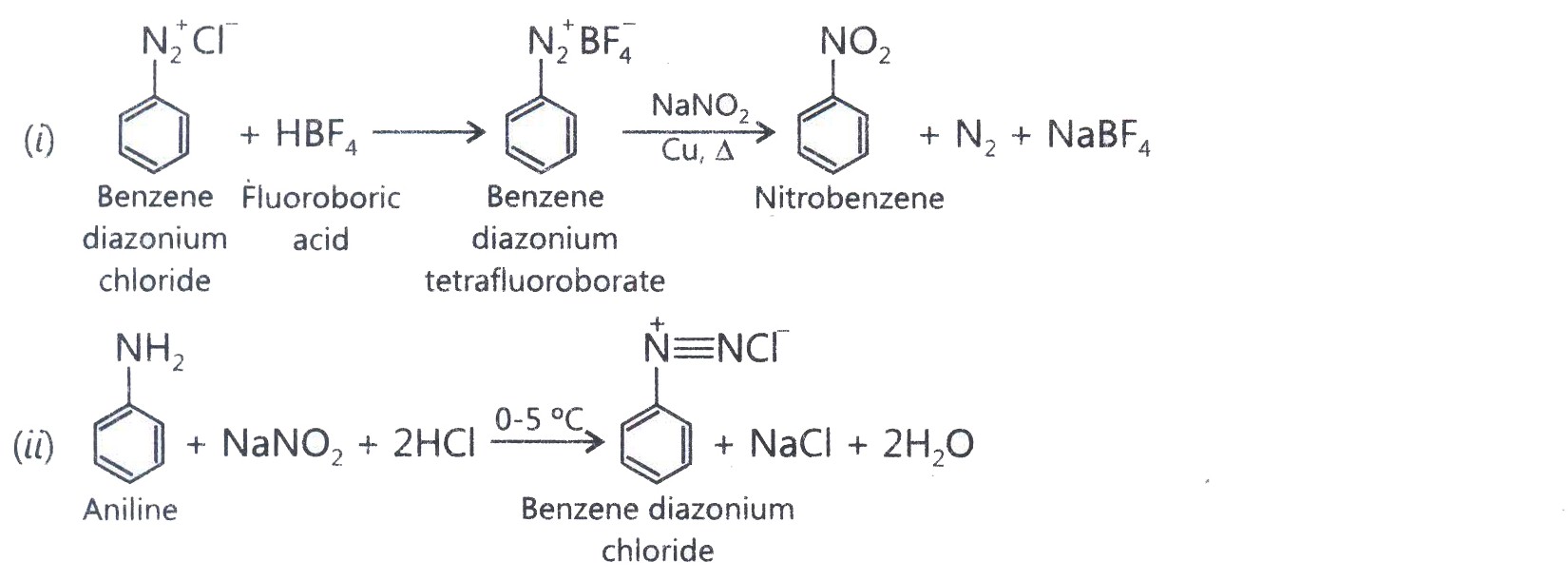
State the reactions and reaction conditions for the following conversions:
(i) Benzene diazonium chloride to nitrobenzene.
(ii) Aniline to benzene diazonium chloride.
3.
Write such reactions and facts about glucose which cannot be explained by its open chain structure.
4.
Explain what is meant by the following:
(i) Peptide linkage
(ii) Pyronose structure of glucose
5.
Draw the structures of isomers, if any, and write the names of the following complexes:
(i) [Cr(NH3)4Cl2]+
(ii) [Co(en)3]3+
Atomic numbers Cr = 24, Co = 27]
6.
How many moles of AgCl will be precipitated when an excess of AgNO3 is added to a molar soultion of [CrCl(H2O)5]Cl2?
7.
Carbohydrates are optically active polyhydroxy aldehydes and ketones. They are also called saccharides. All those carbohydrates which reduce Fehling solution and Tollen's reagent are referred to as reducing sugars. Glucose, the most important sources of energy for mammals, is obtained by the hydrolysis of starch. Vitamins are accessory food factors required in the diet. Proteins are the polymers of \(\alpha\)-amino acids and perform various structural and dynamic functions in the organisms. Deficiency of vitamins leads to many diseases.
Answer the following
(a) The penta-acetate of glucose does not react with hydroxylamine. What does it indicate?
(b) Why cannot vitamin C be stored in our body?
(c) Define the following as related to proteins:
(i) Peptide linkage
(ii) Denaturation
Or
(c) Define the following as related to carbohydrates:
(i) Anomers
(ii) Glycosidic linkage
8.
Account for the following:
(i) pKb of aniline is more than that of methylamine.
(ii) Ethylamine is soluble in water whereas aniline is not.
(iii) Methylamine in water reacts with ferric chloride to precipitate hydrated ferric oxide.
(iv) Although amino group is o– and p– directing in aromatic electrophilic substitution reactions, aniline on nitration gives a substantial amount of m-nitroaniline.
(v) Aniline does not undergo Friedel-Crafts reaction.
(vi) Diazonium salts of aromatic amines are more stable than those of aliphatic amines.
(vii) Gabriel phthalimide synthesis is preferred for synthesising primary amines.
9.
A compound A (C6H12O6) is oxidised by bromine witer into monobasic acid. It also reduces Tollen's reagent and reacts with HCN to give a compound B which on hydrolysis gives a compound C. On treating C with HI/red P, n-heptanoic acid is obtained. Compound A on treatment with excess phenyl hydrazine gave D-glucoszone. Name the compound A and draw its cyclic from.
10.
(a) Write the structures of the main products when aniline reacts with the following reagents:
(i) Br2 water
(ii) HCI
(iii) (CH3CO)2O / pyridine
(b) Arrange the following in the increasing order of their boiling point:
C2H5NH2 , C2H5OH, (CH3)3N
(c) Give a simple chemical test to distinguish between the following pair of compounds:
(CH3)2NH and (CH3)3N
11.
Using valence bond theory, explain the following in relation to the complexes given below :
\([Mn(CN)_6]^{3-}, [Co(NH_3)_6]^{3+}, [Cr(H_2O)_6]^{3+}, [FeCl_6]^{4-}\)
(i) Type of hybridisation
(ii) Inner or outer orbital complex.
(iii) Magnetic behaviour.
(iv) Spin only magnetic moment value.
12.
Using IUPAC norms write the formula for the following:
(i) Potassium tetracyanonickelate (II)
(ii) Tetrabromidocuprate(II)
(iii) Pentaamminenitrito-O-cobalt (III)
(iv) Pentaamminenitrito-N-cobalt (III)
(v) Tetrahydroxozincate (II)
(vi) Hexaamminecobalt (III) sulphate
(vii) Potassium tetrachloridopalladate (II)
(viii) Potassium tri(oxalato) chromate(III)
(ix) Diamminedichlorodiplatinum (II)
(x) Hexaammineplatinum (IV)
13.
(i) Predict the geometry of [Ni(CN)4]2-
(ii) Calculate the spin only magnetic moment of [Cu(NH3)4]2+ ion.
14.
Give the reaction of glucose with hydrogen cyanide. Presence of which group is confirmed by this reaction?
15.
Define the following terms
(i) Nucleotides
(ii) Anomers
(iii) Essential amino acids
16.
How will you convert
(i) ethanoic acid into methanarnine?
(ii) hexane nitrile into 1-aminopentane?
(iii) methanol into ethanoic acid?
17.
Describe with an example of each, the role of coordination compounds in
(i) biological system
(ii) analytical chemistry
(iii) medicinal chemistry
18.
(i) Deficiency of which vitamin causes night blindness?
(ii) Name the base that is found in nucleotide of RNA only.
(iii) Glucose on reaction with HI gives n-hexane. What does it suggest about the structure of glucose?
19.
Accomplish the following conversions:
(i) Benzene to m-bromophenol
(ii) Benzoic acid to aniline
20.
(a) Illustrate the following with an example each.
(i) Linkage isomerism
(ii) Coordination isomerism
(b) Why is [NiCl4]2- paramagnetic? [Ni=28]
21.
Which of the following reactions belong to electrophilic aromatic substitution?
Bromination of acetanilide
Coupling reaction of aryldiazonium salts
Diazotisation of aniline
Acylation of aniline
22.
Pick out the correct statement with respect to [Mn(CN)6]2-
It is sp2d2 hybridised, tetrahedral
It is d2sp3 hybridised, octahedral
It is dsp2 hybridised, square planar
It is sp3d2 hybridised octahedral
23.
Carbohydrate that cannot be hydrolysed further to give simpler unit of polyhydroxy aldehyde or ketone is called
monosaccharide
oligosaccharide
polysaccharide
None of these
24.
Which of the following products is formed in the given reaction?
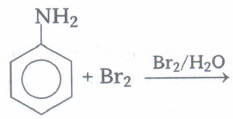
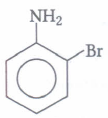
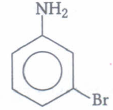
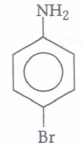
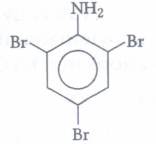
25.
Which of the following statements about \(\alpha \)-amino acids are true?
In -amino acids, the acidic group is \(-\overset { + }{ N } { H }_{ 3 }\) while the basic group is -COO-
All the -amino acids which constitute proteins have D-configuration
The isoelectric point of glycine is 6.1
Valine is an essential amino acid
26.
The number if disulphide linkages present in insulin are
4
3
2
1
27.
The best reagent for converting, 2-phenylpropanamide into 1-phenylethanamine is.................................. .
excess H2/Pt
NaOH/Br2
NaBH4/methanol
LiAIH4/ether
28.
The helical structure of protein is stabilized by
dipeptide bonds
hydrogen bonds
ether bonds
peptide bonds
29.
Amine that cannot be prepared by Gabriel phthalimide synthesis is
aniline
benzylamine
methylamine
isobutylamine
tertiary-butylamine
30.
How many EDTA (ethylenediaminetetraacetic acid) molecules are required to make an octahedral complex with a Ca2+ ion?
One
Two
Six
Three
31.
Which one of the following has an optical isomer?
[Co(H2O)4 (en)]3+
[Zn(en)2]2+
[Zn(en) (NH3)2]2+
[Co(en)3]3+ (en = ethylenediamine)
32.
The complexes [Co (NH3)6] [Cr (CN)6] and [Cr(NH3)6] [Co(CN)6] are the examples of which type of isomerism?
Geometrical isomerism
Linkage isomerism
Ionization isomerism
Coordination isomerism
33.
34.
Assertion (A) All naturally occurring \(\alpha\)-amino acids except glycine are optically active.
Reason (R) Most naturally occurring amino acids have L-configuration.
(a) Both (A) and (R) are correct and (R) is the correct explanation of (A).
(b) Both (A) and (R) are correct but (R) is not the correct explanation of (A).
(c) (A) is correct but (R) is incorrect.
(d) (A) is incorrect but (R) is correct.
35.
Assertion: \(\beta\) -pleated sheet structure of protein shows maximum extension.
Reason: Intermolecular hydrogen bonding is present in them.
Codes:
(a) Assertion and reason both are correct statements and reason is correct explanation for assertion.
(b) Assertion and reason both are correct statements but reason is not correct explanation for assertion.
(c) Assertion is correct statement but reason is wrong statement.
(d) Assertion is wrong statement but reason is correct statement.
36.
In the following questions. an Assertion (A) is followed by a corresponding Reason (R) Use the following keys to choose the appropriate answer.
Assertion (A) The ligands of nitro and nitrito are called ambidentate ligands .
Reason (R) These ligands give linkage isomers.
Codes:
(a) Both (A) and (R) are correct, (R) is the correct explanation of (A).
(b) Both (A) and (R) are correct, (R) is not the correct explanation of (A).
(c) (A) is correct; (R) is incorrect.
(d) (A) is incorrect; (R) is correct.
37.
Observe the histogram showing boiling points of pentane, iso pentane, 1°,2° and 3 ° amines. Answer the questions that follow based on table and related concepts.
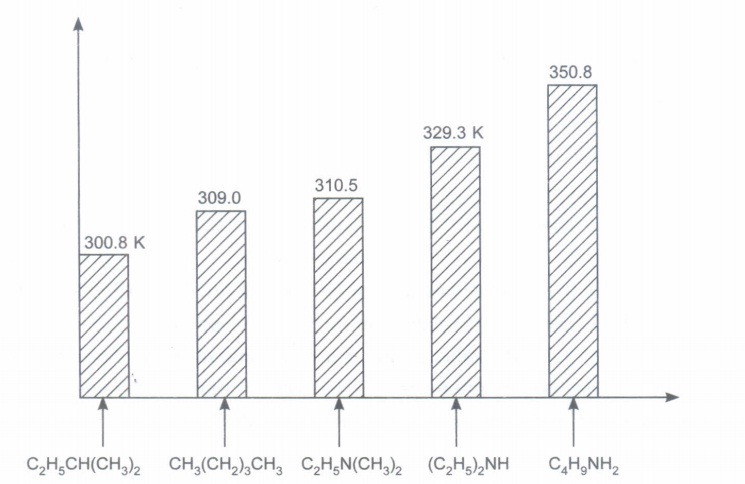
(a) Why does CH3CH2CH2CH2NH2 (1° amine) has higher boiling point than (C2H5)2NH and C2H5N(CH3 )2?
(b) Why does ethanol have higher boiling point than ethanamine?
(c) Why amines are more basic than alcohol?
(d) Why are Primary amines more soluble in water than 2° and 3° amines?
(e) Arrange the compounds shown in graph, increasing order of boiling points. Give reason.
38.
Transition metals form complex compounds which playa very important role in our daily life. Complexes are also formed by other groups elements e.g. Chlorophyll is coordination compound of Mg. Organometallic compounds like Grignard reagent is most useful in organic chemistry. Complexes are used in medicines, analytical chemistry, qualitative analysis, electroplating, biological processes. Stability of complexes depends upon charge on central metal ion, strength of ligand. Counter ions outside the coordination entity are ionisable but inside the coordination sphere are not ionisable.
(a) Name a complex used as anticancer agent?
(b) What is coordination number of Co in [Co(en)3]3+ and why?
(c) Name a complex used in Gold plating
(d) Name a complex used for determining hardness of water. What is its denticity?
(e) How is undecomposed AgBr removed from photographic film? Write the reaction involved.
1.
Boiling points depend upon the extent of H-bonding which, in turn, depends upon the number of H-atoms present on the N-atom. Since C2H9NH2 has two, (C2H5)2NH has one and C2H5N(CH3)2 has no hydrogen linked to nitrogen, therefore, boiling points decrease as the extent H-bonding decreases, i.e., boiling points decrease in the order :
C4H9NH2 > (C2H5)2NH > C2H5N(CH3)2.
2.
3.
(t) Glucose does not respond to Schiff's reagent test.
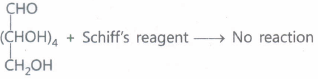
(il) It does not react with sodium bisulphite and ammonia.
.png)
4.
(i) Peptide linkage: The amide linkage between two a-amino acids formed with the loss of a water molecule is called a peptide linkage.
(ii) The six membered cyclic structure of glucose is called pyranose structure (α - or β -), in analogy with heterocylic compound pyran glucose
5.
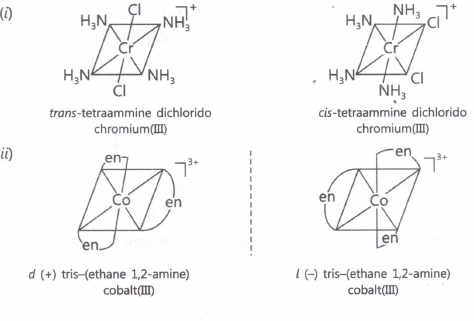
6.
2 moles of AgCl will be precipitated.
7.
(a) The penta-acetate of glucose does not react with hydroxylamine. It indicates that the carbonyl group of glucose is not free as it is present in cyclic form.
(b) Vitamin C is water soluble, that's why it cannot stored in our body.
(c) (i) Peptide linkage Proteins are connected to each other by –CO–NH– bond which is called the peptide linkage.
(ii) Denaturation When a native protein is subjected to physical change or chemical change, the hydrogen bonds are disturbed. As a result, globules unfold and helix gets uncoiled and protein loses its biological activity. This is known as denaturation of proteins.
Or
(c) (i) Anomers In carbohydrates, a pairs of anomers, is a near-identical stereoisomers that differ at only the anomeric carbon.
(ii) Glycosidic linkage The two monosaccharide units are joinied together through an oxide linkage, known as glycosidic linkage.
8.
(i) pKb of aniline is more than that of methylamine.
In aniline, the lone pair of electrons on N atom is in resonance with benzene ring. Hence, it cannot be easily donated to an acid. This decreases its basicity. In methyl amine, the +I effect of methyl group increases the electron density on N atom so that the lone pair of electrons on N atom can be easily donated to an acid. Hence, methylamine is more basic than aniline. Higher is the basicity, lower is the pKb and vice versa.
(ii) Ethylamine is soluble in water whereas aniline is not. With increase in the molecular weight, the solubility decreases. Aniline has higher molecular weight than ethylamine.
(iii) Methylamine in water reacts with ferric chloride to precipitate hydrated ferric oxide. Due to the +I effect of −CH3 group, methylamine is more basic than water. Therefore, in water, methylamine produces OH− ions by accepting H+ ions from water. OH− ions react with ferric chloride to precipitate hydrated ferric oxide.
(iv) The nitration of aniline is carried out using conc. HNO3 and H2SO4. However, in the presence of conc. H2SO4, aniline forms aniline hydrogen sulphate in which the anilinium ion, C6H5NH3+ is meta directing because the positive charge on the nitrogen attracts electrons from the benzene ring.
(v) Aniline does not undergo Friedel craft's reactions because the reagent AlCl3 (the Lewis acid which is used as a catalyst in friedel crafts reaction), being electron deficient acts as a Lewis base. and attacks on the lone pair of nitrogen present in aniline to form an insoluble complex which precipitates out and the reaction does not proceed.
(vi) In aromatic diazonium salts, due to resonance, there is dispersal of positive charge on benzene ring.
But in aliphatic diazonium salts, resonance is not possible, so aliphatic diazonium salts are less stable than aromatic diazonium salt.
(vii) The reaction between alkyl halide (R- X) and ammonia gives mixture, of 1, 2, and 3 amines with tetra alkyl ammonium halide. The mixture is not separable. To get pure 1 amine, Gabriel phthalimide synthesis is preferred.
9.
cyclic from of glucose (A)
10.
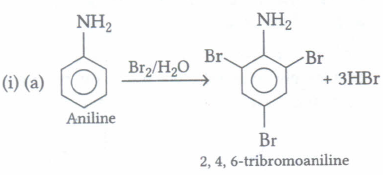
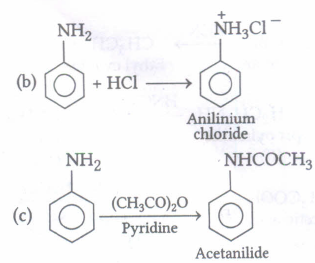
(ii) Alcohols have higher boiling point as compared to that of amines, because oxygen being more electronegative atom, forms strong hydrogen bond as compared to that of nitrogen. In tertiary amine, there is no hydrogen bond formation due to the absence of H-atoms and hence, has the lowest boiling point. Therefore, increasing order of boiling point (CH3)3N < C2H5NH2 < C2H5OH .
(iii) (CH3)3NH and (CH3)3N are secondary and tertiary arnines respectively. These are distinguished by Hinsberg's reagent which gives sulphonamide with secondary amines and no reaction carried out with tertiary arnines. (CH3)3NH reacts with benzene sulphonyl chloride as follows:
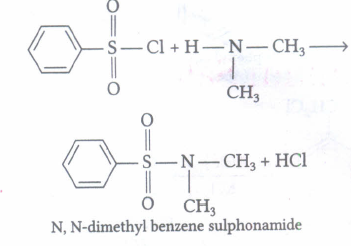
11.
\([Mn(CN)_6]^{3-}\)
d2sp3, (ii) inner orbital complex, (iii) paramagnetic, (iv) 2.87 B.M.
(i) d2sp3 (ii) Inner orbital complex, (iii) diamagnetic, (iv) \(\mu=0\)
(i) d2sp3, (ii) Inner orbital complex, (iii) paramagnetic, (iv) 3.87 B.M.
(i) sp3d2, (ii) outer orbital complex (iii) paramagnetic (iv) 4.9 B.M.
12.
(i) K2[Ni(CN)4]
(ii) [CuBr4]2-
\((iii){ [Co{ \left( { NH }_{ 3 } \right) }_{ 5 }ONO] }^{ 2+ }\)
(iv) \({ [Co{ \left( { NH }_{ 3 } \right) }_{ 5 }{ NO }_{ 2 }] }^{ 2+ }\)
(v) [Zn(OH)4]2-
(vi) [Co(NH3)6]2(SO4)3
(vii) K2[PdCl4]
(viii) K3[Cr(C2O4)3]
(ix) [Pt(NH3)2Cl2]
(x) [Pt(NH3)6]4+
13.
(i) [Ni(CN)4]2- - Square planar
(ii) In \(\left[\mathrm{Cu}\left(\mathrm{NH}_3\right)_4\right]^{2 *}\) ion, copper is in +2 state. The electronic configuration is \(3 d^9 4 s^{\circ}\).
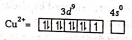
Number of unpaired electron = 1
\(\mu=\sqrt{n(n+2)}=\sqrt{1(1+2)}=\sqrt{3}=1.73 \mathrm{BM}\)
14.
Glucose reacts with HCN to give glucose cyanohydrin.
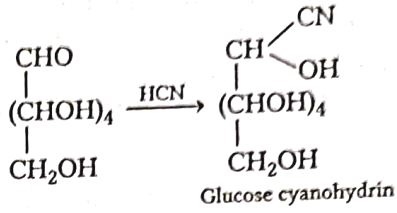
It confirms the presence of carbonyl group.
15.
(i) Nucleotides: These are the monomers of nucleic acid. They consist of heterocyclic base, pentose sugar and phosphoric acid residue.
(ii) Anomers: Those compounds which differ in orientation of -OH group on C-1 carbon atom are called anomers.
(iii) Essential amino acids: Those amino acids which are not synthesised by our body and must be a part of our diet are called essential amino acids.
16.
(i) Ethanoic acid into methanamine
\(\begin{equation} \begin{array}{cc} \mathrm{CH}_{3} \mathrm{COOH} & \stackrel{\mathrm{SOCl}_{2}}{\longrightarrow} \mathrm{CH}_{3} \mathrm{COCl} \stackrel{\mathrm{NH}_{3}(\text { excess })}{\longrightarrow} \\ \text { Ethanoic } & \text { Ethanoyl } \\ \text { acid } & \text { chloride } \end{array} \end{equation}\)\(\begin{equation} \begin{aligned} &\mathrm{CH}_{3} \mathrm{CONH}_{2}\\ &\text { Ethanamide } \end{aligned} \end{equation}\)\(\xrightarrow[{Hofmann\ bromide\ reaction}]{B{r}_{2}/KOH}\)\(\begin{equation} \begin{aligned} &\mathrm{CH}_{3} \mathrm{NH}_{2}\\ &\text { Methanamine } \end{aligned} \end{equation}\)
(ii) Hexane nitrile into 1-aminopentane
\(\begin{equation} \begin{aligned} &\mathrm{CH}_{3}\left(\mathrm{CH}_{2}\right)_{4} \mathrm{CN}\\ &\text { Hexane nitrile } \end{aligned} \end{equation}\)\(\xrightarrow[{partial\ hydrolysis}]{H_3O^+}\)\(\begin{equation} \begin{aligned} &\mathrm{CH}_{3}\left(\mathrm{CH}_{2}\right)_{4} \mathrm{CONH}_{2}\\ &\text { Hexanamide } \end{aligned} \end{equation}\)\(\xrightarrow[{Hofmann\ bromide\ reaction}]{B{r}_{2}/KOH}\)\(\begin{equation} \begin{aligned} &\mathrm{CH}_{3}\left(\mathrm{CH}_{2}\right)_{4} \mathrm{NH}_{2}\\ &\text { 1-aminopentane } \end{aligned} \end{equation}\)
(iii) Methanol into ethanoic acid
\(\begin{equation} \underset{\text { Methanol }}{\mathrm{CH}_{3} \mathrm{OH}} \stackrel{\mathrm{PCl}_{5}}{\longrightarrow} \end{equation}\)\(\begin{equation} \begin{aligned} &\mathrm{CH}_{3} \mathrm{Cl} \quad \stackrel{\mathrm{KCN}(\text { alc. })}{\longrightarrow}\\ &\text { Chloromethane } \end{aligned} \end{equation}\)\(\mathrm{CH}_{3} \mathrm{CN} \stackrel{\mathrm{H}_{3} \mathrm{O}^{+}}{\longrightarrow}\\ Ethane nitrile\)\(\begin{equation} \begin{aligned} &\mathrm{CH}_{3} \mathrm{COOH}\\ &\text { Ethanoic acid } \end{aligned} \end{equation}\)
17.
(i) Many biologically important natural compounds, exist as coordinate complexes e.g. chlorophyll, haemoglobin. Haemoglobin acts as O2 carrier in the blood.
ii) Coordination compounds find use in many qualitative and quantitative chemical analysis. The familiar colour reactions given by metal ions with a number of ligands, e.g. EDTA, DMG, α-nitroso-β-naphthol, cupron, etc. involve the formation of coordination compounds.
iii) Many toxic metal ions are removed by the use of chelate therapy in medicinal chemistry, e.g. excess of copper and iron are removed by the chelating ligands D-penicillamine and desferrioxime Bvia formation of coordination compounds. EDTA is used in treatment of lead poisoning. cis-platin is used in cancer therapy.
18.
(i) Vitamin A
(ii) Uracil
(iii) It suggests that six carbon atoms are in straight chain/CHO-(CHOH)4-CH2OH
19.
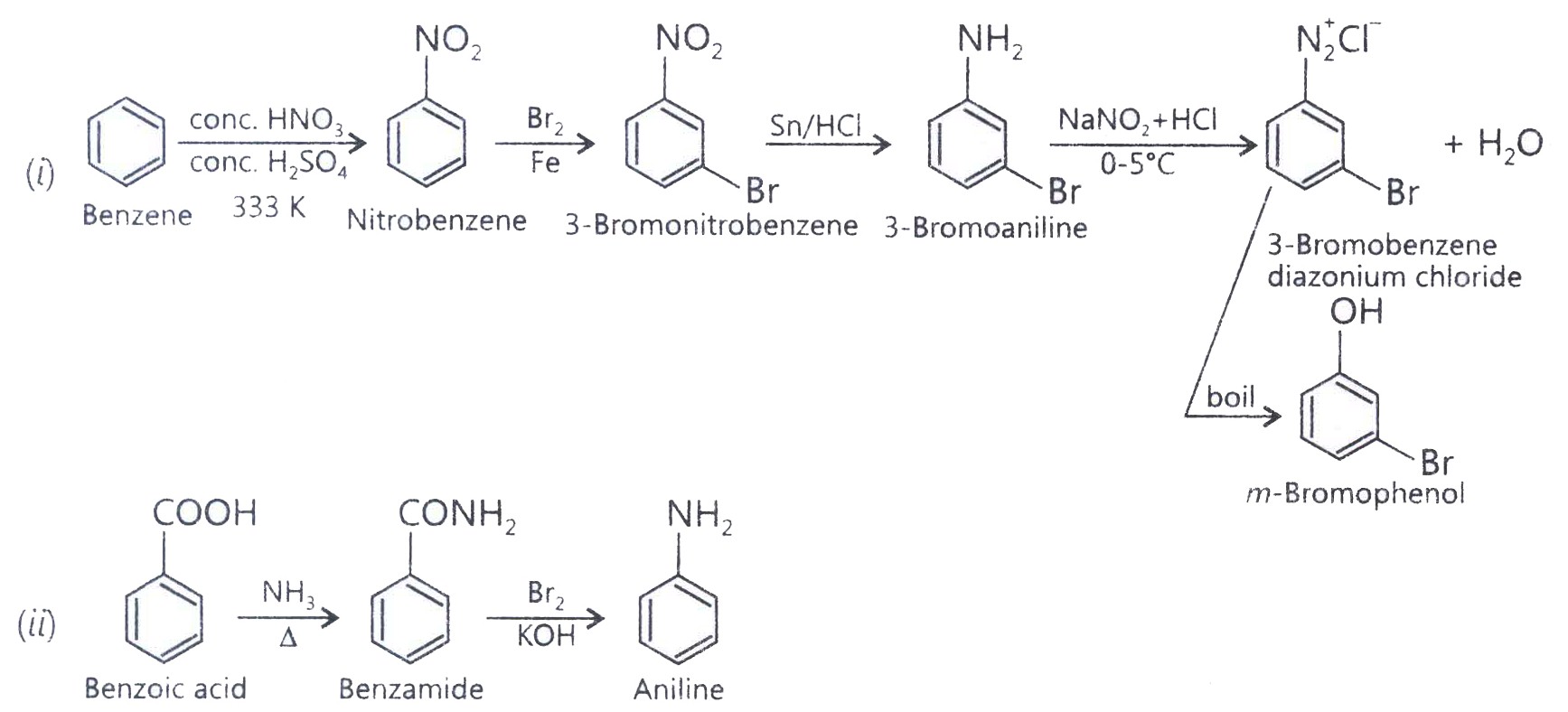
20.
(a) (i) [Co(NH3)5NO2]2+ and [Co(NH3)5ONO]2+ are linkage isomers.
(ii) [Co(NH3)6][Cr(CN)6] and [Co(CN)6][Cr(NH3)6] are coordination isomers.
(b) Ni2+(28) : 4s03d8 ,CI- is weak field ligand, does not cause pairing of electrons
It has Sp3 hybridization and has 2 unpaired electrons due to which it is paramagnetic.
21.
(a)
Bromination of acetanilide
22.
(b)
It is d2sp3 hybridised, octahedral
23.
(a)
monosaccharide
24.
(d)
25.
(d)
Valine is an essential amino acid
26.
(b)
3
27.
(b)
NaOH/Br2
28.
(b)
hydrogen bonds
29.
(a)
aniline
30.
(a)
One
31.
(d)
[Co(en)3]3+ (en = ethylenediamine)
32.
(c)
Ionization isomerism
33.
34.
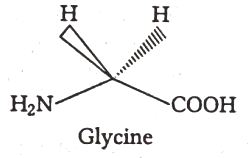
(b) (A) and (R) both are correct and (R) is not the correct explanation of (A). All naturally occurring \(\alpha\)-amino acids except glycine are optically active. Glycine is optically inactive because glycine does not have all four different substituents as shown below.
35.
(b): In \(\beta \) -pleated sheet structure, the polypeptide chains are held together by intermolecular H-bonds. Extension and contraction of \(\beta \) -pleated sheet structure of protein depends on the size of R.
36.
(a) When a monodentate ligand has two possible donor atoms and attached in two ways to the central metal atom then that ligand is called ambidentate ligand. e.g. nitro (NO2) and nitrito (ONO). These show linkage isomerism. Both (A) and (R) are correct and (R) is the correct explanation of (A).
37.
(a) It is because extent of H-bonding is more in CH3CH2CH2CH2NH2 than 2° and 3° amines.
(b) It is because H-bonds are stronger in alcohols than amines because 'O' is more electronegative than 'N'.
(c) It is because \(\stackrel{\oplus}{\mathrm{RNH}_{3}}\) is more stable than \(\underset{\mathrm{ROH2}}{\oplus}\) . +ve charge on oxygen is not stable.
(d) It is because primary amines can form H-bonds with water to more extent.
(e) C2H5CH(CH3)2 < CH3(CH2)3CH3 < C2H5N(CH3)2 < (C2H5)2NH < C4H9NH2.
Isopentane has lower boiling point that n-Pentane due to branching less surface area, less van der Waals' forces of attraction. 3° < 2° < 1° is order of boiling point in amines because extent of H-bonding increases.
38.
(a) Cis-platin
(b) Coordination number of Co is 6 because 'en' (ethane 1, 2-diammine) is bidentate ligand.
(c) \(\left[\mathrm{An}(\mathrm{CN})_{2}\right]^{\ominus}\) Dicyanido aurate(1)
(d) EDTA, it is hexadentate ligand.
(e) It is done by reacting with sodium thio sulphate
AgBr + 2Na2S2O3 \(\rightarrow\) Na3[Ag(SP3)2] + NaBr
Sodium dithio sulphato argentate (I)

12th Standard CBSE Syllabus & Materials
12th Standard CBSE
CBSE 12th Computer Science Python Revision Tour I - New Previous year Question Papers Study Material - QB365 Set A
NEW12th Standard CBSE
CBSE 12th Business Studies Planning Important Questions And Answers Study Material - QB365 Set A
NEW12th Standard CBSE
CBSE 12th Business Studies Business Environment Important Questions And Answers Study Material - QB365 Set A
NEW12th Standard CBSE
CBSE 12th Business Studies Principles of Management Important Questions And Answers Study Material - QB365 Set A



NCERT Books

Syllabus

Exam Pattern

Sample Question Papers

Previous year Question Papers

Important Notes

MCQ Practice test

NCERT Exemplers

Case study Questions

Image Based Questions

Passage based Questions

HOT Questions

Value Based Questions

Model Questions Papers
NCERT ( Book Back ) Questions

Assertion and Reason
Important Questions And Answers

CBSE 12th Standard CBSE Subjects
CBSE Standards








