
 100% FREE ACCESS
12th Standard CBSE Syllabus & Materials
12th Standard CBSE
CBSE 12th Economics Government Budget and the Economy Previous year Question Papers Study Material - QB365 Set A
NEW12th Standard CBSE
CBSE 12th Computer Science Interface Python with MySQL - New Previous year Question Papers Study Material - QB365 Set A
NEW12th Standard CBSE
CBSE 12th Computer Science Database Concept - New Previous year Question Papers Study Material - QB365 Set A
NEW12th Standard CBSE
CBSE 12th Computer Science Data Communication - New Previous year Question Papers Study Material - QB365 Set A
NEW12th Standard CBSE
CBSE 12th Computer Science Data Structures - New Previous year Question Papers Study Material - QB365 Set A
NEW12th Standard CBSE
CBSE 12th Computer Science Functions - New Previous year Question Papers Study Material - QB365 Set A

Published on: 25/10/2025
Download CBSE Class 12th Standard CBSE Chemistry question papers, sample papers, important questions, and previous year solved papers in PDF format. Get free study materials, NCERT solutions, and exam preparation resources for Class 12th Standard CBSE Chemistry
Questions + Answers key
Take MCQ Chemistry Test
1.
Arrange the following compounds in increasing order of their boiling points.
CH3CHO, CH3CH2OH, CH3OCH3, CH3CH2CH3
2.
How are vitamins classified ? Name the vitamin responsible for coagulation of blood ?
3.
Why is acetic acid stronger than phenol whereas formic acid is stronger than acetic acid?
4.
Arrange the following in increasing order of acidic character:
HCOOH, CICH2COOH, CF3COOH, CCl3COOH
5.
Name the products of hydrolysis of
(i) sucrose and
(ii) lactose
6.
Suggest a possible mechanism for the following reaction:
\(n-BuBr + KCN \xrightarrow{EtOH_2,\ H_2O} n-BuCN\)
7.
What are ambident nucleophiles? Explain with an example.
8.
How are the carbohydrates classified?
9.
How are aldehydes distinguished from ketones using tollen's and Fehling reagents? Give complete chemical reaction.
10.
Why are aliphatic carboxylic acids stronger acids than phenols?
11.
Write the important structural and functional differences between DNA and RNA
12.
Give the uses of freon 12, DDT, carbon tetrachloride and iodoform
13.
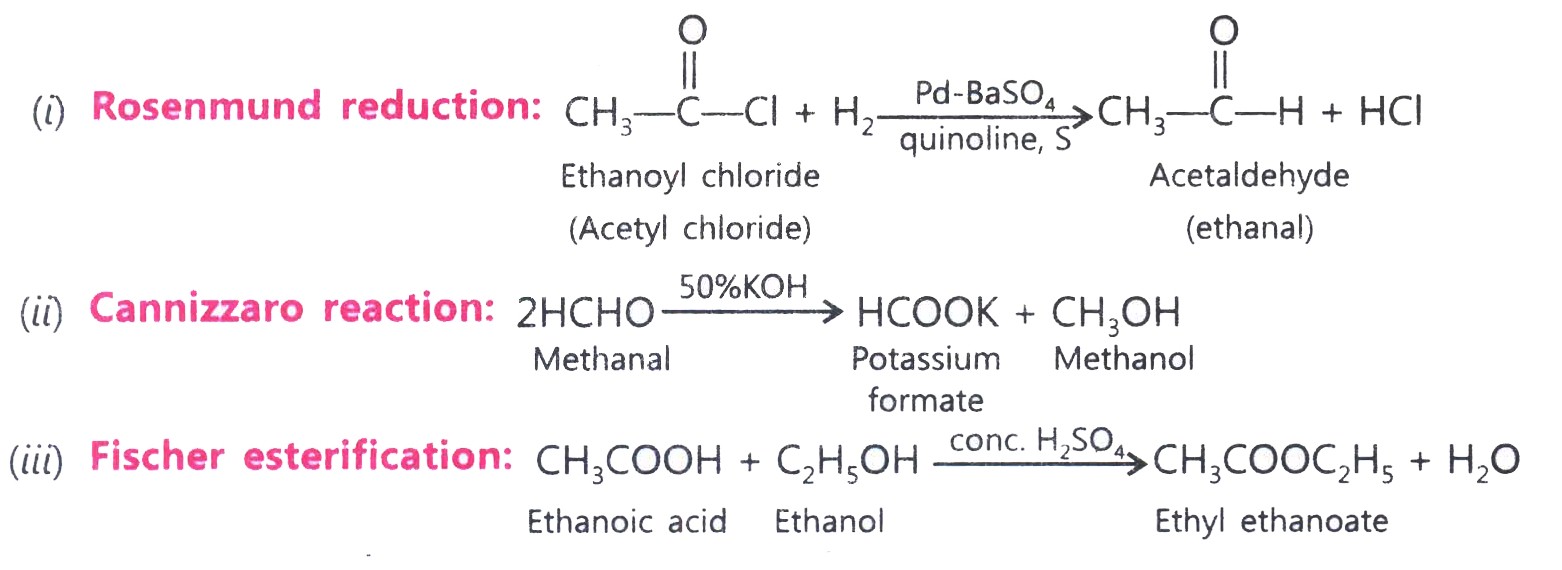
Write one chemical equation for each, to illustrate the following reactions:
(i) Rosenmund reduction
(ii) Cannizzaro reaction
(iii) Fischer esterification
14.
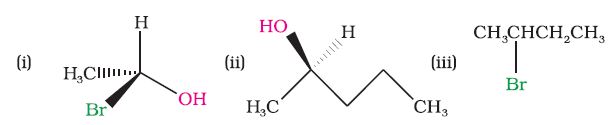
Identify chiral and achiral molecules in each of the following pair of compounds. (Wedge and Dash representations)
(i)
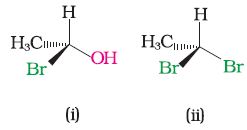
(ii)
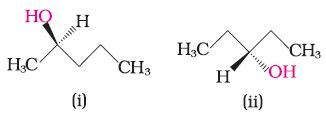
(iii)
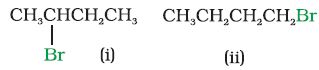
15.
Complete the following chemical equations:
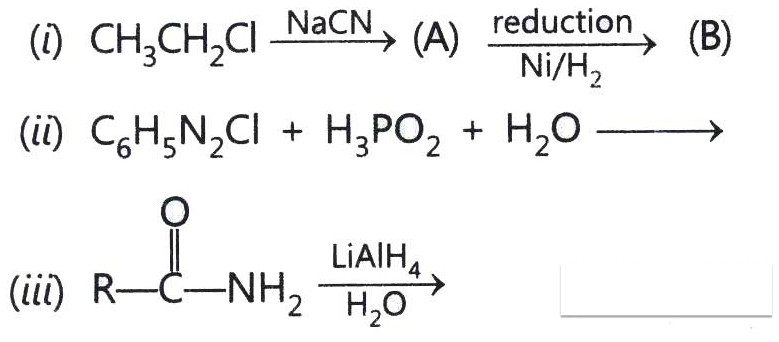
16.
Carbohydrates are optically active polyhydroxy aldehydes and ketones. They are also called saccharides. All those carbohydrates which reduce Fehling solution and Tollen's reagent are referred to as reducing sugars. Glucose, the most important sources of energy for mammals, is obtained by the hydrolysis of starch. Vitamins are accessory food factors required in the diet. Proteins are the polymers of \(\alpha\)-amino acids and perform various structural and dynamic functions in the organisms. Deficiency of vitamins leads to many diseases.
Answer the following
(a) The penta-acetate of glucose does not react with hydroxylamine. What does it indicate?
(b) Why cannot vitamin C be stored in our body?
(c) Define the following as related to proteins:
(i) Peptide linkage
(ii) Denaturation
Or
(c) Define the following as related to carbohydrates:
(i) Anomers
(ii) Glycosidic linkage
17.
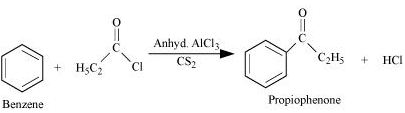
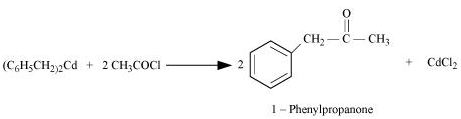
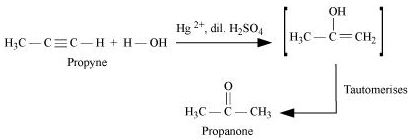
Write the structures of products of the following reactions;
(i)
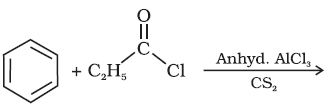
(ii) \(\begin{equation} \left(\mathrm{C}_{6} \mathrm{H}_{5} \mathrm{CH}_{2}\right)_{2} \mathrm{Cd}+2 \mathrm{CH}_{3} \mathrm{COCl} \rightarrow \end{equation}\)
(iii)

(iv)
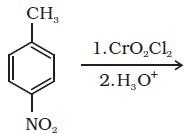
18.
Ramesh was reading about a haloalkane in his book. He found that this compound is used as a solvent for fats, alkaloids, iodine and other substances. It is a colourless oily liquid with a peculiar sickly smell. It was once used as a general anaesthetic in surgery.
Ramesh wanted to test the effect of this halo alkane on himself.
(i) Name the haloalkane discussed in the above paragraph.
(ii) Why is it used as a general anaesthetic in surgery?
(iii) The test that Ramesh wanted to conduct on himself was correct or not? Give reasons to support your answer.
19.
Vitamins represents a group of organic compounds which are needed in small amounts for the healthy growth and maintenance of our body. These are not synthesised by the body and are supplied by the diet. The deficiency of vitamins can be supplemented with medicines.
(i) Which vitamins are water soluble ?
(ii) What are the chemical name of vitamin C and vitamin D ?
(iii) What is the source of vitmain K ?
(iv) How is vitamin K useful ?
20.
Write the structure of the following compounds:
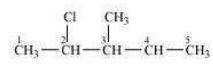
(i) 2-Chloro-3-methylpentane
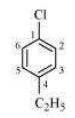
(ii)1-Chloro-4-ethylcyclohexane
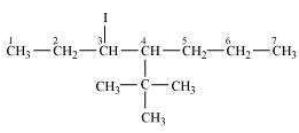
(iii) 4-tert-Butyl-3-iodoheptane
(iv)1,4-Dibromobut-2-ene
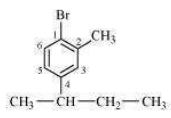
(v)1-Bromo-4-butyl-2-methylbenzene.
21.
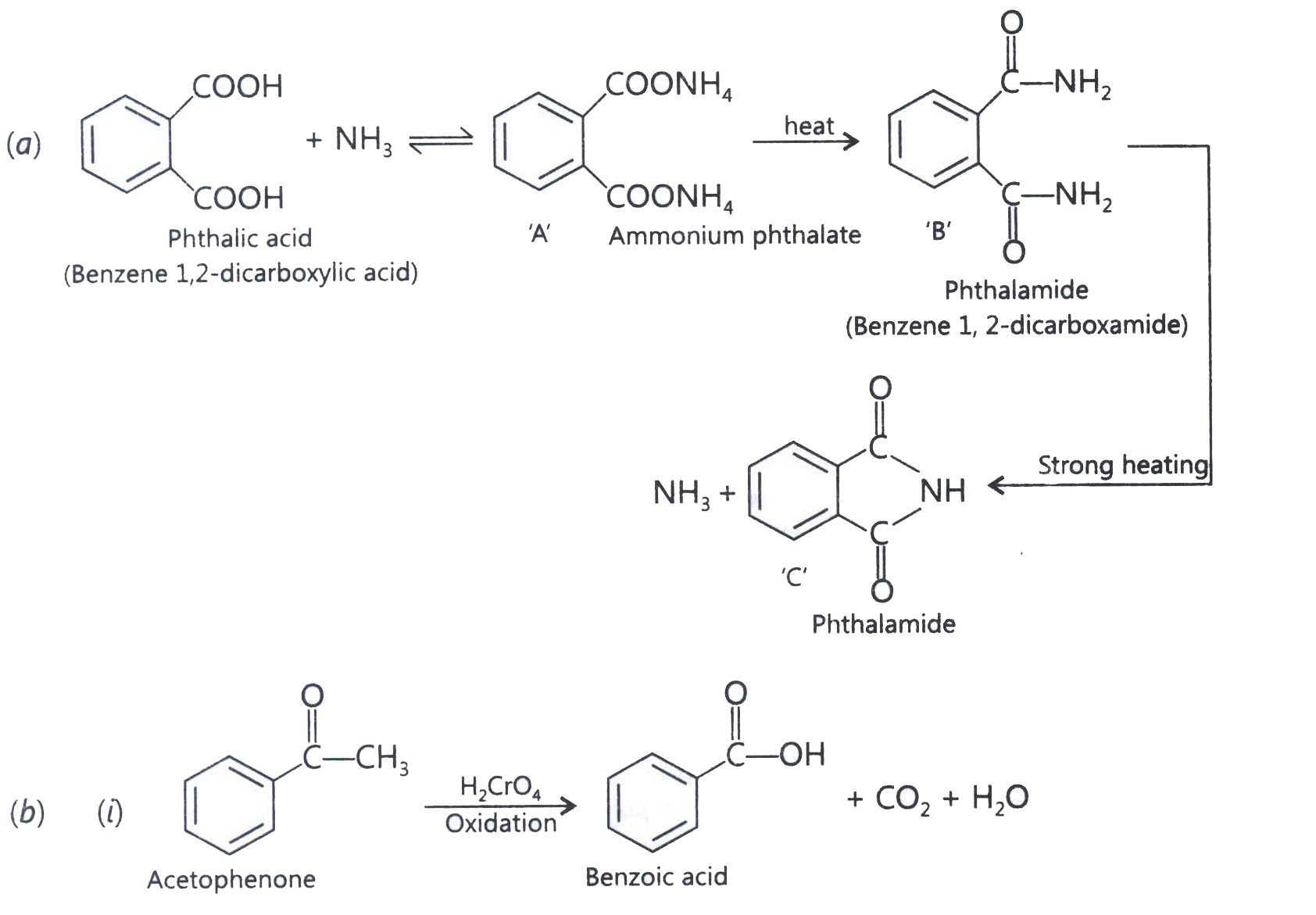
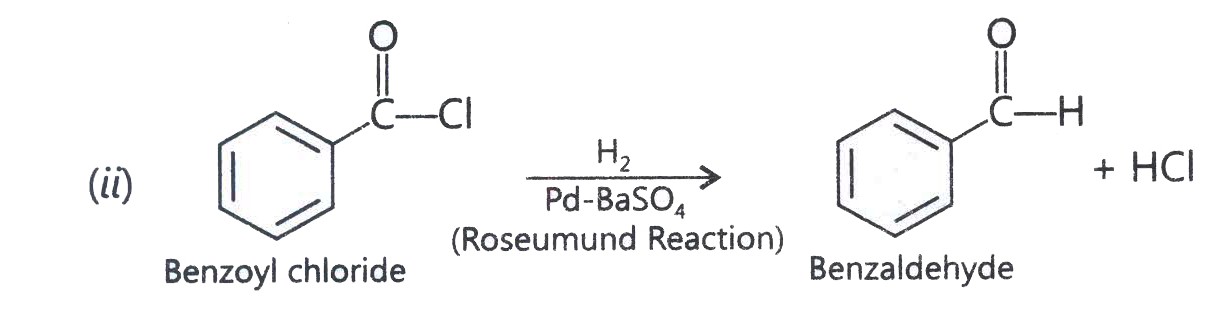
(a) Identify A, B and C in the following sequence of reactions:
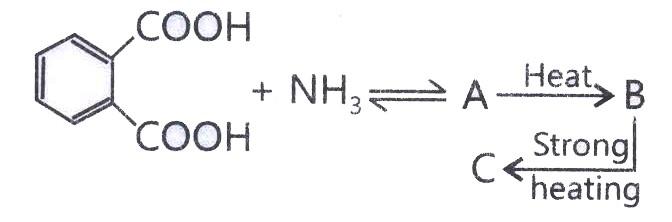
(b) Predict the products of the following reactions:
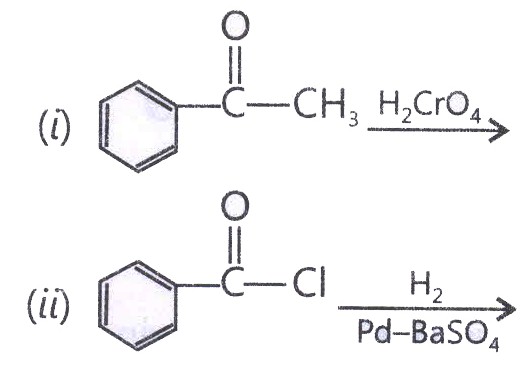
22.
The amino acids are the product of the digestion of
lipid
fats
protein
alcohol
23.
Which of the following sets consists only of essential amino acids?
Alanine, tyrosine, cysteine
Leucine, lysine, tryptophan
Alanine, glutamine, lysine
Leucine, proline, glycine
24.
Which of the following is incorrect for glucose?
It contains four > CHOH groups
It contains one ketone group
It contains one CH2OH group
It contains one-CHO group
25.
Which is most acidic?
CCl3COOH
CHCl2COOH
CH2ClCOOH
CH3COOH
26.
Identify the correct order of boiling points of the following compounds :
CH3CH2CH2CH2OH (1), CH3CH2CH2CHO (2), CH3CH2CH2COOH (3)
1 > 2 > 3
3 > 1 > 2
1 > 3 > 2
3 > 2 > 1
27.
The compound that does not undergo Cannizzaro reaction is
formaldehyde
acetaldehyde
benzaldehyde
trimethylacetaldehyde
28.
Which of the following organic compounds answers both iodoform test and Fehling's test?
Ethanal
Propanone
Ethanol
Methanol
29.
With which of the following reagents, carbonyl compound shows addition cum elimination reaction?
PCl5
Brady's reagent
HCN
all of these
30.
Which of the following is not chiral?
2-Hydroxypropanoic acid
2-Butanol
2,3-Dibromobutane
3-Bromopentane
31.
Among the following the strongest nucleophile is
C2H5SH
CH3COO-
CH3NH2
NCCH2-
32.
When Chlorine is passed through propene at 400oC, which of the following is formed?
PVC
Allyl chloride
Vinyl chloride
1,2-Dichloroethane
33.
Fluorobenzene (C6H5F) can be synthesised in the laboratory
by heating phenol with HF and KF
From aniline by diazotisation followed by heating the diazonium salt with HBF4
by direct fluorination of benzene with F2 gas
by reacting bromobenzene with NaF solution
34.
Assertion: Carbon -halogen bond in aryl halide has partial double bond character.
Reason: Aryl halides undergo nucleophilic substitution easily.
Codes:
(a) Assertion and reason both are correct statements and reason is correct explanation for assertion.
(b) Assertion and reason both are correct statements but reason is not correct explanation for assertion.
(c) Assertion is correct statement but reason is wrong statement.
(d) Assertion is wrong statement but reason is correct statement.
35.
Assertion: n-Butyl bromide has higher boiling point than isobutyl bromide.
Reason: The branching of the chain makes the molecule more compact and therefore decreases the surface area.
Codes:
(a) Assertion and reason both are correct statements and reason is correct explanation for assertion.
(b) Assertion and reason both are correct statements but reason is not correct explanation for assertion.
(c) Assertion is correct statement but reason is wrong statement.
(d) Assertion is wrong statement but reason is correct statement.
36.
In the following questions. an Assertion (A) is followed by a corresponding Reason (R) Use the following keys to choose the appropriate answer.
Assertion (A) Fresh tomatoes are better source of vitamin C than those which have been stored for sometime.
Reason (R) On prolonged exposure to air, vitamin C is destroyed due to aerial oxidation.
Codes:
(a) Both (A) and (R) are correct, (R) is the correct explanation of (A).
(b) Both (A) and (R) are correct, (R) is not the correct explanation of (A).
(c) (A) is correct; (R) is incorrect.
(d) (A) is incorrect; (R) is correct.
37.
In the following questions. an Assertion (A) is followed by a corresponding Reason (R) Use the following keys to choose the appropriate answer.
Assertion (A) IUPAC name of  is butane-dioic acid.
Reason (R) In compounds containing more than one carboxyl group, '-e' of the alkane is retained, and prefix 'di' is added to the term-'oic'.
Codes:
(a) Both (A) and (R) are correct, (R) is the correct explanation of (A).
(b) Both (A) and (R) are correct, (R) is not the correct explanation of (A). .
(c) (A) is correct; (R) is incorrect.
(d) (A) is incorrect; (R) is correct.
38.
Read the passage given below and answer the following questions:
Carbohydrates are polyhydroxy aldehydes and ketones and those compounds which on hydrolysis give such compounds are also carbohydrates. The carbohydrates which are not hydrolysed are called monosaccharides. Monosaccharides with aldehydic group are called aldose and those which free ketonic groups are called ketose. Carbohydrates are optically active. Number of optical isomers = 2n
Where n = number of asymmetric carbons. Carbohydrates are mainly synthesised by plants during photosynthesis.
The monosaccharides give the characteristic reactions of alcohols and carbonyl group (aldehydes and ketones). It has been found that these monosaccharides exist in the form of cyclic structures. In cyclization, the -OH groups (generally C5 or C4 in aldohexoses and C5 or C6 in ketohexoses) combine with the aldehyde or keto group. As a result, cyclic structures of five or six membered rings containing one oxygen atom are formed, e.g., glucose forms a ring structure. Glucose contains one aldehyde group, one 1o alcoholic group and four 2o alcoholic groups in its open chain structure.
The following questions are multiple choice questions. Choose the most appropriate answer:
(i) First member of ketos sugar is
| (a) ketotriose | (b) ketotetrose | (c) ketopentose | (d) ketohexose |
(ii) In CH2OHCHOHCHOHCHOHCHOHCHO, the number of optical isomers will be
| (a) 16 | (b) 8 | (c) 32 | (d) 4 |
(iii) Some statements are given below:
1. Glucose is aldohexose.
2. Naturally occurring glucose is dextrorotatory.
3. Glucose contains three, chiral centres.
4. Glucose contains one 1o alcoholic group and four 2o alcoholic groups.
Among the above, correct statements are
| (a) 1 and 2 only | (b) 3 and 4 only |
| (c) 1,2 and 4 only | (d) 1,2,3 and 4 |
(iv) Which of the following reactions of glucose can be explained only by its cyclic structure?
| (a) Glucose forms cyanohydrin with HCN |
| (b) Glucose reacts with hydroxylamine to form an oxime |
| (c) Pentaacetate of glucose does not react with hydroxylamine |
| (d) Glucose is oxidised by nitric acid to gluconic acid . |
39.
Read the passage given below and answer the following questions :
When an aldehyde with no a-hydrogen reacts with concentrated aqueous NaOH, half the aldehyde is converted to carboxylic acid salt and other half is converted to an alcohol. In other words, half of the reactant is oxidized
and other half is reduced. This reaction is known as Cannizzaro reaction
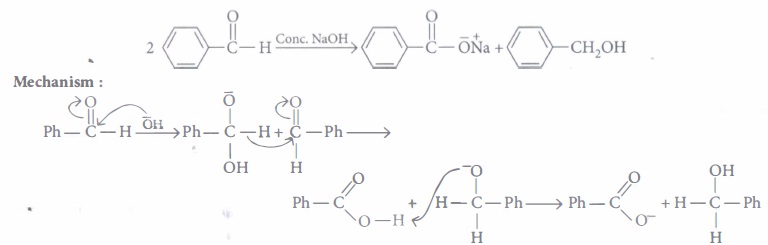
The following questions are multiple choice questions. Choose the most appropriate answer :
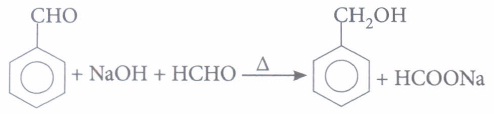
(i) A mixture of benzaldehyde and formaldehyde on heating with aqueous NaOH solution gives
| (a) benzyl alcohol and sodium formate | (b) sodium benzoate and methyl alcohol |
| (c) sodium benzoate and sodium formate | (d) benzyl alcohol and methyl alcohol. |
(ii) Which of the following compounds will undergo Cannizzaro reaction?
| (a) CH3CHO | (b) CH3COCH3 |
| (c) C6H5CHO | (d) C6H5CH2CHO |
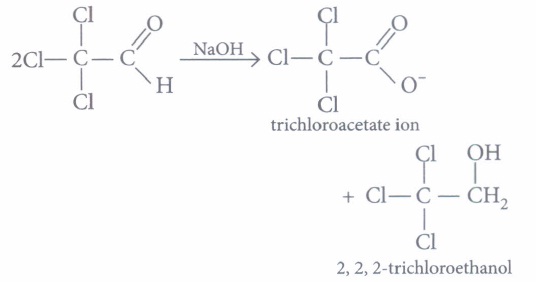
(iii) Trichloroacetaldehyde is subjected to Cannizzaro's reaction by using NaOH. The mixture of the products contains sodium trichloroacetate ion and another compound. The other compounds is
| (a) 2, 2, 2-trichloroethanol | (b) trichloromethanol |
| (c) 2, 2, 2-trichloropropanol | (d) chloroform |
(iv) Which of the following reaction will not result in the formation of carbon-carbon bonds?
| (a) Cannizzaro reaction | (b) Wurtz reaction |
| (c) Reimer- Tiemann reaction | (d) Friedel-Crafts acylation |
1.
\(\mathrm{CH}_3 \mathrm{CH}_2 \mathrm{CH}_3<\mathrm{CH}_3 \mathrm{OCH}_3<\mathrm{CH}_3 \mathrm{CHO}<\mathrm{CH}_3 \mathrm{CH}_2 \mathrm{OH}\) Stronger the attractive forces, higher is the boiling point. Hydrocarbons are non-polar having weakest attractive forces, ethers are polar and aldehydes have strong dipolar interaction. Alcohols have maximum intermolecular forces due to the presence of H-bonding.
2.
Vitamins are classified into two groups depending upon their solubility in water or fat.
(i) Water soluble vitamins. These include vitamin B-complex (B1, B2, B3, i.e., nicotinic acid, B5, i.e., pantothenic acid, B6, B12 and folic acid) and vitamin C.
(ii) Fat soluble vitamins. These include vitamins A, D, E and K. They are stored in liver and adipose (fat storing tissues).
However, biotin, i.e., vitamin H is neither soluble in water nor in fat. Vitamin K is responsible for coagulation of blood.
3.
It acetation ion -ve charge is delocalised over two oxygen atoms as to phenoxide ion in which -ve charge is delocalised over one oxygen atom, therefore, CH3COOH is stronger acid than phenol. Acetic acid is weaker than formic acid because acetate ion is less stable than formate ion due to + I effective -CH3.
4.
HCOOH < CICH2COOH < CCl3COOH < CF3COOH.
5.
(i) Glucose and fructose
(ii) Glucose and galactose.
6.
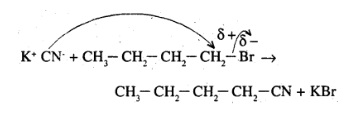
The reaction is an SN2 reaction. In this reaction, CN- acts as the nucleophile and attacks the carbon atom to which Br is attacked. CN- is an ambident nucleophile and can attack through both C and N. In this case, it attacks through the C-atom.
7.
Ambident Nucleophile- An anionic nucleophile, which has two nucleophilic centers, or two negative sites is known as an ambident nucleophile. This negative charge is delocalized due to resonance.
Example – Cyanide and Thiocyanate are examples of ambident nucleophiles.
-C≡N ↔ :C=N-
S=C=N- ↔ -S - C≡ N
8.
On the basis of hydrolysis, carbohydrates can be divided into three major classes:
(i) Monosaccharides : A carbohydrate that cannot be hydrolysed further to simple unit of polyhydroxy aldehyde or ketone is called as monosaccharide. e.g., glucose, fructose, etc.
(ii) Oligosaccharides: A carbohydrate that yield two to ten monosaccharide units on hydrolysis is called as an oligosaccharide. e.g., sucrose and maltose.
(iii) Polysaccharides: A carbohydrate which yield a large number of monosaccharide units on hydrolysis is' called as polysaccharide. e.g., starch, cellulose.
9.
Aldehydes are more easily oxidised than ketones. They show the following two reactions which are not shown by ketones:
(i) They reduce Fehling solution (alkaline solution of copper sulphate containing some sodium potassium tartrate) to form red precipitate of cuprous oxide:
\({ CuSO }_{ 4 }+2NaOH\longrightarrow { Cu(OH) }_{ 2 }+{ Na }_{ 2 }{ SO }_{ 4 }\)
\({ Cu(OH) }_{ 2 }\overset { Sod.pot }{ \underset { tartrate }{ \longrightarrow } } CuO+{ H }_{ 2 }O\)
\({ CH }_{ 3 }CHO+2CuO\longrightarrow { CH }_{ 3 }COOH+\underset { Red.ppt }{ { Cu }_{ 2 }O } \)
(ii) They reduce ammoniacal silver nitrate solution (Tollen's reagent) to form silver which is obtained as a silver mirror.
\({ AgNO }_{ 3 }+{ 3NH }_{ 4 }OH\longrightarrow { { [Ag({ NH }_{ 3 }) }_{ 2 }] }^{ + }{ OH }^{ - }+{ NH }_{ 4 }{ NO }_{ 3 }+{ H }_{ 2 }O\)
\(\\ { CH }_{ 3 }CHO+{ { [Ag({ NH }_{ 3 }) }_{ 2 }] }^{ + }{ OH }^{ - }\longrightarrow { CH }_{ 3 }COOH+\underset { silver\\ mirror }{ 2Ag } +4{ NH }_{ 3 }+{ H }_{ 2 }O\)
The above two reactions are given by aldehydes but not by ketones. Therefore, these can be used to distinguish aldehydes and ketones.
10.
The aliphatic carboxylic acids are stronger acids than phenols. The difference in the relative acidic strengths can be understood if we compare the resonance hybrids of carboxylate ion and phenoxide ion.
(i) The electron charge in the carboxylate ion is more dispersed in comparison to the phenoxide ion since 'there are two electronegative oxygen atoms in carboxylate ion as compared to only one oxygen atom in phenoxide ion.
(ii) Carboxylate ion is stabilised by two equivalent resonance structures in which negative charge is on more electronegative O atom. But phenoxide ion has non-equivalent resonance structures in which the negative charge is also on less electronegative carbon atom.
Therefore, the carboxylate ion is relatively more stable as compared to phenoxide ion. Thus, the release of H+ ion from carboxylic acid is comparatively easier or it behaves as a stronger acid than phenol.
11.
| S.No | DNA | RNA |
| 1 | The sugar present in DNA is 2-deoxy-D-(-)-ribose. | The sugar present in ~A is D-(-)-ribose. |
| 2 | DNA contains cytosine and thymine as pyrimidine bases. | RNA contains cytosine and uracil as pyrimidine bases. |
| 3 | DNA has double stranded u-helix structure. | RNA has single stranded \(\alpha \)-helix structure. |
| 4 | DNA molecules are very large; their molecular mass may vary from \(6\times { 10 }^{ 6 }-16-{ 10 }^{ 6 }u\) ,i.e., from six to sixteen million. | RNA molecules are much smaller with molecular mass ranging from 20,000 to 40,000 u. |
| 1. DNA has unique property of replication. | 1. RNA usually does not replicate. |
| 2. DNA controls the transmission of hereditary effects. | 2. RNA controls the synthesis of prote |
12.
Uses of Freon-12
(i) Freons are used as refrigerants in refrigerators and air conditioners.
(ii) These have also been used extensively as propellants for aerosols and foams to spray out deodorants, cleaners, shaving creams, hair sprays and insecticides.
However, the use of freon restricted or banned in many countries because they are responsible for ozone depletion.
Uses of CC14
(i) It is used as a solvent for oils, fats, waxes, etc.
(ii) It is used as a fire extinguisher under the name pyrene.
(iii) It is used in dry cleaning.
(iv) It is used for the manufacture of freon.
Uses of Iodoform
(i) It is used as an antiseptic and this nature is due to iodinethat it liberates. However, because ofits very un-pleasant smell, it has now been replaced by better antiseptics.
(ii) It is used in the manufacture of pharmaceuticals.
13.
14.
15.
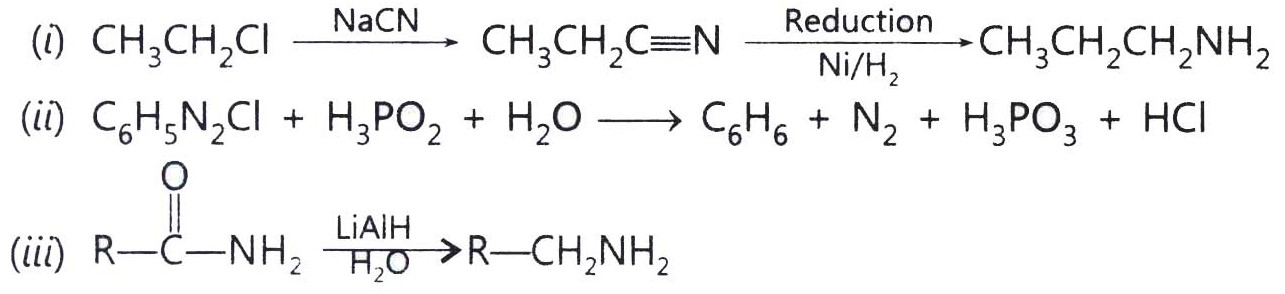
16.
(a) The penta-acetate of glucose does not react with hydroxylamine. It indicates that the carbonyl group of glucose is not free as it is present in cyclic form.
(b) Vitamin C is water soluble, that's why it cannot stored in our body.
(c) (i) Peptide linkage Proteins are connected to each other by –CO–NH– bond which is called the peptide linkage.
(ii) Denaturation When a native protein is subjected to physical change or chemical change, the hydrogen bonds are disturbed. As a result, globules unfold and helix gets uncoiled and protein loses its biological activity. This is known as denaturation of proteins.
Or
(c) (i) Anomers In carbohydrates, a pairs of anomers, is a near-identical stereoisomers that differ at only the anomeric carbon.
(ii) Glycosidic linkage The two monosaccharide units are joinied together through an oxide linkage, known as glycosidic linkage.
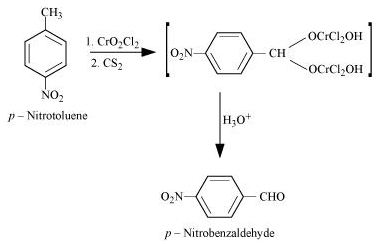
17.
(i)
(ii)
(iii)
(iv)
18.
(i) The haloalkane discussed in the above paragraph is trichloromethane (CHCI3, chloroform).
(ii) It is used as a general anaesthetic in surgery because inhaling chloroform depresses the central nervous system.
(iii) The test that Ramesh wanted to conduct on himself was not fair since chloroform forms poisonous carbonyl chloride with air.
19.
(i) Vitamin B-complex and vitamin C are water soluble vitamins.
(ii) Vitamin C is chemically ascorbic acid while vitamin D is ergocalciferol.
(iii) Green leafy vegetables like spinach, cabbage, carrot etc.
(iv) It is essentially needed for body. The deficiency of vitamin K leads to blood clotting and even harmorrhage
20.
(i) 2-Chloro-3-methylpentane
(ii)1-Chloro-4-ethylcyclohexane
(iii) 4-tert-Butyl-3-iodoheptane
(iv) 1,4-Dibromobut-2-ene

(v)1-Bromo-4-butyl-2-methylbenzene.
21.
22.
(c)
protein
23.
(b)
Leucine, lysine, tryptophan
24.
(b)
It contains one ketone group
25.
(a)
CCl3COOH
26.
(b)
3 > 1 > 2
27.
acetaldehyde contains \(\alpha \)- hydrogens and hence does not undergo aldol condensation
28.
(a)
Ethanal
29.
(b)
Brady's reagent
30.
(d)
3-Bromopentane
31.
(a)
C2H5SH
32.
(b)
Allyl chloride
33.
(a)
by heating phenol with HF and KF
34.
(c): Aryl halides undergo nucleophilic substitution with difficulty.
35.
(a): Branching of chain makes molecule more compact and therefore, decreases the surface area. Due to decreases in surface area, the magnitude of van der Waals' force of attraction decreases and consequently, the boiling points of branched chain are less than those of straight chain compounds.
36.
(a) Both (A) and (R) are correct and (R) is correct explanation of (A).
37.
IUPAC name of is butane-dioic acid. For compounds containing more than one carboxyl group, the ending '-e' of the alkane is retained. The number of carboxyl groups are indicated by adding the multiplicative prefix, di, tri etc., to the term 'oic'. Thus both A and R is correct and R is the correct explanation of A.
38.
(i) (a)
(ii) (a)
(iii) (c) : Glucose contains four chiral centres.
(iv) (c) : Pentacetate of glucose does not react with hydroxylamine showing absence of free -CHO group. This cannot be explained by open structure of glucose.
39.
(i) (a): It is an example of cross Cannizzaro reaction where aromatic aldehyde gets reduced to alcohol and aliphatic aldehyde gets oxidised to its sodium salt (both aldehydes must not contain any \(\alpha\)-hydrogen).
(ii) (c)
(iii) (a): The Cannizzaro product of given reaction yields 2, 2, 2-trichloroethanol.
(iv) (a): C-C bond is not formed in Cannizzaro reaction while other reactions result in the formation of C-C bond.

12th Standard CBSE Syllabus & Materials
12th Standard CBSE
CBSE 12th Computer Science Python Revision Tour I - New Previous year Question Papers Study Material - QB365 Set A
NEW12th Standard CBSE
CBSE 12th Business Studies Planning Important Questions And Answers Study Material - QB365 Set A
NEW12th Standard CBSE
CBSE 12th Business Studies Business Environment Important Questions And Answers Study Material - QB365 Set A
NEW12th Standard CBSE
CBSE 12th Business Studies Principles of Management Important Questions And Answers Study Material - QB365 Set A



NCERT Books

Syllabus

Exam Pattern

Sample Question Papers

Previous year Question Papers

Important Notes

MCQ Practice test

NCERT Exemplers

Case study Questions

Image Based Questions

Passage based Questions

HOT Questions

Value Based Questions

Model Questions Papers
NCERT ( Book Back ) Questions

Assertion and Reason
Important Questions And Answers

CBSE 12th Standard CBSE Subjects
CBSE Standards








