
 100% FREE ACCESS
12th Standard CBSE Syllabus & Materials
12th Standard CBSE
CBSE 12th Economics Government Budget and the Economy Previous year Question Papers Study Material - QB365 Set A
NEW12th Standard CBSE
CBSE 12th Computer Science Interface Python with MySQL - New Previous year Question Papers Study Material - QB365 Set A
NEW12th Standard CBSE
CBSE 12th Computer Science Database Concept - New Previous year Question Papers Study Material - QB365 Set A
NEW12th Standard CBSE
CBSE 12th Computer Science Data Communication - New Previous year Question Papers Study Material - QB365 Set A
NEW12th Standard CBSE
CBSE 12th Computer Science Data Structures - New Previous year Question Papers Study Material - QB365 Set A
NEW12th Standard CBSE
CBSE 12th Computer Science Functions - New Previous year Question Papers Study Material - QB365 Set A

Published on: 25/10/2025
Download CBSE Class 12th Standard CBSE Chemistry question papers, sample papers, important questions, and previous year solved papers in PDF format. Get free study materials, NCERT solutions, and exam preparation resources for Class 12th Standard CBSE Chemistry
Questions + Answers key
Take MCQ Chemistry Test
1.
Name the position of -Br in the compound in \(\begin{equation} \mathrm{CH}_{3} \mathrm{CH}=\mathrm{CH}(\mathrm{CBr})\left(\mathrm{CH}_{3}\right)_{2} \end{equation}\)
2.
Concentrated nitric acid used in the laboratory work is 68% nitric acid by mass in aqueous solution. What should be molarity of such sample of the acid if the density of solution is 1.504 g mL-1?
3.
Write the equations for the preparation of 1-iodobutane from
(1) 1-butanol
(2) 1-Chlorobutane
(3) but-1-ene
4.
Write the isomers of the compound having formula C4H9Br.
5.
Calculate the concentration of that solution of sugar which has osmotic pressure of 2.46 atmosphere at 300 K.
6.
Henry's law constant for CO2 in water is 1.67 \(\times\)108 Pa at 298 K. Calculate the quality of CO2 in 500 ml of soda water when packed under 2.5 atm CO2 pressure at 298 K.
7.
Which one of the following has the highest dipole moment?
(i) CH2Cl2
(ii) CHCl3
(iii) CCl4
8.
Based on solute-solvent interactions, arrange the following in the increasing order of solubility in n-octane and explain. Cyclohexane, KCI, CH3OH, CH3CN.
9.
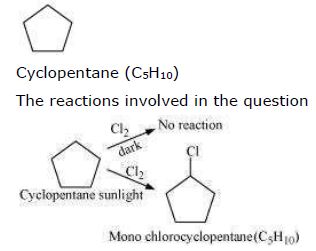
A hydrocarbon C5H10 does not react with chlorine in dark but gives a single monochloro compound C5H9Cl in bright sunlight. Identify the hydrocarbon.
10.
A sample of drinking water was found to be severely contaminated with chloroform, (CHCl3), supposed to be a carcinogen. The level of contamination was 15 ppm (by mass):
(i) express this in percent by mass,
(ii) determine the molality of chloroform in the water sample.
11.
Reaction of 1-phenyl-2-chloropropane with alcoholic KOH gives mainly
1-phenylpropene
3-phenylpropene
1-phenylpropan-3-ol
1-phenylpropan-2-ol
12.
Which of the statements are correct about above reaction?
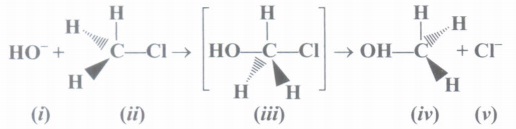
(i) and (v) both are nucleophiles.
In (iii) carbon atom is Sp3 hybridised.
In (iii) carbon atom is Sp2 hybridised.
(i) and (v) both are electrophiles.
13.
Which of the following is incorrect for an ideal solution?
\(\Delta \mathbf{H}_{\operatorname{mix}}=\mathbf{0}\)
\(\Delta \mathbf{V}_{\mathbf{m i x}}=\mathbf{0}\)
\(\Delta \mathbf{P}=\mathbf{P}_{\text {obs }}-\mathbf{P}_{\text {calculated }}=\mathbf{0}\)
\(\Delta \mathbf{G}_{\operatorname{mix}}=\mathbf{0}\)
14.
Which one does not give iodoform test?
Ethanol
Benzophenone
Ethanal
Acetophenone
15.
Ethylidene chloride is a/an ............
vic-dihalide
gem-dihalide
allylic halide
vinylic halide
16.
In SN1 reaction on chiral centres, there is
inversion more than retention reading to partial racemization.
100% retension
100% conversion
100% racemization
17.
The freezing point of solution M is
268.7 K
268.5 K
234.2 K
150.9 K
18.
The freezing point of the solution will be
\(-{ 0.684 }^{ \circ }C\)
\(-{ 0.342 }^{ \circ }C\)
\(-{ 0.372 }^{ \circ }C\)
\(-{ 0.186 }^{ \circ }C\)
19.
Pure benzene freezes at 5.3oC. A solution or 0.223 g of phenylacetic acid (C6H5CH2COOH) in 4.4 g of benzene (Kf = 5.12 K kg mol-1) freezes at 4.47oC. From this observation, one can conclude that
phenylacetic acid exists as such in benzene
phenylacetic acid undergoes partial ionization in benzene
phenylacetic acid undergoes complete ionization in benzene
phenylacetic acid dimerizes in benzene
20.
Solution A contains 7 g/L MgCI2 and solution B contains 7 g/L of NaCI. At room temperature, the osmotic pressure of
solution A is greater than B
both have same osmotic pressure
solutin B is greater than A
can't determine.
21.
(a) Out of (CH3)3C-Br and (CH3)3C-I, which one is more reactive towards SN1and why?
(b) Why dextro and laevo - rotatory isomers of Butan-2-ol are difficult to separate by fractional distillation?
(c) Out of 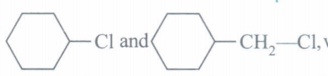 which one is more reactive towards SN2 reaction and why?
(d) Out of 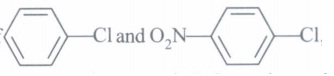 which one is more reactive towards SN2 reaction and why?
(e) Out of 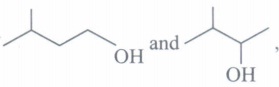 which one is optically active and why?
22.
The air is a mixture of a number of gases. The major components are oxygen and nitrogen with approximate proportion of 20% is to 79% by volume at 298 K, respectively. The water is in equilibrium with air at a pressure of 10 atm. At 298 K, if the Henry's law constant for oxygen and nitrogen are 3.30 x 107 mm and 6.51 x 107 mm respectively, calculate the composition of these gases in water.
23.
Assertion: Elevation in boiling point and depression in freezing point are colligative properties.
Reason: All colligative properties are used for the calculation of molecular masses.
Codes:
A) Assertion and reason both are correct statements and reason is correct explanation for assertion.
B) Assertion and reason both are correct statements but reason is not correct explanation for assertion.
C) Assertion is correct statement but reason is wrong statement.
D) Assertion is wrong statement but reason is correct statement.
24.
In the following questions. an Assertion (A) is followed by a corresponding Reason (R) Use the following keys to choose the appropriate answer.
Assertion (A) Phosphorus chlorides (In and penta) are preferred over thionyl chloride for the preparation of alkyl chlorides from alcohols.
Reason (R) Thionyl chloride give pure alkyl halides.
Codes:
(a) Both (A) and (R) are correct, (R) is the correct explanation of (A).
(b) Both (A) and (R) are correct, (R) is not the correct explanation of (A).
(c) (A) is correct; (R) is incorrect.
(d) (A) is incorrect; (R) is correct.
25.
1.
Allylic.
2.
68% HNO3 means that 68 g HNO3 is present in 100 g of solution.
Moles of \(HNO_{ 3 }=\frac { 68 }{ 63 } =1.08\)
Density of solution \(=1.504g \ mL^{ -1 }\)
Volume of solution \(=\frac { 100 }{ 1.504 } =66.49\)
Molarity\(=\frac { 1.08 }{ 66.49 } \times 1000=16.24 M\)
3.
(i)

(ii)

(iii)

4.
(i)
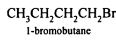
(ii)
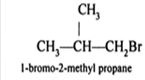
(iii)
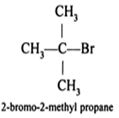
(iv)
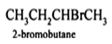
5.
34.2 g/litre
6.
Here, \({ K }_{ H }=4.27\times { 10 }^{ 5 }mm,\ p=760 \ mm\)
Applying Henry's law, \(p={ K }_{ H }x, we \ have \ x=\frac { p }{ { K }_{ H } } =\frac { 760 \ mm }{ 4.27 \times{ 10 }^{ 5 }mm } =1.78 \times{ 10 }^{ -3 }\)
i.e., mole fraction of methane in benzene = 1.78 x 10⁻³
7.
Dichloromethane has highest dipole moment among CH2Cl2, CHCl3 and CCl4. The decreasing order of dipole moments is CH2Cl2>CHCl3>CCl4. These molecules have tetrahedral geometry due to sp3 hybridization of carbon atom.In CCl4, the individual C−Cl bond dipoles cancel each other which results in zero dipole moment.
Hence, CCl4 is non polar.
8.
(i) As cyclohexane and n-octane both are non-polar. Hence, they will mix completely in all proportions.
(ii) KCl is an ionic compound while n-octane is non-polar. Hence, KCl will not dissolve in n-octane.
(iii) CH3OH and CH3CN both are polar but CH3CN is less polar than CH3OH. As the solvent n-octane is non-polar, CH3CN will dissolve more than CH3OH in n-octane. Therefore, the order of solubility will be KCl
9.
A hydrocarbon with the molecular formula, C5H10 belongs to the group with a general molecular formula CnH2n. Therefore, it may either be an alkene or a cycloalkane. Since hydrocarbon does not react with chlorine in the dark, it cannot be an alkene. Thus, it should be a cycloalkane. Further, the hydrocarbon gives a single monochloro compound, C5H9Cl by reacting with chlorine in bright sunlight. Since a single monochloro compound is formed, the hydrocarbon must contain H−atoms that are all equivalent. Also, as all H−atoms of a cycloalkane are equivalent, the hydrocarbon must be a cycloalkane.
10.
15 ppm corresponds to 15g chloroform in 1000,000g of solution.
(i) Percent by mass =\(=\frac{\text { Mass of chloroform }}{\text { Mass of solution }} \times 100\)
Percent by mass =\(\frac{15}{1000,000} \times 100=1.5 \times 10^{-3} \)
(ii) Molality =\({\text { Mass of chloroform }}{\text { Molar mass of chloroform } \times(\text { Mass of solution - mass of chloroform) }} \times\)1000g (all masses in g)
Molality=\(\frac{15}{119.5 \times(1000,000-15)}\)\(\times 1000=1.255 \times 10^{-4} \mathrm{~m}\)
Molality = \(\frac { 15/119.5 }{ { 10 }^{ 6 } } \times 1000=1.25\times { 10 }^{ -4 }m\)
11.
(a)
1-phenylpropene
12.
(a)
(i) and (v) both are nucleophiles.
13.
(d)
\(\Delta \mathbf{G}_{\operatorname{mix}}=\mathbf{0}\)
14.
(b)
Benzophenone
15.
(b)
gem-dihalide
16.
(a)
inversion more than retention reading to partial racemization.
17.
(d)
150.9 K
18.
(c)
\(-{ 0.372 }^{ \circ }C\)
19.
(d)
phenylacetic acid dimerizes in benzene
20.
(c)
solutin B is greater than A
21.
(a) (CH3 ) C-I will be more reactive because C-I has lower bond dissociation enthalpy than C-Br bond, due to longer bond length.
(b) It is because they do not differ appreciably in their boiling points (physical properties), differ in optical rotation and biological properties.
(c) 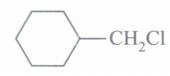 because it is primary halide and has less stearic hinderance.
(d) 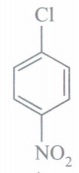 is more reactive because -NO2 being electron withdrawing stabilizes intermediate negatively charged ions.
(e)  is optically active because it has chiral 'C' atom (asymmetric carbon).
22.
Given that, total pressure of air in equilibrium with water = 10 atm
As air contains 20% oxygen and 79% nitrogen by volume.
ஃ Partial pressure of oxygen
(\(\rho\)\(o_{2}\)) = \(\frac{20}{100}\) x 10 atm = 2 atm = 2 x 760 mm = 1520mm
Partial pressure of nitrogen, (\(\rho\)\(N_{2}\) ) = \(\frac{79}{100}\)x 10 atm
= 7.9 atm = 7.9 x 760 mm = 6004 mm
Given that, KH(O2) = 3.30 x 107 mm,
KH(N2) = 6.51 x 107 mm
According to Henry's law,
\(\rho\)\(o_{2}\)= KH \(\times\) \(\chi\)\(o_{2}\)
or \(\chi\)\(o_{2}\) =\(\rho\)\(o_{2}\) /KH =\(\frac{1520 \ mm}{3.30\times 10^7\ mm}\) = 4.61 x 10⁻⁵
\(\rho\)\(N_{2}\) = KH x \(\chi\)\(N_{2}\)
or \(\chi\)\(N_{2}\) = \(\rho\)\(N_{2}\)/KH =\(\frac{6004 mm}{6.51* 10^7mm}\)= 9.22 x 10⁻⁵
23.
C) Assertion is correct statement but reason is wrong statement.
Explanation:
Elevation in boiling point and depression in freezing point are colligative properties because they depend only on the number of solute particles in a solution irrespective of their nature. But all colligative properties are not used for mass determination for every substance, as some give very low precision, or require excessive heating or cooling.
24.
(b) (A) is not correct but (R) is correct. In fact, the use of thionylchloride is preferred over phosphorus chlorides for preparing haloalkanes from alcohols because the other products of the reaction (i.e.) HCI(g) and SO2(g) being gases escape out leaving behind pure haloalkane.
25.

12th Standard CBSE Syllabus & Materials
12th Standard CBSE
CBSE 12th Computer Science Python Revision Tour I - New Previous year Question Papers Study Material - QB365 Set A
NEW12th Standard CBSE
CBSE 12th Business Studies Planning Important Questions And Answers Study Material - QB365 Set A
NEW12th Standard CBSE
CBSE 12th Business Studies Business Environment Important Questions And Answers Study Material - QB365 Set A
NEW12th Standard CBSE
CBSE 12th Business Studies Principles of Management Important Questions And Answers Study Material - QB365 Set A



NCERT Books

Syllabus

Exam Pattern

Sample Question Papers

Previous year Question Papers

Important Notes

MCQ Practice test

NCERT Exemplers

Case study Questions

Image Based Questions

Passage based Questions

HOT Questions

Value Based Questions

Model Questions Papers
NCERT ( Book Back ) Questions

Assertion and Reason
Important Questions And Answers

CBSE 12th Standard CBSE Subjects
CBSE Standards








