
 100% FREE ACCESS
12th Standard CBSE Syllabus & Materials
12th Standard CBSE
CBSE 12th Economics Government Budget and the Economy Previous year Question Papers Study Material - QB365 Set A
NEW12th Standard CBSE
CBSE 12th Computer Science Interface Python with MySQL - New Previous year Question Papers Study Material - QB365 Set A
NEW12th Standard CBSE
CBSE 12th Computer Science Database Concept - New Previous year Question Papers Study Material - QB365 Set A
NEW12th Standard CBSE
CBSE 12th Computer Science Data Communication - New Previous year Question Papers Study Material - QB365 Set A
NEW12th Standard CBSE
CBSE 12th Computer Science Data Structures - New Previous year Question Papers Study Material - QB365 Set A
NEW12th Standard CBSE
CBSE 12th Computer Science Functions - New Previous year Question Papers Study Material - QB365 Set A

Published on: 25/10/2025
Download CBSE Class 12th Standard CBSE Chemistry question papers, sample papers, important questions, and previous year solved papers in PDF format. Get free study materials, NCERT solutions, and exam preparation resources for Class 12th Standard CBSE Chemistry
Questions + Answers key
Take MCQ Chemistry Test
1.

2.
3.
4.
The oxidation number of the central atom in a complex is defined as the charge it would carry if all the ligands are removed along with the electron pairs that are shared with the central atom. Similarly the charge on the complex is the sum of the charges of the constituent parts, i.e. the sum of the charges on the central metal ion and its surrounding ligands.
Based on this, the complex is called neutral if the sum of the charges of the constituents is equal to zero. However, for an anion or cationic complex, the sum of the charges of the constituents is equal to the charge on the coordination sphere.
Based on the above information, answer the following questions.
(a) Define ambidentate ligand with an example.
(b) What type of isomerism is shown by [Co(NH3)5Cl]SO4 and [Co(NH3)5SO4]Cl?
(c) Define chelate effect. How it affects the stability of complex?
Or
(c) Find the coordination number and oxidation state of chromium in Na3[Cr(C2O4)3].
5.
The substitution reaction of alkyl halides occurs in SN1 or SN2 mechanism whatever mechanism alkyl halide follow for substitution reaction to occur, the polarity of the carbon-halogen bond is responsible for the substitution reaction. The rate of SN1 reactions are governed by the stability of carbocation where as for SN2 reactions steric factor is the deciding factor. If the starting material is a chiral compound, we may end up with an inverted product or racemic mixture depending upon the type of mechanism followed by alkyl halide. Cleavage of ethers with HI is also governed by steric factor and stability of carbocation which indicates that in organic chemistry, these two major factors help us in deciding the kind of product formed.
(a) Predict the stereochemistry of the product formed if optically active alkyl halide undergoes substitution reaction by SN1 mechanism.
(b) Name the instrument used for measuring the angle bl which the plane polarised light is rotated.
(c) Predict the major product formed when 2-bromopentane reacts with alcoholic KOH.
(d) Write the structure of the products formed when anisole is treated with ID.
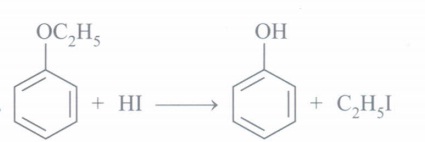
(e) Write the structure of product formed when ethoxy benzene is treated with HI.
6.
Observe the diagram of splitting of d-orbitals in octahedral field and answer the questions based on the diagrams and related studied concepts.
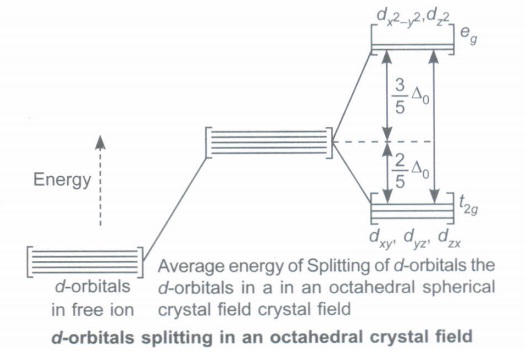
(a) What is crystal field splitting anergy?
(b) Why dx2-y2 ,dz2 have higher energy than dxy, dyz, dzx orbitals in octahedral crystal field?
(c) What is relationship between (CFSE) \(\triangle\)0 and strength of ligand?
(d) What is electronic configuration of d5 ion if \(\triangle\)0 < P?
(e) What is spectrochemical series?
7.
Transition metals form complex compounds which playa very important role in our daily life. Complexes are also formed by other groups elements e.g. Chlorophyll is coordination compound of Mg. Organometallic compounds like Grignard reagent is most useful in organic chemistry. Complexes are used in medicines, analytical chemistry, qualitative analysis, electroplating, biological processes. Stability of complexes depends upon charge on central metal ion, strength of ligand. Counter ions outside the coordination entity are ionisable but inside the coordination sphere are not ionisable.
(a) Name a complex used as anticancer agent?
(b) What is coordination number of Co in [Co(en)3]3+ and why?
(c) Name a complex used in Gold plating
(d) Name a complex used for determining hardness of water. What is its denticity?
(e) How is undecomposed AgBr removed from photographic film? Write the reaction involved.
8.
Complex compounds play an important role in our daily life. Werner's theory of complex compounds says every metal atom or ion has primary valency (oxidation state) which is satisfied by -vely charged ions, ionisable where secondary valency (coordination number) is non-ionisable, satisfied by Iigands (+ve, -ve, neutral) but having lone pair. Primary valency is non-directional, secondary valency is directional. Complex compounds are name according to IUPAC system. Valence bond theory helps in determining shapes of complexes based on hybridisation, magnetic properties, outer or inner orbital complex. Complex show ionisation, linkage, solvate and coordination isomerism also called structural isomerism. Some of them also show stereoisomerism i.e. geometrical and optical isomerism. Ambidentate ligand are essential to show linkage isomerism. Polydentate Iigands form more stable complexes then unidentate Iigands. There are called ehelating agents. EDTA is used to treat lead poisoning, cis-platin as anticancer agents. Vitamin B12 is complex of cobalt. Haemoglobin, oxygen carrier is complex of Fe2+ and chlorophyll essential for photosynthesis is complex of Mg2+.
(a) What is the oxidation state of Ni in [Ni(CO)4]?
(b) One mole of CrCI3 . 6H2O reacts with excess of AgO3 to yield 2 mole of AgCI. Write formula of complex. Write IUPAC name also.
(c) Out Cis - [Pt(en)2 CI2 ]2+ and trans (Ptren), CI2 )2+ which one shows optical isomerism?
(d) Name the hexadentate ligand used for treatment of lead poisoning.
(e) What is hybridisation of [CoF6]3- [Co = 27] Give its shape and magnetic properties.
(f) Out [Fe(CO)5], [Fe(C2 O4 )3]3-, [Fe(H2O6)3+, [Fe(CN)6]3-, which is most stable?
(g) What type of isomerism is shown by [Cr(H2O)6] CI3 and [Cr(H2O)5 CI] CI2 . H2O?
9.
Read the passage given below and answer the following questions:
Proteins are high molecular mass complex biomolecules of amino acids. The important proteins required for our body are enzymes, hormones, antibodies, transport proteins, structural proteins, contractile proteins etc. Except for glycine, all a-amino acids have chiral carbon atom and most of them have L-configuration. The amino acids exists as dipolar ion called zwitter ion, in which a proton goes from the carboxyl group to the amino group. A large number of a-amino acids are joined by peptide bonds forming polypeptides. The pep tides having very large molecular mass (more than 10,000) are called proteins. The structure of proteins is described as primary structure giving sequence of linking of amino acids; secondary structure giving manner in which polypeptide chains are arranged and folded; tertiary structure giving folding, coiling or bonding polypeptide chains producing three dimensional structures and quaternary structure giving arrangement of sub-units in an aggregate protein molecule.
In these questions (i-iv), a statement of assertion followed by a statement of reason is given. Choose the correct answer out of the following choices.
(a) Assertion and reason both are correct statements and reason is correct explanation for assertion.
(b) Assertion and reason both are correct statements but reason is not correct explanation for assertion.
(c) Assertion is correct statement but reason is wrong statement.
(d) Assertion is wrong statement but reason is correct statement.
(i) Assertion: All amino acids are optically active.
Reason: Amino acids contain asymmetric carbon atoms.
(ii) Assertion: In \(\alpha \) -helix structure, intramolecular H-bonding takes place whereas in \(\beta \) -pleated structure, intermolecular H-bonding takes place.
Reason: An egg contains a soluble globular protein called albumin which is present in the white part.
(iii) Assertion: Secondary structure of protein refers to regular folding patterns of continuos portions of the polypeptide chain.
Reason: Out of 20 amino acids, only 12 amino acids can be synthesised by human body.
(iv) Assertion: The helical structure of protein is stabilised by intramolecular hydrogen bond between -NH and carbonyl oxygen.
Reason: Sanger's reagent is used for the identification of N-terminal amino acid of peptide chain.
10.
Read the passage given below and answer the following questions:
Carbohydrates are polyhydroxy aldehydes and ketones and those compounds which on hydrolysis give such compounds are also carbohydrates. The carbohydrates which are not hydrolysed are called monosaccharides. Monosaccharides with aldehydic group are called aldose and those which free ketonic groups are called ketose. Carbohydrates are optically active. Number of optical isomers = 2n
Where n = number of asymmetric carbons. Carbohydrates are mainly synthesised by plants during photosynthesis.
The monosaccharides give the characteristic reactions of alcohols and carbonyl group (aldehydes and ketones). It has been found that these monosaccharides exist in the form of cyclic structures. In cyclization, the -OH groups (generally C5 or C4 in aldohexoses and C5 or C6 in ketohexoses) combine with the aldehyde or keto group. As a result, cyclic structures of five or six membered rings containing one oxygen atom are formed, e.g., glucose forms a ring structure. Glucose contains one aldehyde group, one 1o alcoholic group and four 2o alcoholic groups in its open chain structure.
The following questions are multiple choice questions. Choose the most appropriate answer:
(i) First member of ketos sugar is
| (a) ketotriose | (b) ketotetrose | (c) ketopentose | (d) ketohexose |
(ii) In CH2OHCHOHCHOHCHOHCHOHCHO, the number of optical isomers will be
| (a) 16 | (b) 8 | (c) 32 | (d) 4 |
(iii) Some statements are given below:
1. Glucose is aldohexose.
2. Naturally occurring glucose is dextrorotatory.
3. Glucose contains three, chiral centres.
4. Glucose contains one 1o alcoholic group and four 2o alcoholic groups.
Among the above, correct statements are
| (a) 1 and 2 only | (b) 3 and 4 only |
| (c) 1,2 and 4 only | (d) 1,2,3 and 4 |
(iv) Which of the following reactions of glucose can be explained only by its cyclic structure?
| (a) Glucose forms cyanohydrin with HCN |
| (b) Glucose reacts with hydroxylamine to form an oxime |
| (c) Pentaacetate of glucose does not react with hydroxylamine |
| (d) Glucose is oxidised by nitric acid to gluconic acid . |
11.
Read the passage given below and answer the following questions:
Carbohydrates can exist in either of two conformations, as determined by the orientation of the hydroxyl group about the asymmetric carbon farthest from the carbonyl.
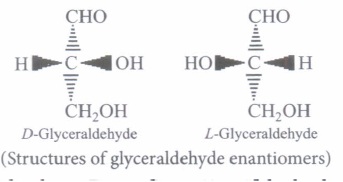
By convention, a monosaccharide is said to have D-configuration if the hydroxyl group attached to the asymmetric carbon atom adjacent to the - CH2OH group is on the right hand side irrespective of the positions of the other hydroxyl groups. On the other hand, the molecule is assigned L-configuration if the - OH group attached to the carbon adjacent to the - CH2OH group is on the left hand side.
The following questions are multiple choice questions. Choose the most appropriate answer:
(i) D-Glyceraldehyde and L-Glyc~raldehyde are
| (a) epimers | (b) enantiomers |
| (c) anomers | (d) conformational diasteriomers |
(ii) Which of the following monosaccharides, is the majority found in the human body?
| (a) D-type | (b) L-type | (c) Both of these | (d) None of these |
(iii) Monosaccharides contain
| (a) always six carbon atoms | (b) always five carbon atoms |
| (c) always four carbon atoms | (d) may contain 3 to 7 carbon atoms |
(iv) The correct corresponding order of names of four aldoses with configuration given below
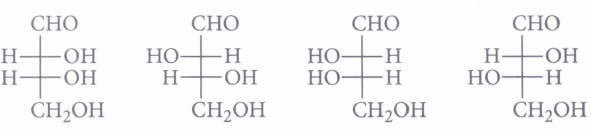
respectively, is
| (a) L-erythrose, L-threose, L-erythrose, D-threose |
| (b) D-threose, D-erythrose, L-tl?repse, L-erythrose |
| (c) L-erythrose, L-threose, D-erythrose, D-threose |
| (d) D-erythrose, D-threose, L-erythrose, L-threose. |
12.
Read the passage given below and answer the following questions:
When a solution of an \(\alpha \) -amino acid is placed in an electric field depending on the pH of the medium, following three cases may happen.

(i) In alkaline solution,\(\alpha \) -amino acids exist as anion II, and there is a net migration of amino acid towards the anode.
(ii) In acidic solution, \(\alpha \) -amino acids exist as cation III, and there is a net migration of amino acid towards the cathode.
(iii) If II and III are exactly balanced there is no net migration; under such conditions anyone molecule exists as a positive ion and as a negative ion for exactly the same amount of time, and any small movement in the direction of one electrode is subsequently cancelled by an equal movement back toward the other electrode. The pH of the solution in which a particular amino acid does not migrate under the influence of an electric field is called the isoelectric point of that amino acid.
The following questions are multiple choice questions. Choose the most appropriate answer:
(i) 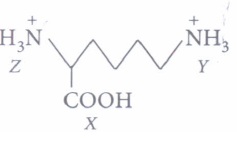
Arrange in order of increasing acid strengths.
| (a) X>Z>Y | (b) Z |
(c) X>Y>Z | (d) Z>X>Y |
(ii) In aqueous solutions, amino acids mostly exist as
| \(\text { (a) } \mathrm{NH}_{2}-\mathrm{CH} R-\mathrm{COOH}\) | \(\text { (b) } \mathrm{NH}_{2}-\mathrm{CH} R-\mathrm{COO}^{-}\) |
| \(\text { (c) } \mathrm{NH}_{3} \mathrm{CH} R \mathrm{COOH}\) | \(\text { (d) } \mathrm{H}_{3} \mathrm{NCH} R \mathrm{COO}^{-}\) |
(iii) Amino acids are least soluble
| (a) at pH 1 | (b) at pH 7 |
| (c) at their isoelectric points | (d) none of these. |
(iv) The \(pK_{a_{1}}\)and \(pK_{a_{2}}\) of an amino acid are 2.3 and 9.7 respectively. The isoelectric point of the amino acid is
| (a) 12.0 | (b) 7.4 | (c) 6.0 | (d) 3.7 |
13.
Read the passage given below and answer the following questions:
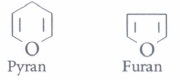
Pentose and hexose undergo intramolecular hemiacetal or hemiketal formation due to combination of the -OH group with the carbonyl group. The actual structure is either of five or six membered ring containing an oxygen atom. In the free state all pentoses and hexoses exist in pyranose form (resembling pyran). However, in the combined state some of them exist as five membered cyclic structures, called furanose (resembling furan).
The cyclic structure of glucose is represented by Haworth structure:
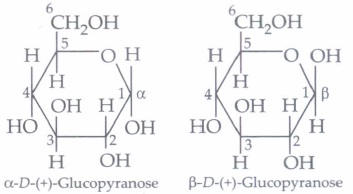
\(\alpha \) and \(\beta\) -D-glucose have different configuration at anomeric (C-l) carbon atom, hence are called anomers and the C-l carbon atom is called anomeric carbon (glycosidic carbon).
The six membered cyclic structure of glucose is called pyranose structure.
The following questions are multiple choice questions. Choose the most appropriate answer:
(i) \(\alpha\) -D(+)-glucose and \(\beta\) -D( +)glucose are
| (a) enantiomers | (b) conformers | (c) epimers | (d) anomers |
(ii) The following carbohydrate is
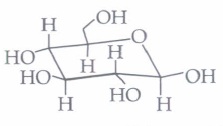
| (a) a ketohexose | (b) an aldohexose |
| (c) an \(\alpha \)-furanose | (d) an \(\alpha \)-pyranose |
(iii) In the following structure,
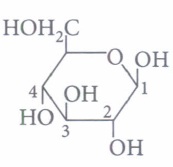
anomeric carbon is
| (a) C-l | (b) C-2 | (c) C-3 | (d) C-4 |
(iv) The term anomers of glucose refers to
| (a) isomers of glucose that differ in configurations at carbons one and four (C-l and C-4) |
| (b) a mixture of (D)-glucose and (L)-glucose |
| (c) enantiomers of glucose |
| (d) isomers of glucose that differ in configuration at carbon one (C-l). |
14.
Read the passage given below and answer the following questions:
Consider the given sequence of reactions:
The following questions are multiple choice questions. Choose the most appropriate answer:
(i) Identify w.
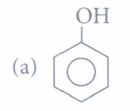 |
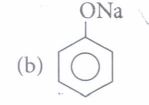 |
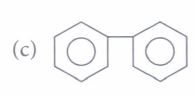 |
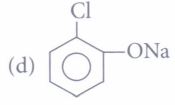 |
(ii) When X reacts with CH3COCI in presence of anhy. AICI3, the reaction is known as
| (a) Fittig reaction | (b) Ullmann reaction | (c) Wurtz-Fittig reaction | (d) Friedel-Crafts acylation reaction. |
(iii) When X is treated Ni-Al / NaOH the product obtained is
| (a) benzene | (b) phenol | (c) p-chlorophenol | (d) triphenyl. |
(iv) Compound Z is
| (a) phenol | (b) p-chlorophenol | (c) p-nitrophenol | (d) nitrobenzene |
15.
Read the passage given below and answer the following questions:
Few colligative properties are:
(a) relative lowering of vapour pressure: depends only on molar concentration of solute (mole fraction) and independent of its nature.
(b) depression in freezing point: it is proportional to the molal concentration of solution.
(c) elevation of boiling point: it is proportional to the molal concentration of solute.
(d) osmotic pressure: it is proportional to the molar concentration of solute.
A solution of glucose is prepared with 0.052 g at glucose in 80.2 g of water. (Kf = 1.86 K kg mol-1 and Kb = 5.2 K kg mol-1)
The following questions are multiple choice questions. Choose the most appropriate answer:
(i) Molality of the given solution is
| (a) 0.0052 m | (b) 0.0036 m | (c) 0.0006 m | (d) 1.29 m |
(ii) Boiling point for the solution will be
| (a) 373.05 K | (b) 373.15 K | (c) 373.02 K | (d) 372.98 K |
(iii) The depression in freezing point of solution will be
| (a) 0.0187 K | (b) 0.035 K | (c) 0.082 K | (d) 0.067 K |
(iv) Mole fraction of glucose in the given solution is
| (a) 6.28 x 10⁻⁵ | (b) 1.23 x 10⁻⁴ | (c) 0.00625 | (b) 0.00028 |
16.
Read the passage given below and answer the following questions:
The properties of the solutions which depend only on the number of solute particles but not on the nature of the solute are called colligative properties. Relative lowering in vapour pressure is also an example of colligative properties.
For an experiment, sugar solution is prepared for which lowering in vapour pressure was found to be 0.061 mm of Hg. (Vapour pressure of water at 20°C is 17.5 mm of Hg.)
The following questions are multiple choice questions. Choose the most appropriate answer:
(i) Relative lowering of vapour pressure for the given solution is
| (a) 0.00348 | (b) 0.061 | (c) 0.122 | (d) 1.75 |
(ii) The vapour pressure (mm of Hg) of solution will be
| (a) 17.5 | (b) 0.61 | (c) 17.439 | (d) 0.00348 |
(iii) Mole fraction of sugar in the solution is
| (a) 0.00348 | (b) 0.9965 | (c) 0.061 | (d) 1.75 |
(iv) The vapour pressure (mm of Hg) of water at 293 K when 25 g of glucose is dissolved in 450 g of water is
| (a) 17.2 | (b) 17.4 | (c) 17.120 | (d) 17.02 |
17.
Read the passage given below and answer the following questions:
Nucleophilic substitution reactions are of two types; substitution nucleophilic bimolecular (SN2) and substitution nucleophilic unimolecular (SN1) depending on molecules taking part in determining the rate of reaction. Reactivity of alkyl halide towards SN1 and SN2 reactions depends on various factors such as steric hindrance, stability of intermediate or transition state and polarity of solvent. SN2 reaction mechanism is favoured mostly by primary alkyl halide then secondary and then tertiary. This order is reversed in case of SN1 reactions.
The following questions are multiple choice questions. Choose the most appropriate answer:
(i) Which of the following is most reactive towards nucleophilic substitution reaction?
| (a) \(\mathrm{C}_{6} \mathrm{H}_{5} \mathrm{Cl}\) | (b) \(\mathrm{CH}_{2}=\mathrm{CHCl}\) | (c) \(\mathrm{ClCH}_{2} \mathrm{CH}=\mathrm{CH}_{2}\) | (d) \(\mathrm{CH}_{3} \mathrm{CH}=\mathrm{CHCl}\) |
(ii) Isopropyl chloride undergoes hydrolysis by
| (a) SN1mechanism | (b) SN2mechanism | (c) SN1 and SN2mechanism | (d) neither SN1 and SN2mechanism |
(iii) The most reactive nucleophile among the following is
| (a) CH3O- | (b) C6H5O- | (c) (CH3)2CHO- | (d) (CH3)3CO- |
(iv) Tertiary alkyl halides are practically inert to substitution by SN2mechanism because of
| (a) insolubility | (b) instability | (c) inductive effect | (d) stearic hindrance. |
18.
Read the passage given below and answer the following questions:
An ideal solution may be defined as the solution which obeys Raoult's law exactly over the entire range of concentration. The solutions for which vapour pressure is either higher or lower than that predicted by Raoult's law are called non-ideal solutions.
Non-ideal solutions can show either positive or negative deviations from Raoult's law depending on whether the A-B interactions in solution are stronger or weaker than A - A and B - B interactions.
The following questions are multiple choice questions. Choose the most appropriate answer:
(i) Which of the following solutions is/are ideal solution(s)?
(i) Bromoethane and iodoethane (ii) Acetone and chloroform
(iii) Benzene and acetone (iv)n-heptane and n-hexane
| (a) only 1 | (b) I and II | (c) II and III | (d) I and IV |
(ii) Which of the following is not true for positive deviations?
| (a) The A-B interactions in solution are weaker than the A -A and B -B interactions. |
| (b) \(P_{A}<P_{A}^{\circ} x_{A} \text { and } P_{B}<P_{B}^{\circ} x_{B}\) |
| (c) Carbon tetrachloride and chloroform mixture is an example of positive deviations. |
| (d) All of these |
(iii) For water and nitric acid mixture which of the given graph is correct?
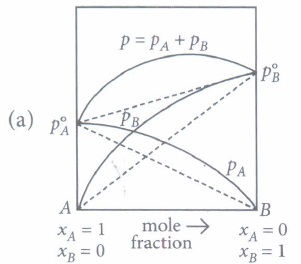 |
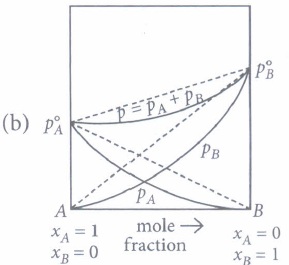 |
| (C) Both of these | (d) None of these |
(iv) Water- HCl mixture
I. shows positive deviations II. forms minimum boiling azeotrope
III. shows negative deviations IV. forms maximum boiling azeotrope
| (a) I and II | (b) II and III |
| (c) I and IV | (d) III and IV |
19.
Read the passage given below and answer the following questions:
At 298 K, the vapour pressure of pure benzene, C6H6 is 0.256 bar and the vapour pressure of pure toluene
C6H5CH3 is 0.0925 bar. Two mixtures were prepared as follows:
(i) 7.8 g of C6H6 + 9.2 g of toluene
(ii) 3.9 g of C6H6 + 13.8 g of toluene
The following questions are multiple choice questions. Choose the most appropriate answer:
(i) The total vapour pressure (bar) of solution 1 is
| (a) 0.128 | (b) 0.174 | (c) 0.198 | (d) 0.258 |
(ii) Which of the given solutions have higher vapour pressure?
| (a) I | (b) II |
| (c) Both have equal vapour pressure | (d) Cannot be predicted |
(iii) Mole fraction of benzene in vapour phase in solution 1 is
| (a) 0.128 | (b) 0.174 | (c) 0.734 | (d) 0.266 |
(iv) Solution I is an example of a/an
| (a) ideal solution | (b) non-ideal solution with positive deviation |
| (c) non-ideal solution with negative deviation | (d) can't be predicted |
20.
Read the passage given below and answer the following questions:
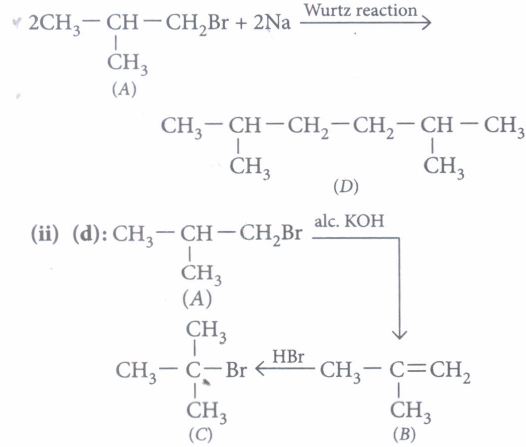
A primary alkyl halide (A) C4H9Br reacted with alcoholic KOH to give compound (B). Compound (B) is reacted with HBr to give compound (C) which is an isomer of (A). When (A) reacted with sodium metal, it gave a compound (D) C8H18 that is different than the compound obtained when n-butyl bromide reacted with sodium metal
The following questions are multiple choice questions. Choose the most ap appropriate answer:
(i) Compound (A) is
| (a) \(\mathrm{CH}_{3} \mathrm{CH}_{2} \mathrm{CH}_{2} \mathrm{CH}_{2} \mathrm{Br}\) | (b) 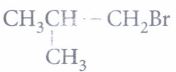 |
(c) 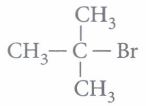 |
(d) \(\mathrm{CH}_{3} \mathrm{CH}_{2} \mathrm{CH}_{2} \mathrm{Br}\) |
(ii) Which type of isomerism is present in compound (A) and (C)?
| (a) Positional | (b) Functional | (c) Chain | (d) Both (a) and (c) |
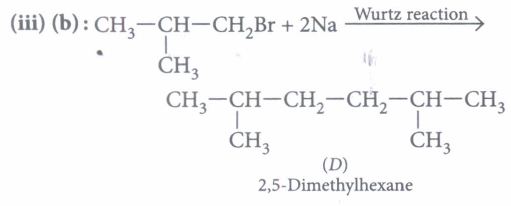
(iii) IUPAC name of compound (D) is
| (a) n-octane | (b) 2,5-dimethylhexane | (c) 2-methylheptane | (d) 3,4-dimethyl hexane. |
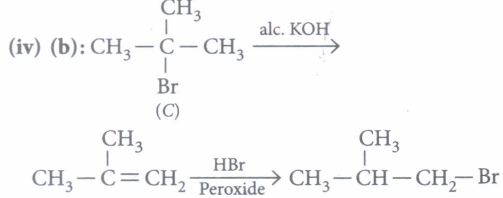
(iv) When compoound (C) is treated with alc. KOH and then treated with HBr in presence of peroxide, the compound obtained is
| a) |
(b) 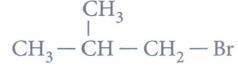 |
| (c) \(\mathrm{CH}_{3} \mathrm{CH}_{2} \mathrm{CH}_{2} \mathrm{CH}_{2} \mathrm{Br}\) | (d) 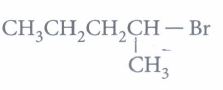 |
1.

2.
3.
4.
(a) When a ligand is bonded through a two different atoms, it is said to be ambidendate ligand,
e.g. \(\mathrm{NO}_2^{-}\), SCN-, CN-.
(b) [Co(NH3)5Cl]SO4 and [Co(NH3)5SO4]Cl show ionisation isomerism.
This type of isomerism arises when compounds give different ions in the solution although they have same composition.
(c) Chelate effect signify the stabilisation of coordination compounds due to the formation of metal chelates. The chelating ligands form more stable complexes than the unidentate analoges because when chelation occurs, entropy decreases and the process becomes more favourable and form a ring complexes which is known as chelate ring.
Or
(c) In complex Na3[Cr(C2O4)3] the coordination number of Cr is 6 as oxalate is a bidentate ligand.
Let, the oxidation number of Cr be x.
\(\therefore\) 3 + x + 3(-2) = 0
x = + 3
Thus, oxidation state of Cr be +3.
5.
(a) Racemic mixture will be formed.
(b) Polarimeter
(c) Pent-2-ene will be major product.
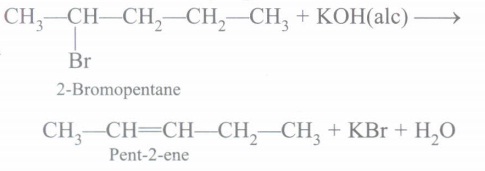
(d) Phenol and CH3I are formed
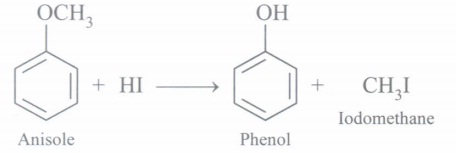
(e)
6.
(a) The energy difference between the two sets of d-orbitals is called crystal field splitting energy denoted by \(\triangle\)0 .
(b) The orbitals dx2y2, dz2 lying in the direction of ligands, will experience greater repulsion and their energies will be raised relative to their positions in symmetrical field as compared to orbitals dxy, dyz, dzx lying in between the axis (at angle of 45°), lying away from the approach of ligand.
(c) Greater the (CFSE) \(\triangle\)0 more will be strength of ligand.
(d) \(t_{2 g}^{3} e g^{2}\)
(e) The series in which ligands are arranged in increasing order of magnitude of crystal field splitting energy (\(\triangle\)0 ) is called spectrochemical series.
7.
(a) Cis-platin
(b) Coordination number of Co is 6 because 'en' (ethane 1, 2-diammine) is bidentate ligand.
(c) \(\left[\mathrm{An}(\mathrm{CN})_{2}\right]^{\ominus}\) Dicyanido aurate(1)
(d) EDTA, it is hexadentate ligand.
(e) It is done by reacting with sodium thio sulphate
AgBr + 2Na2S2O3 \(\rightarrow\) Na3[Ag(SP3)2] + NaBr
Sodium dithio sulphato argentate (I)
8.
(a) Zero
(b) [Cr(H2O)5Cl]CI2 . H2O, pentaaqua chlorido chromium (III) chloride.
(c) Cis - [Pt(en)2 Cl2]2+ shows optical isomerism.
(d) EDTA4- (ethylene diamine tetra acetate)
(e) Sp3 d2, octahedral, paramagnetic. It is outer orbital complex.
(f) [Fe(CO)5] is most stable because CO is strongest ligand.
(g) Solvate isomerism.
9.
(i) (d) : All amino acids except glycine are optically active because they contain, asymmetric carbon atom. They exist in both D and L- forms. Most naturally occurring amino acids have L-configuration.
(ii) (b): In a-helix structure, the formation of hydrogen bonds takes place between -co- and -NH groups, whereas in ~-pleated structure, hydrogen bonds are formed between amide groups of two different chains.
(iii) (c) : Out of 20 amino acids, only 10 amino acids can be synthesised by human body.
(iv) (b)
10.
(i) (a)
(ii) (a)
(iii) (c) : Glucose contains four chiral centres.
(iv) (c) : Pentacetate of glucose does not react with hydroxylamine showing absence of free -CHO group. This cannot be explained by open structure of glucose.
11.
(i) (b)
(ii) (a)
(iii) (d)
(iv) (d): 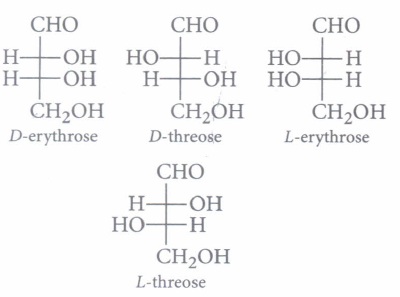
12.
(i) (a): Carboxylic acids are stronger acids than - +NH3, therefore X is the strongest acid. Since -COOH has -I effect which decreases with distance therefore, effect is more pronounced on Z than on Y. As a result Z is more acidic than Y, therefore, overall order of increasing acid strength is X > Z > Y.
(ii) (d): In aqueous solutions, amino acids mostly exist as zwitter ion or dipolar ion
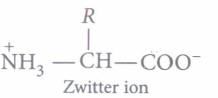
(iii) (c) : Amino acids are least soluble at their isoelectric points. At a specific pH, called isoelectric point, the positive and negative charges balance each other and the net charge becomes zero. If there is a charge, the amino acid prefers to interact with water, rather than other amino acid molecules, this charge makes it more soluble.
(iv) (c) : Isoelectric point = \(\frac{2.3+9.7}{2}=6\)
13.
(i) (d): \(\alpha \)-D-(+)-glucose and \(\beta \) -D-(+)-glucose differ in configuration at C1 (U., anomeric or glycosidic carbon) and hence are called anomers.
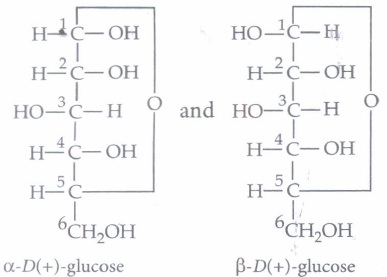
(ii) (b): This structure is an example of pyranose and aldohexose. Here, the carbohydrate's structure is of the \(\beta \) -pyranose form.
(iii) (a) : C-1 is the anomeric carbon.
(iv) (d): Anomers are cyclic monosaccharides or glycosides that are epimers, differing from each other in the configuration at C-1, if they are aldoses or in the configuration at C- 2 if they are ketoses.
14.
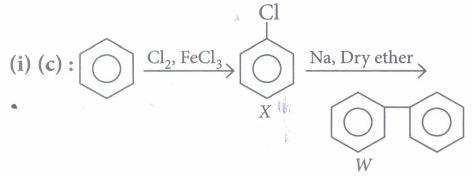
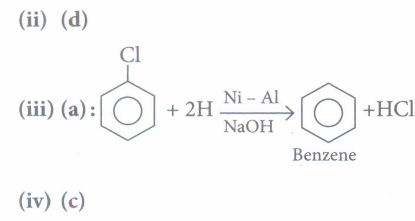
15.
(i) (b): m \(=\frac{0.052}{180} \times \frac{1000}{80.2}=0.0036\)
(ii) (c): \(\Delta T_{b}=K_{b} \times m=5.2 \times 0.0036=0.0187 \mathrm{~K}\)
\(T_{b}=373+0.0187=373.0187 \mathrm{~K} \approx 373.02 \mathrm{~K}\)
(iii) (d): \(\Delta T_{f}=K_{f} \times m=1.86 \times 0.0036=0.067 \mathrm{~K}\)
(iv) (a): Moles of glucose \(=\frac{0.052}{180}=0.00028\)
Moles 0f water = \(\frac{80.2}{18}=4.455\)
Mole fraction of glucose = \(\frac{0.00028}{4.45+0.00028}=6.28 \times 10^{-5}\)
16.
(i) (a) : Vapour pressure of water \(\left(p_{A}^{\circ}\right)\) = 17.5 mm of Hg
Lowering of vapour pressure \(\left(p_{A}^{\circ}-p_{A}\right)\)= 0.061
Relative lowering of vapour pressure
\(=\frac{p_{A}^{\circ}-p_{A}}{p_{A}^{\circ}}=\frac{0.061}{17.5}=0.00348\)
(ii) (c): P = Vapour pressure of solvent - lowering in vapour pressure = 17.5 - 0.061 = 17.439 mm of Hg
(iii) (a): \(\frac{p_{A}^{\circ}-p_{A}}{p_{A}^{\circ}}=x_{B}=0.00348\)
Hence, mole fraction of sugar = 0.00348
(iv) (b): \(\frac{p_{A}^{\circ}-p_{A}}{p_{A}^{\circ}}=x_{B}=\frac{w_{B} \times M_{A}}{M_{B} \times w_{A}}\)
\(\frac{17.5-p_{A}}{17.5}=\frac{25 \times 18}{450 \times 180}=5.56 \times 10^{-3}\)
\(17.5-p_{A}=17.5 \times 5.56 \times 10^{-3}\)
\(17.5-p_{A}=0.0973\)
P = 17.40 mm Hg
17.
(i) (c) : Allylic chlorides are most reactive.
(ii) (c): 20 - alkyl halides undergo hydrolysis by SN1 or SN2 mechanism.
(iii) (a): Smaller the size of the nucleophile (i.e., CH3O-), more reactive it is.
(iv) (d): Stearic hindrance due to bulky alkyl groups prevents the attack of the nucleophile in SN2 mechanism.
18.
(i) (d) : II represents negative deviations and III represents positive deviations.
(ii) (b): For positive deviations \(p_{A}>p_{A}^{\circ} x_{A} \text { and } p_{B}>p_{B}^{\circ} x_{B}\)
(iii) (b): Water and nitric acid mixture shows negative deviations from Raoult's law, hence \(p_{A}<p_{A}^{\circ} x_{A} \text { and } p_{B}<p_{B}^{\circ} x_{B}\)
(iv) (d): Water-HCl mixture shows negative deviations from Raoult's law and solutions showing negative deviations from ideal behaviour form maximum boiling azeotrope.
19.
(i) (b) : Moles of C6H6 = \(\frac{7.8}{78}=0.1\)
Mole C6H5CH3 = \(\frac{9.2}{92}=0.1\)
Mole fraction of C6H6 = \(\frac{0.1}{0.1+0.1}=0.5\)
=> Mole fraction of C6H5CH3 = 0.5
Vapour pressure of toluene = Vapour pressure of pure toluene x mole fraction of toluene
= 0.0925 x 0.5 = 0.04625
Vapour pressure of benzene = 0.256 x 0.5 = 0.128
Total vapour pressure of solution = 0.17425
(ii) (a) : Moles of benzene in solution-II = \(\frac{3.9}{78}=0.05\)
Moles of toluene in solution-II = \(\frac{13.8}{92}=0.15\)
Vapour pressure of solution
= 0.256 x 0.05 + 0.0925 x 0.15
= 0.0128 + 0.013875 = 0.026675
(iii) (c) : Mole fraction of benzene in vapour phase
\(y_{\text {benzene }}=\frac{p_{\text {benzene }}}{P_{\text {total }}}=\frac{0.128}{0.17425}=0.734\)
(iv) (a) : Benzene and toluene form an ideal solution.
20.
(i) (b): When compound (A) reacted with Na-metal, it gave a compound D(C8H18) which is different from the compound obtained when n-butyl bromide reacted with Na metal and hence the
compound (A) must be isobutyl bromide.
\(2 \mathrm{CH}_{3} \mathrm{CH}_{2} \mathrm{CH}_{2} \mathrm{CH}_{2} \mathrm{Br}+2 \mathrm{Na}\) \(\overset{Wurtz reaction}\rightarrow\) \(\mathrm{CH}_{3} \mathrm{CH}_{2} \mathrm{CH}_{2} \mathrm{CH}_{2} \mathrm{CH}_{2} \mathrm{CH}_{2} \mathrm{CH}_{2} \mathrm{CH}_{3}\)

12th Standard CBSE Syllabus & Materials
12th Standard CBSE
CBSE 12th Computer Science Python Revision Tour I - New Previous year Question Papers Study Material - QB365 Set A
NEW12th Standard CBSE
CBSE 12th Business Studies Planning Important Questions And Answers Study Material - QB365 Set A
NEW12th Standard CBSE
CBSE 12th Business Studies Business Environment Important Questions And Answers Study Material - QB365 Set A
NEW12th Standard CBSE
CBSE 12th Business Studies Principles of Management Important Questions And Answers Study Material - QB365 Set A



NCERT Books

Syllabus

Exam Pattern

Sample Question Papers

Previous year Question Papers

Important Notes

MCQ Practice test

NCERT Exemplers

Case study Questions

Image Based Questions

Passage based Questions

HOT Questions

Value Based Questions

Model Questions Papers
NCERT ( Book Back ) Questions

Assertion and Reason
Important Questions And Answers

CBSE 12th Standard CBSE Subjects
CBSE Standards








