
 100% FREE ACCESS
12th Standard CBSE Syllabus & Materials
12th Standard CBSE
CBSE 12th Economics Government Budget and the Economy Previous year Question Papers Study Material - QB365 Set A
NEW12th Standard CBSE
CBSE 12th Computer Science Interface Python with MySQL - New Previous year Question Papers Study Material - QB365 Set A
NEW12th Standard CBSE
CBSE 12th Computer Science Database Concept - New Previous year Question Papers Study Material - QB365 Set A
NEW12th Standard CBSE
CBSE 12th Computer Science Data Communication - New Previous year Question Papers Study Material - QB365 Set A
NEW12th Standard CBSE
CBSE 12th Computer Science Data Structures - New Previous year Question Papers Study Material - QB365 Set A
NEW12th Standard CBSE
CBSE 12th Computer Science Functions - New Previous year Question Papers Study Material - QB365 Set A

Published on: 25/10/2025
Download CBSE Class 12th Standard CBSE Chemistry question papers, sample papers, important questions, and previous year solved papers in PDF format. Get free study materials, NCERT solutions, and exam preparation resources for Class 12th Standard CBSE Chemistry
Questions + Answers key
Take MCQ Chemistry Test
1.
Phenol does not undergo nucleophilic substitution reaction easily due to
acidic nature of phenol
partial double bond character of C-OH bond
partial double bond character of C-C bond
instability of phenoxide ion
2.
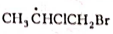
Which of the following molecules has a chiral centre correctly labelled with as asterisk (*)?



3.
Which reagents are required for one step conversion of chlorobenzene to toluene?
CH3Cl/AlCl3
CH3Cl Na, Dry ether
CH3Cl/Fe, Dark
NaNO₂/HCI/0-5°C
4.
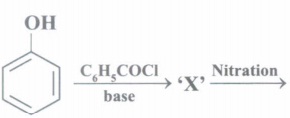 'Y' (Major product)
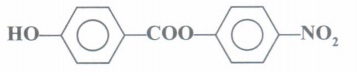
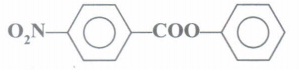
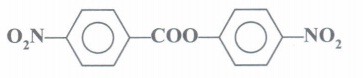
5.
Identify 'C' in the following:

Water
Ethanol
Propanone
Cumene hydroperoxide
6.
The shapes of [Cu(NH3)4]2+ and [Pt(NH3)2 Cl2] are
square planar, tetrahedral
tetrahedral, square planar
square planar, square planar
tetrahedral, tetrahedral
7.
The stability of Mn2+, Fe2+,Cr2+, Co2+ is in order of (At o. of Mn = 25, Fe = 26, Cr = 24, Co = 27)
Mn2+ > Fe2+ > Cr2+ > CO2+
Fe2+ > Mn2+ > Co2+ > Cr2+
Co2+ > Mn2+ > Fe2+ > Cr2+
Cr2+ > Mn2+ > Co2+ > Fe2+
8.
The non-stoichiometric reaction:
2A + B \(\rightarrow\) C+D
| Initial conc A | Initial conc of B | Initial rate (Mol L-1 ) |
| 0.1 M | 0.1 M | 1.2 x 10- 3 |
| 0.1 M | 0.2M | 1.2 x 10- 3 |
| 0.2 M | 0.1 M | 2.4 x 10- 3 |
The rate law for formation of c is
\(\frac{\mathrm{dc}}{\mathrm{dt}}=k[\mathrm{~A}]\)
\(\frac{\mathrm{dc}}{\mathrm{dt}}=k[\mathrm{~A}][\mathrm{B}]\)
\(\frac{\mathrm{dc}}{\mathrm{dt}}=k[\mathrm{~A}]^{2}[\mathrm{~B}]^{1}\)
\(\frac{\mathrm{dc}}{\mathrm{dt}}=k[\mathrm{~A}][\mathrm{B}]^{2}\)
9.
In which of the following molecules carbon atom marked with asterisk (*) is asymmetric?
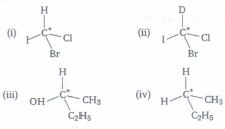
(i), (ii), (iii) and (iv)
(i), (ii) and (iii)
(ii), (iii) and (iv)
(i), (iii) and (iv)
10.
Structure of [Ni(CO)4] is
tetrahedral
square planar
octahedral
None of these
11.
The temperature coefficient of a reaction is
the ratio of rate constant at two temperatures
the ratio of rate constant differing by 10o preferably 25oC and 35oC
the rate constant at a fixed temperature
None of the above
12.
For the reaction,
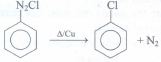
half-life does not depend on the concentration of the reactant. After 10 min, volume of N2 gas is 20 L and after the completion of reaction, it is 100 L. Hence, rate constant is
\(\frac{2.303}{10}\) log 5 min-1
\(\frac{2.303}{10}\) log 10 min-1
\(\frac{2.303}{10}\) log 10 min-1
\(\frac{2.303}{10}\) log 20 min-1
13.
In a reaction, 2x ⟶ y, the concentration of x decreases from 3.0 M to 1.5 Min 4 min. The rate of the reaction is
0.187 M min-1
1.87 M min-1
3.75 x 10⁻¹M min-1
0.75 M min-1
14.
Contact process is used in the formation of sulphur trioxide,
\(2 \mathrm{SO}_{2}(g) + \mathrm{O}_{2}(g) \rightleftharpoons 2 \mathrm{SO}_{3}(g)\)
The rate of reaction can be expressed as
\(\frac{-\Delta\left(\mathrm{O}_{2}\right]}{\Delta t}=2.5 \times 10^{-4} \mathrm{~mol} \mathrm{~L}^{-1} \mathrm{~s}^{-1}\)
Then rate of disappearance of [SO2]will be
\(50.0 \times 10^{-5} \mathrm{~mol} \mathrm{~L}^{-1} \mathrm{~s}^{-1}\)
\(3.75 \times 10^{-4} \mathrm{~mol} \mathrm{~L}^{-1} \mathrm{~s}^{-1}\)
\( 2.5 \times 10^{-4} \mathrm{~mol} \mathrm{~L}^{-1} \mathrm{~s}^{-1}\)
\(4.12 \times 10^{-4} \mathrm{~mol} \mathrm{~L}^{-1} \mathrm{~s}^{-1}\)
15.
Given the standard electrode potentials,
EoFe2+/Fe = - 0.44 V
and EoH+/O2/H2O = 1.23 V
Calculate the E0cell of the corrosion.
- 0.79 V
- 1.67 V
1.67 V
+ 0.79 V
16.
Knowing that the chemistry of lanthanoids (Ln) is dominated by its +3 oxidation state, which of the following statements is incorrect ?
The ionic sizes of Ln (III) decrease in general with increasing atomic number.
Ln (III) compounds are generally colourless.
Ln (III) hydroxides are mainly basic in character
Because of the large size of the Ln (III) ions, the bonding in its compounds is predominantly ionic in character.
17.
Identify the incorrect statement among the following :
Shielding power of 4f electrons is quit weak
There is a decrease in the radii of the atoms or ions as one proceeds from La to Lu
Lanthanoid contraction is the accumulation of successive shrinkages.
As a result of lanthanoid contraction, the properties of 4d series of the transition elements have no similarities with the 5d series of the elements.
18.
Which of the following statements about the interstitial compounds is incorrect ?
They retain metallic conductivity
They are chemically reactive
They are much harder than the pure metal
They have higher melting points than the pure metal
19.
The value of 'spin only' magnetic moment for one of the following configurations is 2.84 BM. The correct one is
d 4 (in strong ligand field)
d 4 ( in weak ligand field)
d 3 (in weak as well as strong fields)
d 5 (in strong ligand field)
20.
Among the following the one which reacts most readily with ethanol is
p-nitrobenzyl
p-chlorobenzyl
p-methoxybenzyl bromide
p-methylbenzyl bromide
21.
In the reaction, CH3COOH \(\overset{LiAlH_4}\longrightarrow\) A \(\overset{PCl_4}\longrightarrow\) B \(\overset{Alc.KOH}\longrightarrow\)C, the product C is
acetyl chloride
acetaldeyde
acetylene
ethylene
22.
In the following sequence of reactions, CH3-Br \(\overset{KCN}\longrightarrow\) A \(\overset{H_3O^+}\longrightarrow\) B \(\overset { LiAlH_{ 4 } }{ \underset { ether }{ \longrightarrow } } \) C the end product (c) is
acetone
methane
acetaldehyde
ethyl alcohol
23.
Which of the esters shown,after reduction with LiAlH4 and aqueous work up, will yield two molecules of only a single alcohol?
C6H5COOC6H5
CH3CH2COOCH2CH3
C6H5COOCH2C6H5
CH3COOCH3
24.
Which of the following compounds can be classified as aryl halides?
p-ClC6H4CH2CH(CH3)2
p-CH3CHCl(C6H4)CH2CH3
o-BrH2C-C6H4CH(CH3)CH2CH3
C6H5-Cl
25.
Best reagent for nuclear iodination of aromatic compounds is
KI/CH3COCH3
I2/CH3CN
KI/CH3COOH
I2/HNO3
26.
The synthesis of alkyl flurides is best acomplished by
Finekelstein reaction
Swarts reaction
free radical fluourination
Sandmeyer's reaction
27.
In the presence of peroxide, hydrogen chloride and hydrogen iodide do not give anti-Markovinikov's addition to alkenes because
both are highly ionic
one is oxidising and the other is reducing
one of the steps are exothermic in both the cases
all the steps are exothermic in both the reactions.
28.
Indicate the complex ion which shows geometrical isomerism.
[Cr(H2O)4Cl2]+
[Pt(NH3)3Cl]
[Co(NH3)6]3+
[Co(CN)5(NC)]3-
29.
Among the following complexes (K-P) K3[Fe(CN)6] (K), [Co(NH3)6]Cl3 (L), Na3[Co(oxalate)3](M), [Ni(H2O)6]Cl2 (N), K2[Pt(CN)4] (O) and [Zn(H2O)6] (NO3)2 (P) the diamagnetic complexes are
K, L, M, N
K, M, O, P
L, M, O, P
L, M, N, O
30.
Which of the following complex species is not expected to exhibit optical isomerism?
[Co(en)(NH3)2Cl2]+
[Co(en)3]3+
[Co(en)2Cl2]+
[Co(NH3)3Cl3]
31.
Which of the following statements are correct concerning redox properties ?
(i) A metal M for which E0 for the half life reaction \({ M }^{ n+ }+{ ne }^{ - }\rightleftharpoons M\) is very negative will be a good reducing agent.
(ii) The oxidizing power of the halogen decreases from chlorine to iodine
(iii) The reducing power of hydrogen halides increases from hydrogen chloride to hydrogen iodide
(i), (ii) and (iii)
(i) and (ii)
(i) only
(ii) and (iii) only
(iii) only
32.
For the given complex [CoCl2 (en) (NH3)2]+, the number of geometrical isomers, the number of optical isomers and total number of isomers of all type possible respectively are
2, 2 and 4
2, 2 and 3
2, 0 and 2
0, 2 and 2
33.
The limiting molar conductivities of HCl, CH3COONa and NaCl are respectively 425, 90 and 125 mho cm2 mol-1 at 25°C. The molar conductivity of 0.1 M CH3COOH solution is 7.8 mho cm2 mol-1 at the same temperature. The degree of dissociation of 0.1 M acetic acid solution at the same temperature is
0.10
0.02
0.15
0.03
0.20
34.
Which of the following statement is correct? (CFSE= Crystal Field Splitting Energy)
Lower CFSE favours formation of low spin complex
Higher CFSE favours formation of high spin complex
A particular metal ion in a particular oxidation state can form either diamagnetic complexes only or paramagnetic complexes only.
t2g orbitals are three fold degenerate while eg orbitals are two fold degenerate
35.
The activation energy of a reaction can be determined from the slope of which of the following graph ?
In k vs \(\frac {1}{T}\)
\(\frac {T}{In k} vs \frac {1}{T}\)
In k vs T
\(\frac {In k} {T}\) vs T
36.
Large number of oxidation states are exhibited by the actinoids than those by the lanthanoids, the main reason being
more energy difference between 5f and 6d than between 4f and 5d orbitals
more reactive nature of the actinoids than the lanthanoids
4f orbitals more diffused than the 5 f orbitals
lesser energy difference between 5f and 6d than between 4f and 5d orbitals
37.
Name a member of lanthanide series which is well known to exhibit + 4 oxidation state :
Ce
La
Lu
Pr
38.
Which one of the following aqueous solutions will have the lower freezing point?
0.1 molal solution of urea
0.1 molal solution of acetic acid
0.1 molal solution of sodium chloride
0.1 molal solution of calcium chloride
39.
\(6.02\times { 10 }^{ 20 }\) molecules of urea are present in 100 mL of its solution. The concentration of the solution is
0.02 M
0.01 M
0.001 M
0.1 M
40.
When ethyl acetate was hydrolysed in presence of 0.1 N HCI, the rate constant was found to be 5.40 \(\times\) 10-5 s-1 . From these values we can say that
H2SO4 is stronger than HCI
H2SO4 is weaker than HCI
Both the acids have equal strength
The data is insufficient to compare the strengths of HCI and H2SO4
41.
Consider the following four electrodes
| P = Cu2+ (0.0001 M)/Cu (s) | Q = Cu2+ (0.1 M)/Cu (s) |
| R = Cu2+ (0.01 M)/Cu (s) | S = Cu2+ (0.001 M)/Cu (s) |
If the standard electrode potential of Cu2+/Cu is + 0.34 V, the reduction potentials in volts of the above electrodes follow the order :
P > S > R > Q
S > R > Q > P
R > S > Q > P
Q > R > S > P
42.
A dilute aqueous solution of Na2 SO4 is electrolysed using platinum electrodes. The products at the anode and cathode are
O2 , H2
SO2 , Na
O2 , Na
S2 O82- , H2
43.
Which following factor (s) affect the solubility of a gaseous solute in the fixed volume of liquid solvent ?
(i) nature of solute
(ii) temperature
(iii) pressure
(i) and (iii) at constant T
(i) and (ii) at constant P
(ii) and (iii) only
(iii) only
44.
KH value for Ar(g), CO2(g), HCHO (g) and CH4 (g) are 4.39,1.67,1.83 x 10-5 and 0.413 respectively. Arrange these gases in the order of their increasing solubility.
\( \mathrm{HCHO}<\mathrm{CH}_4<\mathrm{CO}_2<\mathrm{Ar}\)
\( \mathrm{HCHO}<\mathrm{CO}_2<\mathrm{CH}_4<\mathrm{Ar} \)
\( \mathrm{Ar}<\mathrm{CO}_2<\mathrm{CH}_4<\mathrm{HCHO} \)
\( \mathrm{Ar}<\mathrm{CH}_4<\mathrm{CO}_2<\mathrm{HCHO} \)
45.
Maximum amount of a solid solute that can be dissolved in a specified amount of a given liquid solvent does not depend upon __________________.
Temperature
Nature of solute
Pressure
Nature of solvent
1.
(b)
partial double bond character of C-OH bond
2.
(b)
3.
(b)
CH3Cl Na, Dry ether
4.
5.
(c)
Propanone
6.
(c)
square planar, square planar
7.
(a)
Mn2+ > Fe2+ > Cr2+ > CO2+
8.
(a)
\(\frac{\mathrm{dc}}{\mathrm{dt}}=k[\mathrm{~A}]\)
9.
(b)
(i), (ii) and (iii)
10.
(a)
tetrahedral
11.
(b)
the ratio of rate constant differing by 10o preferably 25oC and 35oC
12.
(a)
\(\frac{2.303}{10}\) log 5 min-1
13.
(a)
0.187 M min-1
14.
(c)
\( 2.5 \times 10^{-4} \mathrm{~mol} \mathrm{~L}^{-1} \mathrm{~s}^{-1}\)
15.
(c)
1.67 V
16.
(b)
Ln (III) compounds are generally colourless.
17.
(d)
As a result of lanthanoid contraction, the properties of 4d series of the transition elements have no similarities with the 5d series of the elements.
18.
(b)
They are chemically reactive
19.
(a)
d 4 (in strong ligand field)
20.
(c)
p-methoxybenzyl bromide
21.
(d)
ethylene
22.
(d)
ethyl alcohol
23.
(c)
C6H5COOCH2C6H5
24.
(a)
p-ClC6H4CH2CH(CH3)2
25.
(d)
I2/HNO3
26.
(b)
Swarts reaction
27.
(c)
one of the steps are exothermic in both the cases
28.
(a)
[Cr(H2O)4Cl2]+
29.
(c)
L, M, O, P
30.
(d)
[Co(NH3)3Cl3]
31.
(a)
(i), (ii) and (iii)
32.
(b)
2, 2 and 3
33.
(b)
0.02
34.
(d)
t2g orbitals are three fold degenerate while eg orbitals are two fold degenerate
35.
(a)
In k vs \(\frac {1}{T}\)
36.
(d)
lesser energy difference between 5f and 6d than between 4f and 5d orbitals
37.
(a)
Ce
38.
(d)
0.1 molal solution of calcium chloride
39.
(b)
0.01 M
40.
(a) : For equimolar solution of twoi acids, \(\frac { Strength of Acid 1}{Strength of Acid 2} = \) \(\frac {k_1}{k_2}\)
41.
(d)
Q > R > S > P
42.
(a)
O2 , H2
43.
(b)
(i) and (ii) at constant P
44.
(c)
\( \mathrm{Ar}<\mathrm{CO}_2<\mathrm{CH}_4<\mathrm{HCHO} \)
45.
(c)
Pressure

12th Standard CBSE Syllabus & Materials
12th Standard CBSE
CBSE 12th Computer Science Python Revision Tour I - New Previous year Question Papers Study Material - QB365 Set A
NEW12th Standard CBSE
CBSE 12th Business Studies Planning Important Questions And Answers Study Material - QB365 Set A
NEW12th Standard CBSE
CBSE 12th Business Studies Business Environment Important Questions And Answers Study Material - QB365 Set A
NEW12th Standard CBSE
CBSE 12th Business Studies Principles of Management Important Questions And Answers Study Material - QB365 Set A



NCERT Books

Syllabus

Exam Pattern

Sample Question Papers

Previous year Question Papers

Important Notes

MCQ Practice test

NCERT Exemplers

Case study Questions

Image Based Questions

Passage based Questions

HOT Questions

Value Based Questions

Model Questions Papers
NCERT ( Book Back ) Questions

Assertion and Reason
Important Questions And Answers

CBSE 12th Standard CBSE Subjects
CBSE Standards








