
 100% FREE ACCESS
12th Standard CBSE Syllabus & Materials
12th Standard CBSE
CBSE 12th Economics Government Budget and the Economy Previous year Question Papers Study Material - QB365 Set A
NEW12th Standard CBSE
CBSE 12th Computer Science Interface Python with MySQL - New Previous year Question Papers Study Material - QB365 Set A
NEW12th Standard CBSE
CBSE 12th Computer Science Database Concept - New Previous year Question Papers Study Material - QB365 Set A
NEW12th Standard CBSE
CBSE 12th Computer Science Data Communication - New Previous year Question Papers Study Material - QB365 Set A
NEW12th Standard CBSE
CBSE 12th Computer Science Data Structures - New Previous year Question Papers Study Material - QB365 Set A
NEW12th Standard CBSE
CBSE 12th Computer Science Functions - New Previous year Question Papers Study Material - QB365 Set A

Published on: 25/10/2025
Download CBSE Class 12th Standard CBSE Maths question papers, sample papers, important questions, and previous year solved papers in PDF format. Get free study materials, NCERT solutions, and exam preparation resources for Class 12th Standard CBSE Maths
Questions + Answers key
Take MCQ Maths Test
1.
Let A be the set of all students of a boys school. Show that the relation R in A given by R = {(a, b) : a is sister of b} is the empty relation and R' = {(a, b) : the difference between heights of a and b is less than 3 meters} is the universal relation.
2.
Write minors and cofactor of elements of following determinants.
\((i) \ \left|\begin{array}{lll}1 & 0 & 0 \\ 0 & 1 & 0 \\ 0 & 0 & 1\end{array}\right|\)
\((ii) \ \left|\begin{array}{rrr}1 & 0 & 4 \\ 3 & 5 & -1 \\ 0 & 1 & 2\end{array}\right|\)
3.
Find X and Y, if \(2 x+3y=\left[\begin{array}{ll}2 & 3 \\ 4 & 0\end{array}\right] and \ 3 x+2 y=\left[\begin{array}{rr}2 & -2 \\ -1 & 5\end{array}\right]\)
4.
Find the value of \(\sin ^{-1}\left[\cos \left(\frac{33 \pi}{5}\right)\right]\)
5.
If the determinant of matrix A order 3x3 is of value 4, write the value of |3A|.
6.
Any square matrix can be expressed as the sum of a symmetric and a skew symmetric matrix.
7.
Find the principal values of the following:
tan−1(-1)
8.
Solve the following systems of linear equation.\(x-y+2 z=7,3 x+4 y-5 z=-5 \text { and } 2 x-y+3 z=12\)
9.
Consider a function \(f:\left[0, \frac{\pi}{2}\right] \rightarrow \mathbf{R}\), given by\(f(x)=\sin x\) and \(g:\left[0, \frac{\pi}{2}\right] \rightarrow \mathbf{R}\), given by \(g(x)=\cos x \) Show that f and g are one-one, but f + g is not one-one.
10.
Solve the following equations:
\(\tan ^{-1} \frac{1-x}{1+x}=\frac{1}{2} \tan ^{-1} x,(x>0)\)
11.
If \(A=\begin{bmatrix} 0 & 1 \\ 0 & 0 \end{bmatrix}\) and \(l=\begin{bmatrix} 1 & 0 \\ 0 & 1 \end{bmatrix}\), prove that \((al+bA)^{ 3 }={ a }^{ 3 }l+{ 3a }^{ 2 }bA.\)
12.
Write the following functions in the simplest form:
\(\tan ^{-1} \frac{x}{\sqrt{a^2-x^2}} ,|x|< a\)
13.
If \(A=\left[\begin{array}{ccc}3 & \sqrt{3} & 2 \\ 4 & 2 & 0\end{array}\right]\ and \ B=\left[\begin{array}{ccc}2 & -1 & 2 \\ 1 & 2 & 4\end{array}\right]\) then verify that
(i)\(\left(A^{\prime}\right)^{\prime}=A\)
(ii) \((A+B)^{\prime}=A^{\prime}+B^{\prime}\)
(iii) \((k B)^{\prime}=k B^{\prime},\) where is any constant.
14.
Simplify \(cosec\left(\sin ^{-1} \frac{1}{5}\right)+\sec \left(\cos ^{-1} \frac{1}{3}\right)\)
15.
Show that the relation R in the set A of all the books in a library of a college, given by R = {(x, y) : x and y have same number of pages} is an equivalence relation.
16.
Let the function f:\(R\rightarrow R\) to be defined by:
\(f(x)=cosx\) for all \(x\in R\).
Show that 'f' is neither one-one nor onto.
17.
Prove that:
\(\left| \begin{matrix} x & a & x+a \\ y & b & y+b \\ z & c & z+c \end{matrix} \right| =0\)
18.
If \(A=\left[a_{i j}\right]\) is a square matrix of order 2 such that \(a_{i j}=\left\{\begin{array}{ll}1, & \text { when } i \neq j \\ 0, & \text { when } i=j\end{array}\right.\), then \(A^2\) is
\(\left[\begin{array}{ll}1 & 0 \\ 1 & 0\end{array}\right]\)
\(\left[\begin{array}{ll}1 & 1 \\ 0 & 0\end{array}\right]\)
\(\left[\begin{array}{ll}1 & 1 \\ 1 & 0\end{array}\right]\)
\(\left[\begin{array}{ll}1 & 0 \\ 0 & 1\end{array}\right] \)
19.
A and B are square matrices of same order. If (A+B)²= A² + B², then
AB = BA
AB =-BA
AB = 0
BA = 0
20.
If \(A=\left[\begin{array}{ll}3 & 4 \\ 5 & 2\end{array}\right]\) and 2 A+B is a null matrix, then B is equal to
\(\left[\begin{array}{cc}6 & 8 \\ 10 & 4\end{array}\right]\)
\(\left[\begin{array}{cc}-6 & -8 \\ -10 & -4\end{array}\right]\)
\(\left[\begin{array}{cc}5 & 8 \\ 10 & 3\end{array}\right]\)
\(\left[\begin{array}{cc}-5 & -8 \\ -10 & -3\end{array}\right]\)
21.
Let A be a non-angular square matrix of order 3 x 3, then |A . adj A| is equal to
|A|3
|A|2
|A|
3|A|
22.
If A and B are invertible matrices then which of the following is not correct
\(A d j A=|A| \cdot A^{-1}\)
\(\operatorname{det}\left(A^{-1}\right)=(\operatorname{det} A)^{-1}\)
\((A B)^{-1}=B^{-1} A^{-1}\)
\((A+B)^{-1}=A^{-1}+B^{-1}\)
23.
The adjoint of the matrix \(A=\left[\begin{array}{ll} 1 & 2 \\ 3 & 4 \end{array}\right]\) is
\(\left[\begin{array}{ll} 4 & 2 \\ 3 & 1 \end{array}\right]\)
\(\left[\begin{array}{rr} -4 & 2 \\ 3 & -1 \end{array}\right]\)
\(\left[\begin{array}{rr} 4 & -2 \\ -3 & 1 \end{array}\right]\)
\(\left[\begin{array}{rr} 1 & -2 \\ -3 & 4 \end{array}\right]\)
24.
For the system of equations 5x + 2y = 4; 7x +3y = 5 the values of x and yare respectively.
x = 2, y = -3
x = 2, y = 3
x = -2, y = -3
x = -2, y = 3
25.
Iff \(f(x)=\left|\begin{array}{ccc} 0 & x-a & x-b \\ x+a & 0 & x-c \\ x+b & x+c & 0 \end{array}\right|\) then
f(a) = 0
f(b) = 0
f(0) = 0
f(1) = 0
26.
The product \(\left[\begin{array}{rr} a & b \\ -b & a \end{array}\right]\left[\begin{array}{rr} a & -b \\ b & a \end{array}\right]\) is equal to
\(\left[\begin{array}{cc}a^{2}+b^{2} & 0 \\ 0 & a^{2}+b^{2}\end{array}\right]\)
\(\left[\begin{array}{ll}(a+b)^{2} & 0 \\ (a+b)^{2} & 0\end{array}\right]\)
\(\left[\begin{array}{ll}a^{2}+b^{2} & 0 \\ a^{2}+b^{2} & 0\end{array}\right]\)
\(\left[\begin{array}{ll}a & 0 \\ 0 & b\end{array}\right]\)
27.
If A is a 3 x 2 matrix, B is a 3 x 3 matrix and Cis a 2 x 3 matrix, then the elements in A, Band C are respectively
6,9,8
6,9,6
9,6,6
6,6,9
28.
The value of \(\sin ^{-1}\left\{\cot \left(\sin ^{-1} \frac{\sqrt{2-\sqrt{3}}}{2}+\cos ^{-1} \frac{\sqrt{12}}{4}+\sec ^{-1} \sqrt{2}\right)\right\}\) is
0
\(\frac{\pi}{2}\)
\(\frac{\pi}{3}\)
\(\frac{\pi}{4}\)
29.
The inverse of cosine function is defined in th intervals
\(\left[-\pi, 0]\right.\)
\(\left[\frac{-\pi}{2}, 0\right]\)
\(\left[0, \frac{\pi}{2}\right]\)
\(\left[\frac{\pi}{2}, \pi]\right.\)
30.
Let A = {1, 2, 3, ... , n} and B = {a, b}. Then the number of surjections from A into B is
nP2
2n-2
2n -1
None of these
31.
A relation f from C to R is defined by \(x f y \Leftrightarrow|x|=y\).Then, the correct option is
(2+i)f3
3f(-3)
i f 1
(2 +3i) f 13
32.
Value of \(sin\left( 2{ cos }^{ -1 }\left( \frac { -1 }{ 2 } \right) \right) \)
\(\sqrt3\)/2
-1
-\(\sqrt3\)/2
-1/2
33.
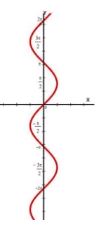
Identify the graph above
y = sin-1x
y = cos-1x
y = sin x
y = cos x
34.
Let A = {1, 2, 3, 4} and let R = {(2, 2), (3, 3), (4, 4), (1, 2)} be a relation on A. Then, R is
Symmetric
Transitive
Reflexive
Equivalence relation
35.
If f : R ⟶ R be given by f (x) = (3 − x3 )\(\frac13\) , then fof (x) is
x\(\frac13\)
x3
x
(3 – x3).
36.
The domain of the function y = sin-1(x2) is
[0, 1]
(0, 1)
[-1, 1]
Φ
37.
Given set A ={1, 2, 3} and a relation R = {(1, 2), (2, 1)}, the relation R will be
reflexive if (1, 1) is added
symmetric if (2, 3) is added
transitive if (1, 1) is added
symmetric if (3, 2) is added
38.
Students of a school are taken to a railway museum to learn about railways heritage and its history.
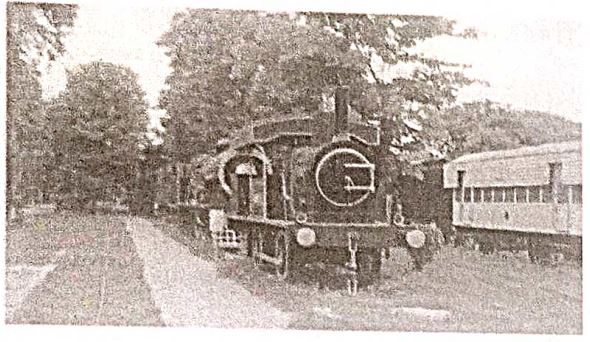
An exhibit in the museum depicted many rail lines on the track near the railway station. Let L be the set of all rail lines on the railway track and R be the relation on L defined by
R = {(l1, l2) : l1 is parallel to l2}
On the basis of the above information, answer the following questions.
(i) Find whether the relation R is symmetric or not.
(ii) Find whether the relation R is transitive or not.
(iii) If one of the rail lines on the railway track is represented by the equation y = 3x + 2, then find the set of rail lines in R related to it.
Or
Let S be the relation defined by S= ((l1,l2) : l1 is perpendicular to l2) check whether the relation S is symmetric and transitive.
39.
If \(A=\left[a_{i j}\right]_{m \times n} \text { and } B=\left[b_{i j}\right]_{m \times n}\) are two matrices, then \(A \pm B\) is of order m x n and is defined as \((A \pm B)_{i j}=a_{i j} \pm b_{i j}\), where i = 1,2, , m and j = 1,2, ..., n
If \(A=\left[a_{i j}\right]_{m \times n} \text { and } B=\left[b_{j k}\right]_{n \times p}\) are two matrices, then AB is of order m x p and is defined as \((A B)_{i k}=\sum_{r=1}^{n} a_{i r} b_{r k}=a_{i 1} b_{1 k}+a_{i 2} b_{2 k}+\ldots . .+a_{i n} b_{n k}\)
Consider \(A=\left[\begin{array}{cc} 2 & -1 \\ 3 & 4 \end{array}\right], B=\left[\begin{array}{ll} 5 & 2 \\ 7 & 4 \end{array}\right], C=\left[\begin{array}{ll} 2 & 5 \\ 3 & 8 \end{array}\right] \text { and } D=\left[\begin{array}{ll} a & b \\ c & d \end{array}\right]\)
Using the concept of matrices answer the following questions.
(i) Find the product AB.
| (a) \(\left[\begin{array}{cc} 3 & 0 \\ 43 & 22 \end{array}\right]\) | (b) \(\left[\begin{array}{cc} 0 & 3 \\ 22 & 43 \end{array}\right]\) | (c) \(\left[\begin{array}{cc} 43 & 22 \\ 0 & 3 \end{array}\right]\) | (d) \(\left[\begin{array}{cc} 22 & 43 \\ 3 & 0 \end{array}\right]\) |
(ii) If A and B are any other two matrices such that AB exists, then
| (a) BA does not exist | (b) BA will be equal to AB | (c) BA mayor may not exist | (d) None of these |
(iii) Find the values of a and c in the matrix D such than CD - AB = 0.
| (a) a = 77, c=-191 | (b) a = -191, c=77 | (c) a = 191, c=77 | (d) a = 91, c = 70 |
(iv) Find the values of band d in the matrix D such that CD - AB = 0.
| (a) b = 44, d = -110 | (b) b = 110, d = 44 | (c) b = -110, d = 44 | (d) b = -44, d = 110 |
(v) Find B + D.
| (a) \(\left[\begin{array}{cc} 80 & 200 \\ 115 & 105 \end{array}\right]\) | (b) \(\left[\begin{array}{cc} 84 & 48 \\ 180 & 181 \end{array}\right]\) | (c) \(\left[\begin{array}{ll} 186 & 108 \\ -84 & -48 \end{array}\right]\) | (d) \(\left[\begin{array}{cc} -186 & -108 \\ 84 & 48 \end{array}\right]\) |
1.
Since the school is boys school, no student of the school can be sister of any student of the school. Hence, R = Ф, showing that R is the empty relation. It is also obvious that the difference between heights of any two students of the school has to be less than 3 meters. This shows that R ' = A × A is the universal relation.
2.
Here, \(\left|\begin{array}{lll} 1 & 0 & 0 \\ 0 & 1 & 0 \\ 0 & 0 & 1 \end{array}\right|\)
Minors of elements of first row are
\(M_{11}=\left|\begin{array}{ll} 1 & 0 \\ 0 & 1 \end{array}\right|=1-0=1, \quad M_{12}=\left|\begin{array}{ll} 0 & 0 \\ 0 & 1 \end{array}\right|=0-0=0\)
and \(M_{13}=\left|\begin{array}{ll}0 & 1 \\ 0 & 0\end{array}\right|=0-0=0\)
Minors of elements of second row are
\(\begin{aligned} & M_{21}=\left|\begin{array}{ll} 0 & 0 \\ 0 & 1 \end{array}\right|=0-0=0 \\ & M_{22}=\left|\begin{array}{ll} 1 & 0 \\ 0 & 1 \end{array}\right|=1-0=1 \text { and } M_{23}=\left|\begin{array}{ll} 1 & 0 \\ 0 & 0 \end{array}\right|=0-0=0 \end{aligned}\)
Minors of elements of third row are
\(\begin{aligned} & M_{31}=\left|\begin{array}{ll} 0 & 0 \\ 1 & 0 \end{array}\right|=0-0=0 M_{32}=\left|\begin{array}{ll} 1 & 0 \\ 0 & 0 \end{array}\right|=0-0=0 \text { and } M_{33}=\left|\begin{array}{ll} 1 & 0 \\ 0 & 1 \end{array}\right|=1-0=1 \end{aligned}\)
Hence, cofactors of elements of first row are
\(A_{11}=(-1)^{1+1} M_{11}=1 \times 1=1, A_{12}=(-1)^{1+2} M_{12}=-1 \times 0=0 \)
\(A_{13}=(-1)^{1+3} M_{13}=1 \times 0=0\)
cofactors of elements of second row are
\( A_{21}=(-1)^{2+1} M_{21}=1 \times 0=0, A_{22}=(-1)^{2+2} M_{22}=1 \times 1=1 \)
\(A_{23}=(-1)^{2+3} M_{23}=-1 \times 0=0 \)
Coafactors of elements of third row are
\( A_{31}=(-1)^{3+1} M_{31}=1 \times 0=0, A_{32}=(-1)^{3+2} M_{32}=-1 \times 0=0 \)
\(A_{33}=(-1)^{3+3} M_{33}=1 \times 1=1 \)
Here, \(\left|\begin{array}{ccc} 1 & 0 & 4 \\ 3 & 5 & -1 \\ 0 & 1 & 2 \end{array}\right|\)
Minors of elements of first row are
\(M_{11}=\left|\begin{array}{cc} 5 & -1 \\ 1 & 2 \end{array}\right|=10+1=11, M_{12}=\left|\begin{array}{cc} 3 & -1 \\ 0 & 2 \end{array}\right|=6-0=6 \text { and } M_{13}=\left|\begin{array}{ll} 3 & 5 \\ 0 & 1 \end{array}\right|=3-0=3\)
Minors of elements of second row are
\(M_{21}=\left|\begin{array}{ll} 0 & 4 \\ 1 & 2 \end{array}\right|=0-4=-4 \)
\(M_{22}=\left|\begin{array}{ll} 1 & 4 \\ 0 & 2 \end{array}\right|=2-0=2 \text { and } M_{23}=\left|\begin{array}{ll} 1 & 0 \\ 0 & 1 \end{array}\right|=1-0=1\)
Minors of elements of third row are
\(\begin{aligned} & M_{31}=\left|\begin{array}{cc} 0 & 4 \\ 5 & -1 \end{array}\right|=0-20=-20 \\ & M_{32}=\left|\begin{array}{cc} 1 & 4 \\ 3 & -1 \end{array}\right|=-1-12=-13 \text { and } M_{33}=\left|\begin{array}{ll} 1 & 0 \\ 3 & 5 \end{array}\right|=5-0=5 \end{aligned}\)
Hence, cofactors of elements of first row are
\(A_{11}=(-1)^{1+1} M_{11}=1 \times 11=11, A_{12}=(-1)^{1+2} M_{12}=-1 \times 6=-6 \)
\(A_{13}=(-1)^{1+3} M_{13}=1 \times 3=3\)
cofactors of elements of second row are
\(A_{21}=(-1)^{2+1} M_{21}=-1 \times-4=4, A_{22}=(-1)^{2+2} M_{22}=1 \times 2=2 \)
\(A_{23}=(-1)^{2+3} M_{23}=1 \times 1=-1\)
Coafactors of elements of third row are
\(A_{31}=(-1)^{3+1} M_{31}=1 \times-20=-20 \)
\( A_{32}=(-1)^{3+2} M_{32}=-1 \times-13=13 \)
\( A_{33}=(-1)^{3+3} M_{33}=1 \times 5=5\)
3.
We have, \(2 X+3 Y=\left[\begin{array}{ll}2 & 3 \\ 4 & 0\end{array}\right]\) and
\(3 X+2 Y=\left[\begin{array}{rr} 2 & -2 \\ -1 & 5 \end{array}\right]\)
On multiplying Eq. (i) by 2 and Eq. (ii) by 3 , we get
\(4 X+6 Y=\left[\begin{array}{ll} 4 & 6 \\ 8 & 0 \end{array}\right]\) and \( 9 X+6 Y=\left[\begin{array}{rr}6 & -6 \\ -3 & 15\end{array}\right]\)
On subtracting Eq. (iii) from Eq. (iv), we get
\( (9 X+6 Y)-(4 X+6 Y)=\left[\begin{array}{rr} 6 & -6 \\ -3 & 15 \end{array}\right]-\left[\begin{array}{ll} 4 & 6 \\ 8 & 0 \end{array}\right] \)
\(\Rightarrow 9 X+6 Y-4 X-6 Y=\left[\begin{array}{rr} 6-4 & -6-6 \\ -3-8 & 15-0 \end{array}\right]=\left[\begin{array}{rr} 2 & -12 \\ -11 & 15 \end{array}\right] \)
\(\Rightarrow X=\frac{1}{5}\left[\begin{array}{rr}2 & -12 \\ -11 & 15\end{array}\right]=\left[\begin{array}{cc}\frac{2}{5} & \frac{-12}{5} \\ \frac{-11}{5} & 3\end{array}\right]\)
On substituting the value of X in Eq. (i), we get
\( \Rightarrow\left[\begin{array}{cc} \frac{2}{5} & \frac{-12}{5} \\ \frac{-11}{5} & 3 \end{array}\right]+3 Y=\left[\begin{array}{cc} 2 & 3 \\ 4 & 0 \end{array}\right] \)
\(\Rightarrow \left[\begin{array}{cc} \frac{4}{5} & \frac{-24}{5} \\ \frac{-22}{5} & 6 \end{array}\right]+3 Y=\left[\begin{array}{cc} 2 & 3 \\ 4 & 0 \end{array}\right] \)
\(\Rightarrow Y=\frac{1}{3}\left[\begin{array}{cc} 2-\frac{4}{5} & 3+\frac{24}{5} \\ 4+\frac{22}{5} & 0-6 \end{array}\right]\)
\(\Rightarrow Y=\frac{1}{3}\left[\begin{array}{cc} \frac{6}{5} & \frac{39}{5} \\ \frac{42}{5} & -6 \end{array}\right]=\left[\begin{array}{cc} \frac{2}{5} & \frac{13}{5} \\ \frac{14}{5} & -2 \end{array}\right] \)
4.
\(\sin ^{-i}\left[\cos \left(\frac{33 \pi}{5}\right)\right]=\sin ^{-1}\left[\cos \left(6 \pi+\frac{3 \pi}{5}\right)\right] \)
\(=\sin ^{-1}\left[\cos \frac{3 \pi}{5}\right] \quad[\because \cos (2 n \pi+\theta)=\cos \theta] \)
\(=\sin ^{-1}\left[\cos \left(\frac{\pi}{2}+\frac{\pi}{10}\right)\right]=\sin ^{-1}\left[-\sin \left(\frac{\pi}{10}\right)\right] \)
\(=-\sin ^{-1}\left(\sin \frac{\pi}{10}\right) \quad[1]\)
\(=-\frac{\pi}{10} \quad\left[\because \sin ^{-1}(\sin x)=x, x \in\left[-\frac{\pi}{2}, \frac{\pi}{2}\right]\right][1] \)
5.
|3A|=108
Alternative Method:
|kA|=kn|A|
⇒ |3A|=33(4)
=27(4)
=108
6.
Any square matrix can be expressed
\(A=\frac{1}{2}\left(A+A^{\prime}\right)+\frac{1}{2}\left(A-A^{\prime}\right)\)
we know that (A + A′) is a symmetric matrix and (A – A′) is a skew symmetric matrix. Since for any matrix A, (kA)′ = kA′, it follows that \(\frac{1}{2}\left(A+A^{\prime}\right)\) is symmetric matrix and \(\frac{1}{2}\left(A-A^{\prime}\right)\) is skew symmetric matrix. Thus, any square matrix can be expressed as the sum of a symmetric and a skew symmetric matrix.
7.
Let y = tan−1(−1)
⇒ tan y = −1
We know that the range of the principal value branch of tan−1x is \(\left(-\frac{\pi}{2}, \frac{\pi}{2}\right) \text {. }\)
\( \Rightarrow \tan y=\tan \left(\frac{-\pi}{4}\right) \)
\(\therefore y=\frac{-\pi}{4} \)
Hence, the principal value of tan−1(−1) is \(\frac{-\pi}{4} \).
8.
\(A=\left[\begin{array}{ccc} 1 & -1 & 2 \\ 3 & 4 & -5 \\ 2 & -1 & 3 \end{array}\right], X=\left[\begin{array}{c} x \\ y \\ z \end{array}\right] \text { and } B=\left[\begin{array}{c} 7 \\ -5 \\ 12 \end{array}\right]\)
\(\text { Now, }|A|=1(12-5)+1(9+10)+2(-3-8)=7+19-22=4 \neq 0\)
\(\text { Now, } A_{11}=7, A_{12}=-19, A_{13}=-11 \)
\(A_{21}=1, A_{22}=-1, A_{23}=-1 \)
\(A_{31}=-3, A_{32}=11, A_{33}=7\)
\(\therefore A^{-1}=\frac{1}{|A|}(\operatorname{adj} A)=\frac{1}{4}\left[\begin{array}{ccc} 7 & 1 & -3 \\ -19 & -1 & 11 \\ -11 & -1 & 7 \end{array}\right] \)
\(\therefore X=A^{-1} B=\frac{1}{4}\left[\begin{array}{ccc} 7 & 1 & -3 \\ -19 & -1 & 11 \\ -11 & -1 & 7 \end{array}\right]\left[\begin{array}{c} 7 \\ -5 \\ 12 \end{array}\right] \)
\(\Rightarrow\left[\begin{array}{l} x \\ y \\ z \end{array}\right]=\frac{1}{4}\left[\begin{array}{c} 49-5-36 \\ -133+5+132 \\ -77+5+84 \end{array}\right] \)
\(=\frac{1}{4}\left[\begin{array}{l} 8 \\ 4 \\ 12 \end{array}\right]=\left[\begin{array}{l} 2 \\ 1 \\ 3 \end{array}\right]\)
Hence, x = 2, y = 1and z = 3
9.
Let \(x_{1}, x_{2} \in\left[0, \frac{\pi}{2}\right],\) such that \(x_{1} \neq x_{2}\)
Then, \(\sin x_{1} \neq \sin x_{2}\) and \(\cos x_{1} \neq \cos x_{2}\)
\(\cos x_{1} \neq \cos x_{2}\) for any two distinct values x in \(\cos x_{1} \neq \cos x_{2}\)
since function cannot give same value.
This is also true for cosine function] Hence, f and g must be one-one.
\(\left[\because a_{1} \neq a_{2} \Rightarrow f\left(a_{1}\right) \neq f\left(a_{2}\right)\right]\)
But \(\left.(f+g)^{*} 0\right)=\sin 0+\cos 0=1\)
and \((f+g)\left(\frac{\pi}{2}\right)=\sin \frac{\pi}{2}+\cos \frac{\pi}{2}=1\)
\(\therefore\) f + g is not one-one.
10.
Given
\({ tan }^{ -1 }\left( \frac { 1-x }{ 1+x } \right) =\frac { 1 }{ 2 } { tan }^{ -1 }x\)
\(\Rightarrow { tan }^{ -1 }1-{ tan }^{ -1 }x=\frac { 1 }{ 2 } { tan }^{ -1 }x\)
\(\Rightarrow \frac { 3 }{ 2 } { tan }^{ -1 }x=\frac { \pi }{ 4 } \)
\(\Rightarrow { tan }^{ -1 }x=\frac { \pi }{ 6 } \)
\(\Rightarrow x=tan\left( \frac { \pi }{ 6 } \right) \)
\(\therefore x=\frac { 1 }{ \sqrt { 3 } } \)
11.
\(\mathrm{LHS}=(a I+b A)^{3}=\left\{\left[\begin{array}{ll} a & 0 \\ 0 & a \end{array}\right]+\left[\begin{array}{ll} 0 & b \\ 0 & 0 \end{array}\right]\right\}^{3} \)
\(=\left[\left.\begin{array}{ll} a & b \\ 0 & a \end{array}\right|^{3}=\left[\begin{array}{ll} a & b \\ 0 & a \end{array}\right]\left[\begin{array}{ll} a & b \\ 0 & a \end{array}\right]\left[\begin{array}{ll} a & b \\ 0 & a \end{array}\right]\right. \)
\(=\left[\begin{array}{cc} a^{2} & 2 a b \\ 0 & a^{2} \end{array}\right]\left[\begin{array}{ll} a & b \\ 0 & a \end{array}\right]=\left[\begin{array}{cc} a^{3}+0 & a^{2} b+2 a^{2} b \\ 0+0 & 0+a^{3} \end{array}\right]=\left[\begin{array}{cc} a^{3} & 3 a^{2} b \\ 0 & a^{3} \end{array}\right] \)
\(\mathrm{RHS}=a^{3} I+3 a^{2} b A=\left[\begin{array}{cc} a^{3} & 0 \\ 0 & a^{3} \end{array}\right]+\left[\begin{array}{cc} 0 & 3 a^{2} b \\ 0 & 0 \end{array}\right]=\left[\begin{array}{cc} a^{3} & 3 a^{2} b \\ 0 & a^{3} \end{array}\right] \)
\(\mathrm{LHS}=\mathrm{RHS} \)
\(\text {Hence, }(a I+b l)^{3}=a^{3} I+3 a^{2} b A \)
12.
\( \tan ^{-1} \frac{x}{\sqrt{a^2-x^2}} \)
\( \text { Put } x=a \sin \theta \Rightarrow \frac{x}{a}=\sin \theta \Rightarrow \theta=\sin ^{-1}\left(\frac{x}{a}\right) \)
\( \therefore \tan ^{-1} \frac{x}{\sqrt{a^2-x^2}}=\tan ^{-1}\left(\frac{a \sin \theta}{\sqrt{a^2-a^2 \sin ^2 \theta}}\right) \)
\(=\tan ^{-1}\left(\frac{a \sin \theta}{a \sqrt{1-\sin ^2 \theta}}\right)=\tan ^{-1}\left(\frac{a \sin \theta}{a \cos \theta}\right. )\)
\( =\tan ^{-1}(\tan \theta)=\theta=\sin ^{-1} \frac{x}{a} \)
13.
(i) We have
\(\mathrm{A}=\left[\begin{array}{lll}
3 & \sqrt{3} & 2 \\
4 & 2 & 0
\end{array}\right] \Rightarrow \mathrm{A}^{\prime}=\left[\begin{array}{cc}
3 & 4 \\
\sqrt{3} & 2 \\
2 & 0
\end{array}\right] \Rightarrow\left(\mathrm{A}^{\prime}\right)^{\prime}=\left[\begin{array}{lll}
3 & \sqrt{3} & 2 \\
4 & 2 & 0
\end{array}\right]=\mathrm{A}\)
Thus \(\left(\mathrm{A}^{\prime}\right)^{\prime}=\mathrm{A}\)
(ii) We have
\(\mathrm{A}=\left[\begin{array}{lll}
3 & \sqrt{3} & 2 \\
4 & 2 & 0
\end{array}\right], \mathrm{B}=\left[\begin{array}{rrr}
2 & -1 & 2 \\
1 & 2 & 4
\end{array}\right] \Rightarrow \mathrm{A}+\mathrm{B}=\left[\begin{array}{ccc}
5 & \sqrt{3}-1 & 4 \\
5 & 4 & 4
\end{array}\right]\)
Therefore \((A+B)^{\prime}=\left[\begin{array}{cc}
5 & 5 \\
\sqrt{3}-1 & 4 \\
4 & 4
\end{array}\right]\)
Now \(\mathrm{A}^{\prime}=\left[\begin{array}{cc}
3 & 4 \\
\sqrt{3} & 2 \\
2 & 0
\end{array}\right], \mathrm{B}^{\prime}=\left[\begin{array}{rr}
2 & 1 \\
-1 & 2 \\
2 & 4
\end{array}\right] \text {, }\)
So \(A^{\prime}+B^{\prime}=\left[\begin{array}{rr}
5 & 5 \\
\sqrt{3}-1 & 4 \\
4 & 4
\end{array}\right]\)
Thus \((\mathrm{A}+\mathrm{B})^{\prime}=\mathrm{A}^{\prime}+\mathrm{B}^{\prime} \)
(iii) We have
\(k B=k\left[\begin{array}{rrr} 2 & -1 & 2 \\ 1 & 2 & 4 \end{array}\right]=\left[\begin{array}{ccc} 2 k & -k & 2 k \\ k & 2 k & 4 k \end{array}\right]\)
and
\((k B)^{\prime} =\left[\begin{array}{ccc} 2 k & -k & 2 k \\ k & 2 k & 4 k \end{array}\right]^{\prime}=\left[\begin{array}{cc} 2 k & k \\ -k & 2 k \\ 2 k & 4 k \end{array}\right].\)
\(=k\left[\begin{array}{rr} 2 & 1 \\ -1 & 2 \\ 2 & 4 \end{array}\right]=k B^{\prime} \)
Thus, (kB)' = kB'
14.
\( \operatorname{cosec}\left(\sin ^{-1} \frac{1}{5}\right)+\sec \left(\cos ^{-1} \frac{1}{3}\right)\)
\( =\operatorname{cosec}\left(\operatorname{cosec}^{-1} 5\right)+\sec \left(\sec ^{-1} 3\right)\)
\(\left[\because \sin ^{-1} \frac{1}{x}=\operatorname{cosec}^{-1} x \text { and } \cos ^{-1} \frac{1}{x}=\sec ^{-1} x\right] \)
\(=5+3=8 \quad\left[\because \operatorname{cosec}\left(\operatorname{cosec}^{-1} x\right)=x \text { and } \sec \left(\sec ^{-1} x\right)=x\right] \)
15.
Set A is the set of all books in the library of a college.
R = {x, y): x and y have the same number of pages}
Now, R is reflexive since (x, x) ∈ R as x and x has the same number of pages.
Let (x, y) ∈ R ⇒ x and y have the same number of pages.
⇒ y and x have the same number of pages.
⇒ (y, x) ∈ R
∴ R is symmetric.
Now, let (x, y) ∈R and (y, z) ∈ R.
⇒ x and y and have the same number of pages and y and z have the same number of pages.
⇒ x and z have the same number of pages.
⇒ (x, z) ∈ R
∴ R is transitive.
Hence, R is an equivalence relation.
16.
Let \(x_{ 1 },x_{ 2 }\in R\).
Now \(f(x_{ 1 })=f(x_{ 2 })\Rightarrow cosx_{ 1 }=cosx_{ 2 }\)
\(\Rightarrow \) \(x_{ 1 }=(2n\pi +x_{ 2 })\)
\(\Rightarrow \) '\(f\)' is not one-one.
(ii) Since cos \(x\) lies in [-1,1],
\(\therefore \) R is not fully covered.
Hence, '\(f\)' is not onto.
17.
\(\left| \begin{matrix} x & a & x+a \\ y & b & y+b \\ z & c & z+c \end{matrix} \right| \)
= \(\left| \begin{matrix} x & a & a \\ y & b & b \\ z & c & c \end{matrix} \right|\)
= 0
18.
(d)
\(\left[\begin{array}{ll}1 & 0 \\ 0 & 1\end{array}\right] \)
19.
(b)
AB =-BA
20.
(b)
\(\left[\begin{array}{cc}-6 & -8 \\ -10 & -4\end{array}\right]\)
21.
(a)
|A|3
22.
(d)
\((A+B)^{-1}=A^{-1}+B^{-1}\)
23.
(c)
\(\left[\begin{array}{rr} 4 & -2 \\ -3 & 1 \end{array}\right]\)
24.
From the option, we can see only option (a) satisfy both the equations
25.
Clearly,
\( f(a) =\left|\begin{array}{ccc} 0 & 0 & a-b \\ 2 a & 0 & a-c \\ a+b & a+c & 0 \end{array}\right| \)
\(=[(a-b)\{2 a \cdot(a+c)\}] \neq 0 \)
\( \therefore \ f(b) =\left|\begin{array}{ccc} 0 & b-a & 0 \\ b+a & 0 & b-c \\ 2 b & b+c & 0 \end{array}\right|\)
\( =-(b-a)[2 b(b-c)] \)
\( =-2 b(b-a)(b-c) \neq 0 \)
26.
(a)
\(\left[\begin{array}{cc}a^{2}+b^{2} & 0 \\ 0 & a^{2}+b^{2}\end{array}\right]\)
27.
The number of elements in m x n matrix is equal to mn.
28.
(a)
0
29.
Cosine functions respected to any interval \(\left[-\pi, 0]\right.\)
30.
Total number of functions = (n(B)n(A) = 2n. Clearly a function will not be onto if all elements of A map to either a or b.
31.
(c)
i f 1
32.
(c)
-\(\sqrt3\)/2
33.
(a)
y = sin-1x
34.
(b)
Transitive
35.
(c)
x
36.
As -1 ≤ -x² < 1
⇒ 1 ≥ x² ≥ -1
⇒ 0 ≤ x² ≤ 1
⇒ |x| ≤ 1
⇒ -1 ≤ x ≤ 1.
37.
Here (1,2) e R, (2,1) € R, if transitive (1,1) should belong to R.
38.
We have, R = {(l1,l2) :l1 is parallel to l2}
(i) If l1 is parallel to l2, then l2 is parallel to l1.
So, if (l1, l2) \(\in R,\) then (l2, l1) \(\in R\)
\(\therefore\) R is symmetric.
(ii) If l1 is parallel to l2 and l2 is parallel to l3, then l1 is parallel to l3.
So, if \(\left(l_1, l_2\right) \in R,\left(l_2, l_3\right) \in R\), then (l1,l3)\(\in R\)
\(\therefore\) R is transitive.
(iii) Let equation of line parallel to y = 3x + 2 be y = mx + c, where m is the slope of line. Since, y = 3x + 2 and y = mx + c are parallel. Slope of (y =3x + 2) = Slope of(y = mx + c)
\(\Rightarrow\) 3 = m i.e. m = 3
Hence, the required line is
y = 3x + c, where c \(\in R\)
Or
We have, S = {(I1, I2) : l1 is perpendicular to l2}
For Symmetric If I1, is perpendicular to I2, then l2 is perpendicular to l1.
So, if (l1,l2) \(\in S\), then (l2, l1) \(\in S\)
\(\therefore\) S is symmetric.
For Transitive If I1, is perpendicular to l2, and l2, is perpendicular to l3, then I1, is not perpendicular to l3, it is parallel to I3.
So, if \(\left(l_1, l_2\right) \in S,\left(l_2, l_3\right) \in S \text {, then }\left(l_1, l_3\right) \notin S \text {. }\)
\(\therefore\) S is not transitive.
39.
(i) (a) : \(A B=\left[\begin{array}{cc} 2 & -1 \\ 3 & 4 \end{array}\right]\left[\begin{array}{ll} 5 & 2 \\ 7 & 4 \end{array}\right]\)
\(=\left[\begin{array}{cc} 10-7 & 4-4 \\ 15+28 & 6+16 \end{array}\right]=\left[\begin{array}{cc} 3 & 0 \\ 43 & 22 \end{array}\right]\)
(ii) (c)
(iii) (b) : We have, CD - AB = 0
\(\Rightarrow\left[\begin{array}{ll} 2 & 5 \\ 3 & 8 \end{array}\right]\left[\begin{array}{ll} a & b \\ c & d \end{array}\right]-\left[\begin{array}{cc} 3 & 0 \\ 43 & 22 \end{array}\right]=\left[\begin{array}{ll} 0 & 0 \\ 0 & 0 \end{array}\right]\)
\(\Rightarrow\left[\begin{array}{ll} 2 a+5 c & 2 b+5 d \\ 3 a+8 c & 3 b+8 d \end{array}\right]-\left[\begin{array}{cc} 3 & 0 \\ 43 & 22 \end{array}\right]=\left[\begin{array}{ll} 0 & 0 \\ 0 & 0 \end{array}\right]\)
\(\Rightarrow\left[\begin{array}{cc} 2 a+5 c-3 & 2 b+5 d \\ 3 a+8 c-43 & 3 b+8 d-22 \end{array}\right]=\left[\begin{array}{ll} 0 & 0 \\ 0 & 0 \end{array}\right]\)
By equality of matrices, we get 2a + 5c - 3 = 0 ...(i)
3a + 8c - 43 = 0 ...(ii)
2b + 5d = 0 ...(iii)
3b + 8d - 22 = 0 ...(iv)
Solving (i) and (ii), we get a = -191, e = 77
(iv) (c) : Solving (iii) and (iv), we get b = -110, d = 44
(v) (d) : Wehave, \(B+D=\left[\begin{array}{ll} 5 & 2 \\ 7 & 4 \end{array}\right]+\left[\begin{array}{cc} -191 & -110 \\ 77 & 44 \end{array}\right]\)
\(=\left[\begin{array}{cc} -186 & -108 \\ 84 & 48 \end{array}\right]\)

12th Standard CBSE Syllabus & Materials
12th Standard CBSE
CBSE 12th Computer Science Python Revision Tour I - New Previous year Question Papers Study Material - QB365 Set A
NEW12th Standard CBSE
CBSE 12th Business Studies Planning Important Questions And Answers Study Material - QB365 Set A
NEW12th Standard CBSE
CBSE 12th Business Studies Business Environment Important Questions And Answers Study Material - QB365 Set A
NEW12th Standard CBSE
CBSE 12th Business Studies Principles of Management Important Questions And Answers Study Material - QB365 Set A



NCERT Books

Syllabus

Exam Pattern

Sample Question Papers

Previous year Question Papers

Important Notes

MCQ Practice test

NCERT Exemplers

Case study Questions

Image Based Questions

Passage based Questions

HOT Questions

Value Based Questions

Model Questions Papers
NCERT ( Book Back ) Questions

Assertion and Reason
Important Questions And Answers

CBSE 12th Standard CBSE Subjects
CBSE Standards








