
 100% FREE ACCESS
12th Standard CBSE Syllabus & Materials
12th Standard CBSE
CBSE 12th Economics Government Budget and the Economy Previous year Question Papers Study Material - QB365 Set A
NEW12th Standard CBSE
CBSE 12th Computer Science Interface Python with MySQL - New Previous year Question Papers Study Material - QB365 Set A
NEW12th Standard CBSE
CBSE 12th Computer Science Database Concept - New Previous year Question Papers Study Material - QB365 Set A
NEW12th Standard CBSE
CBSE 12th Computer Science Data Communication - New Previous year Question Papers Study Material - QB365 Set A
NEW12th Standard CBSE
CBSE 12th Computer Science Data Structures - New Previous year Question Papers Study Material - QB365 Set A
NEW12th Standard CBSE
CBSE 12th Computer Science Functions - New Previous year Question Papers Study Material - QB365 Set A

Published on: 25/10/2025
Download CBSE Class 12th Standard CBSE Maths question papers, sample papers, important questions, and previous year solved papers in PDF format. Get free study materials, NCERT solutions, and exam preparation resources for Class 12th Standard CBSE Maths
Questions + Answers key
Take MCQ Maths Test
1.
Let A = {1,2,3}, B = {4,5,6, 7) and let f = {(1, 4), (2, 5), (3,6)} be a function from A to B. Based on the given information f is best defined as
surjective function
injective function
bijective function
None of the above
2.
The function f : R→ R defined as f(x) = x³ is
one-one but not onto
not one-one but onto
neither one-one nor onto
both one-one and onto
3.
Let the relation R in the set A = {x ∈ Z : 0 ≤ x ≤ 12}, given by R = {(a, b): ab is a multiple of 4}. Then [1], the equivalence class containing 1, is
{1, 5, 9}
{0,1,2,5}
ф
A
4.
A relation R in set A = {1,2,3} is defined as R = {(1,1), (1, 2), (2, 2), (3, 3)}. Which of the following ordered pair in R shall be removed to make it an equivalence relation in A?
(1, 1)
(1, 2)
(2, 2)
(3, 3)
5.
Let A (3,5). Then, number of reflexive relations on A is
2
4
0
8
6.
Select the correct option out of the four given options
Let R be a relation in the set N given by
R = {(a, b):ab - 2,b > 6}
Then,
(8, 7) ∈ R
(6,8) ∈ R
(3,8) ∈ R
(2,4) ∈ R
7.
Let the function 'f' be defined by \(f(x)=5 x^{2}+2, \forall x \in R\) Then f' is
onto function
one-one, onto function
one-one, into function
many-one, into function
8.
If f(x) = x3 and g(x) = cos 3x , then fog is
x3.cos 3x
cos 3x3
cos3 3x
3cos x3
9.
A relation defined in a non-empty set A, having n elements, has
n relations
2 relations
n2 relations
2n2 relations
10.
Let the function 'f' : N \(\rightarrow\) N be defined by \(f(x)= {2} x+3, \forall x \in N \text { . Then } f^{\prime \prime} \text { is }\)
not onto
bijective function
many-one, into function
none of these
11.
Let A = {a, b}. Then number of one-one functions from A to A possible are
2
4
1
3
12.
\(Let f(x)=\left\{\begin{array}{ll}-1, & x<0 \\ 0, & x=0 \text { and } g(x)=1+x-[x]\end{array}\right.\)
where [x] denotes the greatest integer less than or equal to x. Then, for all x, f(g(x)) is equal to
x
1
g(x)
f(x)
13.
If f: R \(\rightarrow\) R and g: R \(\rightarrow\) R are given by \(f(x)=\cos x \) and \( g(x)=3 x^{2}\), then
\( \operatorname{gof}(x)=\cos ^{2} x\)
\(\operatorname{fog}(x)=\cos x^{2}\)
\(gof \neq fog\)
\( f o g=g o f\)
14.
The greatest integer function : R ➝R, given by [(x) = [x] is
one-one
onto
both one-one and onto
neither one-one nor onto
15.
If the set A contains 5 elements and the set B contains 6 elements, then the number of one-one and onto mappings from A to B is
720
120
0
None of these
16.
Let A = {1, 2, 3, ... , n} and B = {a, b}. Then the number of surjections from A into B is
nP2
2n-2
2n -1
None of these
17.
The number of all one-one functions from set A = {1, 2, 3} to itself is
2
6
3
1
18.
f : X⟶Y is onto, if and only if
range of f = Y
range of f ≠ Y
range of f < Y
range of f ≥Y
19.
If A = {x ∈ Z : 0 ≤ x ≤ 12}and R is the relation in A given by R = {(a, b): a = b}. Then, the set of all elements related to 1 is
{1, 2}
{2, 3}
{1}
{2}
20.
For the set A = {1, 2, 3}, define a relation R in the set A as follows
R = {(1, 1), (2,2), (3, 3), (1, 3)}
Then, the ordered pair to be added to R to make it the smallest equivalence relation is
(1, 3)
(3, 1)
(2, 1)
(1, 2)
21.
The relation R in the set of natural numbers N defined as R = {(x, y) : y = x + 5 and x < 4} is
reflexive
symmetric
transitive
None of these
22.
If a relation R on the set {1,2, 3} be defined by R = {(1, 2)}, then R is
reflexive
transitive
symmetric
None of these
23.
A relation f from C to R is defined by \(x f y \Leftrightarrow|x|=y\).Then, the correct option is
(2+i)f3
3f(-3)
i f 1
(2 +3i) f 13
24.
Let R be an equivalence relation on Z, the set of integers. R = { (a,b): a,b ∈ Z and a – b is a multiple of 3 } The Equivalence class of [1] is
{..-7,-4,2,5,8,.}
{.-4,-1,2,5,8,.}
{.-4,-1,2,5,8,.}
{…..-5,-2,1,4,7,.}
25.
Let R = {(3, 3), (6, 6), (9, 9), (12, 12), (6, 12), (3, 9), (3, 12), (3, 6)} be a relation on the set A = {3, 6, 9, 12}. Then, R is
Symmetric only
An equivalence relation
Reflexive and symmetric only
Reflexive and transitive only
26.
Let R be a relation on N (set of natural numbers) such that (m, n) R (p, q)mq(n + p) = np(m + q). Then, R is
An Equivalence Relation
Only Reflexive
Symmetric and reflexive
Only Transitive
27.
Let R be a relation on a finite set A having n elements. Then, the number of relations on A is
n x n
2n
n2
2nxn
28.
If R be a relation “less than” from set A = {1, 2, 3, 4} to B = {1, 3, 5}, i.e. (a, b) ∈ R if a < b, if (b,a) ∈ R-1elements in R-1 are
{(3, 3), (3, 5), (5, 3), (5, 5)}
{(3, 1), (5, 1), (3, 2), (5, 2), (5, 3), (5, 4)}
{(3, 3), (3, 4), (4, 5)}
{(1, 3), (1, 5), (2, 3), (2, 5), (3, 5), (4, 5)}
29.
Let R be a relation on N, set of natural numbers such that m R n ⇔ m divides n. Then R is
Reflexive and symmetric
Neither reflexive nor transitive
Reflexive and transitive
Symmetric and transitive
30.
Let A = {1,2,3,4} and B = {x,y,z}. Then R = {(1,x) , ( 2,z), (1,y), (3,x)} is
relation from B to A
Is not a relation
relation from A to B
relation from B to B
31.
Let C = {(a, b): a2 + b2 = 1; a, b ∈ R} a relation on R, set of real numbers. Then C is
Equivalence relation
Reflexive
Transitive
Symmetric
32.
Let R be a relation on set A of triangles in a plane. R = { (T1 , T2) : T1, T2 element of A and T1 is congruent to T2} Then the relation R is ______
Equivalence relation
Transitive
Symmetric
Reflexive
33.
Let A = {1,2,3,4,5,6,7}. P={1,2}, Q = {3, 7}. Write the elements of the set R so that P, Q and R form a partition that results in equivalence relation
{4,5,6}
{0}
{1,2,3,4,5,6,7}
{ }
34.
Let R be the relation on the set {1, 2, 3, 4} given by R = {(1, 2), (2, 2), (1, 1), (4, 4), (1, 3), (3,3), (3,2)}. then R is
R is reflexive and symmetric but not transitive.
R is symmetric and transitive but not reflexive.
R is an equivalence relation.
R is reflexive and transitive but not symmetric
35.
If A = {1, 2, 3, 4} and B = {1, 3, 5} and R is a relation from A to B defined by (a, b) ∈ element of R ⇔ a < b. Then, R = ?
{(2, 3), (4, 5), (1, 3), (2, 5)}
{(1, 3), (1, 5), (2, 3), (2, 5), (3, 5), (4, 5)}
{(2, 3), (4, 5), (1, 3), (2, 5), (5, 3)}
{(5, 3), (3, 5), (5, 4), (4, 5)}
36.
In the set N x N the relation R is defined by (a, b) R (c, d) ⇔ ad = bc. Then R is
symmetric and transitive but not reflexive
reflexive and transitive but not symmetric
Equivalence relation
Partial order relation
37.
If A = {1,3,5,7} and define a relation, such that R = { (a,b) a,b ∈ A : |a+b| = 8}. Then how many elements are there in the relation R
8
16
1
4
38.
If A = {1,3,5,7} and we define a relation R = {(a,b), a,b ∈ A:|a - b| = 8} Then the number of elements in the relation R is
2
1
3
0
39.
Let A = {1, 2, 3, 4} and let R = {(2, 2), (3, 3), (4, 4), (1, 2)} be a relation on A. Then, R is
Symmetric
Transitive
Reflexive
Equivalence relation
40.
For real number x and y, we write xRy ⇔ x - y + \(\sqrt2\) irrational number. Then the relation R is
Reflexive
Symmetric
Transitive
Equivalence
41.
Let a relation T on the set R of real numbers be T = { (a,b) : 1 + ab < 0, a,∈R}. Then from among the ordered pairs (1,1) (1,2)(1,-2)(2,2), the only pair that belongs to T is________.
(1,-2)
(1,2)
42.
Let R = { (P,Q) : OP = OQ , O being the origin} be an equivalence relation on A . The equivalence class [( 1,2)] is
{(x, y): x2 + y2 = 5}
{(x, y): x2 = y2}
{(x, y): x2 + y2 = 1}
{(x, y): x2 + y2 = 4}
43.
Let A = {1, 2, 3}. Then number of equivalence relations containing (1, 2) is
1
2
3
4
44.
Let A = {1, 2, 3}. Then number of relations containing (1, 2) and (1, 3) which are reflexive and symmetric but not transitive is
1
2
3
4
45.
Let f : R ➝ R be defined as f (x) = 3x. Choose the correct answer
f is one-one onto
f is many-one onto
f is one-one but not onto
f is neither one-one nor onto
46.
Let f : R ⟶ R be defined as f(x) = x4. Choose the correct answer
f is one-one onto
f is many-one onto
f is one-one but not onto
f is neither one-one nor onto
47.
Let R be the relation in the set N given by R = {(a, b): a = b − 2, b > 6}. Choose the correct answer.
(2, 4)∈ R
(3, 8) ∈ R
(6, 8)∈ R
(8, 7) ∈ R
48.
Given a function lf as f(x) = 5x + 4, x ∈ R. If g : R → R is inverse of function ‘f then
g(x) = 4x + 5
g(x) = \(\frac{5}{4x-5}\)
g(x) = \(\frac{x-4}{5}\)
g(x) = 5x – 4
49.
Set A has 3 elements and the set B has 4 elements. Then the number of injective functions that can be defined from set A to set B is
144
12
24
64
50.
A relation S in the set of real numbers is defined as xSy ⇒ x – y+ \(\sqrt3\) is an irrational number, then relation S is
reflexive
reflexive and symmetric
transitive
symmetric and transitive
51.
Given set A = {a, b, c). An identity relation in set A is
R = {(a, b), (a, c)}
R = {(a, a), (b, b), (c, c)}
R = {(a, a), (b, b), (c, c), (a, c)}
R= {(c, a), (b, a), (a, a)}
52.
Given set A ={1, 2, 3} and a relation R = {(1, 2), (2, 1)}, the relation R will be
reflexive if (1, 1) is added
symmetric if (2, 3) is added
transitive if (1, 1) is added
symmetric if (3, 2) is added
53.
Given triangles with sides T1 : 3, 4, 5; T2 : 5, 12, 13; T3 : 6, 8, 10; T4 : 4, 7, 9 and a relation R in set of triangles defined as R = {(Δ1, Δ2) : Δ1 is similar to Δ2}. Which triangles belong to the same equivalence class?
T1 and T2
T2 and T3
T1 and T3
T1 and T4
54.
Let R be a relation on the set L of lines defined by l1 R l2 if l1 is perpendicular to l2, then relation R is
reflexive and symmetric
symmetric and transitive
equivalence relation
symmetric
55.
A general election of Lok Sabha is a gigantic exercise About 911 million people were eligible to vote and voter turnout was about 67%, the highest ever.

Let l be the set of all citizens of India who were eligible to exercise their voting right in general election held in 2019. A relation R is defined on I as follows
R = {(V1,V2) : V1,V2 ∈ l and both use their voting right in general election-2019).
Answer the following questions using the above information.
(i) Two neighbours X and Y ∈ 1. X exercised his voting right while y did not cast her vote in general election-2019. Which of the following is true?
(a) (X, Y) ∈ R
(b) (Y, X) ∈ R
(c) (X, X) ∈ R
(d) (X, Y) ∈ R
(ii) Mr. X and his wife W both exercised their voting right in general election 2019. Which of the following is true?
(a) both (X, W) and (W,X) ∈ R
(b) (X, W) ∈ R but (W,X) ∉ R
(c) both (X, W) and (W,X) ∉ R
(d) (W,X) ∈ R but (X, W) ∉ R
(iii) Three friends F1, F2 and F3 exercised their voting right in general election-2019, then which of the following is true?
(a) \(\left(F_1, F_2\right) \in R,\left(F_2, F_3\right) \in R\) and \(\left(F_1, F_3\right) \in R\)
(b) \(\left(F_1, F_2\right) \in R,\left(F_2, F_3\right) \in R\) and \(\left(F_1, F_3\right) \notin R\)
(c) \(\left(F_1, F_2\right) \in R,\left(F_2, F_2\right) \in R\) but \(\left(F_3, F_3\right) \notin R\)
(d) \(\left(F_1, F_2\right) \notin R,\left(F_2, F_3\right) \notin R\) and \(\left(F_1, F_3\right) \notin R\)
(iv) The above defined relation R is
(a) Symmetric and transitive but not reflexive z
(b) Universal relation
(c) Equivalence relation
(d) Reflexive but not symmetric and transitive
(v) Mr. Shyam exercised his voting right in General Election-2019, then Mr. Shyam is related to which of the following?
(a) All those eligible voters who cast their votes
(b) Family members of Mr.Shyam
(c) All citizens of India
(d) Eligible voters of India
56.
Students of a school are taken to a railway museum to learn about railways heritage and its history.
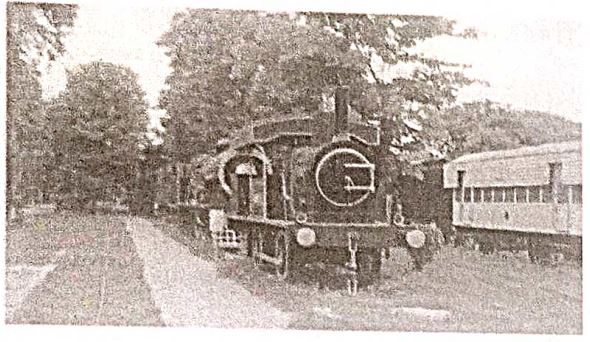
An exhibit in the museum depicted many rail lines on the track near the railway station. Let L be the set of all rail lines on the railway track and R be the relation on L defined by
R = {(l1, l2) : l1 is parallel to l2}
On the basis of the above information, answer the following questions.
(i) Find whether the relation R is symmetric or not.
(ii) Find whether the relation R is transitive or not.
(iii) If one of the rail lines on the railway track is represented by the equation y = 3x + 2, then find the set of rail lines in R related to it.
Or
Let S be the relation defined by S= ((l1,l2) : l1 is perpendicular to l2) check whether the relation S is symmetric and transitive.
57.
Consider the mapping \(f: A \rightarrow B\) is defined by \(f(x)=\frac{x-1}{x-2}\) such that f is a bijection.
Based on the above information, answer the following questions.
(i) Domain of f is
| (a) R - {2} | (b) R | (C) R-{1,2} | (d) R-{0} |
(ii) Range of f is
| (a) R | (b) R -{1} | (C) R-{0} | (d) R-{1,2} |
(iii) If g: \(R-\{2\} \rightarrow R-\{1\}\) is defined by g(x) = 2f(x) - I, then g(x) in terms of x is
| (a) \(\frac{x+2}{x}\) | (b) \(\frac{x+1}{x-2}\) | (c) \(\frac{x-2}{x}\) | (d) \(\frac{x}{x-2}\) |
(iv) The function g defined above, is
| (a) | One-one | (b) Many-one | (c) into | (d) None of these |
(v) A function J(x) is said to be one-one iff
| (a) \(f\left(x_{1}\right)=f\left(x_{2}\right) \Rightarrow-x_{1}=x_{2}\) | (b) \(f\left(-x_{1}\right)=f\left(-x_{2}\right) \Rightarrow-x_{1}=x_{2}\) | (c) \(f\left(x_{1}\right)=f\left(x_{2}\right) \Rightarrow x_{1}=x_{2}\) | (d) None of these |
58.
A relation R on a set A is said to be an equivalence relation on A iff it is
(a) Reflexive i.e.., \((a, a) \in R \ \forall \ a \in A\)
(b) Symmetric i.e., \((a, b) \in R \Rightarrow(b, a) \in R \ \forall \ a, b \in A\)
(c) Transitive i.e., \((a, b) \in R\) and \((b, c) \in R \Rightarrow(a, c) \in R\ \forall\ a, b, c \in A\)
Based on the above information, answer the following questions.
(i) If the relation R = {(1, 1), (1, 2), (1, 3), (2,2), (2, 3), (3,1), (3, 2), (3, 3)} defined on the set A = {1, 2, 3}, then R is
| (a) | reflexive | (b) | symmetric | (c) | transitive | (d) | equivalence |
(ii) If the relation R = {(1, 2), (2,1), (1, 3), (3, I)} defined on the setA = {1, 2, 3}, then R is
| (a) | reflexive | (b) | symmetric | (c) | transitive | (d) | equivalence |
(iii) If the relation R on the set N of all natural numbers defined as R = {(x, y) : y = x + 5 and x < 4}, then R is
| (a) | reflexive | (b) | symmetric | (c) | transitive | (d) | equivalence |
(iv) If the relation R on the set A = {1, 2, 3, , 13, 14}defined as R = {(x, y) : 3x - y = 0}, then R is
| (a) | reflexive | (b) | symmetric | (c) | transitive | (d) | equivalence |
59.
Assertion: Let A = {-1, 1, 2, 3} and B = {1, 4, 9}, where f: A \(\rightarrow\)B given by f(x) = x2, then f is a many-one function.
Reason: If x1 \(\neq\)x2 \(\Rightarrow\) f(x1) \(\neq\)f(x2), for every x1,x2 \(\in\)domain, then f is one-one or else many-one.
(a) Assertion is correct, reason is correct; reason is a correct explanation for assertion.
(b) Assertion is correct, reason is correct; reason is not a correct explanation for assertion.
(c) Assertion is correct, reason is incorrect.
(d) Assertion is incorrect, reason is correct.
60.
Assertion: If f(x) is odd function and g(x) is even function, then f(x) + g(x) is neither even nor odd.
Reason: \(f(x)=\left\{\begin{matrix}
f(x),& f(x) is even\\
-f(x),& f(x) is odd\\
\end{matrix}\right.\)
(a) Assertion is correct, reason is correct; reason is a correct explanation for assertion.
(b) Assertion is correct, reason is correct; reason is not a correct explanation for assertion.
(c) Assertion is correct, reason is incorrect.
(d) Assertion is incorrect, reason is correct.
61.
Assertion: Let L be the set of all lines in a plane and R be the relations in L defined as R = {(L1, L2): L1 is perpendicular to L2}.This relation is not equivalence relation.
Reason: A relation is said to be equivalence relation if it is reflexive,symmetric and transitive.
(a) Assertion is correct, reason is correct; reason is a correct explanation for assertion.
(b) Assertion is correct, reason is correct; reason is not a correct explanation for assertion.
(c) Assertion is correct, reason is incorrect.
(d) Assertion is incorrect, reason is correct.
62.
Assertion: If f is even function, g is odd function, then \(\frac{f}{g}\), (g \(\neq\)0) is an odd function.
Reason: If f(-x)=-f(x) for every x of its domain, then f(x) is called an odd function and if f(-x) = f(x) for every x of its domain, then f(x) is called an even function.
(a) Assertion is correct, reason is correct; reason is a correct explanation for assertion.
(b) Assertion is correct, reason is correct; reason is not a correct explanation for assertion.
(c) Assertion is correct, reason is incorrect.
(d) Assertion is incorrect, reason is correct.
63.
Assertion: f : R \(\rightarrow\) R is a function defined by f(x) = \(\frac{2x+1}{3}\). Then f-1(x) =\(\frac{3x-1}{2}\).
Reason: f(x) is not a bijection.
(a) Assertion is correct, reason is correct; reason is a correct explanation for assertion.
(b) Assertion is correct, reason is correct; reason is not a correct explanation for assertion.
(c) Assertion is correct, reason is incorrect.
(d) Assertion is incorrect, reason is correct.
64.
Assertion: f : R \(\rightarrow\) R defined by f(x) = sin x is a bijection.
Reason: If f is both one-one and onto it is bijection.
(a) Assertion is correct, reason is correct; reason is a correct explanation for assertion.
(b) Assertion is correct, reason is correct; reason is not a correct explanation for assertion.
(c) Assertion is correct, reason is incorrect.
(d) Assertion is incorrect, reason is correct.
1.
(b)
injective function
2.
(d)
both one-one and onto
3.
(a)
{1, 5, 9}
4.
(b)
(1, 2)
5.
(b)
4
6.
(b)
(6,8) ∈ R
7.
(d)
many-one, into function
8.
(c)
cos3 3x
9.
(d)
2n2 relations
10.
(a)
not onto
11.
(a)
2
12.
We know that,
\(0 \leq x-[x]<1, \text { for all } x \in R \)
\(\Rightarrow 1 \leq 1+x-[x]<2 \text { for all } x \in R\)
\(\Rightarrow 15 g(x)<2 \text { for all } x \leq R\)
\(\Rightarrow f(g(x))=1, for \ all \ x \in R\)
\([\because f(x)=1, when x>0]\)
13.
\(\operatorname{gcg} f(x)=3 \cos ^{2} x_{i} f_{0}(x)=\cos 3 x^{2}\)
At X = 0, gof(x) ≠ fog(x)
14.
Range (f) = Integers ee Rand [2,3] = [2,4] = 2
⇒ f is not one-one.
15.
One-one onto mapping is possible only ifn(A) = n(B)
16.
Total number of functions = (n(B)n(A) = 2n. Clearly a function will not be onto if all elements of A map to either a or b.
17.
If n(A) = x and n(B) = y, then number of one-one functions from A to B is given by y Px, where x ≤y.
18.
A function f : A ➝ B is said to be onto, if for every b ∈ B, there exists an element a in A such that f(a) = b
19.
The set of all elements related to 1 is { a ∈ A : a = 1}.
20.
Clearly R is reflexive and transitive. For R to be symmetric we should add (3, 1) in R.
21.
R = {(I,6), (2, 7), (3, 8)}
22.
R does not have elements of the type (a,b) and (b, c).
23.
(c)
i f 1
24.
(d)
{…..-5,-2,1,4,7,.}
25.
(d)
Reflexive and transitive only
26.
(c)
Symmetric and reflexive
27.
(d)
2nxn
28.
(b)
{(3, 1), (5, 1), (3, 2), (5, 2), (5, 3), (5, 4)}
29.
(c)
Reflexive and transitive
30.
(c)
relation from A to B
31.
(d)
Symmetric
32.
(a)
Equivalence relation
33.
(a)
{4,5,6}
34.
(d)
R is reflexive and transitive but not symmetric
35.
(b)
{(1, 3), (1, 5), (2, 3), (2, 5), (3, 5), (4, 5)}
36.
(c)
Equivalence relation
37.
(d)
4
38.
(d)
0
39.
(b)
Transitive
40.
(b)
Symmetric
41.
(c)
(1,-2)
42.
(a)
{(x, y): x2 + y2 = 5}
43.
(b)
2
44.
(a)
1
45.
(a)
f is one-one onto
46.
(d)
f is neither one-one nor onto
47.
(c)
(6, 8)∈ R
48.
y = f(x)
⇒ 5x + 4
⇒ \(\frac{y-4}{5}\)
∴ f-1(y) = \(\frac{y-4}{5}\)
or f-1(x) = \(\frac{x-4}{5}\)
49.
Total injective mappings/functions
= 4 P3 = 4! = 24.
50.
Reflexive, true as x s x ⇒ x - x + \(\sqrt3\)
= \(\sqrt3\) is an irrational number
Symmetric, fase e.g x = \(\sqrt3\), y= 2
x S y ⇒ \(\sqrt3\) - 2 + \(\sqrt3\) = 2 \(\sqrt3\) -2 is an irrational number
but ySx ⇒ 2 - \(\sqrt3\) + \(\sqrt3\) = 2 \(\sqrt3\) -2 is not irrational number
transitive, false e.g = x = 1 + \(\sqrt3\), y = 5 z = 2 \(\sqrt3\)
x S y ⇒ 1 + \(\sqrt3\) - 5 + \(\sqrt3\) = 2 \(\sqrt3\) - 4 is an irrational number
y S z ⇒ 5 -2 \(\sqrt3\) + \(\sqrt3\) = 5 - \(\sqrt3\) is an irrational number
But x S z ⇒ 1 + \(\sqrt3\) - 2 \(\sqrt3\) + \(\sqrt3\) = 1 is an irrational number
51.
A relation R is an identity relation in set A if for all a ∈ A, (a, a) ∈ R.
52.
Here (1,2) e R, (2,1) € R, if transitive (1,1) should belong to R.
53.
T1 and T3 are similar as their sides are proportional.
54.
Not reflexive, as l1 R l2
⇒ l1 ⊥ l1 Not true
Symmetric, true as l1 R l2 ⇒ l2R h
Transitive, false as l1 R l2, l2 R l3
⇒ l1 || l3 . l1 R l2.
55.
(i) (d) Given, R = {(V1,V2) : V1,V2 ∈ l}and both use their voting right in general election-2019. Since, X,Y∈ I⋅X exercised his voting right while Y did not cast her vote in general election-2019.
∴ Clearly, (X,Y)∉R
(ii) (a) Relation is symmetric.
∴(X,W)∈R
⇒(W,X)∈R
(iii) (a) Since, (F,F)∈R,F ∈ I and F use their voting right.
⇒R is reflexive.
⇒(F1,F2)∈R
⇒(F2,F1)∈R
R is symmetric.
and (F1,F2) ∈ R
and (F2,F3) ∈ R
⇒ (F1,F3) ∈ R
(By transitive property)
(iv) (c) Given, relation RR is reflexive, symmetric and transitive.
∴R is equivalence relation.
(v) (a) Clearly, Mr. Shyam exercised his voting right in general election-2019, then Mr. Shyam is related to all those eligible voters who cast their votes.
56.
We have, R = {(l1,l2) :l1 is parallel to l2}
(i) If l1 is parallel to l2, then l2 is parallel to l1.
So, if (l1, l2) \(\in R,\) then (l2, l1) \(\in R\)
\(\therefore\) R is symmetric.
(ii) If l1 is parallel to l2 and l2 is parallel to l3, then l1 is parallel to l3.
So, if \(\left(l_1, l_2\right) \in R,\left(l_2, l_3\right) \in R\), then (l1,l3)\(\in R\)
\(\therefore\) R is transitive.
(iii) Let equation of line parallel to y = 3x + 2 be y = mx + c, where m is the slope of line. Since, y = 3x + 2 and y = mx + c are parallel. Slope of (y =3x + 2) = Slope of(y = mx + c)
\(\Rightarrow\) 3 = m i.e. m = 3
Hence, the required line is
y = 3x + c, where c \(\in R\)
Or
We have, S = {(I1, I2) : l1 is perpendicular to l2}
For Symmetric If I1, is perpendicular to I2, then l2 is perpendicular to l1.
So, if (l1,l2) \(\in S\), then (l2, l1) \(\in S\)
\(\therefore\) S is symmetric.
For Transitive If I1, is perpendicular to l2, and l2, is perpendicular to l3, then I1, is not perpendicular to l3, it is parallel to I3.
So, if \(\left(l_1, l_2\right) \in S,\left(l_2, l_3\right) \in S \text {, then }\left(l_1, l_3\right) \notin S \text {. }\)
\(\therefore\) S is not transitive.
57.
(i) (a) : For f(x) to be defined \(x-2 \neq 0\) i.e.,\(x \neq 2\)
\(\therefore\) Domain of f = R - {2}
(ii) (b) : Let y =J(x), then \(y=\frac{x-1}{x-2}\)
\(\Rightarrow x y-2 y=x-1 \Rightarrow x y-x=2 y-1 \Rightarrow x=\frac{2 y-1}{y-1}\)
Since, \(x \in R-\{2\}\),therefore \(y \neq 1\)
Hence, range of f = R-{1}
(iii) (d): We have,g(x) = 2f(x) - 1
\(=2\left(\frac{x-1}{x-2}\right)-1=\frac{2 x-2-x+2}{x-2}=\frac{x}{x-2}\)
(iv) (a) : We have, \(g(x)=\frac{x}{x-2}\) ,
Let \(g\left(x_{1}\right)=g\left(x_{2}\right) \Rightarrow \frac{x_{1}}{x_{1}-2}=\frac{x_{2}}{x_{2}-2}\)
\(\Rightarrow x_{1} x_{2}-2 x_{1}=x_{1} x_{2}-2 x_{2} \Rightarrow 2 x_{1}=2 x_{2} \Rightarrow x_{1}=x_{2}\)
Thus, \(g\left(x_{1}\right)=g\left(x_{2}\right) \Rightarrow x_{1}=x_{2}\)
Hence, g(x) is one-one.
(v) (c)
58.
(i) (a) : Clearly (1, 1), (2, 2), (3, 3), \(\in\) R. So, R is reflexive on A.
Since, \((1,2) \in R \text { but }(2,1) \notin R\) So, R is not symmetric on A.
Since, \((2,3), \in R\) and \((3,1) \in R\) but \((2,1) \notin R\) .So, R is not transitive on A.
(ii) (b) : Since, (1,1), (2, 2) and (3, 3) are not in R. So, R is not reflexive on A.
Now, \((1,2) \in R \Rightarrow(2,1) \in R\)
and \((1,3) \in R \Rightarrow(3,1) \in R\)
So, R is symmetric
Clearly,\((1,2) \in R \text { and }(2,1) \in R \text { but }(1,1) \notin R\)
So, R is not transitive on A.
(iii) (c) : We have, \(R=\{(x, y): y=x+5 \text { and } x<4\}\) ,where \(x, y \in N\) .
\(\therefore R=\{(1,6),(2,7),(3,8)\}\)
Clearly, (1, 1), (2, 2) etc. are not in R. So, R is not reflexive.
Since, \((1,6) \in R\) but \((6,1) \notin R\) So, R is not symmetric.
Since, \((1,6) \in R\) R and there is no order pair in R which has 6 as the first element. Same is the case for (2, 7) and (3, 8). So, R is transitive.
(iv) (d) : We have,R = {(x, y) : 3x - y = 0}, where \(x, y \in A=\{1,2, \ldots \ldots, 14\}\) .
\(\therefore\) R = {(I, 3), (2, 6), (3, 9), (4, 12)}
Clearly,\((1,1) \notin R\) So, R is not reflexive on A.
Since, \((1,3) \in R\) but \((3,1) \notin R\) .So, R is not symmetric on A.
Since, \((1,3) \in R\) and \((3,9) \in R\) but \((1,9) \notin R\) So, R is not transitive on A.
(v) (d) : Clearly, (1, 1), (2, 2), (3, 3) ∈ R. So, R is reflexive on A.
We find that the ordered pairs obtained by interchanging the components of ordered pairs in R are also in R. So, R is symmetric on A.
For \(1,2,3 \in A\) such that (1, 2) and (2, 3) are in Rimplies that (1, 3) is also, in R. So, R is transitive on A. Thus, R is an equivalence relation.
59.
(a) Assertion is correct, reason is correct; reason is a correct explanation for assertion.
60.
(a) Assertion is correct, reason is correct; reason is a correct explanation for assertion.
61.
(a) Assertion is correct, reason is correct; reason is a correct explanation for assertion.
62.
(a) Assertion is correct, reason is correct; reason is a correct explanation for assertion.
63.
(a) Assertion is correct, reason is correct; reason is a correct explanation for assertion.
64.
(d) Assertion is incorrect, reason is correct.

12th Standard CBSE Syllabus & Materials
12th Standard CBSE
CBSE 12th Computer Science Python Revision Tour I - New Previous year Question Papers Study Material - QB365 Set A
NEW12th Standard CBSE
CBSE 12th Business Studies Planning Important Questions And Answers Study Material - QB365 Set A
NEW12th Standard CBSE
CBSE 12th Business Studies Business Environment Important Questions And Answers Study Material - QB365 Set A
NEW12th Standard CBSE
CBSE 12th Business Studies Principles of Management Important Questions And Answers Study Material - QB365 Set A



NCERT Books

Syllabus

Exam Pattern

Sample Question Papers

Previous year Question Papers

Important Notes

MCQ Practice test

NCERT Exemplers

Case study Questions

Image Based Questions

Passage based Questions

HOT Questions

Value Based Questions

Model Questions Papers
NCERT ( Book Back ) Questions

Assertion and Reason
Important Questions And Answers

CBSE 12th Standard CBSE Subjects
CBSE Standards








