
 100% FREE ACCESS
12th Standard CBSE Syllabus & Materials
12th Standard CBSE
CBSE 12th Economics Government Budget and the Economy Previous year Question Papers Study Material - QB365 Set A
NEW12th Standard CBSE
CBSE 12th Computer Science Interface Python with MySQL - New Previous year Question Papers Study Material - QB365 Set A
NEW12th Standard CBSE
CBSE 12th Computer Science Database Concept - New Previous year Question Papers Study Material - QB365 Set A
NEW12th Standard CBSE
CBSE 12th Computer Science Data Communication - New Previous year Question Papers Study Material - QB365 Set A
NEW12th Standard CBSE
CBSE 12th Computer Science Data Structures - New Previous year Question Papers Study Material - QB365 Set A
NEW12th Standard CBSE
CBSE 12th Computer Science Functions - New Previous year Question Papers Study Material - QB365 Set A

Published on: 03/03/2020
12th Standard Biology Board Exam Model Question 2019-2020
Download CBSE Class 12th Standard CBSE Biology question papers, sample papers, important questions, and previous year solved papers in PDF format. Get free study materials, NCERT solutions, and exam preparation resources for Class 12th Standard CBSE Biology
Questions + Answers key
Take MCQ Biology Test
1.
Many plant and animal species are on the verge of their extinction because of loss of forest land by indiscriminate use by the humans. As biology student what method would you suggest along with its advantages that can protect such threatened species from getting extinct?
2.
"Man can be primary as well as secondary consumer". Justify this statement.
3.
Name the nematode that damages the roots of tobacco plants. How is a transgenic tobacco plant made resistant to nematode using biotechnology?
4.
(a) Name the tropical sugar cane variety grown in South India. How has it helped in improving the sugar cane quality grown in North India?
(b) Identify 'a', 'b' and 'c' in the following table:
| S.No. | Crop | Variety | Insect Pests |
| 1. | Brassica | Pusa Gaurav | (a) |
| 2. | Flat bean | PusaSem2 Pusa Sem 3 |
(b) |
| 3. | (c) | Pusa Sawani Pusa A-4 | Shoot and fruit borer |
5.
Name the type of linkage between
(i) Nitrogen base and pentose sugar
(ii) Pentose sugar and phosphate
(iii) Twoadjacent nucleotides
(iv) N-bases of both the strands of DNA
6.
A couple with normal vision bears a colorblind child. Work out the cross to show how it is possible and mention the sex of the affected child.
7.
Though the conflict between humans and wildlife started with the evolution of man, the intensity of conflict has increased due to the activities of modern man. Justify your answer with suitable examples.
8.
Explain how are microbes important for humans.
9.
Select out any four animals to demonstrate examples of bisexual organism:
Frog, Earthworm, Cockroach, Spider, Sponge, tapeworm, leech, honey, bee, Rat, Rabbit, House fly.
10.
Write the name of pollinating agent and mode of pollination.
| Name of plant | Pollinating Agent |
| 1. Vallisneria | A |
| 2. Yucca | B |
| 3. Zostera | C |
| 4. Bamboo | D |
| 5. Bougainvillea | E |
| 6. Sausage tree | F |
11.
A joint large family living in small house face many problems.
(i) Suggest a few measures to check over-population.
(ii) Suggest any three propaganda campaign for restricting population control measures highlighting the safety of the persons.
12.
A vector is engineered with three features which facilitate its cloning within host cell. List three features and explain each one of them.
13.
Write the scientific name of the pathogen that causes amoebic dysentery.Enumerate four symptoms of the disease.How is the disease transmitted?
14.
How many eggs are released by a human ovary in a month? How many eggs do you think would have been released if the mother gave birth to identical twins?Would your answer change,if the twins born were fraternal?
15.
On his visit to national park, Harshendra, was very angry as the forest authorities did not allow him to enter a specified area.
On returning back, he discussed the matter with his friend, who explained him the reason.
(i) Which category of conservation strategy does national park belong?
(ii) Name India's first national park.
(iii) At present, there are how many national parks in India?
(iv) what values are shown by Harshendra's friend?
16.
What is competition? Why it is not true always? Explain competitive release and Gause's competitive exclusive principle. Write contribution of Mac Arthur.
17.
List the disadvantages of insulin obtained from the pancreas of slaughtered cows and pigs.
18.
Differentiate natality rate and mortality rate.
19.
Why is aerobic degradation more important than anaerobic degradation for the treatment of large volumes of waste water in organic matter. Discuss.
20.
Rose plants produce large, attractive bisexual flowers but they seldom produce fruits. On the other hand Lady's finger produces plenty of fruits. Analyse the reasons for failure of fruit formation in rose.
21.
List at least five flowers of ornamental value that are commonly cultivated at homes and in gardens. List out the names of five more flowers that are used in social and cultural celebrations in your family.
22.
Generally it has been seen that male refuses for vasectomy. As they think that it will affect their health and strength. What will you do in that condition?
23.
List some of the waste which is generated at home. Which of them can you avoid or reduce easily?
24.
A foreign DNA fragment is introduced into the plasmid at the ‘Bam H-1’ site of the tetracycline resistant gene in the vector ‘pBR 322’.
a) How does it affect the recombinant plasmid?
b) What is this mechanism known as?
c) Mention its advantages?
25.
Name the insect pest that is killed by the product of cry IAc gene.
26.
(a) Where do the signals for parturition originate from in humans?
(b)Why is it important to feed the newborn babies on colostrum?
27.
List a few features that characterise AIDS
28.
List the different kinds of plant communities.
29.
Define Genome, Gene pool, Factors, Punnett square.
30.
Give a brief account of cultivation of sugarcane and millets.
31.
Write a note on the need and significance of pollination in plants.
32.
Why are cyanobacteria considered useful in paddy fields?
33.
Name any four regions in India, where sacred groves are found.
34.
Distinguish between primary and secondary productivity.
35.
Convergent evolution leads to analogous structures. Explain with the help of an example.
36.
About which day in a normal human menstrual cycle does rapid secretion of LH (popularly called LH surge) normally occurs?
14th day
20th day
5th day
11th day
37.
Which of the following disease is related to cadmium pollution?
Minamata
Pneumoconiosis
Anaemia
Itai itai
38.
If Meselson and Stahl's experiment is continued for four generations in bacteria, the ratio of 15N/15N :15N/14N : 14N/14N containing DNA in the fourth generation would be:
1:1:0
1:4:0
0:1:3
0:1:7
39.
The term alpha diversity refers to
genetic diversity
Community and ecosystem diversity
species diversity
diversity among plants
40.
Which of the following fixes atmospheric N2 ?
Nostoc
algae
methanogens
None of these
41.
Cuscuta is an example of
ectoparasitism
brood parasitism
predation
endoparasitism
42.
Which one of the following cannot be used for preparation of vaccines against plague?
Formalin-inactivated suspensions of virulent bacteria
Avirulent live bacteria
Heat-killed suspensions of virulent bacteria
Synthetic capsular polysaccharide material
43.
External fertilization occurs in majority of
Algae
Fungi
Liverworts
Mosses
44.
While planning for an artificial hybridization programme involving dioecious plants, which of the following steps will be irrelevent:
Bagging of female flower
Dusting of pollen on stigma
Emasculation
Collection of pollen
45.
Significance of 'heat-shock' method in bacterial transformations is to facilitate:
Binding of DNA to the cell wall
Uptake of DNA through membrane transport proteins
Uptake of DNA through transient pores in the bacterial cell wall
Expression of antibiotic resistance gene
46.
A human male produces sperms with the genotypes AB, ab, aB and ab pertaining to the diallelic characters in equal proportions. What is the corresponding genotype of this person?
AaBB
AABb
AABB
AaBb
47.
The turtle and tortoise evolved from
Amphibians
Fishes
Mammals
None of these
48.
Which one of the following is not used as a biopesticide?
Trichoderma harzianum
Nuclear polyhedrosis virus (NPV)
Xanthomonas campestris
Bacillus thuringiensis
49.
Which of the following birth control measures can be considered as the safest?
the rhythm method
the use of physical barriers
termination of unwanted pregnancy
sterilization techniques
50.
Which of the following combinations of risk are associated with genetically modified food?
I. Toxicity
II. Allergic reaction
III. Antibiotic resistance in micro-organisms present in the alimentary canal.
I and II
I, II and III
I and III
II and III
51.
Name the cytologist who cultured anthers for the first time.
Hannig
Shima Kura
Sumuki
Yabuta
52.
Why does hnRNA need to undergo splicing ? Where does splicing occur in the cell ?
1.
As a biology student, I would suggest the following method that can protect these threatened species from becoming extinct.
Ex situ conservation: The threatened species of plants and animals are taken out of their habitats and are kept in special setting such as zoological parts, botanical gardens and wildlife sanctuaries. In the present scenario, the gametes of endangered species can be preserved by methods like cryopreservation and can be fertilised in vitro followed by propagation through tissue culture methods. Similarly, seeds can be preserved in seed banks. This type of conservation method is an off-site conservation method.
2.
Man can be a primary as well as secondary consumer because man eats plants as well as meat of other animals. So, man is herbivores as well as carnivores.
3.
Nematode - Meloidogyne incognita.
(i) A nematode Meloidogyne incognita infect the roots of tobacco plants and causes a great reduction in yield. RNAi takes place in all eukaryotic organisms as a method of cellular defence. This method involves silencing of a specific mRNA due to a complementary dsRNA molecule that builds to and prevents translation of the mRNA (silencing).
(ii) Using Agrobacterium vectors, nematode-specific genes were introduced into the host plant. The introduction of DNA was such that it produces both sense and anti-sense RNA in the host cells. These two RNAs being complementary to each other formed a double-stranded RNA (dsRNA) that initiated RNAi and thus silenced the specificmRNA of the nematode. As a consequence the parasite could not survive in a transgenic host expressing specific interfering RNA
4.
(a) Saccharum officinarum, crossed with, North Indian variety (Saccharum barberi) to increase quality.
(b)Aphids
(ii) Jassids I aphids I fruit borer
(iii) Okra (Bhindi).
5.
(i) Glycosidic bond (C-N-C)
(ii) Phospho-ester bond
(iii) Phospho-diester bond
(iv) Hydrogen bond [Double hydrogen bond between A & T (A=T) & Triple hydrogen gas bond between C & G (C\(\equiv \)G)]
6.
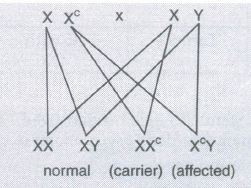
Colour blindness is a sex-linked discase. The gene for this disorder is presenton theX-chromosome. Hence, it is carried by normal females not expressing the disease. If a colourblind child is born to a normal couple, then the motlher could be the carrier of the disease.The inherilance of tlhe disorder is shown by cross.
7.
The humans first evolved around 2.5 million years ago and agriculture began about 11 thousand years ago. It is since then that humans have started to exploit the forest land for agriculture. Development in medical technology has increased the lifespan of humans, decreased the mortality rate of mother and child, further aggrevating the problem of human population.
Along with this, the industrial revolution caused enormous consumption of earth's resources and giving back a lot of air pollution. The enormous amount of waste being generated every day is destroying the natural habitat of other species, be it aquatic or terrestrial, endangering and later causing extinction thereof. This is how human activities have led to the increase in conflict between humans and wildlife.
8.
Microbes are found everywhere, i.e. in soil, water, in/on plants, animals, human, etc. They play very important role in human life in many ways. for example,
(i) in human life products like baking bread, idli, cheese, beer, wine, vinegar, etc.
(ii) enzymes, amino acids, vitamins, antibiotics, organic acids and alcohols are commercially manufactured from the microorganisms.
(iii) live attenuated virus, bacteria and protozoans have been used to develop vaccines for protection from dysentery, typhoid, cholera, etc.
(iv) microbes play an important role in agriculture and recycling of important elements like oxygen, carbon, nitrogen, sulphur and phosphorus.
(v) microbes are used as biocontrol agents in place of pesticides, herbicides, etc.
9.
Earthworm, Sponge, Tapeworm, Leech.
10.
A. Water (Hydrophily)
B. Silk moth (Entomophily)
C. Water (Hydrophily)
D. Wind (Air)
E. Insects (Entomophily)
F. Bats
11.
(i) Measure to check over-population
1. Use of contraceptive measures.
2. Education.
3. Raising of marriageable age.
4. Couples with small families should be given incentive.
(ii) Propaganda campaign:
1. display of posters showing a happy couple with one or two children.
2. Small street corner skits highlighting need for small family.
3. Use of TV media or print media.
12.
Features of Cloning vectors:
(i) Origin of Replication (Ori)
This is the sequence of DNA from where replication starts.
Any piece of alien/foreign DNA linked to it is made to replicate within host cell; it also decides the copy number of the linked DNA.
(ii) Selectable marker
"A marker is a gene, which helps in selecting the host cells, which are transformants/recombinants from the non-recombinant ones, e.g. ampicillin and tetracycline resistant genes in E.coli.
(iii) Cloning site
The vector should have a few, preferably one unique recognition site to link 'the foreign DNA; presence of a particular cloning/recognition site enables the particular restriction enzyme to cut the vector DNA.
13.
(a) Amoebiasis is caused by Entamoeba histolytica.
(b) Symptoms:
(i) Constipation
(ii) Abdominal cramps and pain.
(iii) Stool with excess mucus and blood clots.
Transmission
Drinking water and food contaminated with the faeces of infected persons.
Houseflies act as mechanical carriers and transmit the parasite from faeces to food and water.
14.
One
One
Two
15.
(i) National Park belongs to In situ conservation method.
(ii) First national park of India is Haileys National Park which is now called as Jim Corbett National Park.
(iii) According to National Wildlife Database Cell, Wildlife Institute of India there are 103 national parks till now.
(iv) His friend is calm and has knowledge about biodiversity.
16.
(a) Competition is an interaction between organism for the life requirements(nutrition, shelter, sunlight, etc.). It is of two types: intraspecific and interspecific. Efforts of a tiger and a leopard for a prey is an interspecific competition. In general, it is believed that competition occurs among closely related species when they compete for the same resources that are limited.
(b) But it is found to be not true always for the following reasons:
(i) Completely unrelated species can also compete for the same sources. e.g., In certain shallow lakes of South America, the visiting flamingoes and the native fishes compete for the same zooplankton as their food.
(ii) Resources need not be limiting for competition to occur, the feeding efficiency of one species might be reduced due to the interfering and inhibitory presence of the other species, even if resources are plenty.
e.g., Abinddon tortoise in Galapagos island became extinct within a decade after goats were introduced into the island: this was due to the fact that the goats had greater browsing efficiency than the tortoise.
(c) Another evidence for competition is competitive release, a phenomenon in which a species whose distribution is restricted to a small geographical area due to the presence of a competitively superior species, expands its distributional range when the competing species is experimentally removed.
(d) Gause's competitive exclusion principle
states that two closely related species competing for the same resources cannot exist together as the competitively inferior one will be eliminated, but this is true only when the resources are limiting and not otherwise.
They have also pointed out that species facing competition might evolve mechanisms that promote co-existence, rather than exclusion.
(e) Mac Arthur had shown that five closely related species of warblers living on the same tree were able to avoid competition and co-exist to behavioural differences in their foraging activities.
17.
1. A slaughtered animal produces very little hormone so that the demand was always higher than the supply.
2. It is unethical to slaughter animals for obtaining the drug.
3. Contamination was quite common
18.
Differences between natality rate and mortality rate
| Character | Natality Rate | Mortality Rate |
| 1. Definition | Number of births per 1,000 individuals of a population per year | Number of deaths per 1,000 individuals of a population per year. |
| 2. Population density | Increases population size and population density. | Decreases population size and population density. |
19.
During aerobic condition, the decomposing bacteria multiply very rapidly and associate with fungal filaments to form flocs. The aerobic bacteria decompose large amount of organic wastes of wastewater in the presence of oxygen produced by algae. But during anaerobic degradation, some toxic gases are produced which kill the bacteria and fungi.
20.
Fruit formation fails in rose is due to following reasons:
(i) Rose plants may not produce viable pollen.
(ii) Rose plants may not have functional egg.
(iii) Rose plants may bear abortive ovules.
(iv) Being hybrids, the meiotic process may be abnormal, which leads to formation of non-viable gametes.
(v) There may be self-incompatibility.
(vi) Ther may be internal hinderances for pollen tubes growth and fertilisation.
21.
Ornamental plants:
(i) Chrysanthemum
(ii) Lily
(iii) Petunia
(iv) Rose
(v) Marigold.
Flowers used in Social celebration:
(i) Jasmine
(ii) Rose
(iii) Chrysanthemum
(iv) Lotus
(v) Marigold.
22.
Try to create awareness among them regarding vasectomy.
23.
(a) polythene packets
(b) vegetable peels
(c) Dry cells, blades
(d) aluminium foils
(e) Pieces of glass etc. Polythene packets can be avoided by using cotton bags, jute bags etc.(or any other waste with reason)
24.
a) Due to insert the recombinant plasmids loose the tetracycline resistance.
b) Insertional inactivation.
c) To select recombinants from non-recombinants.
25.
Tobacco budworm.
The protein coded by cnJIAc gene control the cotton bollworms
26.
(a) From the fully developed foetus / placenta / foetal ejection reflex.
(b) It contains antibodies (IgA),provides immunity to the child.
27.
Features that characterise AIDS
1.Lymphopenia
2.Selective cell deficiency
3.Polyclonal activation of Bulls and increased spontaneous secretions of lg.
4.Decreased cyctotoxic responses by T-cells.
5.Decreased antibody response to new antigens.
6.Altered monocycte/macrophage function
28.
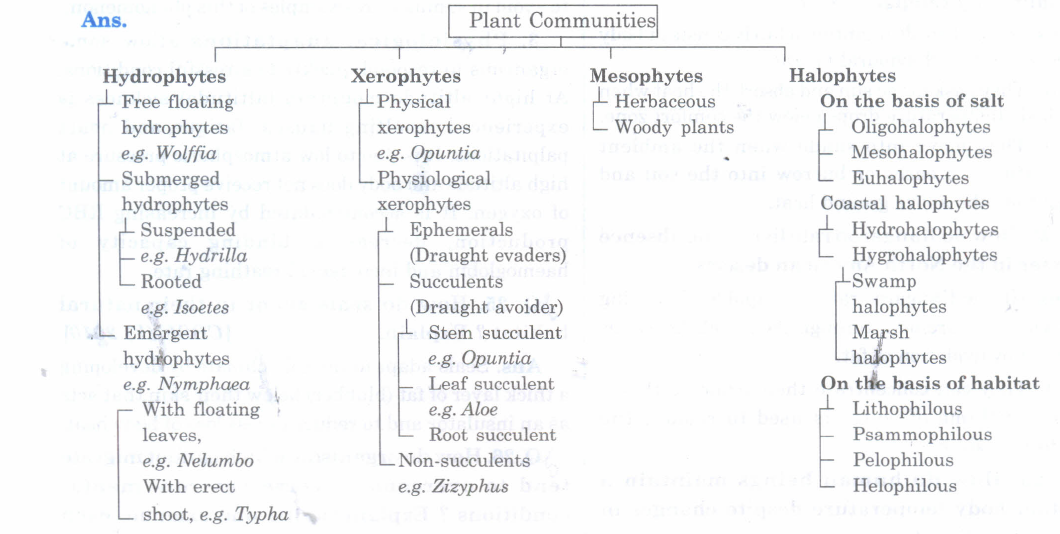
29.
Genome. A complete set of genes (coded information in DNA) contained in the haploid set of chromosomes and inherited as a unit from one parent.
Gene pool. All the genotypes of all the individuals in a population make gene pool.
Factors. The characters which are carried by an organism in the form of hereditary units are called factors or determinants, these days also called genes.
Punnet square. (Proposed by R.C. Punnett). It is a chequer board used to show the results of a cross between two organisms and depicts both genotype and phenotype of the progeny.
30.
Cultivation of Sugarcane
1. Saccharum barberi, originally grown in North India, had poor sugar content.
2. Saccharum officinarum, grown in South India, has thicker stems and higher sugar content.
3. A cross has been made between these species and the hybrid variety, combining the desirable qualities like thick stem, high sugar content and higher yield, is being grown in North India.
Cultivation of Millets.
1. Several hybrid varieties of maize, bajra and jowar have been developed in India.
2. These breeding programmes have resulted in the development of high yielding varieties that are resistant to water stress.
31.
Pollination is the transfer of pollen grains from the opened anther of the stamen to the receptive stigma of the carpel. It is needed for the process of fertilization and production of seeds and fruits to ensure continuity of plant life.
32.
Cyanobacteria are capable of nitrogen fixation. They, however, live in semiaquatic and aquatic habitats. Paddy fields contain water. Therefore, cyanobacteria can be inoculated in these fields for nitrogen fertility.
33.
Sacred groves are found in
(i) Khasi and Jaintia Hills in Meghalaya
(ii) Aravalli Hills of Rajasthan.
(iii) Western Ghat regions in Karnataka and Maharashtra
(iv) Sarguja, chanda and bastar areas of mathaya pradesh.
34.
| Primary Productivity | Secondary productivity |
|---|---|
| 1. It is the amount of biomass or organic matter produced per unit area over a time period by the producers during photosynthesis. | 1. It is the rate of assimilation and formation of new organic matter by consumers. |
35.
convergent evolution is the evolutionary process, where anatomically different structures in different groups of organisms evolve towards the same function, in similar habitats.
Such structures in different groups of organisms which perform similar function, but are anatomically different, are called analogous organs.
The wings of a butterfly and those of bird are anatomically different, but perform the same function (flying); hence they are said to be analogous organs.
36.
(a)
14th day
37.
(d)
Itai itai
38.
(d)
0:1:7
39.
(b)
Community and ecosystem diversity
40.
(a)
Nostoc
41.
(a)
ectoparasitism
42.
(d)
Synthetic capsular polysaccharide material
43.
(a)
Algae
44.
(c)
Emasculation
45.
(c)
Uptake of DNA through transient pores in the bacterial cell wall
46.
(d)
AaBb
47.
(d)
None of these
48.
(c)
Xanthomonas campestris
49.
(d)
sterilization techniques
50.
(b)
I, II and III
51.
(b)
Shima Kura
52.
hnRNA undergoes splicing to remove introns and join exons.Splicing occurs in the nucleus of the cell.

12th Standard CBSE Syllabus & Materials
12th Standard CBSE
CBSE 12th Computer Science Python Revision Tour I - New Previous year Question Papers Study Material - QB365 Set A
NEW12th Standard CBSE
CBSE 12th Business Studies Planning Important Questions And Answers Study Material - QB365 Set A
NEW12th Standard CBSE
CBSE 12th Business Studies Business Environment Important Questions And Answers Study Material - QB365 Set A
NEW12th Standard CBSE
CBSE 12th Business Studies Principles of Management Important Questions And Answers Study Material - QB365 Set A



CBSE 12th Standard CBSE Subjects
CBSE Standards










