
 100% FREE ACCESS
12th Standard CBSE Syllabus & Materials
12th Standard CBSE
CBSE 12th Economics Government Budget and the Economy Previous year Question Papers Study Material - QB365 Set A
NEW12th Standard CBSE
CBSE 12th Computer Science Interface Python with MySQL - New Previous year Question Papers Study Material - QB365 Set A
NEW12th Standard CBSE
CBSE 12th Computer Science Database Concept - New Previous year Question Papers Study Material - QB365 Set A
NEW12th Standard CBSE
CBSE 12th Computer Science Data Communication - New Previous year Question Papers Study Material - QB365 Set A
NEW12th Standard CBSE
CBSE 12th Computer Science Data Structures - New Previous year Question Papers Study Material - QB365 Set A
NEW12th Standard CBSE
CBSE 12th Computer Science Functions - New Previous year Question Papers Study Material - QB365 Set A

Published on: 15/02/2019
12th Standard Biology Important Questions - Reproduction in Organisms
Download CBSE Class 12th Standard CBSE Biology question papers, sample papers, important questions, and previous year solved papers in PDF format. Get free study materials, NCERT solutions, and exam preparation resources for Class 12th Standard CBSE Biology
Questions + Answers key
Take MCQ Biology Test
1.
Micropropagation is a technique
for production of true to type plants
for production of haploid plants
for production of somatic hybrids
for production of somaclonal plants
2.
There are various types of reproduction. The type of reproduction adopted by an organism depends on:
The habitat and morphology of the organism
Morphology of the organism
Morphology and physiology of the organism
The organism's habitat, physiology and genetic makeup
3.
Which of the following statements true of date plam?
It is monoecious producing both staminate flowers and pistilate flowers in the same plant.
It is monoecious producing staminate flowers in one tree and pistillate flowers in another tree.
It is dioecious producing staminate flowers in one tree and pistillate flowers in another tree.
4.
Which of the following statements is true of yeast?
The cell divides by binary fission. One of them develops into a bud.
The cell divides unequally. The smaller cell develops into a bud.
The cell produces conidia, which develop into a bud.
5.
Define embryogenesis.
6.
Name the units of vegetative propagation in grasses and water hyacinth.
7.
Which of the following statement is true for Hydra?
(i) It produces asexual gemmules.
(ii) It produces unicellular bud.
(iii) It produces multicellular bud.
8.
Mention a characteristic feature and a function of zoospores in some algae.
9.
How many kinds of natural vegetative reproduction take place in flowering plants?
10.
Which is better mode of reproduction sexual or asexual? why?
11.
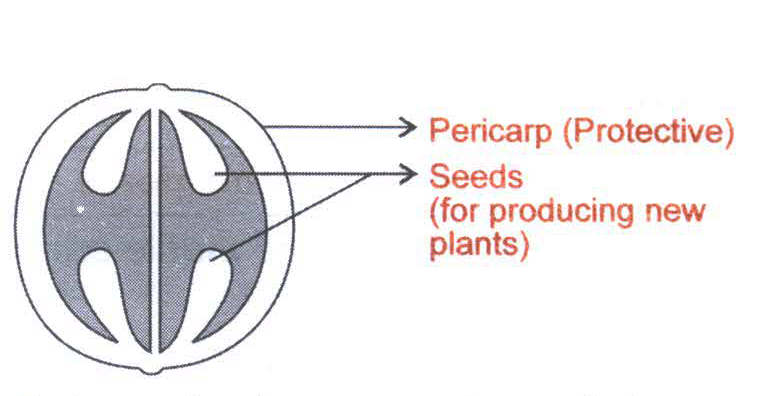
In the following figure of a fruit, label the part which is protective in function and that is responsible for producing new plants.

12.
Identify the reproductive structure and name the organism they are being released from.
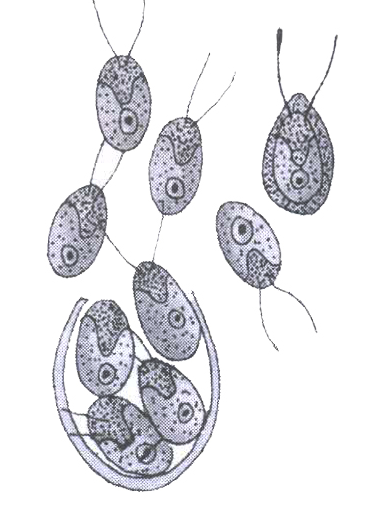
13.
(a) State the difference between meiocyte and gamete with respect to chromosome number.
(b) Why is a whiptail lizard referred to as parthenogenetic?
14.
In the whiptail lizards, only females are born generation after generation. There are no males. How is this possible?
15.
Mention the site where syngamy occurs in amphibians and reptiles, respectively.
16.
How are Cucurbita plants different from papaya plants with reference to the flowers they bear?
17.
What is oestrous cycle? Give two examples.
18.
The number of taxa exhibiting asexual reproduction is drastically reduced in the higher plants (angiosperms) and higher animals (vertebrates) as compared with lower groups of plants and animals. Analyse the possible reasons for this situation.
19.
Which is better method of reproduction? Why? Will your opinion be affected by environmental factors present?
20.
Reptiles and frogs are oviparous animals; yet they differ in certain aspects of reproduction. Bring out the differences and mention which of the two animals has more advantage in survival.
21.
How does sexual reproduction enable organisms like algae and fungi to survive during unfavourable conditions?
22.
Name the units of vegetative propagation in water hyacinth. Explain giving reasons why it has become the most invasive aquatic weed.
23.
Eichhornia crassipes is regarded as a problematic aquatic weed. Explain Or Why is Eichhornia crassipes is nicknamed as "Terror of Bengal"?
24.
Is the presence of a large number of chromosomes in an organism, a hindrance to sexual reproduction? Explain.
25.
Observe the diagram given below and answer the question that follow.
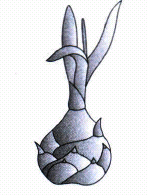
(i) What does the given diagram show?
(ii) Name any two plants (other than the one shown in fig.) Which reproduce by the same method.
(iii) What are these plant parts referred to?
26.
In the following figures label the parts responsible for production of new plants
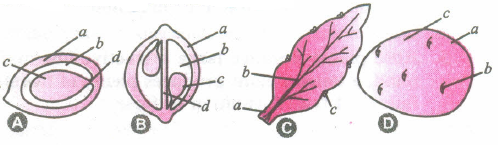
27.
A gardener grafted a scion of "Dashahari" mango twig to the stock of Zea mays. He took all precautions during the grafting process but failed to get positive results as the grafting was not successful. Give the possible reason.
28.
Although potato tuber is an underground plant part, it is considered as a stem. Give two reasons.
29.
Differentiate between external fertilisation and internal fertilisation with an example for each.
30.
(a) Name the technology that has helped the scientists to propagate on large-scale the desired crop in short duration. List the steps carried out to propagate the crops by the said technique.
(b)How are somatic hybrids obtained?
31.
Describe the importance of vegetative propagation.
32.
Enumerate the differences between asexual and sexual reproduction. Describe the types of asexual reproduction exhibited by unicellular organisms.
33.
Jagan has two mango trees in the backyard of his house, which yielded fruits for the first time during this summer. The fruits were small, fibrous and not so sweet. In the next house, where his friend Ajay livers, there is a mango tree, which yields fruits that are fleshy/juicy, very sweet and bigger in size. Ajay, a student of B.sc. (Botany) comes out with an idea and takes some branches from the jagan's garden to his garden and explains the procedure.
(a) What method do you think Ajay has suggested for getting good quality fruits, on the trees of Jagan's house in a short period of time, i.e. during the next season?
(b) Describe how it is carried out to help japan.
(c) What are its advantages over growing a mango tree with the seeds obtained from Ajay's garden?
(d) Mention the values expressed by Ajay in this case.
1.
(a)
for production of true to type plants
2.
(d)
The organism's habitat, physiology and genetic makeup
3.
(c)
It is dioecious producing staminate flowers in one tree and pistillate flowers in another tree.
4.
(b)
The cell divides unequally. The smaller cell develops into a bud.
5.
()
It is the process of the development of the embryo from the zygote.
6.
()
Grasses: Runner.
Water hyacinth: Offset.
7.
()
Statement(iii) is true. Multicellular organism like Hydra reproduce asexually by producing multicellular bud that further develops into a new organism.
8.
()
Zoospores in algae are motile cells helping in asexual reproduction.
9.
()
Natural Vegetative reproduction takes place by modified tuberous roots having adventitious buds, underground modified stems, creeping stems, leaves, bulbils, and turions.
10.
()
Sexual reproduction is a better mode of reproduction because is needs meiosis and fusion of male and female gametes. Such a fusion involving two parent results in the offspring that are not identical to the presents. It also causes variation which is essential for evolution and survival of species under diverse changes in environmental factors.
11.
()
12.
()
Zoospores; Chlamydomonas.
13.
(a) A meiocyte is diploid cell, while a gamete is haploid.
(b) A whiptail lizard develops from the female gamete, without fertilisation; hence it is parthenognetic.
14.
()
The whiptail lizard/turkey shows parthe-nogenesis, the phenomenon which the female gamete undergoes development without fertilisation into adult.
15.
()
In the medium of water in amphibians (external fertilisation) and in the body of female animals in reptiles (internal fertilisation).
16.
()
Papaya plants are dioecious as an individual plant bears exclusively either staminate flowers or pistillate flowers.
17.
The females of placental mammals exhibit series of cyclic changes in the activities of ovaries, reproductive tract, and hormones during the reproductive phase. These cyclic changes are called oestrous cycle. During this period the female has a 'high level of oestrogen and develops strong sex urge It is seen in non-primates such as cows, sheep.
18.
(i) both angiosperms and vertebrates have a more complex structural organisation.
(ii) They have evolved very efficient mechanism of sexual reproduction.
(iii) Since asexual reproduction does not create new genetic pools in the offspring and consequently hampers their adaptability to external conditions, these groups have resorted to reproduction by the sexual method which introduces variations.
19.
(i) Sexual reproduction is better method of reproduction.
(ii) The organisms produced will show variations.
(iii) the variations thus developed help the organisms to adapt to the environment even in the changes in those factors and enable them to survive.
(iv) Variations contribute to the evolution.
20.
| Reptiles | Frogs |
|
In reptiles, fertilisation is internal |
In frogs, fertilisation is external. |
| They lay fertillised eggs in safe places. | Both male and female gametes are laid in water |
| Eggs have a calcareous shell for protection. | Eggs have no calcareous shell, but have mucilaginous covering. |
21.
Sexual reproduction in organisms like algae and fungi occurs either towards the end of favorable season or at the onset of unfavourable seasons; the zygote formed as a result of sexual reproduction develops a thick wall that helps to survive under unfavourable conditions. Also, sexual reproduction brings in genetic variation, which helps in the better survival of some individuals under an unfavorable change in the environment
22.
Offset. The plants propagate vegetatively at such a phenomenal rate that it is very difficult to get rid of them; it drains oxygen from the water and causes mortality of aquatic organisms.
23.
Eichhornia crassipes is an aquatic plant which is commonly known as water hyacinth. It was introduced into the water bodies of Bengal for its beautiful flowers and leaves. But however, it turned out to be a highly invasive and problematic water weed due to its excessive growth. Because of its rapid vegetative multiplication through offsets it spread into almost all the stagnant water bodies not only of Bengal but also to other similar aquatic habitats of our country. It leads to an imbalance in the ecosystem dynamics of the water body resulting in the death of aquatic fauna and flora. It is therefore nicknamed as Terror of Bengal.
24.
No, the presence of a large number of chromosomes in an organism is not a hindrance to sexual reproduction, e.g. Ophioglossum (a fern) has chromosome number 1260, still, it can reproduce sexually, In higher organisms, the chromosomes are present in a compartment called nucleus, within the cell.Whether the number is small or large, the chromosomes are duplicated and then segregated inside this compartment, during cell division.
25.
(i) The given diagram shows a bulbil of Agave.
26.
(A) c is a seed that produces new plant.
(B) c is a seed that produces new plant.
(C) c is an adventitious bud that produces a new plant.
(D) b is an eye that has a bud.
27.
Gardener did a mistake by selecting a monocotyledonous stock for grafting a dicotyledonous scion. Usually grafting is between two dicotyledonous plants where cambium develops at the place of grafting.
28.
(i) The tuber has nodes and internodes.
(ii) Leafy shoots appear from the nodes.
29.
| External fertilisation | Internal fertilisation |
| When fusion of gametes (syngamy) occurs outside the body of the oranism, it is called external fertilisation. | When fusion of a gametes (syngamy) occurs inside the body of the oranism, it is called internal fertilisation. |
| A large number of gametes are released in the surrounding medium by such animals, e.g. frog and bonyfish. | The number of ova produced is less, but a large number of male gametes are formed, as they have to travel towards the ovum, e. birds, human beings, etc. |
| Chances of survival of offspring are less. | Chances of survival of offspring are high. |
30.
(a) A large-scale propagation of the desired crop in a short duration can be carried out with the help of micropropagation or tissue culture technique. The main steps of tissue culture technique are as follows:
1. Preparation of nutrient medium: A suitable nutrient medium is prepared and transferred into containers under aseptic conditions.
2. Selection of explants: Explants are taken preferably from the meristematic regions (apical or axillary buds or the modal sections) of the desired crop plants.
3. Sterilization of explants: The explants are surface sterilized by disinfectant like sodium hypochlorite and then washed by sterile distilled water. Inoculation: Inoculation (transfer) of explants into the previously sterilized nutrient medium under aseptic conditions. Incubation: The cultures are kept for incubation in the growth chamber under suitable cultural conditions. Regeneration: After incubation, for a few days the explants give rise to an undifferentiated mass of cells called callus from which in due course of time a number of plantlets come out.
4. Hardening:The regenerated plntlets are acclimatized gradually exposed to the environmental conditions Plantlets Transfer: The plantlets are transferred to green House or field after their acclimatization (Hardening).
(b) Somatic hybrids are obtained by somatic hybridization a process of fusing the protoplast of two different somatic cells obtained from different varieties or species of plants under optimal cultural conditions. The main steps of somatic hybridization are:
1. Isolation of single cells from two different plants having desired characteristics or traits. Digestion of their cell wall with the help of enzymes like cellulase and pectinases. Isolation of naked protoplast. Fusion of two protoplasts by spontaneous fusion or by induced fusion.
2. The growth of hybrid protoplast: The hybrid protoplast is further grown to form the somatic hybrid.
3. A new hybrid plant named as pomato has been developed by this technique. This has the characteristics both tomato and potato.
31.
Merits of vegetative propagation
(1) Plants produced by vegetative propagation are genetically similar and constitute a uniform population called as clone.
(2) Plants with reduced power of sexual reproduction, long dormant period of seed, poor viability are multiplied by vegetative methods.
(3) Some fruit trees like banana, pineapple do not produce viable seeds so these are propagated by only vegetative methods.
(4) It is more rapid, and easier method of propagation.
(5) Good characters are preserved by vegetative propagation.
(6) Some plants such as bub grass (Cynodon dactylon) which produce only a small quantity of seeds are mostly propagated by vegetative propagation.
(7) Grafting helps in getting an economically important plant having useful characteristic of two different individuals in short time.
32.
(i) Differences between asexual and sexual reproduction
| Asexual Reproduction | Sexual Reproduction |
| 1. The process involves only one cell or one parent 2. The whole body of the parent may act as reproductive unit or it can be single cell. 3. The offsprings are genetically similar to parents. (clone) 4. Only mitotic division takes place. 5. No formation of sex organs. 6. No evolutionary significance. |
1. This process involves two cells or gametes belonging to either the same or different parents. 2. The reproductive unit is called gamete which is unicellular and haploid. 3. The offsprings differ genetically from parents. 4. Meiosis and mitosis are essential events. 5. Formation of sex organs is essential. 6. It introduces variations hence of evolutionary significance. |
(ii) Types of asexual reproduction in unicellular organisms.
33.
(a) Grafting a branch from the tree of Ajay's house on a tree of Jagan's garden can be done.
(b) The part of the graft that forms the upper part is called scion and the part of the graft that becomes the supporting portion (the root and base), is called stock.
(i) The scion is selected from a superior quality plant (juicy, larger mango fruits) while the stock belongs to the plant to be improved.
(ii) The scion and stock should be of same diameter and slant cuts are made on both the branches.
(iii) The scion is kept on the stock, covered with grafting clay and polythene; it is tied well and arrangement of water supply/ moisturising is made.
(iv) After a few weeks, you will see buds and leaves appearing on scion.
(c)The mango tree will start producing flowers and fruits very early, may be in the next season itself. - Many branches can be grafted on the tree with poor quality mangoes.
(i) When grown from a seed it takes many years for the tree to produce fruits. - Sometimes the plant produced from the seed may not be of the same quality, as sexual reproduction results in variation.
(d) Values for friendship and generosity.

12th Standard CBSE Syllabus & Materials
12th Standard CBSE
CBSE 12th Computer Science Python Revision Tour I - New Previous year Question Papers Study Material - QB365 Set A
NEW12th Standard CBSE
CBSE 12th Business Studies Planning Important Questions And Answers Study Material - QB365 Set A
NEW12th Standard CBSE
CBSE 12th Business Studies Business Environment Important Questions And Answers Study Material - QB365 Set A
NEW12th Standard CBSE
CBSE 12th Business Studies Principles of Management Important Questions And Answers Study Material - QB365 Set A



CBSE 12th Standard CBSE Subjects
CBSE Standards










