
 100% FREE ACCESS
12th Standard CBSE Syllabus & Materials
12th Standard CBSE
CBSE 12th Economics Government Budget and the Economy Previous year Question Papers Study Material - QB365 Set A
NEW12th Standard CBSE
CBSE 12th Computer Science Interface Python with MySQL - New Previous year Question Papers Study Material - QB365 Set A
NEW12th Standard CBSE
CBSE 12th Computer Science Database Concept - New Previous year Question Papers Study Material - QB365 Set A
NEW12th Standard CBSE
CBSE 12th Computer Science Data Communication - New Previous year Question Papers Study Material - QB365 Set A
NEW12th Standard CBSE
CBSE 12th Computer Science Data Structures - New Previous year Question Papers Study Material - QB365 Set A
NEW12th Standard CBSE
CBSE 12th Computer Science Functions - New Previous year Question Papers Study Material - QB365 Set A

Published on: 03/03/2020
12th Standard CBSE Biology Public Exam Important Question 2019-2020
Download CBSE Class 12th Standard CBSE Biology question papers, sample papers, important questions, and previous year solved papers in PDF format. Get free study materials, NCERT solutions, and exam preparation resources for Class 12th Standard CBSE Biology
Questions + Answers key
Take MCQ Biology Test
1.
At high altitudes places like Manali or Mansarover we suffer from altitudes sickness this is because in low atmospheric pressure, body does not get enough oxygen, but gradually the problem is over. How did our body solve this problem?
2.
Each restriction enzyme cuts DNA at a specific base sequence. For example, EcoRI always cuts DNA at GAATTC
3’—GTAAGAATTCTTTAGAATTCCGCCATTATCGAATTCAGGATCTTAC—5’
5’—CATTCTTAAGAAATCTTAAGGCGGTAATAGCTTAAGTCCTAGAATG—3’
a. How many times EcoRI cuts this long strand?
b. How many small DNA pieces are formed from this long strand?
c. These fragments show overhangs of single stranded DNA. What are they known as? Why are they called so?
d. Which enzyme is used to seal these fragments together?
3.
List four laws which enforce control of pollution.
4.
Give four differences between a prokaryotic chromosome and a eukaryotic chromosome.
5.
Make a table showing typical climatic conditions in major forest types in India.
6.
What are the applications of biotechnology?
7.
What is horticulture? Give in a tabulated form some horticultural crops.
8.
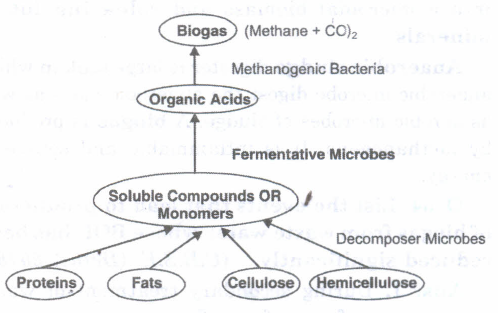
By a flow chart show the stages in anaerobic digestion during production of biogas.
9.
Point out the differences in male and female urethra.
10.
Briefly, explain the IVF and ET. What are the conditions in which these methods are advised?
11.
Name the scientist who had used the set-up shown below:
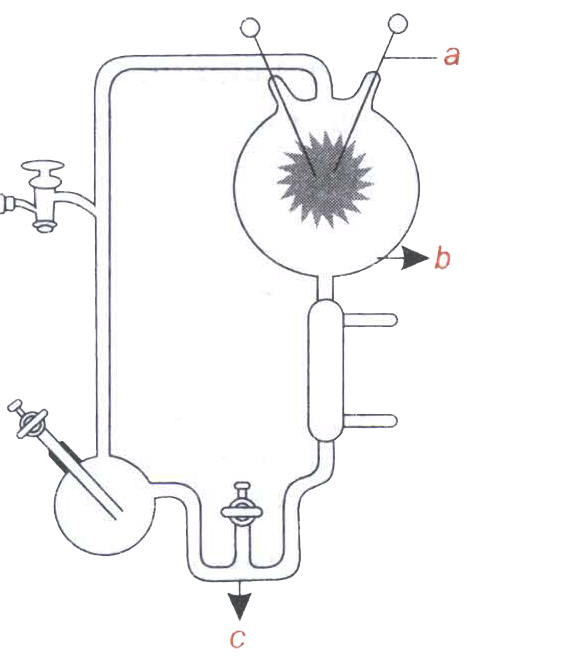
Write the purpose of 'a' in the set-up and the conclusion, the scientist arrived at.
12.
What is mass of extinction? Give an example. How many species of the Red List face extinction?
13.
Mention the symptoms of AIDS.
14.
Name the category of codons UGA belongs to.Mention another codon of the same category.Explain their role in protein synthesis.
15.
You must have seen corn cobs with tassels. What do these tassels represent? What is their significance/advantage?
16.
What are hermaphrodites? Name two hermaphrodite animals
17.
Name and explain the evolutionary concept represented in the illustration given below:
18.
Differentiate between a template strand and a coding strand of DNA
19.
Consult internet and find out how to make orally active protein pharmaceutical. What is the major problem to be encountered?
20.
Why are reducers or decomposers considered crucial and essential components of an ecosystem? Explain.
21.
What is the main reason for low milk production in India? How can it be improved?
22.
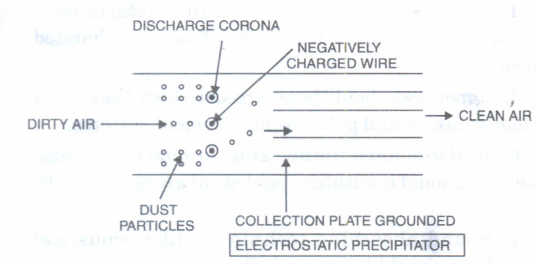
How does an electrostatic precipitator work to remove particulate pollutants released from Thermal Plants
23.
Alien species are highly invasive and are a threat to indigenous species. Substantiate this statement with any three examples.
24.
(a) Name the virus that causes AIDS in humans.
(b) Explain the sequence of events that follows,when this virus attacks to cause immune deficiency in humans.
25.
A non-haemophilic couple was informed by their doctor there is possibility of a haemophilc child to be born to them. Explain the basis on which the doctor conveyed this information. Give the genotypes and phenotypes of all the possible children who could be born to them.
26.
Explain the process of artificial hybridisation to get improved crop variety in
(i) plants bearing bisexual flowers and
(ii) female parent producing unisexual flowers.
27.
(a) Describe the different steps in one complete cycle fPCR.
(b) State the purpose of such an amplified DNA sequence.
28.
Nisha is dark-skinned. Her class fellows and friends make fun of her by calling her blacky. Ritu a close friend of hers tries to help her and tells to all the classmates that the skin colour is due to inheritance and as such ask them to stop teasing Nisha only because of her dark skin.
On the basis of above statement answer the following questions
(i) What type of inheritance is involved in the skin colouration in human beings?
(ii)What values are exhibited by Ritu?
29.
Krishna a student of class X was studying a chapter "reproduction in animals in his science book. In this chapter, he found the description of how higher animals like elephant, cattle, dog, and monkey etc. are reproduced and increase their population. He asked his father about it. His father appreciated his interest in the subject and told him about sexual reproduction.
Answer the following questions:
(i) How do the higher animals reproduce to increase their population?
(ii) Do these animals continue to reproduce throughout their life?
(iii) What values were exhibited by Krishna?
30.
A village health worker was taking a session with women. She tells the women that one has to be very careful while using oral pills as method of birth control. Wrong usage can actually promote conception.
(a) Analyze the statement and compare the merits' and demerits of using oral pills and surgical methods of birth control.
(b) Village women were confused as to how a thin metallic Copper loop can provide protection against pregnancy. Justify the use explaining the mode of action of IUDs
31.
Roma is working woman and gave birth to a baby two weeks ago. Due to very hectic schedule, she asked her mother-in-law to feed the powdered milk to the baby. On the other hand, mother-in-law insisted on breastfeeding.
Read the above passage and answer the following questions:
(i) In your opinion who is the right Roma or her mother-in-law?
(ii) Why is breastfeeding important?
(iii) What health problem can mother face in case she does nor breastfeed the baby?
32.
List the uses of biodiversity.
33.
Write a short note on electronic waste. List the various sources of e-wastes and the problems associated with its disposal.
34.
(a) List the various causes of variations in the progeny of a population.
(b) Describe the three different ways in which natural selection operates in nature, with regard to organic evolution.
35.
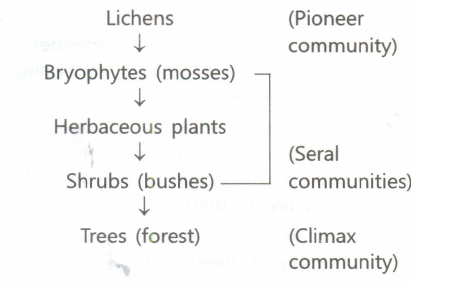
Explain how xerarch succession progresses from xeric to mesic condition and forms a stable climax community.You may use a flow chart.
36.
Describe the Hershey-Chase experiment.Write the conclusion they arrived at after the experiment.
37.
Name any five hybird v arieties of crop plants which have been developed in india.
38.
A common means of sympatric speciation is
polyploidy
temporal segregation of breeding season
spatial segregation of mating sites
imposition of geographic barrier
39.
During the past 150 years, the conc.of CO2 has increased approximately from
200 ppm to 300 ppm
120 ppm to 280 ppm
280 ppm to 370 ppm
350 ppm to 450 ppm
40.
If mammalian ovum fails to get fertilized, which one of the following is unlikely?
Corpus luteum will degenerate
Progesterone secretion rapidly declines
estrogen secretion further decrease
Primary follicle starts developing
41.
Immunoglobulins serving as mediators in allergic response are
IgE
IgD
IgM
IgA
42.
Large woody vines are more commonly found in
temperate forests
mangrooves
tropical rainforests
alpine forests
43.
Extinction of a species in a food chain is compensated by
food chain
ecological pyramid
food web
none of these
44.
Offsprings formed by sexual reproduction exhibit more variation than those formed by asexual reproduction because:
Sexual reproduction is a lengthy process
Gametes of parents have qualitatively different genetic composition
Genetic material comes from parents of two different species
Greater amount of DNA is involved in sexual reproduction.
45.
Which one of the following conditions correctly describes the number of determining the sex?
homozygous sex chromosomes (ZZ) determine female sex in birds
XO type of sex chromosomes determine male sex in grasshopper
XO condition in humans as found in Turner's syndrome, determines female sex
homozygous sex chromosomes (XX) produce male in Drosophila
46.
33% India's Gross Domestic Product comes from
Industry
Agriculture
Export
Smallscale cottage industry
47.
Genetically engineered bacteria are being employed for production of
Thyroxine
Human insulin
Cortisol
Epinephrine
48.
An antibiotic resistance gene in a vector usually helps in the selection of:
Competent cells
Transformed cells
Recombinant cells
None of these
49.
Meselson and Stahl experiment proved
DNA is genetic material
Central dogma
Transformation
Semi conservative DNA replication
Transduction
50.
Male gametes in angiosperms are formed by the division of
Generative cell
vegetative cell
Microspore mother cell
Microspore
51.
Which of the following is the component of oral pills?
Progesterone
Oxytocin
Relaxin
None of these
52.
Saccharomyces cerevisiae is used for production of
Bread
Ethanol
Both (a) and (b)
Acetic acid
1.
By increasing RBC count, By decreasing binding capacity of hemoglobin, By increasing breathing rate.
2.
a. Three cuts.
b. Four strands.
c. Sticky ends, since they have complementary bases, they can rejoin fragments with complementary sticky ends to form rDNA (gene from vector and the gene to be cloned is inserted)
d. DNA ligase
3.
1. The Environment (Protection) Act, 1986.
This act clearly brings the protection of air, water and soil quality, and the control of environmental pollutants including noise under its purview.
2. The Insecticide Act, 1968.
This act deals with the regulation of import, manufacture, sale, transport, distribution and use of insecticides with a view to prevent risk to human health and other organisms.
3.The Water (Prevention and Control of Pollution) Act, 1974.
This act deals with the preservation of water quality and the control of water pollution with a concern for the detrimental of water pollutants on human health and also on the biological world.
4. The Air Prevention and Control of Pollution) Act, 1981.
This act deals with the preservation of air quality and the control of air pollution with a concern for the detrimental effects of air pollutants on human health and also on the biological world. In 1987, important amendments of the Air Act 1981 were made and noise was recognised as an air pollutant.
5. Many countries have enacted legislation to control noise. India enacted Air (Prevention and Control of Pollution) Act, 1981 and noise pollution has been declared as an offence.
4.
Differences between a prokaryotic chromosome and eukaryotic chromosome.
| Prokaryotic Chromosome | Eukaryotic Chromosome |
| 1. It is simpler, shorter and codes for fewer proteins. | 1. It is complex, longer, and codes for more proteins. |
| 2. It lies in direct contact with cytoplasm and not enclosed by nuclear envelope. | 2. Chromosomes are separated from cytoplasm by the nuclear envelope. |
| 3. Chromosomal DNA is circular and without a protein coat. | 3. It is linear and with a protein coat. |
| 4. There is single chromosome in one cell. | 4. There are 2 to many chromosomes in one cell. |
5.
| Forest type | Mean annual Temperature \(\quad \quad { \circ }_{ C }\) | Mean annual rainfall (mm) | Dry months during the year |
|---|---|---|---|
| Tropical rainforest | 23-37 | 2000-3500 | 2-3 |
| Tropical deciduous forest | 22-32 | 900-1600 | 6-8 |
| Temperature broadleaf forest | 6-20 | 1000-2500 | 3-5 |
| Temperature needle leaf forest | 6-15 | 500-1700 | 3-5 |
6.
The applications of biotechnology include therapeutics, diagnostics, genetically modified crops for agriculture, processed food, bioremediation, waste treatment, and energy production.
7.
Horticulture is a branch of agriculture which deals with act of growing fruits, vegetables and ornamental plants.
Horticultural Crops
| Type | Some Examples |
| Vegetables | Tomato, Cabbage, Spinach. |
| Fruits | Bananas, Grapes, Guava, Apple. |
| Decorative plants | Crotons, Cactus, Bougainvillea. |
| Flowers | Rose, Jasmine. |
8.
9.
In case of male urethra, there is present a single opening for the elimination of urine and for ejaculation of sperms.In female, there are two separate openings, one for the elimination of urine and other for vaginal orifice.The urethra in male is continued into the panis and in case of female it has not been found.
10.
1. IVF (In Vitro Fertilization) involves fusion of sperm and ovum in a culture medium outside the female genital tract.It should be performed under following conditions:
(a) Removal of unfertilized ovum from ovary of female or female reproduction tract with a laparoscope.
(b) Ovum is kept in culture medium in an aseptic conditions.
(c) Collection of semen of male in hygienic manner.
(d) Gamates are induced to fuse under simulated conditions to form zygote.
2. ET (Embryo Transfer) involves transfer of developing embryo from culture medium into female reproductive tract.It occurs in the presence of following conditions:
(a) Zygote is induced to develop in culture medium.It can implanted upto 32 cells stage into fallopian tube or uterus.
(b) Endometrium is stimulated to proliferate for implantation.
11.
1. S.L. Miller used this.
2. The electrodes (a) are used to create an electric discharge, similar to the lightning in the primitive earth; it was to provide energy.
3. He observed formation of amino acids; it proved the chemical evolution.
12.
Mass Extinction
It is the phenomenon in which a large number of species became extinct in short span of time because of catasrophies, e.g extinction of dinosaurs -784 species.
13.
Symptoms of AIDS:
(i) Swollen lymph nodes.
(ii) Fever
(iii) Night sweats.
(iv) Loss of body weight
(v) Infection by pathogen.
14.
It is a stop/termination codon
UAA or UAG
They terminate the translation process i.e they stop the elongation of the polypeptide chain during translation.
15.
The tassels of corn cob are the styles and stigma.
They are meant to easily trap the air-borne pollen grains.
16.
Hermaphrodites are those bisexual organisms which posses both male and female reproductive organs in the same body, e.g. Tapeworm and earthworm.
17.
The illustration given above represents the process of evolution of different species in a given geographical area starting from a single print and radiating or spreading to other. habitats.· Such a phenomenon may be called as adaptive radiation. Australian marshpials within Australian island. Darwin has explained that a number of different marsupials of various habitats have evolved from a single ancestral stock. When more than one adaptive radiations appeared to have taken place in different habitats of an isolated geographical area & two or more groups of unrelated organisms evolve similar features & adopt to the same habitat it may be referred to as convergent evolution.
18.
| Template strand | Coding strand |
|
(i)This is the strand of DNA with 3o->5opolarity |
(i)This is the strand DNA with 5o>3o polarity |
| (ii) it functions as the template for transcription and codes for RNA |
(ii) It does not code for any region of RNA during transcription. |
19.
The major problem here is that the proteins with a short half lives are not orally active and are not absorbed properly.
An orally active protein should be metabolically stable and have a longer half life, so that it is not degraded fast and absorbed efficiently.
To make orally active protein drug, the site directed mutagenesis can be used to redesign their genes for the expression of a modified peptide.
20.
Sun is the endless source of energy, but the chemical materials of the environment are exhaustible.The producers fix solar energy into the chemical energy of organic compounds by utilizing inorganic substance (i.e., CO2 and water). This stored energy is passed to consumers by repeated eating and being eaten.Decomposers act on dead decaying organic matter and return the locked inorganic substance back to the environment for their reuse by producers.Without this, all life will ultimately cease to exist and earth will be full of dead organisms and waste organic substances.
21.
The main reasons for low milk production in India are insufficient number of improved breeds and the improper feeding of the cattle. Improved breeds should be increased in number by proper management which include fascilities, processes, materials and labour. Cattle should be fed with proper and balanced feed consisting of appropriate quantities of proteins, carbohydrates, fats, vitamins and water.
22.
An electrostatic precipitator. It removes over 99% particulate matter present in the exhaust from a thermal power plant. It has electrode wires and a stage of collecting plates. The electrode, wires are maintained at several thousand volts, which produce a corona that releases electrons. These electrons attach to dust particles and give them a net negative charge within a very small fraction of a second. The collecting plates are grounded and attract the charged dust particles. The velocity of air between the plates must be low enough to allow the dust to fall.
23.
(i) The Nile perch introduced into Lake Victoria in East Africa caused extinction of more than 200 species of cichlid fish in that lake.
(ii) Partneniurn, Lantana and Eichhornia caused environmental damage and posed threat to many species in our country.
(iii) Illegal introduction of African catfish, Clarias qariepinus for aquaculture purposes is posing a threat to the indigenous catfishes in our rivers.
24.
1. After entering the body of a person,the virus enters the macrophages.
2. The viral genome (RNA) undergoes replication and reverse transcription to become viral DNA with the help of reverse transcriptase.
3. The viral DNA gets incorporated into the DNA of the cells and directs these cells to produce virus particles.
4. The macrophages function as HIV factory and produce a number of HIV particles.
5. These HIV particles move out of macrophages and infect the helper T-lymphocytes and replicant to produce progeny viruses.
6. The progeny viruses released in the blood attack new helper T- cells.
7. This process is repeated and there is a progressive decrease in the number of helper T-cells.
25.
The doctor must have used Pedigree analysis; which refers to the analysis of distribution and movement of traits in a series of generations of a family. Since the non-haemophilic parents give rise to a haemophilic child, the genotypes of them should be
26.
(i) Emasculation refers to the practice of removal of anthers/stamens from a bisexual flower before the pollen grains mature.
(ii) It is necessary to prevent the self-pollen from contaminating the stigma.
(iii) Bagging refers to the covering of the emasculated flowers with a suitable bag made of butter paper; it is essential to prevent contamination of the stigma of the emasculated flower with unwanted pollen grains.
(iv) When the stigma becomes receptive, the pollen grains from the selected flowers are dusted on it and the flower is rebagged for the development of fruits and seeds.
(v) If female parent bears unisexual flowers, there is no need for emasculation.
(vi) The female flower buds are bagged before they open.
(vi) When the stigma becomes receptive, pollination is carried out with the desired pollen the flowers are rebagged.
27.
(a) Refer Quick Review (Same value points to be awarded in an explanation)
(b) Purpose : Used to ligate with a vector for further cloning. Detection of bacteria or virus by amplification of their DNNdetection of HIV in AIDS patient. Detection of mutation in genes in suspected cancer patients.
28.
(i) It is a polygenic inheritance. It is a quantitative inheritance. The skin coloration is due to additive effect of dominant genes.
(ii) (a) understanding
(b) awareness
(c) Compassion
(d) Sensitivity towards her companions
29.
(i) Higher animals reproduce by sexual reproduction to increase their population. The sexual reproduction involves formation and fusion of gametes to form the zygote which develops into the embryo followed by the development of a new individual.
(ii) No these individuals do not continue to reproduce throughout their life. They reproduce only during the certain period of their life which is called as the reproductive phase which follows the juvenile phase and is followed by senescence phase.
(iii) Krishna is a keen observer, curious, inquisitive and a fast learner.
30.
| Contraceptive pills | Surgical method | |
| Merits | (i) Pills are effective with lesser side effects and well accepted by females. (ii) Reversible method |
(i) Surgical intervention block gamete transport (ii) Highly effective |
| Demerits | (i) If not taken on right days they can promote conception. (ii) Can have side effects if taken for a long time. |
(i) Not Reversible (ii) Can affect health of a person if performed in unhygienic condition |
(b) Mode of action of IUDs
(i) Increase phagocytosis of sperms within the uterus.
(ii) Cu++ released suppress sperms motility/fertility capacity of sperm.
(iii) Hormone releasing IUDs make uterus unsuitable for implantation/cervix hostile to the sperms.
31.
(i) Her mother-in-law is right that mother should breast feed her baby.
(ii) Mother's milk perfect food for infants. It protects infants from intestinal and other bacterial infections.
(iii) It may disturb hormonal balance in the body of the mother and she may develop breast cancer.
32.
Uses of biodiversity.
1. As source of food and improved varieties.
2. As source of drugs and medicines.
3. Aesthetic and cultural benefits.
Examples of aesthetic rewards include ecotourism, bird watching, wildlife, pet keeping, gardening, etc. Throughout human history, people have related biodiversity to the very existence of human race through cultural and religious beliefs.
4. Biodiversity is essential for the maintenance and sustainable utilization of goods and services from ecological system as well as from individual species.
33.
Solid waste can be biodegradable recyclable non-biodegradable, and can be categorised municipal wastes (sewage), Industrial waste, hospitals and nursing wastes and electronic waste. Irrepairable computers, mobiles and other electronic goods are often known as 'e' waste or electronic waste.
Source of e-waste
Majority of the developing countries like China, Pakistan and India import irrepairable electronic goods for their valuable metals like copper, nickel and gold.
Disposal of e-waste
Such waste should be burried in landfills or incinerated. In developing countries metal from e-waste is extracted manually. So, during working with e-waste, one can expose with toxic substances present in it, and may get affected by skin diseases in future. However, recycling is the only solution for the treatment of electronic waste.
34.
(a) (i) Mutation,
(ii) genetic recombination during gametogenesis,
(iii) gene flow and
(iv) genetic drift.
(b) Different ways in which natural selection results in different populations include the following:
(i) Stabilisation - More individuals acquire mean character value, i.e. variation is much reduced.
(ii) Directional change - More individuals acquire value other than the mean character value.
(iii) Disruption - More individuals acquire peripheral character values at both ends of the distribution curve.
35.
Xerarch succession
1. In the primary xerarch succession lichens are the pioneer species they secrete acids to' dissolve the rock, facilitating weathering and soil formation.
2. With formation of soil, small plants like bryophytes occupy the area.
3. They are succeeded by bigger plants over a long period of time.
4. After several more seral stages, a stable climax forest community is formed.
5. The climax community remains stable as long as the environment remains unchanged.
6. The xeric habitat is changed into a mesic habitat.
36.
Alfred Hershey and Martha Chase proved that DNA is the genetic material.
Experiment of Hershey and Chase
1. They made two different preparations of the phage; in one, the DNA was made radioactive with \(^{ 32 }P\) and in the other, the protein coat was made radioactive with \(^{ 35 }{ { S } }\).
2. These two phage preparations were allowed to infect the bacterial cells separately.
Soon after infection, the cultures were gently agitated in a blender to separate the adhering protein coats of the virus from the bacterial cells.
3. The culture was also centrifuged to separate the viral coat and the bacterial cells.
4. It was found that when the phage containing radioactive DNA was used to infect the bacteria, its radioactivity was found in the bacterial cells (in the sediment) indicating that the DNA has been injected into the bacterial cell.
5. So, DNA is the genetic material and not proteins.
37.
Hybrid varieties
1.. Wheat - Himgiri
2. Rice - Jaya, Ratna
3. Cowpea - Pusa Komal
4. Okra - Pusa Sawani
5. Flat bean - Pusa Sem-2
6. Mustard - Pusa Gaurav
- Pusa Swarnim
7. Chilli - Pusa Sadabahar
38.
(b)
temporal segregation of breeding season
39.
(c)
280 ppm to 370 ppm
40.
(d)
Primary follicle starts developing
41.
(a)
IgE
42.
(c)
tropical rainforests
43.
(c)
food web
44.
(b)
Gametes of parents have qualitatively different genetic composition
45.
(a)
homozygous sex chromosomes (ZZ) determine female sex in birds
46.
(b)
Agriculture
47.
(b)
Human insulin
48.
(b)
Transformed cells
49.
(d)
Semi conservative DNA replication
50.
(a)
Generative cell
51.
(a)
Progesterone
52.
(a)
Bread

12th Standard CBSE Syllabus & Materials
12th Standard CBSE
CBSE 12th Computer Science Python Revision Tour I - New Previous year Question Papers Study Material - QB365 Set A
NEW12th Standard CBSE
CBSE 12th Business Studies Planning Important Questions And Answers Study Material - QB365 Set A
NEW12th Standard CBSE
CBSE 12th Business Studies Business Environment Important Questions And Answers Study Material - QB365 Set A
NEW12th Standard CBSE
CBSE 12th Business Studies Principles of Management Important Questions And Answers Study Material - QB365 Set A



CBSE 12th Standard CBSE Subjects
CBSE Standards










