
 100% FREE ACCESS
12th Standard CBSE Syllabus & Materials
12th Standard CBSE
CBSE 12th Economics Government Budget and the Economy Previous year Question Papers Study Material - QB365 Set A
NEW12th Standard CBSE
CBSE 12th Computer Science Interface Python with MySQL - New Previous year Question Papers Study Material - QB365 Set A
NEW12th Standard CBSE
CBSE 12th Computer Science Database Concept - New Previous year Question Papers Study Material - QB365 Set A
NEW12th Standard CBSE
CBSE 12th Computer Science Data Communication - New Previous year Question Papers Study Material - QB365 Set A
NEW12th Standard CBSE
CBSE 12th Computer Science Data Structures - New Previous year Question Papers Study Material - QB365 Set A
NEW12th Standard CBSE
CBSE 12th Computer Science Functions - New Previous year Question Papers Study Material - QB365 Set A

Published on: 08/10/2019
Organic Compounds Containing Nitrogen
Download CBSE Class 12th Standard CBSE Chemistry question papers, sample papers, important questions, and previous year solved papers in PDF format. Get free study materials, NCERT solutions, and exam preparation resources for Class 12th Standard CBSE Chemistry
Questions + Answers key
Take MCQ Chemistry Test
1.
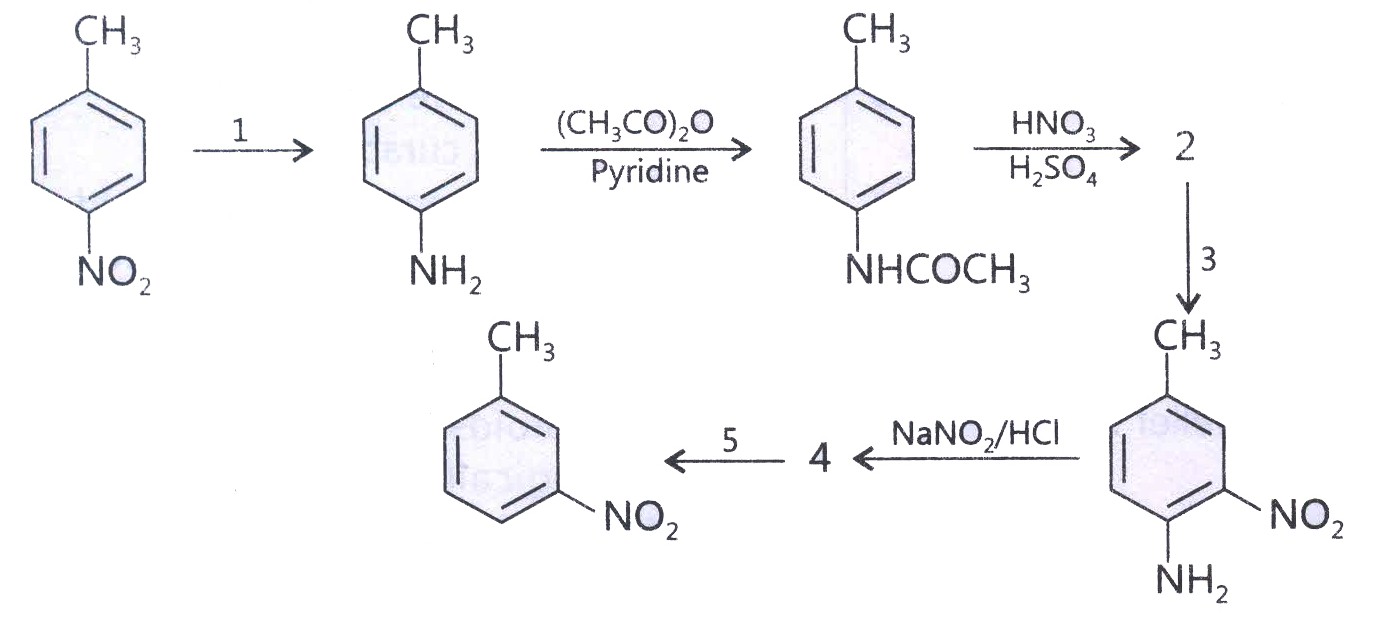
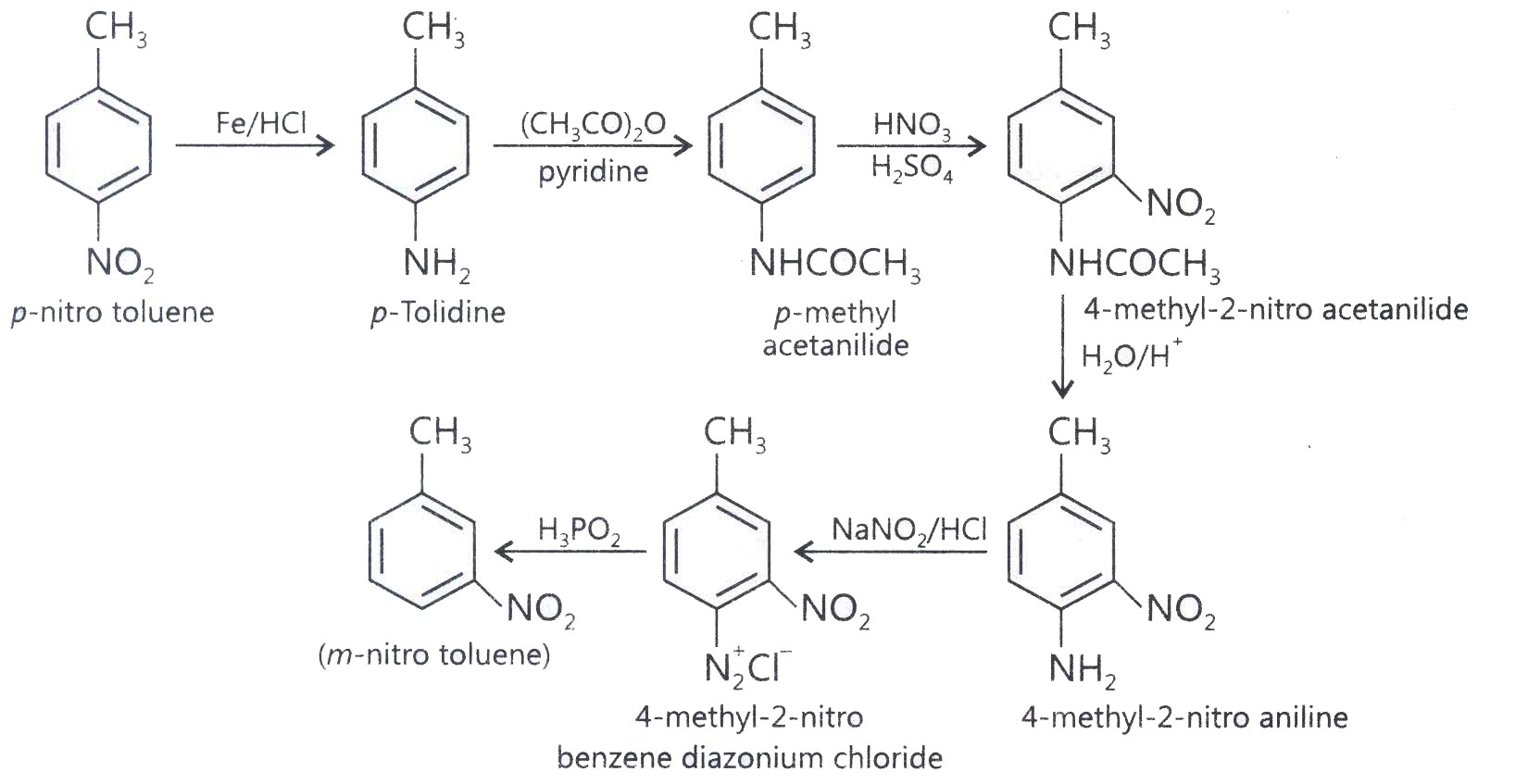
Predict the reagent or the product in the following reaction sequence.
2.
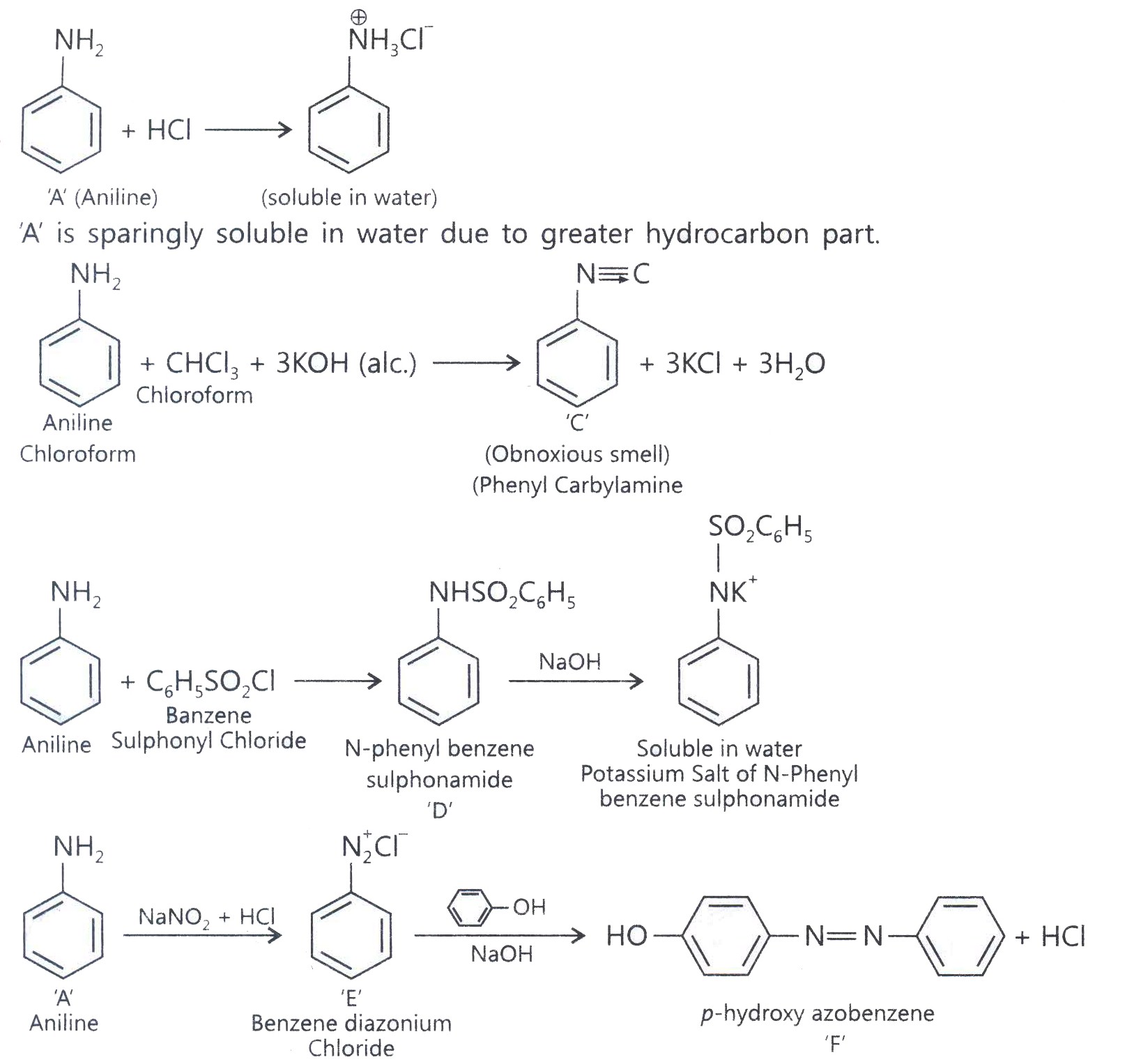
A colourless substance 'A' (C6H7N) is sparingly soluble in water and gives a water soluble compound 'B' on treating with mineral acid. On reacting with CHCl3 and alcoholic potash 'A' produces an obnoxious smell due to the formation of compoung 'C'. Reaction of 'A' with benzenesulphonyl chloride gives compound 'D' which is soluble in alkali. With NaNO2 and HCl, 'A' forms compound 'E' which reacts with phenol in alkaline medium to give an orange dye 'F' . Identify compounds 'A' to 'F'.
3.
Explain why the amino group in aniline acts as a powerful activator and ortho and para director towards electrophilic substitution reaction.
4.
Iodomethane reacts with KCN to form a major product 'A' . Compund 'A' on reduction in presence of LiAIH4 forms a higher amine 'B'. Compound B on treatment with CuCl2 frms a blue colour complex 'C'. Identify the compounds 'A', 'B' and 'C' .
5.
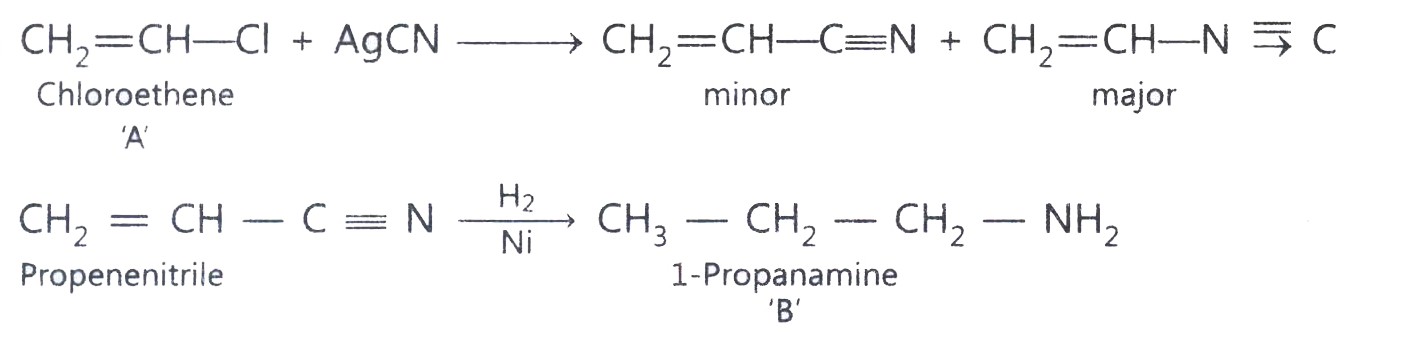
An aliphatic compound 'A' with molecular formula C2H3Cl on treatment with AgCN hives two isomeric compounds of unequal amounts with the molecular formula C3H3N. The minor of nthese two products on complete reduction with H2 in the presence of Ni gives a compound 'B' with molecular formula C3H9N. Identify the compounds 'A' , 'B' and write the reactions involved.
6.
A compound 'X' having molecular formula C3H7NO, reacts with Br2 in presence of KOH to give another compound 'Y'. The compound Y reacts with NHO2 to form ethanol and N2 gas. Identify the compounds X and Y and write the reactions involved.
7.
How would you achieve the following conversions?
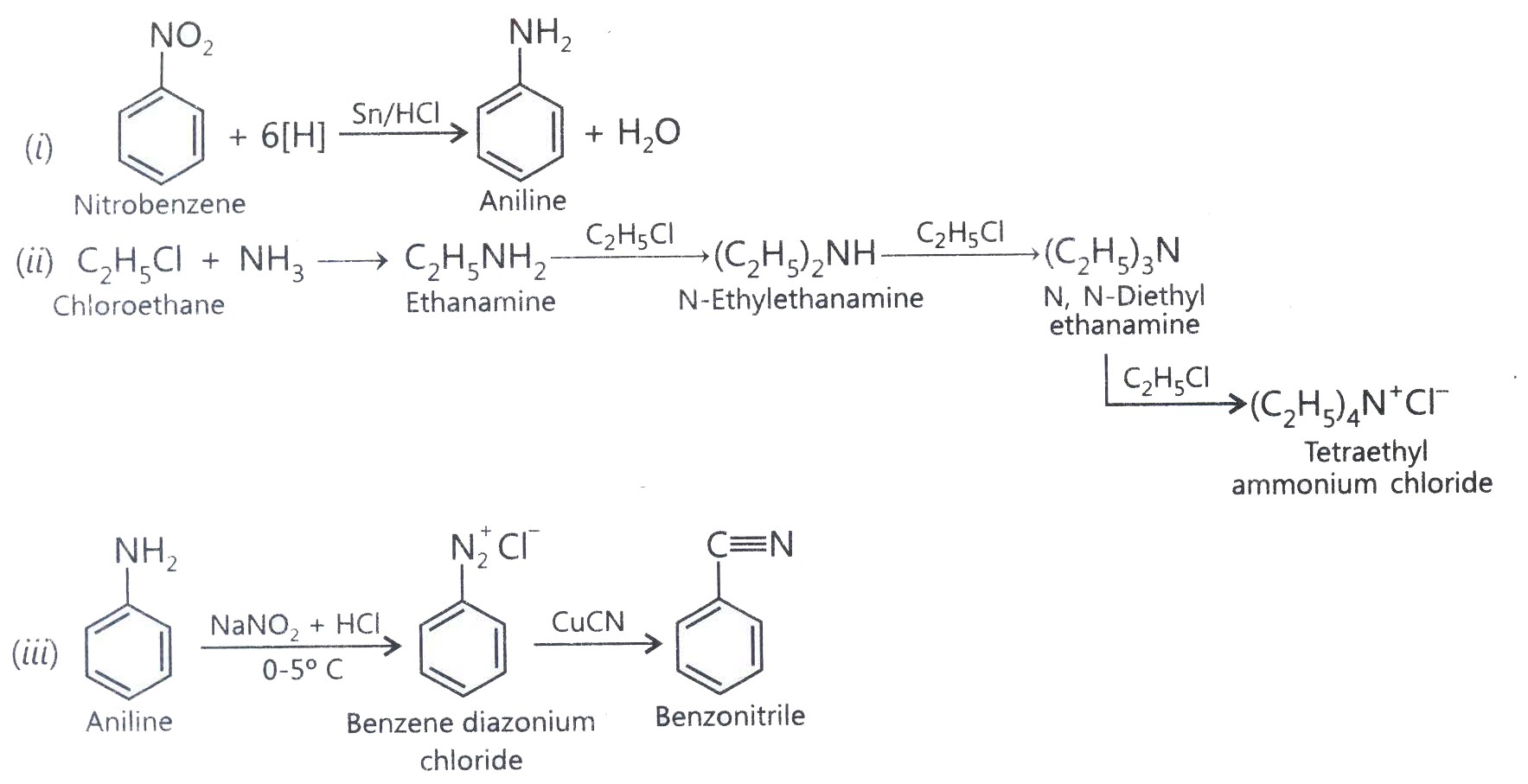
(i) Nitrobenzene to aniline
(ii) An alkyl halide to a quaternary ammonium salt.
(iii) Aniline to benzonitrile.
Write the chemical equation with reaction conditions in each case.
8.
Give one chemical test each to distinguish between the compounds in the following pairs:
(i) Methyleamine and dimethylamine
(ii) Aniline and benzylamine
(iii) Ethylamine and aniline
9.
Illustrate the following reactions giving a chemical equation in each case:
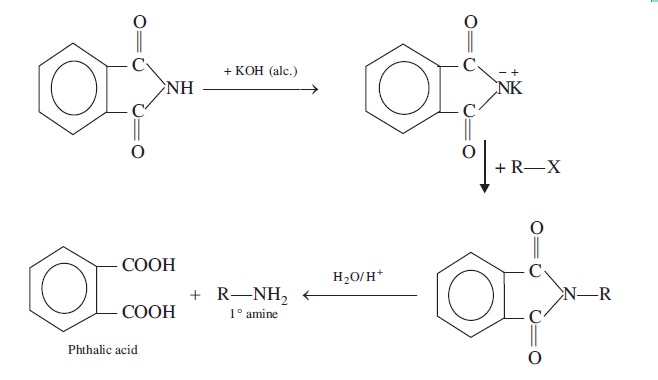
(i) Gabriel phthalimide synthesis
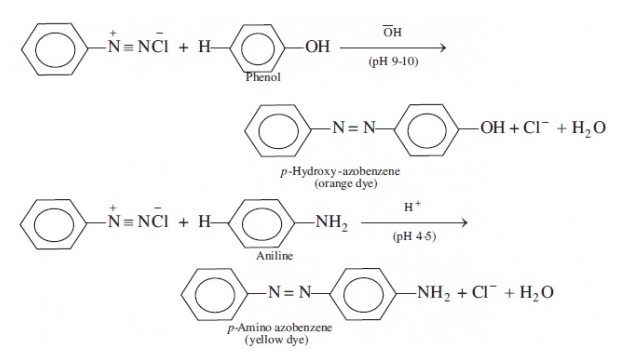
(ii) A coupling reaction.
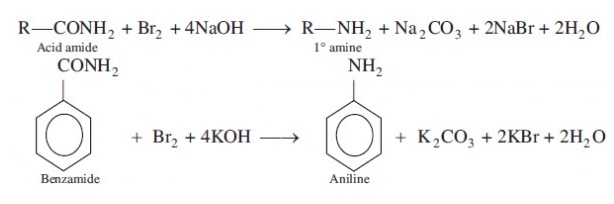
(iii) Hoffmann's bromamide reaction.
10.
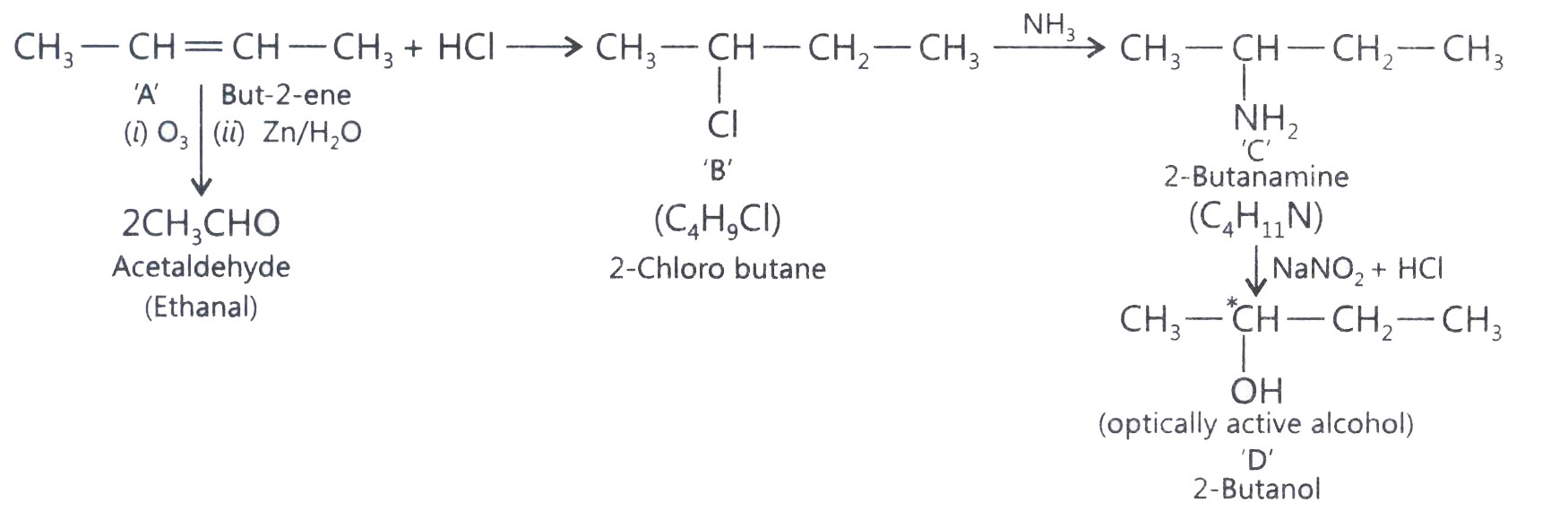
A hydrocarbon 'A' (C4H8) on reaction with HCI gives a compound 'B' , (C4H11N). On reacting with NaNO2 and HCI followed by treatment with water, compound 'C'. Ozonolysis of 'A' gives 2 moles of acetaldehyde. Identify compounds 'A' to 'D' . Explain the reactions involved.
1.
2.
3.
-NH2 group has lone pair of electrons, therefore, it increases electron density at o and p-positions and that is why electrophilic substitution takes place at o- and p-positions.
4.

5.
6.

7.
8.
(i) Methylamine and dimethylamine can be distinguished by the carbylamine test. Carbylamine test: Aliphatic and aromatic primary amines on heating with chloroform and ethanolic potassium hydroxide form foul-smelling isocyanides or carbylamines. Methylamine (being aliphatic primary amine) gives a positive carbylamine test, but dimethylamine does not.
(ii) Secondary and tertiary amines can be distinguished by allowing them to react with Hinsbergs reagent (benzenesulphonyl chloride, C6H5SO2Cl). Secondary amines react with Hinsberg’s reagent to form a product that is insoluble in an alkali. For example, N, N−diethylamine reacts with Hinsberg’s reagent to form N, N−diethylbenzenesulphonamide, which is insoluble in an alkali. Tertiary amines, however, do not react with Hinsberg’s reagent amines, however, do not react with Hinsberg’s reagent.
(iii) Aniline and benzylamine can be distinguished by their reactions with the help of nitrous acid, which is prepared in situ from a mineral acid and sodium nitrite. Benzylamine reacts with nitrous acid to form unstable diazonium salt, which in turn gives alcohol with the evolution of nitrogen gas.
9.
(i) Gabriel phthalimide synthesis: This reaction is used for the preparation of aliphatic primary amines. In this reaction, phthalimide is first of all treated with ethanolic KOH to form potassium phthalimide. Potassium phthalimide on treatment with alkyl halide gives N-alkyl phthalimide, which on hydrolysis with dilute hydrochloric acid gives a primary amine as the product.
(ii) Coupling reactions: Diazonium salts react with aromatic amines in weakly acidic medium and phenols in weakly alkaline medium to form coloured compounds called azo dyes by coupling at p-position of amines or phenol. The mechanism is basically that of electrophilic aromatic substitutions where the diazonium ion is electrophile.
(iii) Hoffman’s bromamide reaction: When a primary acid amide is heated with an aqueous or ethanolic solution of NaOH or KOH and bromine (i.e., NaOBr or KOBr), it gives a primary amine with one carbon atom less.
10.

12th Standard CBSE Syllabus & Materials
12th Standard CBSE
CBSE 12th Computer Science Python Revision Tour I - New Previous year Question Papers Study Material - QB365 Set A
NEW12th Standard CBSE
CBSE 12th Business Studies Planning Important Questions And Answers Study Material - QB365 Set A
NEW12th Standard CBSE
CBSE 12th Business Studies Business Environment Important Questions And Answers Study Material - QB365 Set A
NEW12th Standard CBSE
CBSE 12th Business Studies Principles of Management Important Questions And Answers Study Material - QB365 Set A



CBSE 12th Standard CBSE Subjects
CBSE Standards










