
 100% FREE ACCESS
12th Standard CBSE Syllabus & Materials
12th Standard CBSE
CBSE 12th Economics Government Budget and the Economy Previous year Question Papers Study Material - QB365 Set A
NEW12th Standard CBSE
CBSE 12th Computer Science Interface Python with MySQL - New Previous year Question Papers Study Material - QB365 Set A
NEW12th Standard CBSE
CBSE 12th Computer Science Database Concept - New Previous year Question Papers Study Material - QB365 Set A
NEW12th Standard CBSE
CBSE 12th Computer Science Data Communication - New Previous year Question Papers Study Material - QB365 Set A
NEW12th Standard CBSE
CBSE 12th Computer Science Data Structures - New Previous year Question Papers Study Material - QB365 Set A
NEW12th Standard CBSE
CBSE 12th Computer Science Functions - New Previous year Question Papers Study Material - QB365 Set A

Published on: 03/03/2020
12th Standard CBSE Chemistry Public Exam Model Question 2020
Download CBSE Class 12th Standard CBSE Chemistry question papers, sample papers, important questions, and previous year solved papers in PDF format. Get free study materials, NCERT solutions, and exam preparation resources for Class 12th Standard CBSE Chemistry
Questions + Answers key
Take MCQ Chemistry Test
1.
A metal (M) oxide crystallizes in a hexagonal close packed array of oxide ions with two out of every three octahedral holes occupied by metal ions. Derive the formula of the metal oxide.
2.
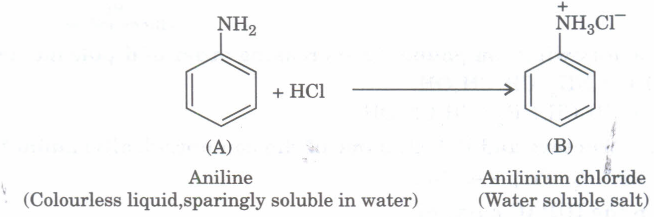
Why is aniline soluble in aqueous HCI?
3.
Give two differences between natural and synthetic polymers.
4.
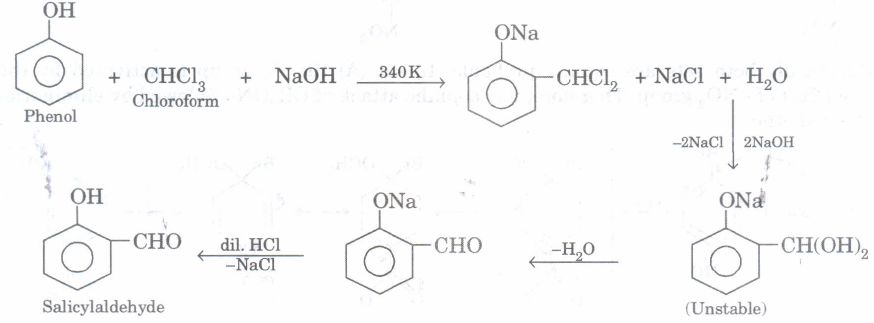
Give the equations of reactions of preparation of phenol from cumene
5.
Why complexes are preferred in the electrolytic bath for electroplating?
6.
What do you mean by an adsorption isotherm and an adsorption isobar? Explain Freundlich adsorption isotherm for the adsorption of gases on solids.
7.
Write such reactions and facts about glucose which cannot be explained by its open chain structure.
8.
Draw the structures of optically active unsaturated compound having molecular formula C5H9Br, that after addition of H2 becomes either optically inactive or shows optical activity.
9.
CoSO4Cl. 5NH3 exists in ywo isomeric forms 'A' and 'B' . Isomer 'A' reacts with AgNO3 to give white precipitate, but does not react with BaCl2. Isomer 'B' gives white precipitate with BaCl2 but does not react with AgNO3. Answer the following questions.
(i) Identify 'A' and 'B' and write their structural formulae.
(ii) Name the type of isomerism involved.
(iii) Give the IUPAC name of 'A' and 'B'.
10.
Compare the relative stability of +2 oxidation states in aqueous solutions for the metals having in their atoms the outer electron configurations, 3d3, 4s2, 3d6 4s2 and 3d5 4s2.
11.
Name one example each of
(i) acidic flux
(ii) basic flux.
12.
What do you understand by the rate law and rate constant of a reaction? Identify the order of a reaction if the units of its rate constant are :
(i) L-1 mol s-1
(ii) L mol-1 s-1
13.
Mohan heard a lot of noise and weeping in nearby jhuggis he look courage and went to enquire what had happened. He found that some people has taken spurious alcohol containing methanol and were crying with pain and were complaining of loss of eyesight. He immediately hired an auto rickshaw and packed it with 4 persons who has consumed spurious alcohol.
(i) How does methanol in drinking alcohol cause problem?
(ii) What treatment might the doctors have undertaken to save the patients?
(iii) What message would you give to the person who consumed spurious alcohol?
14.
Carbon compounds containing more than one halogen atom are usually called polyhalogen compounds. Polyhalogen compounds are useful in industry and agriculture. One of the important polyhalogen compound is used as an insecticide.
(i) Name the polyhalogen compound for which Paul Muller won the Nobel Prize in medicine and physiology. Draw its structure also.
(ii) Why is the use of DDT banned in some countries?
(iii) What values do you derive from the answer of above question?
15.
One of the major gifts of civilisation is the stress. In the mad race to earn more money and to buy more comforts, we have added stress to our life.we do not have proper sleep and this leads to many disorders and diseases. We have to take sleeping pills from time to time.
(i) What is the chemical name of sleeping pills?
(ii) How do they help in reducing stress?
(iii) How are tranquillizers helpful?
(iv) If we still take sleeping pills, then which value do we lack?
16.
A house wife while working in the kitchen gots a cut on the finger. It started bleeding and become panicked. She immediately called her neighbour.She had kept ferric chloride in her house. She immediately applied it on the affected area and the bleeding stopped.
(i) What is the chemical formula of ferric chloride?
(ii) Why did bleeding stop on applying it on the affected finger?
(iii) What is the name of the phenomenon involved?
(iv) What do we learn from it? What is the value associated with this from the point of view of chemist?
17.
CoSO4Cl.5 NH3 exists in two isomeric forms 'A' and 'B' gives white precipitate with BaCl2 but does not react with AgNO3. Answer the following questions.
(i) Identify 'A' and 'B' and write their structure formulas.
(ii) Name the type of isomerism involved
(iii) Give the IUPAC name of 'A' and 'B'.
18.
(a) Complete the following chemical equations:
(i) F2 + H2O \(\to\) .............
(ii) Ca3P2 + H2O \(\to\) .............
(iii) XeF4 + H2O \(\to\) .............
(b) Draw structures of the following species:
(i) H2S2O7 (ii) NO3-
19.
(a) Define the following:
(i) Order of a reaction
(ii) Elementary step in a reaction
(b) A first order reaction has a rate constant value of 0.00510 min-1. If we begin with 0.10 M concentration of the reactant, how much of the reactant will remain after 3.0 hours?
20.
0.6 mL of acetic acid (CH3COOH), having density 1.06 g mL–1, is dissolved in 1 litre of water. The depression in freezing point observed for this strength of acid was 0.0205°C. Calculate the van’t Hoff factor and the dissociation constant of acid.
21.
(i) What is the role of t-butyl peroxide in the polymerization of ethene?
(ii) Identify the monomers in the following polymer:
\(-\left[\mathrm{NH}-\left(\mathrm{CH}_{2}\right)_{6}-\mathrm{NH}-\mathrm{CO}-\left(\mathrm{CH}_{2}\right)_{4}-\mathrm{CO}\right]-_{n}\)
(iii) Arrange the following polymers in the increasing order of their intermolecular forces:
Polystyrene, Terylene, Buna-S
22.
(i)What are disinfectants? Give an example.
(ii) Give two examples of macromolecules that are chosen as drug target.
(iii) What are anionic detergent? Give an example.
23.
Define the following terms:
(i) Glycosidic linkage
(ii) Invert sugar
(iii) Oligosaccharides.
24.
Write the complete chemical equation for each the following:
(i) An alkaline solution of \(KMnO_{ 4 }\) reacts with an iodide.
(ii) An excess of \(SnCI_{ 2 }\) solution is added to a solution of mercury (II) chloride.
(iii) Potassium chromate is acidified with sulphuric acid.
25.
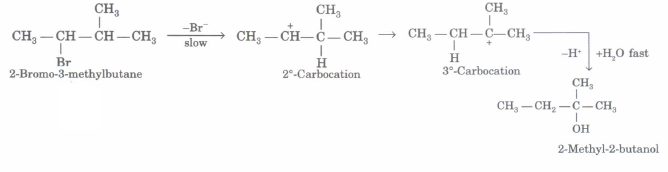
Hydrolysis of 2-bromo-3-methylbutane \(\left( 2° \right) \) gives only 2-methyl1-2-butanol \(\left( 3° \right) \).Explain.
26.
Discuss the electrolysis of fused alumina for obtaining aluminium.
27.
How is ammonia manufactured industrially?
28.
Express the relationship between the rate of production of water and the rate of disappearance of oxygen in the reaction:2H2+O2\(\longrightarrow\)2H2O
29.
A cell with N/50 KCI solution showed a resistance of 550 ohms at 25oC . The specific conductivity of N/50 KCI at 25o C is 0.002768 ohm-1 cm-1. The cell filled with N/10 ZnSO4 solution at 25oC shows a resistance of 72.18 ohms. Find the cell constant and molar conductivity of ZnSO4 solution.
30.
In the mineral, spinel, having the formula MgAl2O4,oxide ions are arranged in the cubic close packing, Mg2+ ions occupy the tetrahedral voids while Al3+ ions occupy the octahedral voids.
(i) What percentage of tetrahedral voids is occupied by Mg2+ ions?
(ii) What percentage of tetrahedral voids is occupied by Al3+ ions?
31.
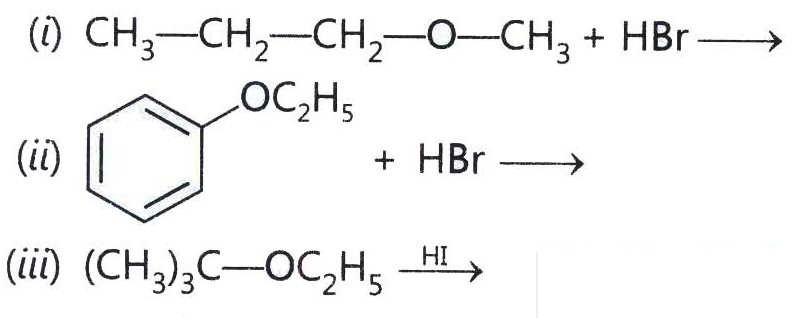
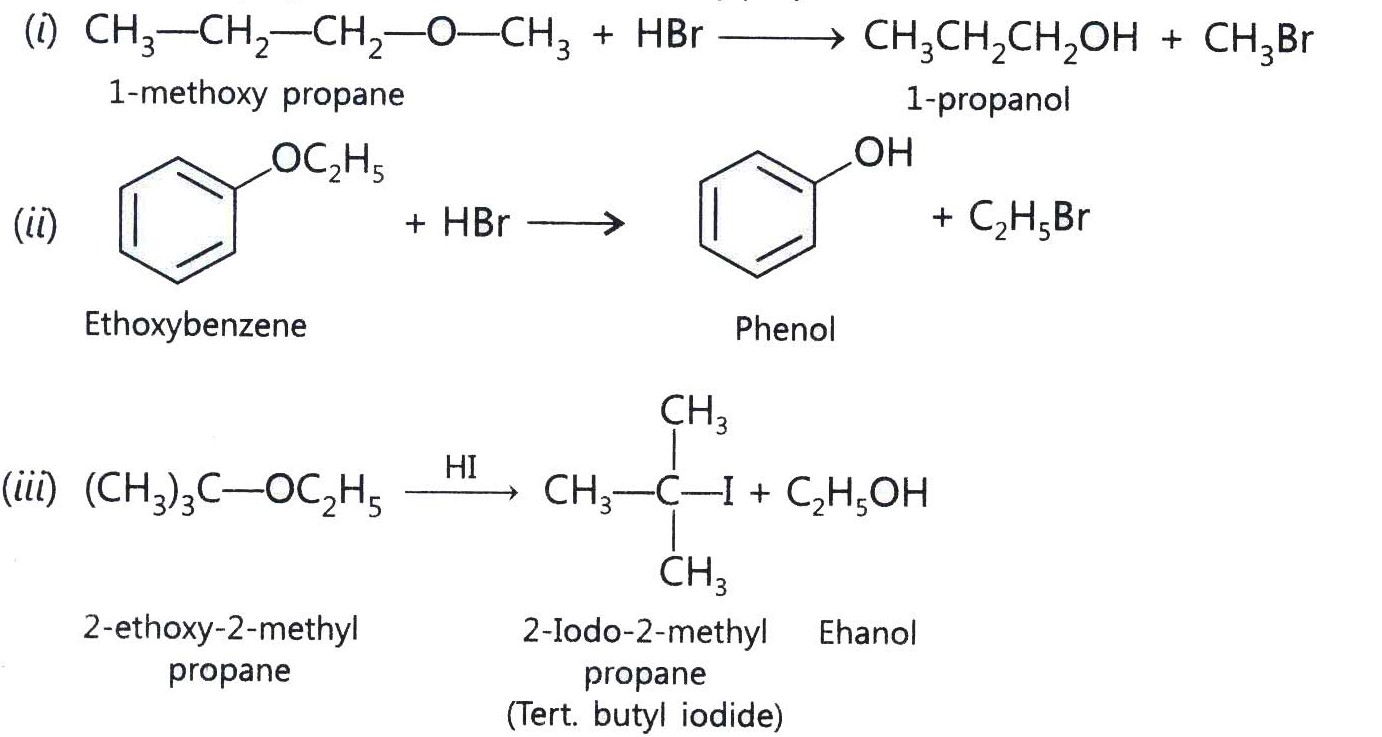
State the products of the following reactions:
32.
Veronal and lnminal are derivates of barbituric acid which are ......... .
Tranquillizers
Non - narcotic analgesic
Antiallergic drugs
Neurologically active drugs
33.
The final product in the following sequence of reactions is \({ C }_{ 6 }H_{ 5 }{ NH }_{ 2 }\overset { { NaNO }_{ 2 }\ /\ HCI }{ \underset { 273-278\ K }{ \longrightarrow } } \ A\ \overset { { C }_{ 6 }H_{ 6 }/NaOH }{ \longrightarrow } \ B\)
\({ C }_{ 6 }H_{ 5 }{ N }_{ 2 }CI\quad\)
\({ C }_{ 6 }H_{ 5 }OH\)
\({ C }_{ 6 }H_{ 5 }-{ C }_{ 6 }H_{ 5 }\)
\({ C }_{ 6 }H_{ 5 }N=NOH\)
34.
\(\alpha-D(+)-\)glucose and \(\beta-D(+)-\)glucose are
enatiomers
conformers
epimers
anomers
35.
Which one of the following is a copolymer formed by condensation polymerization?
Terylene
Buna-S
Buna-N
Neoprene
36.
Which of the following arrangements does not represent the correct order of the property stated against it ?
Sc<Ti<Cr<Mn : number of oxidation states
V2+<Cr2+<Mn2+<Fe2+ : paramagnetic behaviour.
Ni2+<Co2+<Fe2+<Mn2+ : ionic size
Co3+<Fe3+<Cr3+<Sc3+ : stability in aqueous solution
37.
Isopropyl benzene is oxidised in the presence of air to compound 'A'. When compound 'A' is treated with dilute mineral acid,the aromatic product formed is
phenol
benzene
benzaldehyde
acetophenone
toluene
38.
The general formula Cn H2n O2 could be for open chain
dialdehydes
diketones
carboxyilc acids
diols
39.
Due to the presence of ambidentate ligands co-ordination compounds show isomerism. Palladium complexes of the type \([Pd(C_6H_5)_2(SCN)_2]\) and \([Pd(C_6H_5)_2(NCS)_2]\) are
linkage isomers
coordination isomers
ionisation isomers
geometrical isomers
40.
The correct statement for the molecule, CsF3, is
it contains Cs+, I- and lattice I2 molecules
it is a covalent molecule
it contains Cs+ and I\(\overset{-}{3}\) ions
it contains Cs3+ and I- ions
41.
Rust is a mixture of
FeO and Fe(OH)2
FeO and Fe(OH)3
Fe2O3 and Fe(OH)3
Fe3O4 and Fe(OH)3
42.
Upon heating with Cu2S,the reagent(s) that give copper metal is/are
CuFeS2
CuO
Cu2O
CuSO4
43.
Which one of the following forms propanenitrile as the major product?
Ethyl bromide ||+ alcoholic KCN
Propyl bromide+alcoholic KCN
Propyl bromide +alcoholic AgCN
Ethyl bromide+alcoholic AgCN
44.
The correct order of adsorption of the gases studied will be
\({ NH }_{ 3 }>{ SO }_{ 2 }>{ CO }_{ 2 }>HCI\)
\({ CO }_{ 2 }>{ SO }_{ 2 }>{ NH }_{ 3 }>HCI\)
\({ SO }_{ 2 }>{ NH }_{ 3 }>HCI>{ CO }_{ 2 }\)
\(HCI>{ SO }_{ 2 }>{ NH }_{ 3 }>{ CO }_{ 2 }\)
45.
At high pressure, the following reaction is of zero order.
2NH3 \(\xrightarrow [ Platinum \ catalyst ]{ 1130K } \) (g) N2(g) + 3H2(g)
Which of the following options are correct for this reaction ?
Rate reaction = Rate constant
Rate of the reaction depends on concentration of amonia
Rate of decomposition of ammonia will remain constant until ammonia disappears completely
Further increase in pressure will change the rate of reaction
46.
For a weak monobasic acid, if pKa = 4, then at a concentration of 0.01 M of the acib solution, the van't Hoff factor is
1.01
1.02
1.10
1.20
47.
In an ionic compound A+X-,the radii of A+ and X- ions are 1.0pm and 2.0pm respectively.The volume of the unit cell of the crystal AX will be
27pm3
64pm3
125pm3
216pm3
1.
M2O3
2.
Aniline forms the salt anilinium chloride with HCIwhich is water soluble
3.
Natural polymers are high molecular mass macromolecules obtained from natural sources (plants and animals). For example,
(i) Proteins;
(ii) Nucleic acids
Synthetic polymers are man made high molecular mass macromolecules which are prepared in laboratories.
For example,
(i) Polythene;
(ii) Nylon
4.
5.
They dissociate slowly and hence give a smooth and even deposit.
6.
The amount of gas adsorbed increases with increase in pressure, the increase is however not proportionate but less. The saturation pressure 'Ps' keeps the adsorption constant. At a given temperature, the mass of the gas adsorbed per gram of adsorbent by a solid adsorbent at various pressure is given by an empirical solution known as Freundlich equation:
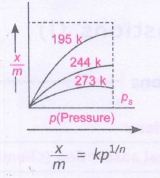
where 'x' is the amount (mass) of gas adsorbed by m gram of the solid adsorbent at pressure (P), k and 'n' are constants at a given temperature for a gas and solid adsorbents. The graph can be sub-divided into three parts.
7.
(t) Glucose does not respond to Schiff's reagent test.
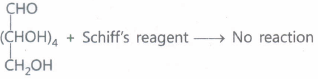
(il) It does not react with sodium bisulphite and ammonia.
.png)
8.

9.
\((i)\ \left[ Co{ \left( { NH }_{ 3 } \right) }_{ 5 }{ SO }_{ 4 } \right] Cl+{ AgNO }_{ 3 }(aq)\longrightarrow AgCl(s)+\left[ Co{ \left( { NH }_{ 3 } \right) }{ SO }_{ 4 } \right] { NO }_{ 3 }\\ \quad \quad \quad \quad \quad \quad \quad \quad \quad 'A'\quad \ \quad \quad \quad \quad \quad \quad \quad \quad \quad \quad white\ ppt\)
\( \left[ Co{ \left( { NH }_{ 3 } \right) }_{ 5 }Cl \right] { SO }_{ 4 }+{ BaCl }_{ 2 }\longrightarrow { BaSO }_{ 4 }(s)+\left[ Co{ \left( { NH }_{ 3 } \right) }_{ 5 }Cl \right] { Cl }_{ 2 }\\ \quad \quad \quad \quad \quad \quad \quad \quad \quad 'B'\quad \quad \quad \quad \quad \quad \quad \quad \quad \quad \quad \quad \quad \quad \quad white\ ppt\)
(ii) Ionisation isomerism
(iii) 'N' is pentaamrnine chloridocobalt(III) sulphate.
'B' is pentaammine sulphatocobalt(III) chloride.
10.
Mn2+ (3d5) > V2+ (3d3) > Fe2+ (3d6)
3d5 4s2 > 3d3 4s2 > 3d6 4s2
It is because reduction potential of Mn2+ is lowest and it has half filled d-orbitals, therefore it is more stable and reduction potential of Fe2+ is highest because it has t2g orbitals which are half filled and more stable.
11.
(i) Acidic flux: SiO2 is acidic flux.
(ii) Basic flux: CaO is basic flux.
12.
Rate law is expression which gives relationship between rate of a reaction and conc. of reactants, e.g.
\(\frac { dx }{ dt } =k{ \left[ A \right] }^{ x }{ \left[ B \right] }^{ y }\)
Rate constant is equal to rate of reaction when conc. of reactants is equal to unity.'k' is rate constant in above expression.
(i) Zero order
(ii) Second order.
13.
(i) Methyl alcohol is easily oxidized to formaldehyde and then to formic acid which may cause blindness and death.
(ii) Doctors give an intra venous infusion of diluted ethanol the enzyme responsible for oxidation of HCHO to acid is swamped allowing time for kidneys to excrete methanol.
(iii) People should be educated not to drink cheap alcohol from unauthorized sources. It is not worth saving money when the life get endangered. If at all one has to drink, the stuff must be purchased from an authorized source.
14.
(i) The polyhalogen compound for which Paul Muller was awarded the Nobel Prize is DDT. (Dichlorodiphenyltrichloroethane). The structure of DOT is given below:
(ii) The use of DOT is banned in some countries because:
(a) it is toxic to aquatic life.
(b) it is not degraded rapidly by soil microorganisms due to its complex structure.
(c) it is not metabolized rapidly by animals and deposited in the fatty tissues.
(d) Because of its stability, it accumulates in food chain leading to biomagnification.
(iii) Environmental protection and sensitivity towards life.
15.
(i) The sleeping pills contain the chemical substances known as tranquillizers.
(ii) These help in accelerating the signal sending capacity of the neurotransmitters.
(iii) The tranquillizers give relief from the stress and are also sleep inducing they help in controlling our blood pressure as well as anxiety. However, the frequent use of these is quite harmful.
(iv) Ignorant, careless about health.
16.
(i) Chemical formula of ferric chloride is FeCI3.
(ii) Fe3+ ions of FeCl3 neutralize the charge on the colloidal particles of blood. This leads to coagulation of blood. Bleeding therefore, stopped.
(iii) This phenomenon is known as coagulation or flocculation.
(iv) All house wives must keep small bag or kit in their kitchen. It must have ferric chloride kept in small bottle or potash alum, burnol and bandages etc. Minor accidents are very common in kitchen. The kit can be very helpful to deal with emergency skill of applying knowledge, helping others, kindness, etc are the values associated with it.
17.
(i) As isomer A reacts with AgNO3 to give a white precipitate, CI must be present in the ionization sphere. As it does not react with BaCI2, SO42- must be present in coordination sphere.
Formula of A = [Co(NH3)5SO4] CI (coordination no. of Co = 6) As reactions are reverse for isomer B, formula of B = [Co(NH3)5CI]S04
(ii) Ionization isomerism.
(iii) A = Pentaarnminesulphatocobalt (III) chloride ; B = Pentaamminechloridocobalt (ill) sulphate
18.
(a) \((i)\ { 2F }_{ 2 }+2{ H }_{ 2 }O\longrightarrow { 4H }^{ + }(aq)+{ 4F }^{ - }(aq)+{ O }_{ 2 }(g)\)
\(\\ (ii)\ { Ca }_{ 3 }{ P }_{ 2 }+6{ H }_{ 2 }O\longrightarrow 3Ca(O{ H) }_{ 2 }+{ 2PH }_{ 3 }\)
\(\\ (iii)\ { 6XeF }_{ 4 }+12{ H }_{ 2 }O\longrightarrow 4Xe+{ 2XeO }_{ 3 }+24HF+{ 3O }_{ 2 }\)
(b) (i)
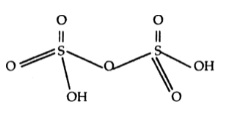
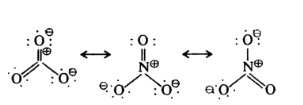
19.
(a) (i) It is sum of powers to which cone. terms are raised in rate law or rate equation.
(ii) Each step of complex reaction (which takes place in more than one step) is called elementary, step in a reaction.
\((b) \ k=0.00510 \ { min }^{ -1 }\)
\(t=\frac { 2.303 }{ k } \log { \frac { { \left[ R \right] }_{ 0 } }{ \left[ R \right] } }\)
\(3\times 60\times 60=\frac { 2.303 }{ 0.00510 } \log { \frac { 0.1 }{ \left[ R \right] } }\)
\(\log { \frac { 0.1 }{ \left[ R \right] } } =\frac { 10800\times 0.00510 }{ 2.303 } \)
\(=23.94\)
\(\frac { 0.1 }{ \left[ R \right] } =Antilog \ 23.94\)
\(\frac { 0.1 }{ \left[ R \right] } =8.71\times { 10 }^{ 23 }\)
\(\left[ R \right] =\frac { 0.1 }{ 8.71\times { 10 }^{ 23 } }\)
\(\left[ R \right] =0.1148\times { 10 }^{ -24 }\)
\(\left[ R \right] =1.148\times { 10 }^{ -25 }M\)
20.
\(\text { Number of moles of acetic acid } =\frac{0.6 \mathrm{~mL} \times 1.06 \mathrm{~g} \mathrm{~mL}^{-1}}{60 \mathrm{~g} \mathrm{~mol}^{-1}} \\\)
\(=0.0106 \mathrm{~mol}=n\)
\(\text { Molality }=\frac{0.0106 \mathrm{~mol}}{1000 \mathrm{~mL} \times 1 \mathrm{~g} \mathrm{~mL}^{-1}}=0.0106 \mathrm{~mol} \mathrm{~kg}^{-1}\)
\(\triangle\)Tf = 1.86 K kg mol–1 x 0.0106 mol kg–1 = 0.0197 K
\(\text { van't Hoff Factor }(i)=\frac{\text { Observed freezing point }}{\text { Calculated freezing point }}=\frac{0.0205 \mathrm{~K}}{0.0197 \mathrm{~K}}=1.041\)
Acetic acid is a weak electrolyte and will dissociate into two ions: acetate and hydrogen ions per molecule of acetic acid. If x is the degree of dissociation of acetic acid, then we would have n (1 – x) moles of undissociated acetic acid, nx moles of CH3COO– and nx moles of H+ ions,
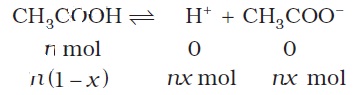
Thus total moles of particles are: n(1 – x + x + x) = n(1 + x)
\(i=\frac{n(1+x)}{n}=1+x=1.041\)
Thus degree of dissociation of acetic acid = x = 1.041– 1.000 = 0.041
Then [CH3COOH] = n(1 – x) = 0.0106 (1 – 0.041),
[CH3COO–] = nx = 0.0106 x 0.041, [H+] = nx = 0.0106 x 0.041.
\(\mathrm{K}_{\mathrm{a}}=\frac{\left[\mathrm{CH}_{3} \mathrm{COO}^{-}\right]\left[\mathrm{H}^{+}\right]}{\left[\mathrm{CH}_{3} \mathrm{COOH}\right]}=\frac{0.0106 \times 0.041 \times 0.0106 \times 0.041}{0.0106(1.00-0.041)}\)
= 1.86 × 10⁻⁵
21.
(i) Catalyst/initiator of free radical
(ii) Hexamethylenediamine and adipic acid
(iii) Buna-S < Polystyrene < Terylene
22.
(i) Disinfectants are the chemicals which kill or prevent the growth of microorganisms. For example; 1% solution of phenol.
(ii) Proteins, Nucleic acid
(iii) Anionic detergents are sodium salts of sulfonated long chain alcohols or hydrocarbons. In anionic detergents, the anionic part of the molecule is involved in the cleansing action.
23.
(i) Glycosidic linkage: The two monosaccharides units are joined together through an oxide linkage formed by loss of a molecule of H2 O.
(ii) Invert sugar: Hydrolysis of sucrose brings about a change in a sign of rotation from dextro (+) to leavo (-) and the product is known as invert sugar.
(iii) Carbohydrates that yield two to ten monosaccharides units, on hydrolysis are called Polysaccharides. Examples are starch, cellulose, glycogen etc.
24.
(i) The black powder acts as a catalyst. The catalysts accelerate the speed of reactions without itself undergoing any permanent changes.
(ii) Black powder is manganese dioxide (MnO2).
(iii) Black powder cannot be used for all decomposition reactions because catalysts are highly specific in nature. A catalyst which can catalyze one reaction may have no effect on another reaction even, if that reaction is very similar.
(iv) Glycerol slows down the decomposition of H2O2 and it is called negative.catalyst.
25.
During SNIreaction, the ionization gives 2° carbocation which rearranges by a hydride shift to a more stable 3"-carbocation to form 3°-alcohol as:
26.
The alumina is dissolved in molten cryolite and is electrolysed in an iron tank lined inside with carbon. The molten cryolite (Na3AlF6) decreases the melting point to about 1173 K and also increases the electrical conductivity. The process of electrolysis is carried in an iron tank having a lining of carbon, which acts as the cathode. The anode consists of a number of carbon rods which dip in the fused electrolyte. The electrolyte is covered with a layer of powdered coke. The overall reaction is \(2{ Al }_{ 2 }{ O }_{ 3 }+3C\longrightarrow 4Al+{ 3CO }_{ 3 }\)
This process of electrolysis is called Hall Heroult process. During electrolysis the following reactions occur:
At cathode:
\({ Al }^{ 3+ }(melt)+{ 3e }^{ - }\longrightarrow Al(l)\)
At anode:
\({ O }^{ 2- }(melt)\longrightarrow O++{ 2e }^{ - }\)
\(\\ C(s)+O\longrightarrow CO(g)\)
\(\\ CO(g)+O\longrightarrow { CO }_{ 2 }(g)\)
Therefore, aluminium is liberated at the cathode and gets collected at the bottom of tank, from where it is removed periodically. The oxygen evolved at the anode combines with the carbon of the anode to produce carbon monoxide. CO either burns to CO2 or escapes out. In this method, for each kg of aluminium produced, about 0.5 kg of carbon anode is burnt
away. Because of the reaction of carbon anodes, these need to be replaced periodically.
27.
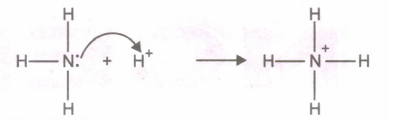
NH3 has one lone pair of electrons which is available for donation. Therefore, it donates an electron pair to a proton to form \({ NH }_{ 4 }^{ + }\) ion and hence it acts as a Lewis base.
28.
\(-{d[O_2]\over dt}={1\over2}{d[H_2O]\over dt}\)
29.
1.5224 cm-1,421.8 ohm-1 cm2 mol-1
30.
(i) 12.5%
(ii) 50%
31.
32.
(a)
Tranquillizers
33.
(c)
\({ C }_{ 6 }H_{ 5 }-{ C }_{ 6 }H_{ 5 }\)
34.
(d)
anomers
35.
(a)
Terylene
36.
(b)
V2+<Cr2+<Mn2+<Fe2+ : paramagnetic behaviour.
37.
(a)
phenol
38.
(c)
carboxyilc acids
39.
(a)
linkage isomers
40.
(c)
it contains Cs+ and I\(\overset{-}{3}\) ions
41.
(c)
Fe2O3 and Fe(OH)3
42.
(c)
Cu2O
43.
(a)
Ethyl bromide ||+ alcoholic KCN
44.
(c)
\({ SO }_{ 2 }>{ NH }_{ 3 }>HCI>{ CO }_{ 2 }\)
45.
(c)
Rate of decomposition of ammonia will remain constant until ammonia disappears completely
46.
(a)
1.01
47.
(d)
216pm3

12th Standard CBSE Syllabus & Materials
12th Standard CBSE
CBSE 12th Computer Science Python Revision Tour I - New Previous year Question Papers Study Material - QB365 Set A
NEW12th Standard CBSE
CBSE 12th Business Studies Planning Important Questions And Answers Study Material - QB365 Set A
NEW12th Standard CBSE
CBSE 12th Business Studies Business Environment Important Questions And Answers Study Material - QB365 Set A
NEW12th Standard CBSE
CBSE 12th Business Studies Principles of Management Important Questions And Answers Study Material - QB365 Set A



CBSE 12th Standard CBSE Subjects
CBSE Standards










