
 100% FREE ACCESS
12th Standard CBSE Syllabus & Materials
12th Standard CBSE
CBSE 12th Economics Government Budget and the Economy Previous year Question Papers Study Material - QB365 Set A
NEW12th Standard CBSE
CBSE 12th Computer Science Interface Python with MySQL - New Previous year Question Papers Study Material - QB365 Set A
NEW12th Standard CBSE
CBSE 12th Computer Science Database Concept - New Previous year Question Papers Study Material - QB365 Set A
NEW12th Standard CBSE
CBSE 12th Computer Science Data Communication - New Previous year Question Papers Study Material - QB365 Set A
NEW12th Standard CBSE
CBSE 12th Computer Science Data Structures - New Previous year Question Papers Study Material - QB365 Set A
NEW12th Standard CBSE
CBSE 12th Computer Science Functions - New Previous year Question Papers Study Material - QB365 Set A

Published on: 02/11/2025
Download CBSE Class 12th Standard CBSE Biology question papers, sample papers, important questions, and previous year solved papers in PDF format. Get free study materials, NCERT solutions, and exam preparation resources for Class 12th Standard CBSE Biology
Questions + Answers key
Take MCQ Biology Test
1.
Suggest a technique to a researcher who need to separate fragments of DNA.
2.
Cleistogamy can favour only autogamy. Justify.
3.
Name a recombinant vaccine that is currently being used in vaccination pro-grammes
4.
Comment on the similarity between the flippers of dolphins and penguins, with reference to evolution.
5.
Which one is tailed with adenylate residue between 3' end and 5'end of hnRNA?
6.
A garden pea plant produced axial white flowers. Another of the same spcies produced terminal violet flowers. Identify the dominant traits
7.
Name the first cell of male gametophyte of angiosperms.
8.
Why is banana referred to as a parthenocarpic fruit?
9.
Write the functions of :
(a) Cry 1ACgene
(b) RNA interference (RNAi
10.
One of the salient features of the genetic code is that it is nearly universal from bacteria to humans. Mention two exceptions to this rule. Why are some codes said to be degenerate?
11.
This is the pedigree of a family tracing the movement of the gene for haemophilia. Explain the pattern of inheritance of the disease in the family.
12.
Is sweet potato analogous or homologous to potato tuber ? Give reasons to support your answer.
13.
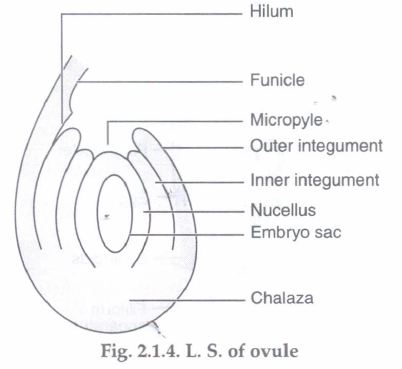
Draw a well-labeled diagram of a typical anatropous ovule
14.
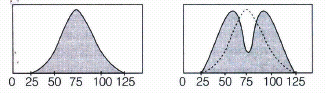
Refer the graph and answer the questions that follow.
(i)The graph depicts which type of natural selection?
(ii)Explain the other two effects/ types of natural selection.
15.
State the function of the following.
(i) Acrosome
(ii) Sperm tail
16.
Very briefly explain Sex-influenced traits
17.
How can you explain the existence of analogous organs?
18.
What changes happen during processing of RNA?
19.
Elisa technique is based on antigen and antibody interaction. Can this technique be used in the molecular diagnosis of genetic disorder such as phenylketonuria?
20.
A mixture of fragmented DNA was electrophoresed in an agarose gel. After staining the gel with ethidium bromide, no DNA bands were observed. What could be the reason?
21.
The figure given below represents Miller's apparatus used for his experiment.
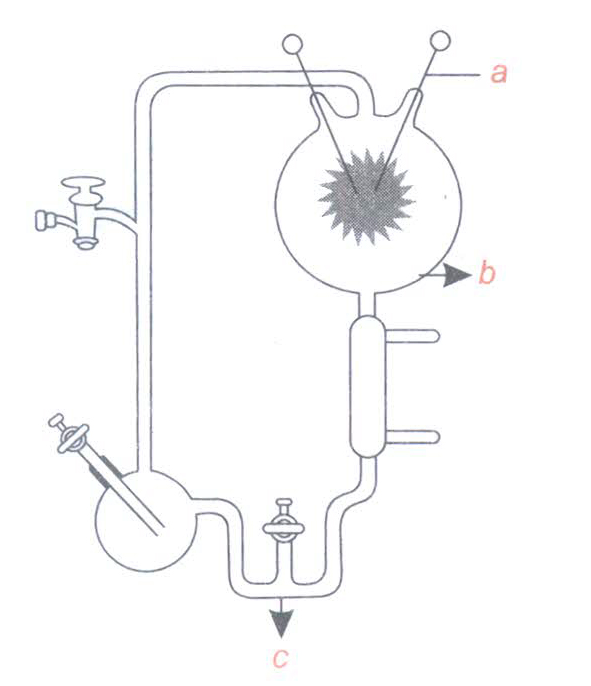
Name the chemicals found in the sample drawn from 'c'. How did this experiment support evolution?
22.
Write any four ways used to introduce a desired DNA segment into a bacterial cell i recombinant DNA technology experiments.
23.
(a)Explain how to find whether an E.Coli bacterium has transformed or not when a recombinant DNA bearing ampicillin-resistant gene is transferred into it.
(b)What does the ampicillin-resistant gene act as, in the above case?
24.
Explain how a hereditary disease can be corrected. Give an example of the first successful attempt made towards correction of such diseases
25.
How do Darwin and de Vries differ in their views on the mechanism of evolution of life on earth?
26.
Choose two pairs of homologous structures from the following and mention why they are so called?
(a) Hearts of humans and monkeys.
(b) Eyes of Octopus and mammals.
(c) Thorns of Bougainvillea and tendrils of Cucurbits.
(d) Flippers of penguins and dolphins.
27.
Mention the fate of corpus luteum and its effect on the uterus in the absence of fertilisation of the ovum in a human female.
28.
Geitonogamous flowering plants are genetically autogamous, but functionally cross-pollinated. Justify.
29.
In a certain population the frequency of three genotypes is as follows:
| Genotype: | BB | Bb | bb |
| Frequency: | 36% | 48% | 16% |
What would be the likely frequency of the Allele B & b.
30.
(a) State Hardy-Weinberg principle. Name any two factors which affect it.
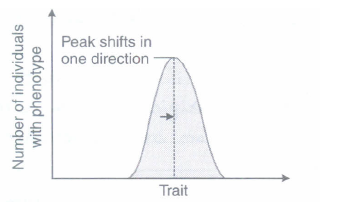
(b) Draw a graph to show that natural selection leads to directional change.
31.
(a) How is apomixis different from parthenocarpy ?
(b) Describe any two modes by which apomictic seeds can be produced.
32.
A non-biology person is quite shocked to know that apple is a false fruit, mango is a true fruit and banana is a seedless fruit. As a biology student how would you satisfy this person?
33.
Explain the events in a normal woman during her menstrual cycle on the following days:
(a) Ovarian event from 13-15 days
(b) Ovarian hormones level from 16 to 23 days
(c) Uterine events from 24 to 29 days
34.
A woman has certain queries as listed below, before starting with contraceptive pills. Answer them.
(a) What do contraceptive pills contain and how do they act as contraceptives?
(b) What schedule should be followed for taking these pills?
35.
What is tubectomy?Represent it diagramatically
36.
(a) Give one example each of albuminous and non-albuminous seeds.
(b) Name the parts of the ovule and the embryo sac of an angiosperm that develop into
(i) perisperm,
(ii) seed coat,
(iii) endosperm, and
(iv) embryonal axis.
37.
Doctor are worried about antibiotics resistance in disease causing bacteria such as Mycobacterium and are using DNA fingerprinting technique for screening of resistance bacteria.
Read the above passage and answer the following questions:
(i) What is antibiotics?
(ii) What are the possible reasons for development of resistance in bacteria to antibiotics?
(iii) How can DNA fingerprinting be helpful in controlling growth of such bacteria?
38.
While travelling, Arvind noticed that in his city every public transport, whether bus or train, was full of passengers and there was no space even in the markets or other public places. He shared his observation with his grandfather. Grandfather told him that the situation was not so worse when he was a child. Population has increased so much that we do not have sufficient resources to provide basic amenities needed in a civillized society.
Read the above passage and answer the following questions:
(i) Whar are the possible reasons of population explosion?
(ii) What are the adverse effect of such population explosion?
(iii) As an educated citizen, what are your suggestion to reserve the trend?
39.
Can you list 10 recombinant proteins which are used in medical practice. Find out where they are used as therapeutics (use the internet).
40.
Explain the steps to DNA-fingerprinting that will help in processing of the two blood samples A and B picked up from the crime scene.
41.
One of the main objectives of biotechnology is to minimise the use of insecticides on cultivated crops. Explain with the help of suitable example, how insect resistant crops have been developed using techniques of biotechnology.
42.
(a) Draw a diagramatic sectional view of human ovary showing different stages of oogenesis along with corpus luteum.
(b) Where is morula formed in human?Explain the process of its development from zygote.
43.
(a) Describe the process of syngamy and triple fusion in angiosperms.
(b) Explain the development of a fertilised egg upto a mature embryo in a dicot plant. draw a labelled diagram of a mature dicot embryo,
44.
Which type of selection is industrial melanism observed in moth, Biston bitularia:
Stabilising
Directonal
Disruptive
Artificial
45.
Which of the following is the relatively most accurate method of dating of fossils?
radio-carbon method
potassium-argon method
electron-spin resonance method
uranium-lead method
46.
DNA is a polymer of nucleotides which are linked to each other by 3'-5' phosphodiester bond. To prevent polymerisation of nucleotides, which of the following modifications would you choose?
(a) Replace purine with pyrimidines
(b) Remove/Replace 3' OH group in deoxyribose
(c) Remove/Replace 2' OH group with some other group in deoxyribose
(d) Both 'b' and 'c'
47.
1st polar body is formed at which state of oogenesis?
1st meiosis
2nd mitosis
1st mitosis
differentiation
48.
Identify the correctly matched pair/pairs of the germ layers and their derivatives.
A.ectoderm-epidermis B. endoderm-dermis
C. mesoderm-muscles D. mesoderm-notochord
E. endoderm-enamel of teeth
A and D only
A and B only
A, C and D only
A, B, C and E only
49.
Represented below is the inheritance pattern of a certain type of trait in humans. Which one of the following conditions could be an example of this pattern?
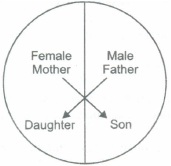
Phenylketonuria
Sickel cell anaemia
Haemophilia
Thalassemia.
50.
The main aim of human genome project is
to develop better techniques for comparing two different human DNA samples
to remove disease causing genes from human DNA
to introduce new genes into humans
to identify the sequence of all the genes present in human DNA
51.
Select the correct order of endosperm types
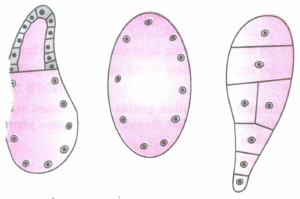
cellular, helobial, free nuclear
cellular, free nuclear, helobial
helobial, free nuclear, cellular
free nuclear, cellular, helobial
free nuclear, helobial, cellular
52.
In cloning of cattle a fertilized egg is taken out of the mother's womb and
In the eight cell stage, cells are separated and cultured until small embryos are formed which are implanted into the womb of other cows
In the eight cell stage, the individual cells are separated under electrical field for further development in culture media
From this upto eight identical twins can be produced
The egg is divided into 4 pairs of cells which are implanted into the womb of other cows
53.
The polymerase chain reaction is a technique that
Is used for in vivo replication of DNA
Is used for in vivo synthesis of mRNA
Is used for in vitro synthesis of mRNA
Is used for in vitro replication of specific DNA sequence using thermostable DNA polymerase
54.
In pea plants, yellow seeds are dominant to green. If heterozygous yellow seeded plant is crossed with a green seeded plant, what ratio of yellow and green seeded plants would you expect in F1 generation?
9 : 1
1 : 3
3 : 1
50 : 50
55.
The correctly matched pair is
Okazaki fragments-splicing
RNA polymerase-RNA primer
Central dogma_codon
Restriction endonuclease-genetic engineering
56.
Pollen grains are able to withstand extremes of temperature and desiccation because their exine is composed of
Cutin
Suberin
Sporopollenin
Callose
57.
In a flowering plant, archesporium gives rise to
only the wall of the sporangium
both wall and the sporogenous cells
wall and the tapetum
Only tapetum and sporogenous cells
58.
The structure which provides vascular connection between foetus and uterus is called________.
1.
()
Gel Electrophoresis
2.
()
In cleistogamy, flowers never open at all. Hence, foreign pollen will not land on the stigma of such flowers. So, cleistogamy can favour only self-pollination or autogamy.
3.
()
Hepatitis-B vaccine.
4.
()
They are analogous organs, which perform similar functions.
Analogous organs are the result of convergent evolution.
5.
()
3' end
6.
()
Axial flowers and violet flowers
7.
()
Microspore.
8.
()
Banana fruit develops without fertilisation of the ovary; hence it is considered parthenocarpic.
9.
(a) It produces inactive pro-toxin in the host cell/produces proteins to control cotton bollworms.
(b) It produces dsRNA which silences host m-RNNceliular defence mechanism/prevents infestation by nematodes.
10.
(i) Mitochondrial codons
(ii) Some protozoans
Since some amino acids are coded by more than one codon hence it is called as degenerate.
11.
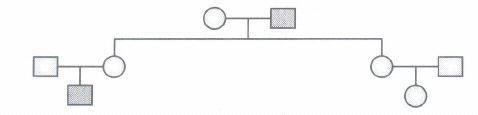
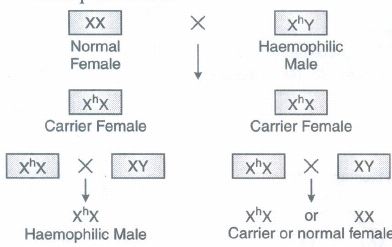
In the given pedigree of a family, a normal female is crossed with a haemophilic male. The offspring generated are carrier females as haemophilia is an X-linked disease and female has two X chromosomes. These carrier females when crossed with normal males produced carrier females and haemephilic males.
12.
Analogous, sweet potato-root modification, potato tubers - stem modification. I'hey are structurally different but both are functionally similar, as they both store food.
13.
14.
(i)The graph depicts disruptive natural selection.This type of selection tends to eliminate intermediate types.
(ii)The other two types of natural selection are :
(a)Directional selection Large number of individuals acquire value other than mean character value.
(b)Stabilising selection Large number of individuals acquire mean character value.
15.
(i) Acrosome It contains hydrolytic enzymes required to dissolve the membranes of the ovum for fertilisation.
(ii) Sperm tail It helps in the movement of sperm in the female genital tract for fertilisation.
16.
The autosomal traits in which the dominant expression depends on the sex only, but not in both through they are present in both the sexes.such are called sex limited characters.
17.
The existence of analogous organs can be explained on the concept of evolution. These organs have developed in the course of evolution as adaptation of different organisms to a similar mode of life.
18.
During RNA processing
(i)unwanted nucleotides are removed
(ii)useful regions are rejoined
(iii)certain nucleotides are added
(iv)some nucleotides are modified, and
(v)folding of molecule
19.
Yes. One can use antibody against the enzyme (that is responsible for the metabolism of phenylalanine) to develop ELISA based diagnostic technique. The patient where the enzyme protein is absent would give negative result in ELISA when compared to normal individual.
20.
1) Wrong fitting of electrodes.
2) Non - use of UV = radiations.
3) Inadvert contamination with nuclease
4) Wrong fitting of electrodes.
21.
1. Amino acids were found.
2. Miller created in a laboratory scale the conditions similar to the primitive earth
3. Electric discharge using electrodes was created in a closed flask containing \(CH_{ 4 },NH_{ 3 },H_{ 2 }\) and water vapour at \(800^{ \circ }C\)
4. The production of organic compounds supported the chemical evolution that preceded the formation of life on earth.
22.
(i) Microinjection
(ii) Biolistics/ gene gun
(iii) Heat-Shock method
(iv) Using disarmed pathogen vectors.
23.
(a) The recombinant/transformant can be selected out from the non-recombinants/non-transformants by plating the transformants on ampicillin containing medium.
1. The transformants will grow in it, while the non-transformants will not grow.
(b) It acts as a selectable marker.
24.
A hereditary disease can be corrected by gene therapy, which is a collection of methods that allows correction or replacement of a defective gene.
Correction of a genetic defect involves the delivery of a normal gene in the individual at the embryonic stage; this is to make the delivered/introduced gene to take the function of the defective, gene.
ADA-deficiency has been corrected by gene therapy.
25.
| Darwinian Concept | de Vries' Concept |
|
According to Darwin, speciation occurs with the accumulation of minor heritable variations. Evolution was gradual and occurs through a number of generations. Variations are small and directional. |
According to de Vries, mutations arising suddenly in a population, are responsible for speciation. Evolution occurs in a large single-step mutation (saltation). Mutations are random and directionless. |
26.
(a) Hearts of humans and monkeys.
(c) Thorns of Bougainvillea and tendrils of Cucurbits.
These are homologous structures as they have similar anatomical structures, but perform different functions.
27.
In the absence of fertilisation, the corpus luteum degenerates.
It causes dis integration of the endometrium of uterus, leading to menstruation
28.
1. Since geitonogamy involves two different flowers of the same plant, it is genetically similar to autogamy; both autogamy and geitonogamy do not result in genetic variation in the progeny.
2. Geitonogamy and cross-pollination involve different flowers and a pollinating agent.
29.
Frequency of allele B = all BB + \(\frac { 1 }{ 2 } \) of Bb.
\(=36+\frac { 1 }{ 2 } \times 48\)
= 36 + 24
= 60%
Frequency of allele b = all bb + \(\frac { 1 }{ 2 } \)Bb
\(=16+\frac { 1 }{ 2 } \times 48\)
= 16 +24
= 40%
30.
(a) Hardy-Weinberg principle states that the total genes and their allels in a population the gene pool remains constant i.e., Allelic frequencies in a population are stable and constant from generation to generation. Gene flow, genetic drift, mutation, genetic recombination, natural selection.
(b)
31.
(a) Parthenocarpy: The formation of fruit without the act of fertilization is called parthenocarpy and the fruits so developed are called as parthenocarpic fruits. These fruits are seedless. e.g., banana. While apomixis is a special type of sexual reproduction which does not involve meiosis and syngamy. In fact it is a form of asexual reproduction that mimics the sexual reproduction in which the seeds are produced without fertilization
(b) Apomictic seeds can be produced by any of the following methods.
(i) Apospory: It is the formation of diploid embryo sac directly from a cell of nucellus
(ii) Diplospory or generative apospory: It is the formation of diploid embryo sac from the megaspore mother cell without meiosis.
The diploid egg of the diploid embryo sac develops into embryo without syngamy i.e., parthenogenetically.
Apogamy : The synergids or antipodals of the diploid embryo sac may develop into embryo parthenogenetically.
32.
Fruit is a ripened ovary whereas seed develops from ovule. Mango is a true fruit because it develops only from the ovary of the flower. Apple is a false fruit because here in this case along with ovary, thalamus of flower also takes part in the formation of fruit. Banana is a seedless fruit as it develop without the stimulus of pollination and fertilization. Such fruits are also called as parthenocarpic fruits.
33.
(a) Rupture of Graafian follicleleads to ovulation! release of ovum.
(b) Estrogen level islow.
(c) Disintegtation of endometrium and menstrual cycle begins again.
34.
(i) Oral pills contain hormones such as progestron and estrogen.Oral administration of small doses of either progestron or progesterone-estrogen combinations is another contraceptive method used by the females.They are used in the form of tablets and hence are popularly called the 'pills'.
Functions.
1. They inhibit ovulation and implantation as well as alter the quality of cervical mucus to prevent/retard entry of sperms.
2. Pills are very effective with lesser side effects and are well accepted by the females.
Advantages of Saheli. 'Saheli', the new oral contraceptive for the female contains a non-steroidal preparation called 'centchroman'. It is a 'once a week' pill with very few side effects and high contraceptive value.
(ii) Schedule. Pills have to be taken daily for a period of 21 days starting preferably within the first five days of menstrual cycle. After a gap of 7 days (during which menstruation occurs) it has to be repeated in the same pattern till the desired period on contraception.
35.
Tubectomy is the sterilisation procedure in females involving ligation of fallopian tube.
36.
(a) Albuminous seed-Castor, Coconut
Non-albuminous seed-Pea, groundnut.
(b) (i) Nucellus
(ii) Integuments
(iii) Primary endosperm cell
(iv) Zygote.
37.
(i) Antibiotics are the chemicals produced by bacteria which hinder growth of other microbes.
(ii) Indiscriminate and overuse of antibiotics are possible reasons for development of resistance in bacteria to antibiotics.
(iii) DNA fingerprinting is used to identify the antibiotic for which bacterium is resistant. This technique helps in selection of the right antibiotic for treatment.
38.
(i) A sudden increase in population in the recent past is due to decrease in death rate and increased longevity as a result of recent advances in medical science.
(ii) As resources are limited, it will not be possible to provide food, shelter, education, medical facilities and other public facilities to all our citizens.
(iii) We should popularise the advantage of small family and method of birth control.
39.
| Recombinant protein | Therapeutic use |
| 1. Reo-pro | Prevention of blood clots. |
| 2. Hirudin | As anticoagulant. |
| 3. OKT-3 | Prevents acute kidney transplant rejection |
| 4. Humulin | Treatment of diabetes |
| 5. DNase | Treating cystic fibrosis |
| 6. Blood Clotting Factor | Treatment of haemophilia-A. |
| 7. Hepatitis-B vaccine | Prevention of hepatitis-B. |
| 8. Asparaginase | Used to treat leukaemia. |
| 9. INF-2 | Treatment of hepatitis-C. |
| 10. Tissue plasminogen activator (TPA) | Treatment of myocardial infarction. |
40.
DNA-Fingerprinting
The steps/procedure in DNA-fingerprinting include the following.
(i) Extraction. DNA is extracted from the cells in a high-speed, refrigerated centrifuge.
(ii) Amplification. Many copies of the extracted DNA are made by polymerase chain reaction.
(iii) Restriction Digestion. DNA is cut into fragments with restriction enzymes into precise reproducible sequences.
(iv) Separation of DNA sequences restriction fragments. The cut DNA fragments are introduced and passed through electrophoresis set-up containing agarose polymer gel; the separated fragments can be visualised by staining them with a dye that shows fluorescence under ultraviolet radiation.
(v) Southern Blotting. The separated DNA sequences are transferred on to a nitrocellulose or nylon membrane.
(vi) Hybridisation. The nylon membrane is immersed in a bath and radioactive probes (DNA segments of known sequence) are added; these probes target a specific nucleotide sequence that is complementary to them.
(vii) Autoradiography. The nylon membrane is pressed on an X-ray film and dark bands develop at the probe sites.
The bands form a characteristic pattern, which varies from individual to individual.
41.
The bacterium Bacillus thurinqiensis produces proteins, called Bt toxins, which kill the larvae of some insects.
The Bt toxin gene has been isolated and cloned in bacteria.
Such genes are introduced into crop plants, which could be expressed in plants to provide resistance to the insects, i.e. they function as biopesticides; so there is no need for insecticides.
Bt toxins are insect group-specific and coded by cry genes; the proteins encoded by genes crylAc and cryllAb control cotton bollworms while crylAb controls corn borer.
When the insect larvae ingest any plant part, the toxin becomes active in the alkaline pH of the gut and kills the insect pest. So such plants are resistant to pests.
42.
(b) Morula is formed in the isthmus of the oviduct/fallopian tube.
The zygote undergoes mitotic divisions in quick succession,called cleavage,forming 2,4,8 and 16 daughter cells,called blastomeres.
The embryo with 8-16 blastomeres is called a morula.
43.
(a) Syngamy
Syngamy refers to the fusion of a male gamete with the female gamete in the embryo sac to form a diploid zygote.
Triple fusion
Triple fusion refers to the fusion of a male gamete with the secondary nucleus (formed by fusion of two haploid polar nuclei) to form the triploid primary endosperm nucleus.
(b) Embryo development
Th'e zygote undergoes mitotic divisions during embryogeny.
The first division is transverse and results in a basal cell and a terminal cell; the basal cell forms the suspensor while the terminal cell forms the embryo proper.
It first, forms a filamentous proembryo, which later forms in sequence a globular embryo, heart-shaped embryo and then a mature embryo.
44.
(b)
Directonal
45.
(c)
electron-spin resonance method
46.
(b)
(b) Remove/Replace 3' OH group in deoxyribose
47.
(a)
1st meiosis
48.
(c)
A, C and D only
49.
(c)
Haemophilia
50.
(d)
to identify the sequence of all the genes present in human DNA
51.
(c)
helobial, free nuclear, cellular
52.
(a)
In the eight cell stage, cells are separated and cultured until small embryos are formed which are implanted into the womb of other cows
53.
(d)
Is used for in vitro replication of specific DNA sequence using thermostable DNA polymerase
54.
(d)
50 : 50
55.
(d)
Restriction endonuclease-genetic engineering
56.
(c)
Sporopollenin
57.
(b)
both wall and the sporogenous cells
58.
()
placenta.

12th Standard CBSE Syllabus & Materials
12th Standard CBSE
CBSE 12th Computer Science Python Revision Tour I - New Previous year Question Papers Study Material - QB365 Set A
NEW12th Standard CBSE
CBSE 12th Business Studies Planning Important Questions And Answers Study Material - QB365 Set A
NEW12th Standard CBSE
CBSE 12th Business Studies Business Environment Important Questions And Answers Study Material - QB365 Set A
NEW12th Standard CBSE
CBSE 12th Business Studies Principles of Management Important Questions And Answers Study Material - QB365 Set A



NCERT Books

Syllabus

Exam Pattern

Sample Question Papers

Previous year Question Papers

Important Notes

MCQ Practice test

NCERT Exemplers

Case study Questions

Image Based Questions

Passage based Questions

HOT Questions

Value Based Questions

Model Questions Papers
NCERT ( Book Back ) Questions

Assertion and Reason
Important Questions And Answers

CBSE 12th Standard CBSE Subjects
CBSE Standards








