
 100% FREE ACCESS
12th Standard CBSE Syllabus & Materials
12th Standard CBSE
CBSE 12th Economics Government Budget and the Economy Previous year Question Papers Study Material - QB365 Set A
NEW12th Standard CBSE
CBSE 12th Computer Science Interface Python with MySQL - New Previous year Question Papers Study Material - QB365 Set A
NEW12th Standard CBSE
CBSE 12th Computer Science Database Concept - New Previous year Question Papers Study Material - QB365 Set A
NEW12th Standard CBSE
CBSE 12th Computer Science Data Communication - New Previous year Question Papers Study Material - QB365 Set A
NEW12th Standard CBSE
CBSE 12th Computer Science Data Structures - New Previous year Question Papers Study Material - QB365 Set A
NEW12th Standard CBSE
CBSE 12th Computer Science Functions - New Previous year Question Papers Study Material - QB365 Set A

Published on: 28/11/2025
Download CBSE Class 12th Standard CBSE Biology question papers, sample papers, important questions, and previous year solved papers in PDF format. Get free study materials, NCERT solutions, and exam preparation resources for Class 12th Standard CBSE Biology
Questions + Answers key
Take MCQ Biology Test
1.
What is the importance of MOET.
2.
Why is sewage water treated until the BOD is reduced ? Give a reason.
3.
Mention the uses of cloning vector in biotechnology
4.
Biotechnologists refer to Agrobacterium tumefaciens as a natural genetic engineer of plants. Give reasons to support the statement.
5.
A boy of ten years had chicken pox.He is not expected to have the same disease for the rest of his life.Mention how it is possible.
6.
Why is the south indian sugar cane prederred by agriculturists?
7.
State the function of mast cells in allergy response
8.
Define livestock.
9.
Why is a little curd added to milk to set it into curd? Explain
10.
Explain the role of Ti plasmids in biotechnology
11.
Explain the advantages of animal inbreeding programme.Mentioin when inbreeding depression would occur.
12.
Name the plant source of ganja.How does it affect the body of the abuser?
13.
Why is a person with cuts and brusis following an accident administered tetanus antitoxin?Given reasons.
14.
How does the HIV breakdown the immune system of the AIDS patient?
15.
How do the tranquillizers differ from the sedatives?
16.
What are the advantages of biogas plant in rural.
17.
What is biopesticide? Explain with situation example.
18.
(a) Why do farmers prefer biofertilisers to chemical fertilisers days? Explain.
(b) How do Anabaena and mycorrhiza act as biofertilisers?
19.
What are allergens?Name any four examples.
20.
What are bioreactors? List five growth conditions that a bioreactor provides for obtaining the desired product.
21.
Explain the different steps involved in each cycle of polymerase chain reaction.
22.
(a) Name the virus that causes AIDS in humans.
(b) Explain the sequence of events that follows,when this virus attacks to cause immune deficiency in humans.
23.
Why are plants obtained through micro-propagation termed somaclones? Name three food plants produced on commerical scale using this method.
24.
Expand MOET. Explain the procedure of this technology in cattle improvement.
25.
Draw labelled sketch of a typical biogas plant.
26.
(a) Describe the different steps in one complete cycle fPCR.
(b) State the purpose of such an amplified DNA sequence.
27.
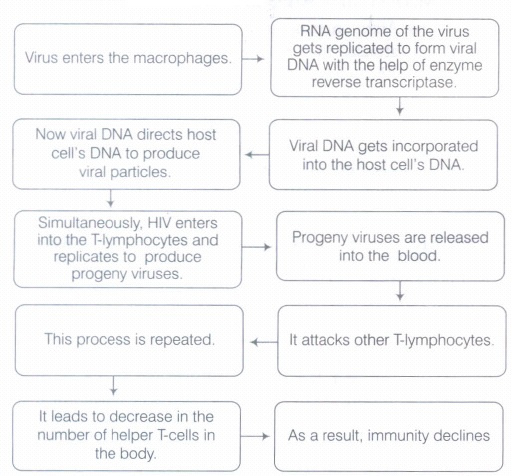
Explain the process of replication of a retrovirus after it gains entry into human body.
1.
()
1. It is used to increase herd size in short term.
2. It is also meant for successful production of hybrids.
2.
()
Sewage water is treated to reduce the BOD, because higher the BOD of the water, grater is its polluting potential
3.
()
(i) Cloning vector are used to make multiple copies to the desired DNA/gene
(ii) They are used to transfer the gene of interest to the host cell.
4.
()
When it infects a plant cell it delivers a part of its DNA called 'T-DNA' (or Tumour-inducing (Ti) plasmid) into the plant cell and transforms it into a tumour cell.
5.
()
His body develops antibodies,that circulate in the body fluids and neutralise the pathogenic agent during subsequent encounters.
Memory B cells and memory T cells are retained inthe system.
6.
()
The south indian sugarcane has thick stems with high sugar content
7.
()
Mast cells release chemicals like sertonin and histamine,which cause allergy.
8.
Livestock includes domesticated animals like cows, buffaloes, sheep, goats, pigs, horses, etc. Cattle and buffaloes are most important livestock animals. These are used in agriculture operations and transportation though also provide milk, meat, hides (for leather goods), dung manure and fuel (in biogas plants). There are 30 breeds of cows and 10 breeds of buffaloes in India.
9.
1. The small amout of curd added to the milk contains millions of lactic acid bacteria they start multiplying at the suitable temperatures.
2. LAB produce acides that coagulate and partially digest the milk proteins; thus, milk is coverted into curd.
3. Vitamin B12 content is increased.
10.
The Ti plasmid of Agrobacterium is responsible for the transformation of plant cells into tumours.
So, it is modified into a non-pathogenic one but still usable to deliver the DNA; this disarmed plasmid of Agrobacterium is used as a vector for transformation of plant cells.
11.
Advantages of inbreeding:
(i) Inbreeding helps to envolve a pure line in animals, as it increases ho-mozygosity.
(ii) It exposes the harmful recessive alleles,which are eliminated by selection.
(iii) It helps in accumlation of superior genes and elimination of less desriable genes.
(iv) This approch increases productivity of the inbred population, as there is selection at selection at each step.
12.
Ganja is obtained from the leaves,flower tops and the resin of the plant Cannabis sativa.
They interact with the cannabinoid receptors present in the brain and affect the cardiovascular system of the body.
13.
Tetanus antitoxin,i.e. preformed antibodies for tetanus are injected,as the child infected with deadly microbe (tetanus bacteria) to which quick immunisation response is required.
If tetanus vaccine is injected,it will take some time for the body to develop antibodies and this can lead to a fatal end.
14.
Mechanism of AIDS infection involves.
(i) After entering into the body of a person, the virus attacks the macrophages. Inside macrophages, the RNA genome of the virus replicates to form viral DNA with the help of enzyme reverse trancsriptase.
(ii) The viral DNA gets integrated into the host cell's DNA and use the raw material and infected cell machinery to produce virus particles.
(iii) The macrophages continue to produce virus particles and act, like a HIV factory
(iv) Simultaneously, virus enters the helper T-lymphocytes (TH). Where also, it replicats and forms progeny viruses.
(v) Progeny viruses released in the blod, attack the other helper T-lymphocytes, resulting in progressive decrease in their number in infected person. With the lack of T-lymphocytes, B-lymphocytes do not produce antibodies to encounter the pathogens/ antigens.
(iv) Infected person becomes so immunodeficient that he/she is unable to protect himself/herself against any infection/pathogen such as Mycobacterium, viruses and even parasites like Toxoplasma.
15.
Tranquillizers are the drugs which lessen tension and anxiety, and promote calmness and soothing without sedating or depressant effect and do not induce sleep. On the other hand, sedatives are the drugs which depress the activities of the central nervous system. They reduce excitement, assuge pin, and give a feeling of calmness, relaxation or drowsiness.
16.
Biogas plant is installed basically to get the biogas which is used as fuel for heating and cooking, lighting, etc.It also yields nitrogen rich slurry that is an excellent source of manure.
17.
Biopesticide involves the biological control of weeds, insects and pathogens by some living organisms. It involves the use of insects feeding on a specific weed or use of certain micro-organisms viruses, bacteria, fungi, protozoa or mites which will cause disease in weeds.
First bioherbicide was developed in 1961: and it was a mycoherbicide derived from a fungus Phytophthora palmivora which controls the growth of milk weed vines citrus orchards. Another fine example of biological control of weeds is the control of overgrowth of cacti by introduction of cochineal insect (Cactoblastis cactorum) in India and Australia.
Few examples of biopesticides are:
Biochemical active ingredients
(a) Plant volatile and Floral attractants
(i) Lemon grass oil
(ii) Eucalyptus oil
(iii) Mustard oil (Allyl isothiocyanate)
(iv) Geranium oil
(v) Citronella oil
(b) Natural insect growth regulators
18.
(a) Farmers prefer biofertilisers to chemical fertilisers for the following differences between them:
| Biofertilisers | Chemical Fertilisers |
|---|---|
| Biofertilisers are organisms that enrich the nutrient quality of the soil. | Fertilisers are synthetic chemicals added to soil to supply specific nutrient(s) that is/are lacking. |
| They provide almost all the nutrients, but slowly. | They supply only the specific nutrient(s), but quickly. |
| They do not degrade the soil quality. | They degrade the soil quality. |
| Their culturing does not cause environmental pollution. | Their manufacture causes environmental pollution. |
(b) Anabaena acts as biofertiliser because
(i) It fixes atmospheric nitrogen and enriches soil fertility.
(ii) By its photosynthesis, it adds organic matter to soil.
Mycorrhizae are the symbiotic associations between certain fungi and roots of higher plants.
Mycorrhizae act as biofertiliser because - The fungus absorbs phosphorus from the soil and passes it to the plant.
Plants with mycorrhiza show resistance to root-borne pathogens.
They show increased tolerance to salinity and drought.
There is an overall increase in plant growth and development.
19.
Allergens are those agents which cause exaggerated/hypersensitive response of the immunesystem,e.g.dust mites,pollen,grains,animal dander,any chemical/fibres.
20.
Bioreactors are the large vessels in which the raw materials are biologically converted into specific products in large quantities, i.e. on corrynerciaI scale.
The bioreactors provide optimum conditions of
(i) ph,
(ii) substrate concentration,
(iii) mineral salts,
(iv) vitamins, and
(v) oxygen.
21.
Polymerase Chain Reaction:
Multiple copies of the desired gene or segment of DNA, can be synthesised in vitro using two sets of primers, the oligonucleotides that are complementary to the regions of DNA of the two strands and the enzyme DNA polymerase.
This enzyme extends the primers using the nucleotides provided in the reaction and the genomic DNA as the template.
For repeated amplification to be achieved, a thermostable DNA polymerase (Taq polymerase), extracted from the bacterium, Thermus aquaticus is employed; it remains active during the high temperature treatment used for denaturation and separation of the two strands.
22.
1. After entering the body of a person,the virus enters the macrophages.
2. The viral genome (RNA) undergoes replication and reverse transcription to become viral DNA with the help of reverse transcriptase.
3. The viral DNA gets incorporated into the DNA of the cells and directs these cells to produce virus particles.
4. The macrophages function as HIV factory and produce a number of HIV particles.
5. These HIV particles move out of macrophages and infect the helper T-lymphocytes and replicant to produce progeny viruses.
6. The progeny viruses released in the blood attack new helper T- cells.
7. This process is repeated and there is a progressive decrease in the number of helper T-cells.
23.
1. Plants obtained through micropropagation are genetically identical among themselves and to the parent plant from which they are produced:hence they are called somaclones.
2.The food plants produced by micropropagation include:Tomato, banana and apple.
24.
(a) Multiple ovulation Embryo Transfer , (MOET) technology
(b) Steps in MOET technology:
A cow is administered hormones with FSH-like activity to induce follicular maturation and superovulation, i.e. instead of one egg, 6-8 eggs are produced per cycle.
The animal is either mated with an elite bull or artificially inseminated.
The fertilised eggs are recovered at the 8-32 celled stages, nonsurgically.
They are then transferred to surrogate mothers.
The genetic mother is available for and her round of superovulation.
25.
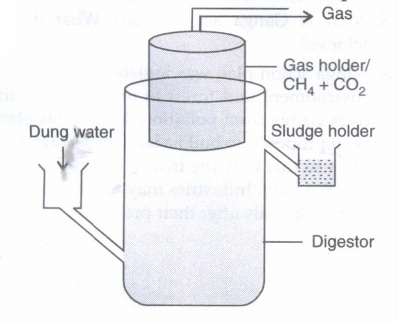
26.
(a) Refer Quick Review (Same value points to be awarded in an explanation)
(b) Purpose : Used to ligate with a vector for further cloning. Detection of bacteria or virus by amplification of their DNNdetection of HIV in AIDS patient. Detection of mutation in genes in suspected cancer patients.
27.
The process by which retrovirus gains entry into human host body or the mechanism by which AIDS virus causes immunodeficiency is as follows:

12th Standard CBSE Syllabus & Materials
12th Standard CBSE
CBSE 12th Computer Science Python Revision Tour I - New Previous year Question Papers Study Material - QB365 Set A
NEW12th Standard CBSE
CBSE 12th Business Studies Planning Important Questions And Answers Study Material - QB365 Set A
NEW12th Standard CBSE
CBSE 12th Business Studies Business Environment Important Questions And Answers Study Material - QB365 Set A
NEW12th Standard CBSE
CBSE 12th Business Studies Principles of Management Important Questions And Answers Study Material - QB365 Set A



NCERT Books

Syllabus

Exam Pattern

Sample Question Papers

Previous year Question Papers

Important Notes

MCQ Practice test

NCERT Exemplers

Case study Questions

Image Based Questions

Passage based Questions

HOT Questions

Value Based Questions

Model Questions Papers
NCERT ( Book Back ) Questions

Assertion and Reason
Important Questions And Answers

CBSE 12th Standard CBSE Subjects
CBSE Standards








