
 100% FREE ACCESS
12th Standard CBSE Syllabus & Materials
12th Standard CBSE
CBSE 12th Economics Government Budget and the Economy Previous year Question Papers Study Material - QB365 Set A
NEW12th Standard CBSE
CBSE 12th Computer Science Interface Python with MySQL - New Previous year Question Papers Study Material - QB365 Set A
NEW12th Standard CBSE
CBSE 12th Computer Science Database Concept - New Previous year Question Papers Study Material - QB365 Set A
NEW12th Standard CBSE
CBSE 12th Computer Science Data Communication - New Previous year Question Papers Study Material - QB365 Set A
NEW12th Standard CBSE
CBSE 12th Computer Science Data Structures - New Previous year Question Papers Study Material - QB365 Set A
NEW12th Standard CBSE
CBSE 12th Computer Science Functions - New Previous year Question Papers Study Material - QB365 Set A

Published on: 28/11/2025
Download CBSE Class 12th Standard CBSE Biology question papers, sample papers, important questions, and previous year solved papers in PDF format. Get free study materials, NCERT solutions, and exam preparation resources for Class 12th Standard CBSE Biology
Questions + Answers key
Take MCQ Biology Test
1.
State two different roles of the spleen in the human body.
2.
Where are B-cells and T-cells formed?how do they differ from each other?
3.
How can a small amount of curd added to fresh milk convert it into curd?
4.
Mention any two methods used for breeding for disease-resistance, apart from the convertional method of hybirdisation
5.
Identify a,b,c,and d in the following table:
|
Name of the human disease |
Name of the casual bacteria/virus |
Specific organ or its part affected |
|---|---|---|
|
1. Typhoid |
Salmonella typhi |
a |
|
2. Common cold |
b |
c |
|
3. Pneumonia |
Streptococcus pneumoniae |
d |
6.
Explain giving reasons, the need to keep beehives in the fields during flowering seasons.
7.
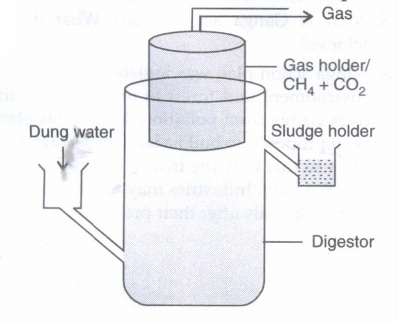
Draw labelled sketch of a typical biogas plant.
8.
Describe the process of waste-water treatment under the following heads :
(a) Primary treatment.
(b) Secondary treatment.
9.
(a) Name and explain any four lymphoid organs present in humans
(b) Categorise the named Lymphoid organs as primary or secondary lymphoid, giving reasons
10.
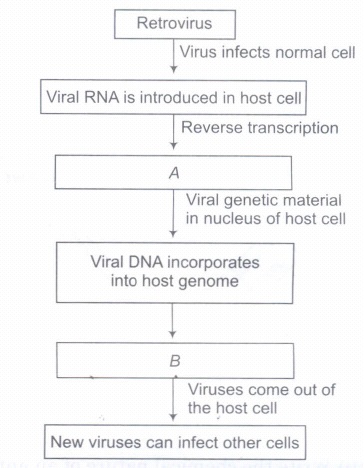
In the given flow diagram, the replication of retrovirus in a host is shown. Observe and answer the following questions.
(a) fill in (A) and (B)
b) Why is the virus called retrovirus?
(c) Can the infected cell survive, while viruses are being replicated and released?
11.
(i) State the objective of animal breeding.
(ii) List the importance and limitations of inbreeding. How can the limitations be overcome?
(iii) Give an example of a new breed each of cattle nd poultry.
12.
Brefly describe various steps involved in plant breeding.
13.
What is "biofortification" ? Write its importance. Mention the contribution of Indian Agricultural Research Institute towards it with the help of two examples.
14.
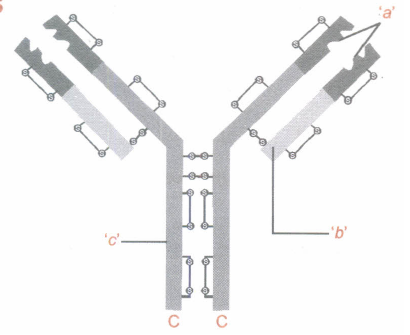
Identify a, b and c in the schematic diagram of an antibody given and answer the questions.
(i) Write the chemical nature of an antibody.
(ii) Name the cells that produce antibodies in humans.
(iii) Mention the type of immune response provided by an antibody.
15.
Name any three organic acids and the bacteria that produce them.
16.
A common biocontrol agent for the control of plant diseases is
Trichoderma
Baculovirus
Bacillus thuringiensis
Glomus
17.
The term 'totipotency' refers to the capacity of a:
Cell to generate whole plant
bud to generate whole plant
seed to germinate
cell to enlarge in size
18.
In malaria, the product released by mosquito into blood that causes chill and fever is called
Haematin
Schuffner's dots
Haemozoin
Haemotoxin
19.
Cyclosporin-A an immunosuppressive drug is produced by
Aspergillus niger
Manascus purpureus
Penicillium notatum
Trichoderma polysporum
20.
The technique of obtaining large number of plantlets culture method is called
Organ culture
Micropropagation
Macropropagation
Introduction and Mutation
1.
()
The spleen is the secondary lymphoid organ that stores lymphocytes, it filters blood by trapping blood-borne microbes, phagocytes and lymphocytes. It also acts as a large reservoir to store erythrocytes.
2.
()
B-cells and T-cells and formed in red bone marrow.But B-cells mature and T-cells mature in thymus.
Difference between B-cells and T-cells
| B-cells | T-cells |
| 1. They are produced in cells of bone marrow and remain there and later migrate to lymphoid tissue. | 1. They are produced in cells of bone marrow and migrate to the thymus and differentiate under the influence of thymus. |
| 2. These cells produce plasma cells, once triggered off by the antigens. | 2. These cells are responsible for recognising a specific antigen and attack it by releasing chemicals. |
| 3. They are part of humoral system. | 3. They are part of cell mediated immune system |
| 4. They act against viruses and bacteria and do not react against transplants and cancer cells. | 4. They act against pathogenic micro-organism, organ transplants and cancer cells |
| 5. No inhibitory effect on immune system. | 5. Suppressor cells inhibit immune system. |
3.
()
The small amount of curd contains millions of lactic acid bacteria which multiply and convert milk into curd by the lactic acid produced.
4.
()
(i) Selection among somacional variants.
(ii) Generic engineering
5.
a - Small intestine.
b - Rhino viruses
c - Nose,respiratory passage
d - Alveoil of lungs
6.
During flowering seasons, the honey-bees visit a number of flowers in search of edible pollen and nectar; since they collect nectar from a large number of flowers, honey collection improves during flowers seasons.
7.
8.
(a) Primary treatment
1. Physical removal of particles like debris, soil, sand or silt through filtration, sedimentation in stages.
2. Solids settle to form primary sludge, the supernatants form the primary effluent
(b) Secondary Treatment
It is the biological treatment
(i) Effluent passed into aeration tanks
(ii) Vigorous growth of useful aerobic microbes into flocs.
(iii) Significant reduction of BOD due to use of organic matter by microorganisms.
(iv) After fall in the level of BOD, the effluent is passed on to settling tanks where bacterial flocs settle to form activated sludge.
(v) Activated sludge is passed on to anaerobic sludge digester, where bacteria and fungi are anaerobically digested.
9.
a) Bone marrow - blood cells-lymphocytes are produced and mature.
Thymus,- Large at the time of birth but keep reducing in size with age. T-Lymphocytes are produced and mature
Spleen - Acts as a filter for micro-organisms in blood and reservoir for RBCs.In foetus it producers all types all types to blood cells but in adults it produces only lymphocytes. Macrophages of spleen are phagocytic
Lymph nodes - Act as filters for lymph, trap micro-organisms or other antigens and activate lymphocytes and initiate immune system
(b) Primary lymphoid organs - bone marrow and thymus.
Immature lymphocytes differentiate into antigen sensitive lymphocytes
Secondary lymphoid organ - spleen and lymph nodes.
Provide the site for interaction of lymphocytes with antigen, which proliferate to become effector cell.
10.
(a)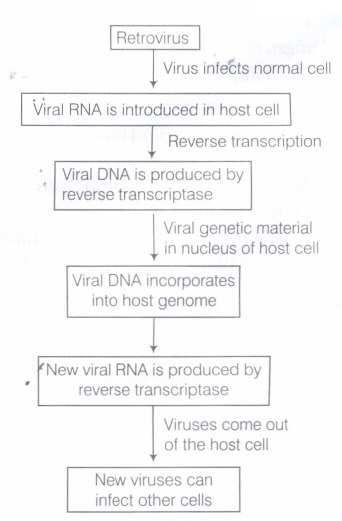
(b) The virus is called retro virus because its genetic material is RNA that is transcribed to DNA using enzyme reverse transciptase.
(c) Yes, the infected cell can survive, while viruses are being replicated and released.
11.
(i) Animal breeding is a branch of animals husbandry that aims to increase the animal yield and improvement of desirable qualities of animal product.
(iii) New breed of cattle and poultry are Jersey and Leghorn respectively.
12.
The various steps involved in plant breeding are discussed below:
1. Collection of variability. The entire collection (of plants I seeds) having all the diverse alleles for all genes in a given crop is called germplasm collection.
2. Evaluation and Selection of parents. The germplasm is evaluated to identify plants with desirable combination of useful characters. The selected plants are multiplied and used in the process of hybridization. Pure lines are created wherever desirable and possible.
3. Cross hybridization among the selected parents. Cross hybridizing the two parents to produce hybrids that genetically combine the desired characters in one plant.
4. Selection and testing of superior recombinants. This step consists of selecting, among the progeny of the hybrids, those plants that have the desired character combination. The selection process is crucial to the success of the breeding objective and requires careful scientific evaluation of the progeny. This step yields plants that are superior to both of the parents (very often more than one superior progeny plant may become available).
5. Testing, release, and commercialization of new cultivars. The newly selected lines are evaluated for their yield and other agronomic traits of quality, disease resistance etc. This evaluation is done by growing these in the research fields and recording their performance under ideal fertiliser application,irrigation and other crop management practices. The evaluation in research fields is followed by testing the materials in farmers fields, for at least three growing seasons, at several locations in the country, representing all the agroclimatic zones where the crop is usually grown. The material is evaluated in comparison to the best available local crop cultivar - a check or reference cultivar.
13.
The process of breeding crops for higher level of vitamins and minerals, higher proteins, healthier fats, to improve public health is known as biofortification.
It helps to improve:
(i) Protein content and quality;
(ii) Oil content and quality;
(iii) Vitamin content: and
(iv) Micronu ient and mineral content.
IARI has released several vegetable crops that are rich in vitamins and minerals. e.g. Vitamin A enriched carrots, spinach, pumpkin, vitamin C enriched bitter grourd, bathua, mustard, tomato, iron and calcium enriched spinach and bathua, protein enriched beans-lablab, broad, French and garden pea.
14.
a - Antigen binding site
b - Light chain
c - Heavy chain
(i) They are chemically proteins
(ii) B-Iymphocytes
(iii) Humoral immune response
15.
(i) Acetic acid - Acetobacter aceti
(ii) Butyric acid - Clostridium butylicum
(iii) Lacteric acid - Lactobacillus delbruekii
16.
(a)
Trichoderma
17.
(a)
Cell to generate whole plant
18.
(c)
Haemozoin
19.
(d)
Trichoderma polysporum
20.
(b)
Micropropagation

12th Standard CBSE Syllabus & Materials
12th Standard CBSE
CBSE 12th Computer Science Python Revision Tour I - New Previous year Question Papers Study Material - QB365 Set A
NEW12th Standard CBSE
CBSE 12th Business Studies Planning Important Questions And Answers Study Material - QB365 Set A
NEW12th Standard CBSE
CBSE 12th Business Studies Business Environment Important Questions And Answers Study Material - QB365 Set A
NEW12th Standard CBSE
CBSE 12th Business Studies Principles of Management Important Questions And Answers Study Material - QB365 Set A



NCERT Books

Syllabus

Exam Pattern

Sample Question Papers

Previous year Question Papers

Important Notes

MCQ Practice test

NCERT Exemplers

Case study Questions

Image Based Questions

Passage based Questions

HOT Questions

Value Based Questions

Model Questions Papers
NCERT ( Book Back ) Questions

Assertion and Reason
Important Questions And Answers

CBSE 12th Standard CBSE Subjects
CBSE Standards








