
 100% FREE ACCESS
12th Standard CBSE Syllabus & Materials
12th Standard CBSE
CBSE 12th Economics Government Budget and the Economy Previous year Question Papers Study Material - QB365 Set A
NEW12th Standard CBSE
CBSE 12th Computer Science Interface Python with MySQL - New Previous year Question Papers Study Material - QB365 Set A
NEW12th Standard CBSE
CBSE 12th Computer Science Database Concept - New Previous year Question Papers Study Material - QB365 Set A
NEW12th Standard CBSE
CBSE 12th Computer Science Data Communication - New Previous year Question Papers Study Material - QB365 Set A
NEW12th Standard CBSE
CBSE 12th Computer Science Data Structures - New Previous year Question Papers Study Material - QB365 Set A
NEW12th Standard CBSE
CBSE 12th Computer Science Functions - New Previous year Question Papers Study Material - QB365 Set A

Published on: 02/11/2025
Download CBSE Class 12th Standard CBSE Biology question papers, sample papers, important questions, and previous year solved papers in PDF format. Get free study materials, NCERT solutions, and exam preparation resources for Class 12th Standard CBSE Biology
Questions + Answers key
Take MCQ Biology Test
1.
Where are UTRs located on m RNA ? Find out the UTRs from this segment of mRNA -5' UCG AGC AUG CCC GCG UUU UAG GAG GAA 3'
2.
PCR requires very high temperature conditions where most of the enzymes get denatured. How was this problem resolved in a PCR?
3.
Why is Gambusia introduced into drains and ponds?
4.
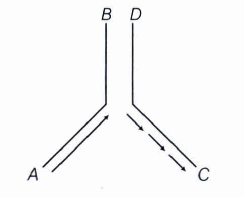
Mention the polarity of the DNA strands A-B and C-D shown in the replicating fork given below.
5.
Name three narcotics derived from different sources
6.
What is the significance of 'Typhoid Mary'?
7.
Name the cellular factory responsible for synthesis of proteins.
8.
How many molecules of histones are present in a nucleosome?
9.
Which one out of Rho factor and sigma factor, act as initiation factor during transcription in prokaryote?
10.
Study the diagram showing replication of HIV in humans and answer the following questions accordingly
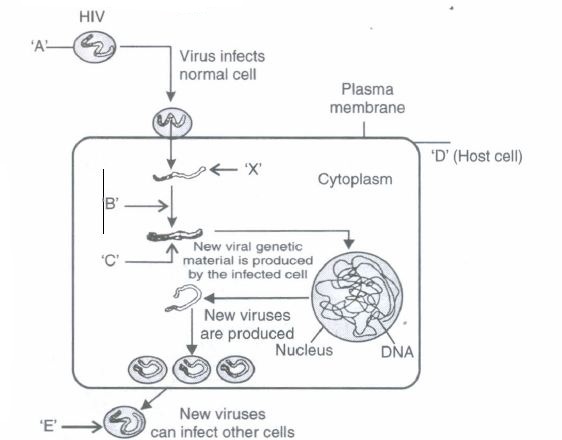
(i) Write the chemical nature of the coat' A
(ii) Name the enzyme 'B' acting on 'X' to produce molecule 'C'. Name 'C'.
(iii) Mention the name of the host cell 'D' the HIV attacks first when it enters into the human body.
(iv) Name the two different cells the new viruses 'E' subsequently attack.
11.
(a) Why did Meselson and Stahl use 14N and 15N isotopes in the sources of nitrogen present in the culture medium in their experiment? Explain.
(b) Write the conclusion drawn by them from the experiment.
12.
The following illustrates the linking of DNA fragments
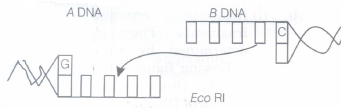
(i) Write the name of A and B.
(ii) Complete the palindrome, which is recognised by Eco RI.
(iii) Write the name of the enzymes that can link the two DNA fragments.
13.
What was the rationale of using and,\({ 32 }_{ P }\) \({ 35 }_{ S }\) by Hershey and chase? Instead, if we use radiolabelled C and N, will the results be any different?
14.
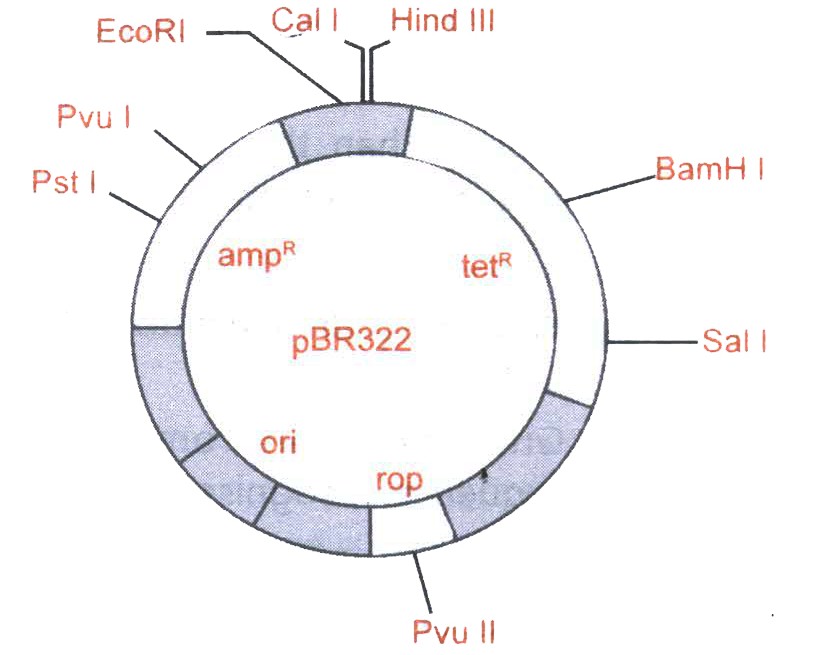
(i) Name the organism in which the vector shown is inserted to get the copies of the desired gene.
(ii) Mention the area labelled in the vector responsible for controlling the copy number of the inserted gene.
(iii) Name and explain the role of a selectable marker in the vector shown.
15.
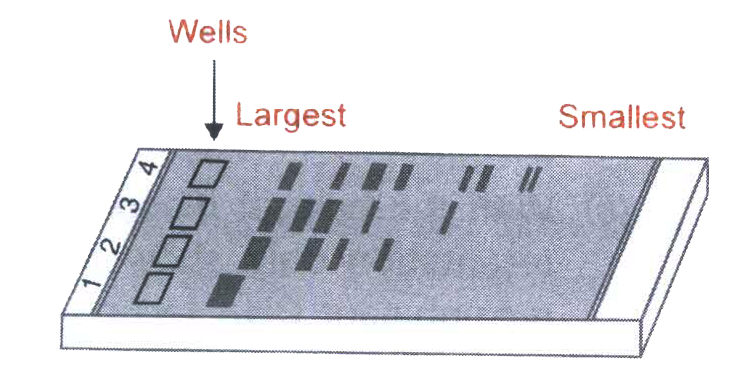
(a) What does this diagram depict?
(b) What is meant by largest and smallest in the picture?
(c) Name the compound used to visualise them.
(d) Define elution.
16.
Study a part of the life cycle of malarial parasite given below. Answer the questions that follows:
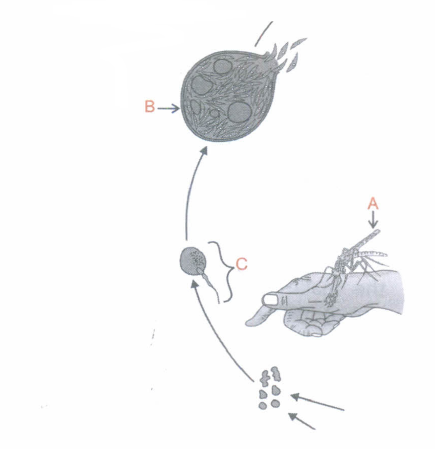
(a) Mention the roles of 'A' in the life cycle of the malarial parasite.
(b) Name the event 'c' and the organ where the event occurs.
(c) Identify the organ 'B' and name the cells being released from it.
17.
(a) Name a drug used:
(i) as an effective sedative and pain killer,
(ii) for helping patients to cope with mental illnesses like depression,but often misused.
(b) How does the moderate and high dosage of cocaine affected the human body?
18.
A vector is engineered with three features which facilitate its cloning within host cell. List three features and explain each one of them.
19.
Draw a schematic sketch of pBR 322 plasmid and label the following in it
(a) Any two restriction sites
(b) Ori and rop genes
(c) An antibiotic resistant gene.
20.
How are the structural genes activated in the lac operon in E.coli?
21.
Given below is the diagram of agarose gel kept under UV light:
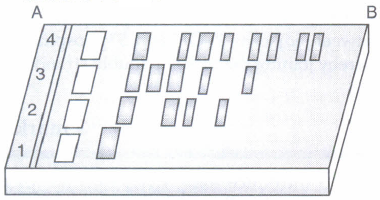
(a)Mark the positive and negative terminals.
(b) What is the charge carried by DNA molecule and how does it help in its separation?
(c)How are the separated DNA fragments finally isolated?
22.
Explain when is a genetic code said to be
(i) Degenerate (ii) Universal
23.
Study the figure below and answer the questions:
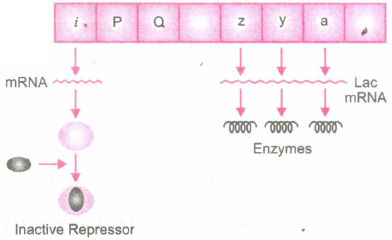
(a)What does the figure express?
(b)When does the transcription of lac mRNA stop?
(c)Name the enzyme transcribed by the gene 'Z'
24.
List four reasons to justify the ban on intake of cannabinoids by sports persons.
25.
Identify a,b,c,and d in the following table:
|
Name of the human disease |
Name of the casual bacteria/virus |
Specific organ or its part affected |
|---|---|---|
|
1. Typhoid |
Salmonella typhi |
a |
|
2. Common cold |
b |
c |
|
3. Pneumonia |
Streptococcus pneumoniae |
d |
26.
Following figure shows one of the artificial plasmids constructed to act as a vector.
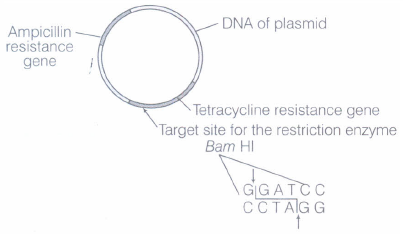
(i) With reference to above figure explain the importance of the plasmids having a single target site for a particular restriction enzyme, such as Bam HI.
(ii) The genes for ampicillin resistance and tetracycline resistance on the plasmid allow the genetic engineer to distinguish between bacteria that have taken up different circuits of DNA.
Complete the table to shoe whether bacteria which have taken up each of the different circuits of DNA are resistance to ampicillin, to tetracycline or to both. Show presence of resistance with a tick (\(\surd \)) and absence of resistance with a cross(\(\times \)).
(iii) (a) Explain why genes for antibiotic resistance are now rarely used as markers in gene technology.
(b) Describe the use of one alternative marker gene that can be used instead of an antibiotic resistance gene..
27.
(a) Cancer is one of the most dreaded disease of humans.Explain 'Contact inhibition' and 'Metastasis' with respect to the disease.
(b)Name the group of genes which have been identified in normal cells that could lead to cancer and how they do so?
(c) Name any two techniques which are useful to detect cancers of internal organs.
(d)Why are cancer patients often given \(\alpha \) interferon as part of the treatment?
28.
Answer the following question based on Hershey and chase experiment
(a) Name the kind of virus they worked with and why?
(b) Why did they use two types of culture media to grow viruses in it? Explain
(c) What was the need for using a blender and later a centrifuge during their experiment?
(d) State the conclusion drawn by them after the experiment.
1.
()
UT‘s are present at both 5'-end (before start codon) and at3'–end (after stop codon). UCG, AGC,GAG &GAA.
2.
()
The thermostable DNA polymerase is used which is isolated from a bacterium called Thermus aquaticus.
It remains active during the high temperature and induces denaturation of double stranded DNA.
3.
()
Gambusia is a kind of fish that preys upon the larvae of mosquitoes. It is therefore introduced into the drains and ponds. To feed on Mosquitoes larvae I to eliminate the vectors responsible for causing malaria. It thus helps in controlling malaria.
4.
()
A-B is 3'\(\rightarrow \)5' and C-D is 5'\(\rightarrow \)3'.
5.
()
opium, bhang and cocaine
6.
()
A cook, Mary Mallon, nick named Typhoid Mary was a Typhoid carrier who continued to spread typhoid for several years through food she prepared.
7.
()
Ribosome
8.
()
Eight molecules.
9.
Sigma factor acts as an initiation factor and it binds to the promoter site during transcription in prokaryotes
10.
(i) The chemical nature of the coat: Viral protein coat.
(ii) Enzyme B- ViralDNAis produced by the enzyme reverse transcriptase. (Process called reverse transcription.)
x - Viral RNA is introduced into Cell.
C = Viral DNA.
(iii) Host cell (D) = Macrophage
(iv) Two different cells are macrophages and helper T-lymphocytes.
11.
(a) Meselson and Stahl use 14N and 15N isotopes in the sources of nitrogen present in the culture medium in their experiment as nitrogen is a major constituent of DNA. Moreover 15N is by far the most abundant isotope of nitrogen, and DNA with the heavier 15N isotope is also functional. E.coli can be grown for several generations in a medium with 15N easily. When DNA is extracted from these cells and centrifuged on a salt density gradient, the DNA separates out at the point at which its density equals that of the salt solution.
(b) The experiment proves the semi-conservative nature of replication of DNA. In this type of replication of DNA. In this type of replication one strand is old. It means, one strand of daughter duplex is derived from the old DNA, while the other strand is formed new. It proves semi-conservative replication of DNA..
12.
(i) A- Vector DNA/Plasmid DNA
b- Foreign DNA
(ii) 5'- GAATTAC-3'
3'-CTTAAG-5'
(iii) DNA ligase.
13.
Phosphorus exist in the backbone of the DNA strands and sulphur is constituted of amino acid or protein thus rationale of this experiment is different than c and N isotopes
14.
(i) Escherichia coli
(ii) Ori
(iii) \({ amp }^{ R }\) (ampicillin-resistance gene) and \({ tet }^{ R }\) (tetracycline-resistance gene) are selectable markers.
If a foreign DNA is ligated at the Bam HI site of tetracycline resistance gene, the recombinant plasmid will lose tetracycline resistance.
The selectable marker helps in I identifying the recombinants from the non-recombinants.
15.
(a) It depicts gel electrophoresis of DNA segments.
(b) They are the DNA fragments.
(c) Ethidium bromide.
(d) It depicts gel electrophoresis.
DNA bands/fragments
Ethidium bromide
Elution is the process in which the separated DNA fragments are cut out from the agarose gel and extracted from the gel piece.
16.
(a) A part of the life cycle of the parasite occurs in the body of female Anopheles mosquito; these mosquitoes act as vectors and transmit the disease from patients to healthy individuals.
(b) Fertilisation; it occurs in the intestinal wall of mosquito.
(c) Salivary gland. Sporozoites are the cells released from it.
17.
(a) (i) Morphine
(ii) Lysergic acid diethylamides (LSD) or barbiturates.
(b) Moderate doses of cocaine have a stimulating action on the central nervous system and produce a sense of euphoria and increased energy.High dosage of cocaine causes hallucination.
18.
Features of Cloning vectors:
(i) Origin of Replication (Ori)
This is the sequence of DNA from where replication starts.
Any piece of alien/foreign DNA linked to it is made to replicate within host cell; it also decides the copy number of the linked DNA.
(ii) Selectable marker
"A marker is a gene, which helps in selecting the host cells, which are transformants/recombinants from the non-recombinant ones, e.g. ampicillin and tetracycline resistant genes in E.coli.
(iii) Cloning site
The vector should have a few, preferably one unique recognition site to link 'the foreign DNA; presence of a particular cloning/recognition site enables the particular restriction enzyme to cut the vector DNA.
19.
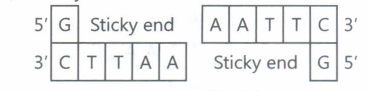
(i) Palindromic sequence and the site where EcoRI cuts it (indicated by the arrows).
\({ 5 }^{ ' }{ G }^{ \downarrow }\begin{matrix} A & A \end{matrix}\begin{matrix} T & T \end{matrix}C\quad { 3 }^{ ' }\)
\({ 3 }^{ ' }C\begin{matrix} T & T \end{matrix}\begin{matrix} A & { A }_{ \uparrow } \end{matrix}G\quad { 5 }^{ ' }\)
(ii) Sticky ends
20.
The lac operon consists of
(i) three structural genes (z,y and a) which code for \(\beta \) -galactosidase, permease and transacetylase, respectively.
(ii) an operator; which controls the structural genes as a unit.
(iii) a regulatory gene ti.e., inhibitor gene) and
(iv) a promoter, where the RNA polymerase binds for transcription.
The regulatory gene codes for the repressor protein, all the time (constitutively): the repressor binds to the operator to inactivate the operon.
Lactose enters the cell with the help of permease and the active form of lactose binds to the repressor and prevents it from binding to the operator.
This allows RNA polymerase an access to the promoter and transcription continues, i.e. lac operon is activated.
21.
(a) Positive terminal-B' Negative terminal-' A'
(b) DNA being negatively charged, moves towards the positive electrode (anode)
(c) By elution-separated bands of DNA are cut out from the agarose gel and extracted from the gel piece.
22.
The differences between unambiguous and universal genetic codes are as follows
| Unambiguous | Universal |
| In genetic code, one codon codes for only one amino acid hence, it is unambiguous | The genetic code is universal.i.e. each codon codes for same amino acid in all organisms |
(ii) The differences between degenerate and initiator codes are as follows
| Degenerate | Initiator |
| Some amino acids are coded by more than one codon, hence the code is degenerate, e.g. serine, leucine, arginine are encoded by 6 codons. | These codons act as start signal for translation. e.g. AUG acts as initiator codon and it codes for methionine |
23.
(a) In presence of an inducer(such as lactose or allolactose), the repressor is inactivated by intersection with the inducer.
(b) Transcription of lac mRNA stops when the repress of the operon is synthesised from the i gene.The repress protein binds to the operator region of the operon and stops transcription.
(c) The gene 'Z' codes for beta-galactosidase.
24.
Cocaine has a potent stimulating action on the central nervous system.
It produces a sense of euphoria and increased energy and hence,sportspersons become addicted to it.
25.
a - Small intestine.
b - Rhino viruses
c - Nose,respiratory passage
d - Alveoil of lungs
26.
(i) Single target site is present for particular restriction enzyme. If more than one site is present, then more cuts would fragment the plasmid.
(ii)
| Circle of DNA taken up by Bacteria | Bacteria Resistant to Ampicillin | Bacteria Resistance to Tetracycline |
| Unaltered plasmids | \(\surd \) | \(\surd \) |
| Recombinant plasmids that have taken up the wanted gene | \(\surd \) | \(\times \) |
(iii) (a) Now a days antibiotic resistance gene as markers are not used as they create more risk of plasmids to resistant gene to other bacteria.
It may spread the antibiotic resistance in many bacteria.
(b) Reporter genes are used now a days instead of antibiotic resistance genes. These genes have an ability to produce color in the presence of chromogenic substrate.
27.
(a) (i) Normal cells whow a property celled contact inhibition by virtue of which contact with other cells inhibits their uncontrolled growth.Cancer cells appear to have lost this property and as result continue to divide to give masses of cells called tumours.
(ii) Metastasis: Cancerous cells sloughed off from tumours reach distant sites through blood or other body fluids and start a tumour there.This property is called metastasis.It is the most fearsome property of malignant tumours.
(b) (i) Viral oncogenes
(ii) Cellular oncogenes (C-onc) or proto-oncogenes when activated under certain conditions, whether could head to oncogenic transfermation of the cells.
(c) Technique like radiography (use of X-rays),CT (Compiled Tomography) and MRI (magnetic Resonance Imaging are useful to detect cancer of internal organs.
(d) \(\alpha \)-interferons are biological response modifiers are given to cancer patients.These substances activate immune system and help in destroy the tumour.
28.
(a) (i) Bacteriophage virus \({ T }_{ 2 }\)
(ii) \({ T }_{ 2 }\) the virus infects Escherichia coli
(b) One culture medium was provided with radioactive phosphorus \({ 35 }_{ P }\) it gets incorporated into nucleotides which form a nucleic acid
The other culture medium was provided with \({ 35 }_{ S }\) It gets incorporated into sulphur containing amino acids and therefore become part of a protein. The bacteria of both cultures got labelled
(c) (i) Blender: was used to remove the empty phage capsids.
(ii) Centrifugation: is carried out so that the heavier bacteria settle down. The supernatant contains lighter viral coats which do not enter the bacterial cells.
(d) Hershey and chase concluded that DNA is the genetic material and not the protein.

12th Standard CBSE Syllabus & Materials
12th Standard CBSE
CBSE 12th Computer Science Python Revision Tour I - New Previous year Question Papers Study Material - QB365 Set A
NEW12th Standard CBSE
CBSE 12th Business Studies Planning Important Questions And Answers Study Material - QB365 Set A
NEW12th Standard CBSE
CBSE 12th Business Studies Business Environment Important Questions And Answers Study Material - QB365 Set A
NEW12th Standard CBSE
CBSE 12th Business Studies Principles of Management Important Questions And Answers Study Material - QB365 Set A



NCERT Books

Syllabus

Exam Pattern

Sample Question Papers

Previous year Question Papers

Important Notes

MCQ Practice test

NCERT Exemplers

Case study Questions

Image Based Questions

Passage based Questions

HOT Questions

Value Based Questions

Model Questions Papers
NCERT ( Book Back ) Questions

Assertion and Reason
Important Questions And Answers

CBSE 12th Standard CBSE Subjects
CBSE Standards








