
 100% FREE ACCESS
12th Standard CBSE Syllabus & Materials
12th Standard CBSE
CBSE 12th Economics Government Budget and the Economy Previous year Question Papers Study Material - QB365 Set A
NEW12th Standard CBSE
CBSE 12th Computer Science Interface Python with MySQL - New Previous year Question Papers Study Material - QB365 Set A
NEW12th Standard CBSE
CBSE 12th Computer Science Database Concept - New Previous year Question Papers Study Material - QB365 Set A
NEW12th Standard CBSE
CBSE 12th Computer Science Data Communication - New Previous year Question Papers Study Material - QB365 Set A
NEW12th Standard CBSE
CBSE 12th Computer Science Data Structures - New Previous year Question Papers Study Material - QB365 Set A
NEW12th Standard CBSE
CBSE 12th Computer Science Functions - New Previous year Question Papers Study Material - QB365 Set A

Published on: 02/11/2025
Download CBSE Class 12th Standard CBSE Biology question papers, sample papers, important questions, and previous year solved papers in PDF format. Get free study materials, NCERT solutions, and exam preparation resources for Class 12th Standard CBSE Biology
Questions + Answers key
Take MCQ Biology Test
1.
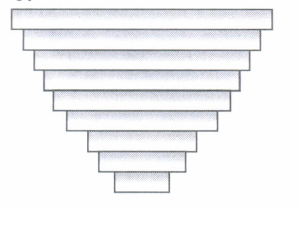
Define stages zero population growth rate. Draw an age pyramid for the same.
2.
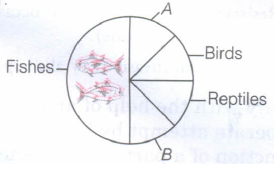
Identify 'A' and 'B' in the figure given below representing a proportionate number of major vertebrate taxa.
3.
Why is sewage water treated until the BOD is reduced ? Give a reason.
4.
Pollinating species of wasps show mutualism with specific fig plants. Mention the benefits the female wasps derive from the fig trees from such an interaction.
5.
Why are living plant cells said to be totipotent?
6.
How are Baculoviruses and Bacillus thuringiensis used as bio-control agents? Why are they preferred over readily available chemical pesticides.
7.
(a) Write the parasitic adaptations the parasites have evolved in accordance with their lifestyles.
(b) Hosts and parasites tend to co-evolve. Explain.
8.
In Lake Tanganyika in Africa, there are six species of fish of the genus Tropheus and a much larger number of distinctly coloured subspecies of each of the six species. Tropheus species are small fishes that are confined to isolated rocky habitats around the shores of Lake Tanganyika.

Recent research has compared DNA sequence data from these various species and subspecies and linked this with geological data on the lake. This suggests that some 1.25 million years ago, when the lake first filled, the six species evolved during the primary radiation phase. They arose from river dwelling ancestors and then filled all available niches. Secondary radiations into the many subspecies occurred during the last 2,00,000 years.
Sometime during this period, the water level in the lake fell, resulting in the formation of three separate lake basins. These basins persisted for level rose again.
Figure shown above is an outline map of the lake and the location of the three temporary basins caused by lowering of lake levels.
(i) Define the terms
(a) species
(b) niche
(ii) Explain how natural selection could have caused the evolution of the six closely related species in the primary radiation.
9.
Name the kind of interaction between the following
(a) Birds and Cattle
(b) Termites and flagellates
(c) Alga and fungus
(d) Plasmodium and humans
10.
What ingredients you suggest to be added in the following specified culture media?
(a) Preparation of a semisolid medium
(b) Preparation of a solid medium
(c) A culture medium for graving an explant in vitro.
11.
"To reduce or check the global warming is the biggest challenge. Scientist belive that this rise in temperature is leading to deletrious changes in environment and resulting in odd climates".
(i) Write one difference between E1-nino and La-nino affect.
(ii) Name any two agents which cause global warming.
12.
Name some traditional Indian foods made of wheat, rice and Bengal gram, which involve use of microbes.
13.
(a) Explain how to overcoe inbreeding depression in cattle.
(b) List three advantages of inbreeding in cattle.
(c) Name an improved breed of cattle.
14.
Increasing population in India is the cause of failure behind many planning of Govt. Study of the population attributes helps the country in this situation. Give your Opinion.
15.
Children of a school visited the river near a large farm. They were surprised to see that the colour of the water had changed and was having unpleasant odour. Also large green floating plants grew in abundance. When they visited the same place before rainy season, the water was clear.
(i) What could be the reason for this change?
(ii) What will be the effect of such type of change on the fishes?
(iii) Suppose the path of flowing water from the field is diverted elsewhere, Can we still find this type of change?
16.
SCP- One of the alternate source of protein for animal and human beings. Expand this term and how it could ease the pressure on agriculture and dairy farming.
17.
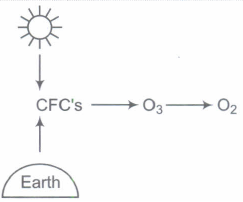
(a) Expand CFC.
(b) How does it reduce ozone to oxygen?
18.
What is the difference between biological oxygen demand and chemical oxygen demand? What is the effect of a higher biological oxygen demand? What is the effect of a higher biological oxygen demand on the level of dissolved oxygen and sensitive organisms in a water body?
19.
Name the most common morphological defence shown by plants. Give two examples of plants showing this.
20.
(a) What is an age-pyramid?
(b) Explain with the help of figures the three different types of a e pyramids represented by a human population.
21.
E-waste is creating a big problem. Developing countries are more responsible for it, affecting the environment of developing countries. Explain.
(i) What is e-waste ? Why is it a cause of concern for our environment?
(ii) How is it produced and how does it affect the developing countries?
22.
(i) Name the category of microbes occurring naturally in sewage and making it less polluted during the treatment.
(ii) Explain the different steps involved in the secondary treatment of sewage.
23.
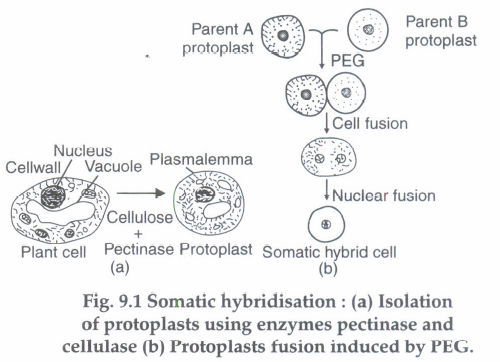
(a) Name the technology that has helped the scientists to propagate on large scale the desired crops in short duration. List the steps carried out to propagate the crops by the said technique.
(b) Hew are somatic hybrids obtained?
1.
()
When in a population the individuals in the prereproductive age group are comparatively fewer and the individuals both in the reproductive and post reproductive stages are almost equal, it is called zero population growth rate.
For zero population growth rate an inverted bell shaped pyramid is obtained.
2.
()
In the given pie chart, A is mammals and B is amphibians.
3.
()
Sewage water is treated to reduce the BOD, because higher the BOD of the water, grater is its polluting potential
4.
()
It is a case of mutualism, where a given fig species is pollinated only by its 'partner' wasp species; the female wasp uses the fruit for oviposition (egg-laying) and the developing seeds to nourish the larvae.
5.
()
Because a living plant cell has the capacity to generate a whole plant from it
6.
1. Baculoviruses belong to NucIeopolyhedroviruses. They are used as biocontrol agents and preferred over radilly available chemical pesticides because they are species specific and have narrow spectrum insecticidal application. They do not harm the non
target organisms.
2. Bacillus thuringiensis is a bacterium and is a biocontrol agent against cotton bollworm insects.
3. They produce a toxin that specifically kill the insect larvae when the toxin is released in their gut. It is also preferred over chemical pesticides' because it is specific and does not have negative role over non target organisms. More over the biopesticides are inexpensive and do not cause environmental pollution.
7.
(a)Parasites have evolved the following adaptations.
(i) Loss of unnecessary sense organs.
(ii) Presence of hook/adhesive organs and suckers.
(iii) Loss of digestive system .
(iv) High reproductive capacity
(b) In some cases, a parasitic species may evolve with its host taxa. Long-term co-evolution sometimes leads to a relatively stable relationship, tending to commensalism or mutualism, as it is in the evolutionary interest of the parasite that its host thrives. A parasite may evolve to become less harmful for its host or a host may evolve to cope with the unavoidable presence of a parasite, co the point that the parasite's absence causes the host harm
8.
(i) (a) Species A group of specific organisms with similar characteristics which are capable of compatible interbreeding to produce fertile offsprings
(b) Niche The way in which an organism functions in relation to the biotic and abiotic factors within its habitat that serves a purpose in its environment.
(ii) Increased selection pressure due to climatic or habitat change cause organisms to become specialised and have the optimum phenotype that is suited to the prevailing environment condition.
In the primary radiation, the six closely related species evolved as a result of the increasing water levels when the lake first filled. This change in the environment exerted a selection pressure on their river dwelling ancestors to adapt by developing different characteristics for survival, thus giving rise to the six species that could occupy more niches.
9.
(a) Protocooperation
(b) Mutualism
(c) Mutualism
(d) Parasitism
10.
(a) Gelatin (b) Agar agar
(c) Nutrients like inorganic salts, vitamins, 2-4% sucrose, amino acid glycine and growth regulators.
11.
(i) Both the terms refer to large scale changes in sea-surface temperature across the central and eastern tropical Pacific. Usually, sea-surface temperature, off South America's west coast, ranges from \({ 60 }^{ 0 }F\) to \({ 70 }^{ 0 }F\) , while it exceeds \({ 80 }^{ 0 }F\) inthe "warmpool" located in the central and western Pacific. This warm pool expands to cover the tropics during E1-Nine but shrinks to the west during La-Nino.
(ii) Increase in release of green house gases (CO2 and methane) are responsible for increase in temperature. Thus leads to global warming.
12.
(i) Wheat - Roti
(ii) Rice - Idli and Dosa
(iii) Bengal gram - Dhokla and khandvi.
13.
a) Inbreeding depression can be overcome by outcrossing.
(b) (i) Inbreeding is necessary to evolve purelines in any animal, as it increases homozygosity.
(ii) Inbreeding exposes the harmful recessive alleles, which become eliminated by selection.
(iii) It helps in accumulation of superior genes and elimination of the less desirable ones.
(c)Hisardale, a breed of sheep.
14.
Different characters of population, methods to control birth
15.
(i) River eutrophicated due to run off water from field containing non- biodegradable chemicals like fertilizers containing Nitrogen / Phosphorus .Water becomes nutrient- rich . A large algal bloom is formed.
(ii) Do deplete fish will die.
(iii) No
16.
1. Single cell protein-Microbes like spirulina can be gown easily on materials like waste water from potato processing plants, molasses, animal manure, even sewage in large quantities & serve as food as it is rich in nutrients & specially proteins (microbial components).
2. 250g of microbe Methylophilus methylotrophus can yield 25 tones of proteins.
17.
(a) Chlorofluorocarbon.
(b) CFC move upward and reach stratosphere UV-rays act on them releasing CI atom due to which ozone degrades releasing molecular oxygen.
18.
| Biological oxygen demand (BOD) | Chemical oxygen demand (COD) |
| 1. It is the amount of oxygen required for microbial breakdown of organic matter. | 1. It is the amount of oxygen required for oxidation of both biodegradable and non-biodegradable organic matter in the water. |
| 2. Its value is less than COD | 2. Its value is more than BOD |
Higher biological oxygen demand shows that the dissolved oxygen in water bodies is much reduced and thus aquatic animals will die.0.
19.
Thorns and spines are the most common morphological defence, e.g. Citrus and Duranta have thorns, Acacia and Zizyphus have spines.
20.
(a) Age pyramid:
(b) Age distribution depends upon the natality and mortality and determines the population growth. With regard to age distribution, there are three kinds of population .
1.Rapidly growing or expanding population: It has high birth rate and Jaw death rate, so there are more number of young individuals in the population. According to a recent survey, more than 36% of the Indian population consists of children below the age of 14 years, so the Indian population is called young population.
.png)
2. Stationary or stable population: It has equal birth and death rates, so the population shows zero population growth.
.png)
3. Declining population: It has higher death rate than birth rate, so the population of young members is lower than that of old members, e.g., Japan (ageing population).
.png)
21.
(i) E-waste is electronic products nearing the end of their useful life. It includes computers, monitors, CDs, DVDs, VCRs, televisions, mobiles, laptops, games, etc.
It causes toxicity due to some of the substances.
(ii) Uncontrolled burning and disposal of e-waste is causing environment problems.
22.
(i) Aerobic microbes
The primary effluent is passed into large aeration tanks where it is constantly agitated mechanically and air is pumped into it. This allows vigorous growth of useful aerobic microbes into flocs (masses of bacteria associated with fungal filaments to form mesh like structures). While growing, these microbes consume the major part of the organic matter in the effluent. This significantly reduces the BOD (biochemical oxygen demand) of the effluent. The sewage water is treated till the BOD is reduced. Once the BOD of sewage or waste water is reduced significantly, the effluent is then passed into a settling tank where the bacterial 'flocs' are allowed to sediment.
ii). This sediment is called activated sludge. A small part of the activated sludge is pumped back into the aeration tank to serve as the inoculum. The remaining major part of the sludge is pumped into large tanks called anaerobic sludge digesters. Here, other kinds of bacteria, which grow anaerobically, digest the bacteria and the fungi in the sludge. During this digestion, bacteria produce a mixture of gases such as methane, hydrogen sulphide and carbon dioxide. These gases form biogas and can be used as source of energy as it is inflammable. The effluent from the secondary treatment plant is generally released into natural water bodies like rivers and streams.
23.
(a) Tissue culture / micro propagation.
Explants, grown in a test-tube, under sterile condition, in special nutrient medium / culture medium. For detailed refer to Question No. l. (L.A.T.Q.)PP 246.
(b) Isolated single cells, digests cell walls, to obtain naked protoplast from two different varieties, fusion of protoplast.
Hybrid protoplasts thus, obtained are cultured in a suitable medium to form new plants.

12th Standard CBSE Syllabus & Materials
12th Standard CBSE
CBSE 12th Computer Science Python Revision Tour I - New Previous year Question Papers Study Material - QB365 Set A
NEW12th Standard CBSE
CBSE 12th Business Studies Planning Important Questions And Answers Study Material - QB365 Set A
NEW12th Standard CBSE
CBSE 12th Business Studies Business Environment Important Questions And Answers Study Material - QB365 Set A
NEW12th Standard CBSE
CBSE 12th Business Studies Principles of Management Important Questions And Answers Study Material - QB365 Set A



NCERT Books

Syllabus

Exam Pattern

Sample Question Papers

Previous year Question Papers

Important Notes

MCQ Practice test

NCERT Exemplers

Case study Questions

Image Based Questions

Passage based Questions

HOT Questions

Value Based Questions

Model Questions Papers
NCERT ( Book Back ) Questions

Assertion and Reason
Important Questions And Answers

CBSE 12th Standard CBSE Subjects
CBSE Standards








