
 100% FREE ACCESS
12th Standard CBSE Syllabus & Materials
12th Standard CBSE
CBSE 12th Economics Government Budget and the Economy Previous year Question Papers Study Material - QB365 Set A
NEW12th Standard CBSE
CBSE 12th Computer Science Interface Python with MySQL - New Previous year Question Papers Study Material - QB365 Set A
NEW12th Standard CBSE
CBSE 12th Computer Science Database Concept - New Previous year Question Papers Study Material - QB365 Set A
NEW12th Standard CBSE
CBSE 12th Computer Science Data Communication - New Previous year Question Papers Study Material - QB365 Set A
NEW12th Standard CBSE
CBSE 12th Computer Science Data Structures - New Previous year Question Papers Study Material - QB365 Set A
NEW12th Standard CBSE
CBSE 12th Computer Science Functions - New Previous year Question Papers Study Material - QB365 Set A

Published on: 28/11/2025
Download CBSE Class 12th Standard CBSE Biology question papers, sample papers, important questions, and previous year solved papers in PDF format. Get free study materials, NCERT solutions, and exam preparation resources for Class 12th Standard CBSE Biology
Questions + Answers key
Take MCQ Biology Test
1.
What advantage does the sea anemone get in the sea anemone-hermit crab interaction as facultative mutualis. Give an alternative term for this kind of mutualism.
2.
Give two examples of symbiosis among humans.
3.
Name one organism from each of the 3 categories of organisms regarding their mode of obtaining food.
4.
How does population size increase or decrease?
5.
Explain the following terms:
(a) Mimicry
(b) Acclimatisation
6.
Why has camel survived and bred in desert but not frog?
7.
Mention any two adaptations the animals of colder regions have to minimize heat loss.
8.
Mention two physical properties and two chemical properties of soil that determine the type of plants in a given area.
9.
Egrets are often seen along with grazing cattle. How do you refer to this interaction? Give a reason for this association.
10.
How does our body adapt to low oxygen availability at high altitudes?
11.
Name the kind of interaction between the following
(a) Birds and Cattle
(b) Termites and flagellates
(c) Alga and fungus
(d) Plasmodium and humans
12.
Distinguish between the following:
(a) Hiberation and aestivation
(b) Ectotherms and endotherms.
13.
Mutualism often involves co-evolution of the mutualists. Describe taking the example of animal plant (wast-fig) relationship.
14.
Describe any three reproductive strategies that organisms have evolved in relation to a particular set of selective pressures.
15.
Name six major terrestrial biomes of the world.
16.
Give one example for each of the following:
(a) Migratory animal
(b) Predator animal
(c) Phytophagous animals
(d) Camouflaged animal
(e) Chemical defense agent.
17.
Write a short note on effect of temperature or water scarcity and the adaptations of animals.
18.
(a) Write the importance of measuring the size of a population in a habitat or an ecosystem.
(b) Explain with the help of an example how the percentage cover is a more meaningful measure of population size than mere numbers.
19.
Comment on the following figures 1,2 and 3 : A,B,C,D,G,P,Q,R,S are species
20.
What is adaptation? Describe the adaptation of plant and animal in desert.
21.
Organisms remain as individuals but interact as a group with other organisms and physical habitats and behave as population, community, ecosystem, etc.
(a) What according to you, are the factors that account for the formation of major biomes?
(b) Name any four major biomes of India.
(c) What value is learnt from this statement?
22.
Define the following terms and give one example for each.
(a) Commensalism
(b) Parasitism
(c) Camouflage
(d) Mutualism
(e) Interspecific competition.
23.
A protozoan reproduces by binary fission. What will be the number of protozoans in its population after six generations?
128
24
64
32
24.
A population has more young individuals compared to the older individuals. What would be the status of the population after some years?
It will decline
It will stabilise
It will increase
It will first decline and then stabilise
25.
Xerophytes are mostly
succulents
water related
mesophytes
none of these
26.
Niche is defined as the
position of species in a community in relation to other species
place where organism lives
place where organism lives and performs its duty
place where population perform their duties
27.
Industrial melanism is an example of
defensive adaptation of skin against UV radiations
drug resistance
protective resemble with the surronding
darkening of skin due to industries
28.
The greatest problem of water conservation is to reduce the amount of
precipitation
run off water
ground water
evaporation
29.
Consider the following four (1-4) statements about certain desert animals such as kangaroo rat
1. They have dark colour and high rate of reproduction and excrete solid urine.
2. They do not drink water, breathe at a slow rate to conserve water and have their body covered with thick hairs.
3. They feed on dry seeds and do not require drinking water.
4. They excrete very concentrated urine and do not use water to regulate body temperature.
Which of the above statements for such animals are true?
3 and 1
1 and 2
3 and 4
2 and 3
30.
The ability of the venus fly trap to capture insects is due to
specialized 'muscle-like' cells
chemical stimulation by the prey
a passive process requiring no special ability on the part of the plant
rapid turgor pressure changes
31.
The term ecology was coined by
Odum
E. Munch
Tansley
Reiter
32.
What is a keystone species?
A common species that has plenty of biomass, yet has a fairly low impact on the community's organization
A race species that has minimal impact on the biomass and on other species in the community
A dominant species that constitutes a larger proportion of the biomass and which affects many other species
A species which makes up only a small proportion of the total biomass of community, yet has a huge impact on the community's organization and survival.
1.
The sea anemone is transported on the back of hermit crab for reaching new food sources.Alternative term for this type of mutualism is proto cooperation.
2.
Interdependence of mother and infant, husband and wife.
3.
Plants, animals, and bacteria and fungi.
4.
Population (size/density) increases by birth/hatching/germination and immigration that add individuals. Population (size/density) decreases by death and emigration. Population is regulated by food, space, disease, natural calamities and environmental factors.
5.
(a) Mimicry. It is phenomenon in which a living organism modifies its form, appearance, structure or behaviour and looks like another living organism or some inanimate (non-living) object so as to defined from its predators, or to increase the chances of capturing they prey.
The individual which shows mimicry is called mimic while the animate or inanimate object with which a mimic resembles is called model. The concept of mimicry was first observed by an English naturalist, Henry Bates (1862 A.D.) so the phenomenon is also called Batesian mimicry.
Types: Mimicry is three types:
(i) Protective mimicry,
(ii) Aggressive mimicry,
(iii) Feigning death or Conscious mimicry.
(b) Acclimatisation. The gradual physiological adjustment to slowly changing new environmental conditions is known as acclimatisation. If some factors shift beyond the tolerance range, the organism can come to tolerance range or migrate to acclimatise.
6.
The camel adjusts itself with desert environment and can use it as a habitat. The physical conditions prevailing in the desert and biological endowments of camel suit each other nicely e.g., it can easily move on hot sand and run at the speed of 25 kilometres per hour. Hump at the back of camel contains fats in the form of reserve food. Such adaptations are not found in the case of frog.
7.
(i) They have short ears and short limbs.
(ii) Aquatic mammals have a thick layer of fat, called blubber under their skin, which acts as an insulator.
8.
Physical Properties:
(i) Grain size
(ii) Water holding capacity
(iii) Aggregation of grains.
Chemical Properties:
(i) Mineral composition
(ii) pH of the soil.
9.
The interaction is called commensalism.
The egrets always, forage close to where the cattle are grazing.
As they move, thJ cattle stir up and flush out from the vegetation the insects which otherwise might be difficult for the egrets to find and catch.
Thus, the egrets are benefitted while the cattle are neither benefitted nor harmed.
10.
The mountain dwellers have
(i) higher red blood cell count.
(ii) higher haemoglobin content.
(iii) faster breathing rate.
(iv) decreased binding capacity of haemoglobin.
11.
(a) Protocooperation
(b) Mutualism
(c) Mutualism
(d) Parasitism
12.
(a) Differences between hibernation and aestivation
| Hibernation | Aestivation |
| 1. Spending the winter in an inactive/dormant state, is called hibernation (winter sleep). | 1.Spending dry,hot period (summer) in an inactive period is called aestivation (summer sleep). |
| 2. Example. Northern ground squirrels. | 2. Example. Ground squirrels in the South West deserts. |
(b) Difference between ectotherms and endotherms.
| Ectotherms | Endotherms |
|
Ecthotherms are those animals whose body temperature changes to match with that of the surroundings, in which they are living |
Endotherms are those animals whose body temperature is maintained relatively constant by physiological regulation. |
13.
Co-evolution of mutualists:
Evolution of the flower characteristics and its pollinator species is highly linked with each other as in wasp-fig relationship.
A given species of fig is pollinated by a specific (partner) wasp species.
The wasp pollinates the fig inflorescence while searching fon a suitable egg laying site.
The female wasp uses the ovary of flowers for oviposition (laying eggs) and the developing seeds provide nourishment to the young ones.
Later the young ones emerge from the fruits of fig.
14.
Reproductive strategies:
(i) Some organisms breed only once in their life time-e.g. Bamboo, Pacific Salmon.
(ii) Some produce a large number of small-sized offspring-Oysters.
(iii) Some breed many times during their life time-e.g. birds.
(iv) Some produce a small number of large sized offspring, e.g. Mammals.
15.
(i) Tropical rainforest
(ii) Deciduous forest
(iii) Desert
(iv) Coniferous forest
(v) Agricultural fields
(vi) Grassland.
16.
(a) Arctic tern
(b) Tiger/Lion
(c) Aphid
(d) Chameleon
(e) Glycosides (in Calotropis).
17.
Effect of temperature or water scarcity and adaptation of animals. As discussed in (c) and reducing loss of water from body, and ability to tolerate arid condition.
18.
(a)The study tells about the status of the population. A change in the population size can indicate the outcome of competition with another species, the impact of a predator or the effect of a pesticide application.
(b) The per cent cover is a more meaningful measure of population size, in case of a single huge banyan tree with C1 large canopy in an area where 200 small plants like Parthenium are present.
In such a case, stating that the population density of banyan is low is underestimating the enormous role of the banyan tree in the community.
19.
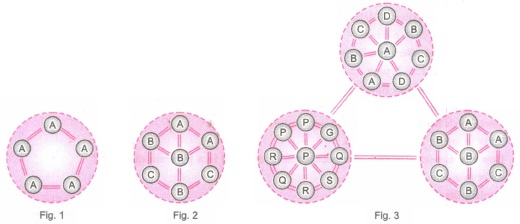
Fig 1. represents interaction between individuals of a single population.
Fig 2. represents interaction between individuals of 3species (A,B,C) in a community.
Fig 3. represents a biome having 3 communities at different stages of development
20.
Adaptation is the quality of the organism (morphological, physiological, behavioural) that enables the organism to survive and reproduce in its habitat. It adopts organism to live in different types of habitats.
Adaptation of desert plant are as follows:
(i) Desert plants have cuticle to minimise transpiration.
(ii) In some desert plant, leaves modify into spines to minimise loss of water.
(iii) They have long roots and adaptations to reduce transpiration, e.g., Acacia.
Adaptation of desert animal are as follows:
(i) Desert animals concentrate their urine for minimum loss of water, e.g., Kangaroo rat.
(ii) Desert animals absorb heat from the sun when the body temperature drop below the comfort zone.
(iii) They live in burrows during hot season and have little water requirement.
21.
(a) The factors include
(i) The rotation of the earth around the sun and the tilt of its axis cause annual variation in the intensity and duration of temperature, which affects distinct reasons.
(ii) Annual variation in precipitation.
(b) (i) Scorching deserts of Rajasthan.
(ii) Rain-soaked Meghalaya forests
(iii) Deep ocean trenches.
(iv) Tropical rain forests
(v) High mountain tops. (any four)
(c) Interactions are necessary; they should be beneficial to all.
22.
(a) Commensalism:
It is the interspecific interaction, where one species is benefitted by the association while the other is neither benefitted nor harmed, e.g. Sucker fish attached to a shark.
(b) Parasitism:
It is the interspecific interaction, where one species (called parasite) takes food and shelter from another living species (host) and damages the host in due course of time; the parasite is benefitted and the host is harmed,e.g. Tapeworm in the intestine of man.
(c) Camouflage:
It is an adaptation, where the animal (organism blends with the surroundings to escape detection by the predator, e.g. Frogs have olive green skin with patches of chromatophores to camouflage with the grasses.
(d) Mutualism:
It is the interspecific interaction, where both the interacting species are mutually benefitted, e.g. An alga and a fungus in a lichen. Rhizobium and legume plant.
(e) Interspecific competition: It is an interspecific interaction, where organisms of two different species compete with each other for certain resources, e.g. Flamingoes and fishes competing for their common food, i.e. zooplanktons.
23.
(c)
64
24.
(c)
It will increase
25.
(a)
succulents
26.
(c)
place where organism lives and performs its duty
27.
(c)
protective resemble with the surronding
28.
(b)
run off water
29.
(c)
3 and 4
30.
(d)
rapid turgor pressure changes
31.
(d)
Reiter
32.
(d)
A species which makes up only a small proportion of the total biomass of community, yet has a huge impact on the community's organization and survival.

12th Standard CBSE Syllabus & Materials
12th Standard CBSE
CBSE 12th Computer Science Python Revision Tour I - New Previous year Question Papers Study Material - QB365 Set A
NEW12th Standard CBSE
CBSE 12th Business Studies Planning Important Questions And Answers Study Material - QB365 Set A
NEW12th Standard CBSE
CBSE 12th Business Studies Business Environment Important Questions And Answers Study Material - QB365 Set A
NEW12th Standard CBSE
CBSE 12th Business Studies Principles of Management Important Questions And Answers Study Material - QB365 Set A



NCERT Books

Syllabus

Exam Pattern

Sample Question Papers

Previous year Question Papers

Important Notes

MCQ Practice test

NCERT Exemplers

Case study Questions

Image Based Questions

Passage based Questions

HOT Questions

Value Based Questions

Model Questions Papers
NCERT ( Book Back ) Questions

Assertion and Reason
Important Questions And Answers

CBSE 12th Standard CBSE Subjects
CBSE Standards








