
 100% FREE ACCESS
12th Standard CBSE Syllabus & Materials
12th Standard CBSE
CBSE 12th Economics Government Budget and the Economy Previous year Question Papers Study Material - QB365 Set A
NEW12th Standard CBSE
CBSE 12th Computer Science Interface Python with MySQL - New Previous year Question Papers Study Material - QB365 Set A
NEW12th Standard CBSE
CBSE 12th Computer Science Database Concept - New Previous year Question Papers Study Material - QB365 Set A
NEW12th Standard CBSE
CBSE 12th Computer Science Data Communication - New Previous year Question Papers Study Material - QB365 Set A
NEW12th Standard CBSE
CBSE 12th Computer Science Data Structures - New Previous year Question Papers Study Material - QB365 Set A
NEW12th Standard CBSE
CBSE 12th Computer Science Functions - New Previous year Question Papers Study Material - QB365 Set A

Published on: 28/11/2025
Download CBSE Class 12th Standard CBSE Biology question papers, sample papers, important questions, and previous year solved papers in PDF format. Get free study materials, NCERT solutions, and exam preparation resources for Class 12th Standard CBSE Biology
Questions + Answers key
Take MCQ Biology Test
1.
Explain codominance with the help of one example.
2.
Study the figures given below and answer the question
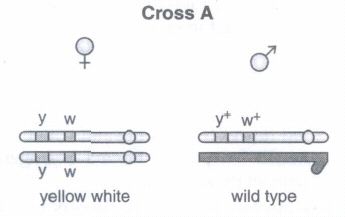
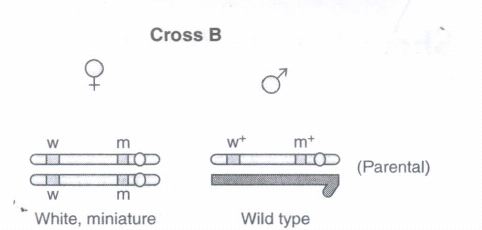
Identify in which of the crosses the strength of linkage between the genes is higher. Give reasons in support of your answer
3.
Very briefly explain alleles
4.
A man with blood group A married a woman with B group.They have a son with AB group and a daughter with blood group O.Work out and show the possibiliy of such inheritance
5.
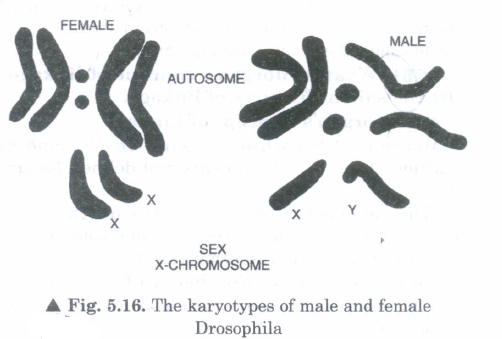
Draw the karyotype of male and female Drosophila.
6.
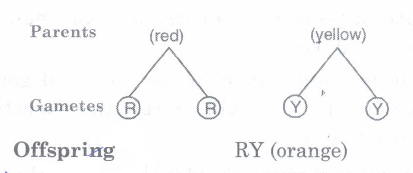
A plant with red flowers was crossed with another plant with yellow flower.If \({ F }_{ 1 }\) showed all flowers orange in colour, explain the inheritance.
7.
In a certain mammal, erect ears are dominant over drooping ears. In a cross between the two types, out of the four offspring produced in F2 generation, three had erect ears and one had drooping ears. What were the genotypes of the parents? (You may represent the dominant gene as E.)
8.
Differentiate between Homozygous and Heterozygous Conditions
9.
Tallness of pea plant is a dominant trait, while dwarfness is the alternate recessive trait. When a pureline tall is crossed with a pureline dwarf, what fraction of tall plants in F2 shall be heterozygous? Give reasons.
10.
With the help of a Punnett square, find the percentage of homozygous tall plants in a F2 population involving a true-breeding tall and a true-breeding dwarf pea plant.
11.
12.
13.
14.
15.
A person with trisomy of 21st chromosome shows
(i) furrowed tongue
(ii) Characteristic palm crease
(iii) rudimentary ovaries
(iv) gynaecomastia
Select the correct option, from the choices given below
(ii) and (iv)
(i), (ii) and (iv)
(ii) and (iii)
(i) and (ii)
16.
The probability of all possible genotypes of offspring in a genetic cross can be obtained with the help of
test cross
back cross
Punnett square
linkage cross
17.
A couple has two daughters. What is the probability that the third child will also be a female ?
25 %
50 %
75 %
100 %
18.
In a dihybrid cross, if you get 9:3:3:1 ratio it denotes that:
The alleles of two genes are interacting with each other
It is a multigenic inheritance.
It is a case of multiple allelism.
The alleles of two genes are segregating independently.
19.
A woman with normal vision has a colorblind father. She marries a colourblind man. What proportion of their children will be colourblind?
0%
25%
50%
100%
20.
A heterozygous violet-flowered pea plant is crossed to another homozygous violet-flowered pea plant. What percent of the progeny plants will have the recessive trait, i.e., white flowers?
0%
25%
50%
75%
21.
Which is correct for Turners's syndrome?
It is a case of monosomy
It causes sterlity in females.
Absence of Barr body
All of the above.
22.
In a dihydrid cross where two parents differ in two pairs of contrasting traits like seed colour yellow (YY) and seed colour green (yy) with seed shape round (RR) and seed shape wrinkled (rr), the number of green coloured seeds (yy) among sixteen products of F2 generation will be
2
4
6
8
23.
Among the seven pairs of contrasting traits in pea plant as studied by Mendel, the number of traits related to flower, pod and seed respectively were
2, 2, 2
2, 2, 1
1, 2, 2
1, 1, 2
24.
The idea of mutations was brought forth by
Hugo de Vries who worked on evening primrose
Gregor Mendel who worked on Pisum sativum
Hardy Weinberg who worked on allele frequencies in a population
Charles Darwin who observed a wide variety of organisms during sea voyage.
25.
Test cross in plants or in Drosophila involves crossing
between two genotypes with recessive trait
between two F1 hybrids
the F1 hybrid with a double recessive genotype
between two genotypes with dominant trait
26.
A person with unknown blood group under ABO system, has suffered much blood loss in an accident and needs immediate blood transfusion. His friend who was valid certificate of his own blood type, offers for blood donation without delay. What would have been the type of blood group of the donor friend?
Type B
Type AB
Type O
Type A
27.
Which one of the following symbols and its representation, used in human pedigree analysis is correct.
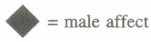



28.
In a certain taxon of insects some have 17 chromosomes and the others have 18 chromosomes. The 17 and 18 chromosome-bearing organisms are :
males and females, respectively
females and males, respectively
all males
all females
29.
Occasionally, a single gene may express more than one effect. The phenomenon is called :
multiple allelism
mosaicism
pleiotropy
polygeny
30.
Which of the following is correct?
Haemophilic-Y chromosome
Down's syndrome-21st chromosome
Sickle cell anaemia-X chromosome
Parkinson,s disease-X and Y chromosome.
31.
Which one of the following conditions in humans is correctly matched with its chromosomal abnormality/linkage?
Erythroblastosis foetails-X-linked
Down's syndrome-44 autosomes + XO
Klinefelter's syndrome-44 autosomes + XXY
Colour blindness-Y linked
32.
Which of the following conditions is related to haemophilia
A recessive gene responsible present in the X chromosome
A dominant gene responsible present in the X chromosome
A responsible dominant gene present in the Y chromosome
A responsible dominant gene present in the autosomal chromosome
33.
Indicate, the inheritance of which of the following is controlled by multiple alleles
Colour blindness
Sickle cell anaemia
Blood group
Phenylketoneuria
34.
A human male produces sperms with the genotypes AB, ab, aB and ab pertaining to the diallelic characters in equal proportions. What is the corresponding genotype of this person?
AaBB
AABb
AABB
AaBb
35.
A common test to find the genotype of a hybrid is by
Crossing of one F2 progeny with female parent
Studying the sexual behaviour of F1 progenies
Crossing of one F1 progeny with male parent
Crossing of one F2 progeny with male parent
36.
Given below is the representation of a kind of chromosomal mutation

What is the kind of mutation represented?
Deletion
Duplication
Inversion
Reciprocal translocation
37.
One of the parents of a cross has a mutation in its mitochondria. In that cross, that parent is taken as a male. During segregation of F2 progenies that mutation is found in
none of the progenies
all the progenies
50 percent of the progenies
one-third of the progenies
38.
When a cluster of genes show linkage behaviour they
Do not show independent assortment
Do not show a chromosome map
Show recombination during meiosis
Induce cell division
39.
Colour blindness is a recessive sex-linked trait in which the eye fails to distinguish
Red and green colours
Red and yellow colours
Green and blue colours
40.
A self-fertilizing trihybrid plant forms
4 different gametes and 16 different zygotes
8 different gametes and 16 different zygotes
8 different gametes and 32 different zygotes
8 different gametes and 64 different zygotes
41.
The chromosomal disorders on the other hand are caused due to absence or excess or abnormal arrangement of one or more chromosomes. Failure of segregation of chromatids during cell division cycle results in the gain or loss of a chromosome(s), called aneuploidy (hyper or hypo). For example. Down's syndrome results in the gain of extra copy of chromosome 21. Similarly, Turner's syndrome results due to loss of an X chromosome in human females. Failure of cytokinesis after telophase stage of cell division results in an increase in a whole set of chromosomes in an organism and, this phenomenon is known as polyploidy. This condition is often seen in plants. The total number of chromosomes of a normal human being is 46 (23 pairs). Out of these 22 pairs are autosomes or body chromosome and one pair of chromosomes are sex chromosome allosome. Sometimes, though rarely, either an additional copy of a chromosome may be included in an individual or an individual may lack one of any one pair of chromosomes. These situations are known as trisomy (2n+1) or monosomy (2n−1)of a chromosome, respectively. Such a situation leads to very serious consequence in the individual.
1.Trisomy is :
A) One chromosome less than 2n
B) One chromosome more than 2n
C) A hybrid obtained by crossing diploid and tetraploid
D) Three chromosomes more than 2n
2.When a diploid female plant is crossed with a tetraploid male plant, then ploidy of endosperm cells in the resulting seed is :
A) Triploidy
B) Diploidy
C) Pentaploidy
D) Tetraploidy
3.When a diploid female plant is crossed with a hexaploid male, the ploidy of endosperm cells in the resulting seed is
A) Tetraploidy
B) Pentaploidy
C) Diploidy
D) Triploidy
4.Polyploidy can be produced artificially by :
A) Colchicine
B) Inbreeding
C) Line breeding
D) Self-pollination
5.Choose the wrong statement.
A) Failure of segregation of chromatids during cell division results in aneuploidy
B) Additional copy of 'X' chromosome in males results in Klinefelter's syndrome
C) Closely located genes in a chromosome always assort independently resulting in recombinants
D) According to Mendel, recessive character never blends in heterozygous condition
42.
Mendel's mainly described those traits that have distinct alternate forms such as flower colour which are either purple or white. But if you look around, you will find that there are many traits which are not so distinct in their occurrence and are spread across a gradient. For example, in humans we don't just have tall or short people as two distinct alternatives but a whole range of possible heights. Such traits are generally controlled by three or more genes and are thus called as polygenic traits. F. Galton in 1883 suggested that many instances of continuous variation are heritable. He was impressed by the fact that taller humans beings generally produce taller children. He suggested that characters such as height and mental capabilities in humans are heritable although these show a continuous range of variation in a population. Gallon's postulate gained experimental support when it was found that at least in, some instances the same character can be determined by more than one gene, each with the same but cumulative or additive phenotypic effect. Quantitative characters like plant height, yield of crops (size, shape and number of seeds and fruits per plant), intelligence in human beings and milk yield in animals have been found to be determined by many genes and their effects have been found to be cumulative. Each gene has a certain amount of effect, and the more the number of dominant genes, the greater expression of the character. Though polygenic traits can be easily influenced by environment, these are generally controlled by three or more genes with phenotype reflecting the contribution of each allele.
1.Polygenic traits are controlled by how many gene(s)?
A) One gene
B) Two genes
C) Three or more genes
D) Not controlled by gene
2.Which of the following scientist is concerned with polygenic inheritance?
A) G. J. Mendel, 1856
B) Carl Corren, 1902
C) F. Gallon, 1883
D) Sturtevent, 1911
3.Many genes are controlling one trait is referred as -
A) Monogenes
B) Polygenes
C) Pleiotrophy
D) Phenotypic
4.Quantitative inheritance is due to
A) Cumulative effect
B) Additive effect
C) Both of the above
D) None of the above
43.
Males are more susceptible to X-linked recessive traits than females. These traits can be traced down using pedigree analysis of family. Thus, genetic counselling play a major role in the marriages these days.
(i) What are sex-linked recessive traits?
(ii) Why does X-linked recessive traits occur commonly in mnales than females?
(iii) Which symbols are used to represent affected male and consanguineous marriage in pedigree analysis?
(iv) Give an example of sex-linked dominant trait
(v) Mention one example each of autosomal dominant and autosomal recessive trait
44.
While teaching in class, teacher told students that Mendel used the contrasting traits of pea plant to propose three basic laws of inheritance She also said that these laws are not always universally applicable.
(i) When did Mendel performed hybridisation experiments and with how many traits of pea plants?
(ii) Which law(s) of Mendel is/are based on monohybrid cross?
(iii) Mention the phenotypic and genotypic ratios were obtained by Mendel in Monohybrid cross.
(iv) Give example of any two exceptions to Mendel's law of dominance.
(v) Which Mendel law of inheritance is universally accepted without exception?
45.
Read the following and answer any four questions from (i) to (v) given below:
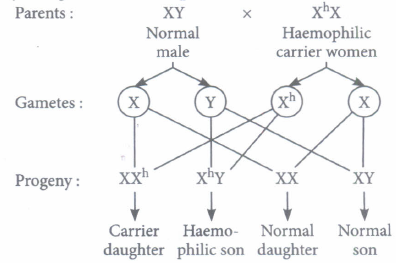
Haemophilia is a sex linked disease which is also known as bleeder's disease as the patient will continue to bleed even from a minor cut since he or she does not possess the natural phenomenon of blood clotting due to absence of anti-haemophilic globulin or factor VIII and plasma thromboplastin factor IX essential for it. As a result of continuous bleeding the patient may die of blood loss. Colour blindness is another type of sex linked trait in which the eye fails to distinguish red and green colours. Vision is however, not affected and the colour blind can, lead a normal life, reading, writing and driving (distinguishing traffic lights by their position).(i) If a haemophilic man marries a woman whose father was haemophilic and mother was normal then which of the following holds true for their progenies?
| (a) Of the total number of daughters, 50% daughters are carrier and 50% are haemophilic |
| (b) All the daughters are haemophilic. |
| (c) All sons are haemophilic and all daughters are normal. |
| (d) All sons are normal, all daughters are carriers. |
(ii) A man whose father was colourblind and mother was normal marries a woman whose father was haemophilic and mother was normal. Which of the following is true for their progenies? [Note: Percentage is from the total number of progenies.
| (a) 25% female progenies carry the gene for both haemophilia and colourblindness |
| (b) 25% male progenies carry only the gene of colourblindness |
| (c) 25% female progenies carry only the gene of colourblindness. |
| (d) 25% male progenies and 25% female progenies carry the gene of haemophilia |
(iii) Which of the following statements is incorrect regarding haemophilia?
| (a) It is a dominant disease | (b) A single protein involved in clotting of blood is affected | (c) It is recessive disease | (d) It is Mendelian disorder |
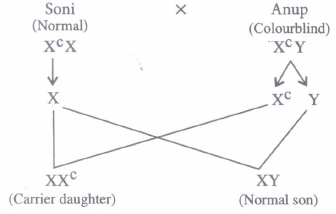
(iv) Anup is having colourblindness and is married to Soni who is normal. What is the chance that their son will have the disease?
| (a) 100% | (b) 50% | (c) 25% | (d) 0% |
(v) Refer to the given cross
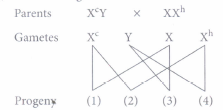
Select the correct option regarding 1, 2, 3 and 4.
| (a) 1. Colourblind carrier female 2. Colourblind haemophilic female 3. Normal male 4. Haemophilic male |
(b) 1.Colourblind people 2.Haemophilic female 3.Normal male 4..Haemophilic male |
(c) 1. Colourblind female 2. Colourblind and haemophilic female 3. Normal male 4. Normal male |
(d) 1.Colourblind carrier female 2.Normal female 3.Normal male 4.Haemophilic male |
1.
Codominance is the phenomenon in which two alleles of a gene are equally dominant and express themselves in the presence of the other, when they are together in an individual, e.g. blood group ABin this, the alleles IAand IBare codominant and both express themselves producing the glycoproteins A and B, making the blood group AB.
2.
Cross A, because they are tightly linked I due to close physical association I they are closely located
3.
There are two alternative forms of a gene for each character, one controlling each of its two contrasting expression.A pair of genes that control the two alternatives expressions of the same characterand have the same loci in the homologous chromosomes are called alleles.
4.
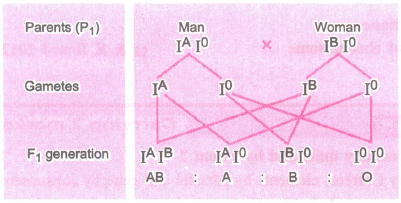
5.
Drosophila has four pairs of chromosomes in each cell. In male and female three similar pairs of chromosomes are called autosomes while the chromosomes of the remaining pair is called sex chromosomes. In male Drosophila, there is one rodshaped X-chromosome while its partner is hookshaped Y-chromosome but in female Drosophila, the sex chromosomes are of same rod type called Xand X chromosomes.
6.
It is a case of incomplete dominance. The trait of yellow colour is not recessive. It dilutes the trait of red colour and produces orange coloured flowers.
7.
Since drooping ears, the recessive trait has appeared in the progeny, both the parents must be heterozygous, i.e. Ee.
These individuals (with genotype, Ee)are produced by a cross between parents of the two types i.e. with erect ears and drooping ears; so both the parents must be homozygous, i.e. EEand ee.
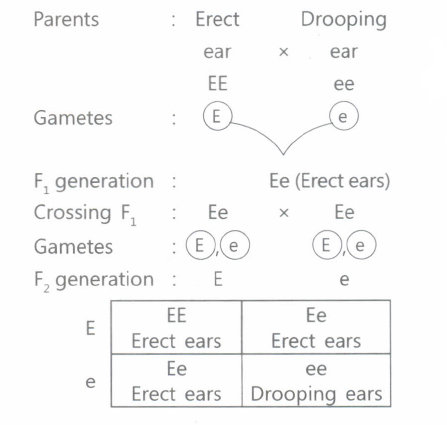
The phenotypic ratio is 3 Erect ears : 1 Drooping ears.
8.
| Homozygous | Heterozygous |
|---|---|
| - It is the condition in which the members of a pair of alleles for a character are similar. | - It is the condition in which the members of a pair of alleles for a character are different. |
| - Individual with such a condition is pure breedin. | - Individual with such a conditions is not pure breeding. |
9.
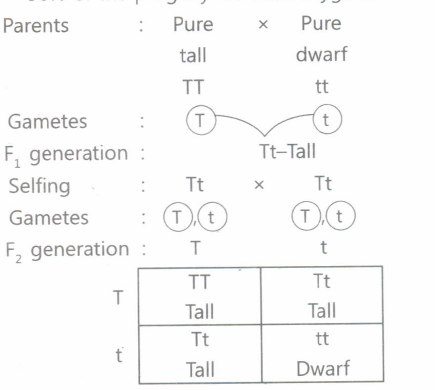
Phenotypic ratio : 3 Tall : 1 Dwarf Genotypic ratio : 1 TT : 2 Tt : 1 tt
Two-thirds of the tall progeny is heterozygous.
It is because the gene for tallness (T) is dominant and expresses itself in the heterozygous condition, Tt.
10.
Phenotypic ratio : 3 Tall : 1 Dwarf Genotypic ratio : 1 TT : 2 Tt : 1 tt
Two-thirds of the tall progeny is heterozygous.
It is because the gene for tallness (T) is dominant and expresses itself in the heterozygous condition, Tt.
11.
(d)
12.
(a)
13.
(a)
14.
(c)
15.
(d)
(i) and (ii)
16.
(c)
Punnett square
17.
(b)
50 %
18.
(d)
The alleles of two genes are segregating independently.
19.
(c)
50%
20.
(a)
0%
21.
(d)
All of the above.
22.
(b)
4
23.
(a)
2, 2, 2
24.
(a)
Hugo de Vries who worked on evening primrose
25.
(c)
the F1 hybrid with a double recessive genotype
26.
(c)
Type O
27.
(b)
28.
(a)
males and females, respectively
29.
(c)
pleiotropy
30.
(b)
Down's syndrome-21st chromosome
31.
(c)
Klinefelter's syndrome-44 autosomes + XXY
32.
(a)
A recessive gene responsible present in the X chromosome
33.
(c)
Blood group
34.
(d)
AaBb
35.
(c)
Crossing of one F1 progeny with male parent
36.
(c)
Inversion
37.
(a)
none of the progenies
38.
(a)
Do not show independent assortment
39.
(a)
Red and green colours
40.
(d)
8 different gametes and 64 different zygotes
41.
1.B) One chromosome more than 2n
2.D) Tetraploidy
3.B) Pentaploidy
A) Colchicine
4.C) Closely located genes in a chromosome always assort independently resulting in recombinants
Explanation:
Closely located genes in a chromosome always assort independently resulting in recombinants
42.
1.C) Three or more genes
2.C) F. Gallon, 1883
3.B) Polygenes
4.C) Both of the above
43.
(i) X-linked recessive traits are those associated with recessive X-allele. These are transmitted from carrier female to normal males due to recessiveness.
(ii) X-linked recessive traits occur commonly in male because they receive X-chromosome from mother only. For female to become infected, two copy of affected X-chromosomes are required but this is rare case. In case of males, one copy of affected X-chromosome is sufficient to produce its effect.
(iii) Affected males-
Consanguineous marriage-O
(iv) Defective tooth enamel.
(v) Autosomal dominant - Huntington's disease.
Autosomal recessive - Sickle cell anaemia.
44.
(i) Mendel performed hybridisation experiments in the years 1856-1863. He used seven contrasting traits of pea plant
(ii) Law of dominance and law of segregation are based on the monohybrid cross.
(ii) Phenotypic ratio - 3 : 1, Genotypic ratio - 1:2:1
(iv) Co-dominance - ABO blood grouping. Incomplete dominance - Inheritance of flower colour in Mirabilis jalapa.
(v) Law of segregation.
45.
(i) (a) : When a haemophilic man (Xhy) marries a woman whose father was haemophilic and mother was normal i.e., carrier woman (XXh), then 50% daughters are carriers and 50% are haemophilic. This can be explained as follows:

(ii) (d) : When a man whose father was colourblind and mother was normal (i.e., normal man XY) marries a woman whose father was haemophilic and mother was normal (i.e., carrier haemophilic woman XhX), then 25% male progenies and 25% female progenies carry the gene of haemophilia.
(iii) (a) : Haemophilia is sex linked recessive Mendelian disorder.
(iv) (d) : When Anup who is colourblind (Xcy) marries Soni who is normal (XX) then 0%, chances that their son will have colourblindness.
(v) (a)

12th Standard CBSE Syllabus & Materials
12th Standard CBSE
CBSE 12th Computer Science Python Revision Tour I - New Previous year Question Papers Study Material - QB365 Set A
NEW12th Standard CBSE
CBSE 12th Business Studies Planning Important Questions And Answers Study Material - QB365 Set A
NEW12th Standard CBSE
CBSE 12th Business Studies Business Environment Important Questions And Answers Study Material - QB365 Set A
NEW12th Standard CBSE
CBSE 12th Business Studies Principles of Management Important Questions And Answers Study Material - QB365 Set A



NCERT Books

Syllabus

Exam Pattern

Sample Question Papers

Previous year Question Papers

Important Notes

MCQ Practice test

NCERT Exemplers

Case study Questions

Image Based Questions

Passage based Questions

HOT Questions

Value Based Questions

Model Questions Papers
NCERT ( Book Back ) Questions

Assertion and Reason
Important Questions And Answers

CBSE 12th Standard CBSE Subjects
CBSE Standards








