
 100% FREE ACCESS
12th Standard CBSE Syllabus & Materials
12th Standard CBSE
CBSE 12th Economics Government Budget and the Economy Previous year Question Papers Study Material - QB365 Set A
NEW12th Standard CBSE
CBSE 12th Computer Science Interface Python with MySQL - New Previous year Question Papers Study Material - QB365 Set A
NEW12th Standard CBSE
CBSE 12th Computer Science Database Concept - New Previous year Question Papers Study Material - QB365 Set A
NEW12th Standard CBSE
CBSE 12th Computer Science Data Communication - New Previous year Question Papers Study Material - QB365 Set A
NEW12th Standard CBSE
CBSE 12th Computer Science Data Structures - New Previous year Question Papers Study Material - QB365 Set A
NEW12th Standard CBSE
CBSE 12th Computer Science Functions - New Previous year Question Papers Study Material - QB365 Set A

Published on: 28/11/2025
Download CBSE Class 12th Standard CBSE Biology question papers, sample papers, important questions, and previous year solved papers in PDF format. Get free study materials, NCERT solutions, and exam preparation resources for Class 12th Standard CBSE Biology
Questions + Answers key
Take MCQ Biology Test
1.
What is self-incompatibility? Why does self-pollination not lead to seed formation in self-incompatible species?
2.
What is corpus luteum? Under what conditions does it undergo degeneration?
3.
Why are cyanobacteria considered useful in paddy fields?
4.
How can the DNA segments separated by gel electrophoresis be visualised and isolated?
5.
How does Monarch butterfly defend itself from predators? Explain.
6.
If the sequence of one coding strand of DNA is written as follows:
5' - ATGCATGCATGCATGCATGCATGCATGC -3'
write down the sequence of complementary strand in 5'⟶3' direction.
7.
How does \(\beta\)-galactosidase coding sequence act as a 'selectable marker'? Explain, why is it a preferred selectable marker to antibiotic resistance genes?
8.
(i) Do all pollen grains remain viable for the same length of time? Support your answer with two suitable examples.
(ii) How are pollen grains stored in pollen banks? State the purpose of storing pollen grains in these banks.
9.
Many microbial pathogens enter the gut of humans along with food. What are the preventive barriers to protect the body from such pathogens?
10.
Briefly, describe termination of a polypeptide chain.
11.
A mother is ready to feed her newborn baby just after parturition by nature.
(i) Name the cells which secrete milk.
(ii) Name the process of producing during the first few days, after parturition.
(iv) Name the hormone meant for release of milk.
(v) Why the doctors recommend breastfeeding during the initial period of infant growth?
12.
Study the three different age pyramids for human population given below and answer questions that follows:
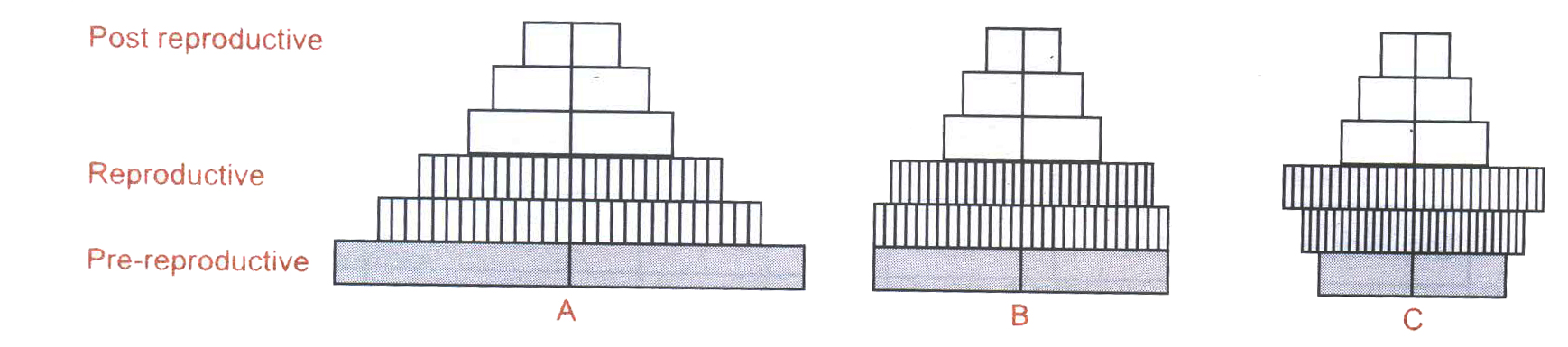
(a) Write the names given to each of these age pyramids.
(b) Mention the one which is ideal for human population and why?
(c) What would be the growth rate pattern when the resources are limited?
13.
How are flocs produced in the secondary treatment plant of the sewage? Explain their role.
14.
(a)Why is tRNA called an 'adopter'?
(b)Draw and label a secondary strucuture of tRNA.How does the actual structure of tRNA look like?
15.
Explain the roles of the following with the help of an example each in recombinant DNA technology
(i) Restriction enzymes
(ii) Plasmids
16.
(a) How does a Human Immunodeficiency Virus (HIV) replicate in a host?
(b) How does an HIV-infected patient lose immunity?
(c) List any two symptoms of this disease.
17.
(a) Describe the development of a 7-celled female gametophyte from a megaspore mother cell in an angiosperm.
(b) What is the role of endothecium and tapetum in an anther?
18.
How are concepts of biotic potential, environmental resistance and carrying capacity related to population growth?
19.
Who proposed that DNA replication is semicoservative? How did Meselson and Stahl prove it experimentally?
20.
(a)Name two types of satellite DNA.Mention the basis for such a classification.
(ii)Show only diagrammatically the process of transcription in bacteria
21.
22.
23.
24.
PCR and Restriction Fragment Length polymorphism are the methods for:
Study of enzymes
Genetic transformation
DNA sequencing
Genetic fingerprinting
25.
'Athlete's foot' is caused by
Tinea pedis
Tinea capitis
Candida albicans
Rickettsia
26.
The restriction enzyme(s) used in recombinant DNA technology that make staggered cuts in DNA leaving sticky ends is/are
Eco R I
Hind III
Bam H I
all of these
27.
Aedes mosquito is a vector of
Malaria
Filariasis
Cholera
Dengue
28.
Bacillus thuringiensis forms protein crystals which contain insecticidal protein. This protein
binds with epithelial cells of midgut of the insect pest ultimately killing it
is coded by several genes including the gene cry
is activated by acid pH of the foregut of the insect pest
does not kill the carrier bacterium which is itself resistant to this toxin
29.
The phenomenon wherein the ovary develops into a fruit without fertilization is called:
Parthenocarpy
Apomixis
Asexual reproduction
Sexual reproduction
30.
The outermost and innermost wall layers of microsporangium in an anther are respectively
Endothecium and tapetum
Epidermis and endodermis
Epidermis and middle layers
Epidermis and tapetum
31.
Select the correct order of endosperm types
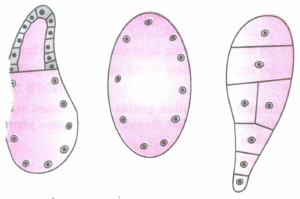
cellular, helobial, free nuclear
cellular, free nuclear, helobial
helobial, free nuclear, cellular
free nuclear, cellular, helobial
free nuclear, helobial, cellular
32.
Through which cell of the embryo sac, does the pollen tube enter the embryo sac?
Egg cell
Persistent synergid
Degenerated synergid
Central Cell
33.
34.
Study the picture of biogas plant given below and answer the questions that follows.
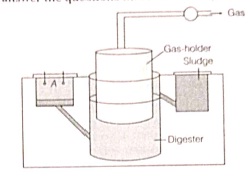
(i) Name the components gaining entry from A into the chamber.
(ii) Mention the group of bacteria and the condition in which they act on the component that entered A in the digester.
(iii) Name the components that get collected in gas holder.
35.
36.
Assertion: Template or antisense strand, having 3′ → 5′ polarity takes part in transcription.
Reason: Non-template or sense strand, having 5′ → 3′ polarity, does not take part in transcription.
Codes:
(a) If both Assertion and Reason are true and Reason is the correct explanation of Assertion.
(b) If both Assertion and Reason are true but Reason is not the correct explanation of Assertion.
(c) If Assertion is true but Reason is false.
(d) If both Assertion and Reason are false.
37.
Assertion : In human male, testes are extra abdominal and lie in scrotal sacs.
Reason : Scrotum acts as thermo regulator and keeps testicular temperature lower
Codes:
(a) If both Assertion and Reason are true and Reason is the correct explanation of Assertion.
(b) If both Assertion and Reason are true but Reason is not the correct explanation of Assertion.
(c) If Assertion is true but Reason is false.
(d) If both Assertion and Reason are false.
38.
Assertion (A): Besides curdling of milk, LAB also improve curd's nutritional quality.
Reason (R): LAB, when present in human stomach, check disease causing microbes.
Codes:
(a) Both A and R are true and R is the correct explanation of A.
(b) Both A and R are true and R is not the correct explanation of A.
(c) A is true, but R is false.
(d) A is false, but R is true.
1.
Self-incompatibility
It is the third device to prevent inbreeding. It is a genetic phenomenon of preventing the pollen from fertilising ovules of the same flower by inhibiting pollen germination or pollen tube growth in the pistil.
2.
The corpus luteum is formed in the mammalian ovary from a reputed Graaflan follicle after ovulation.It degenerates in the absence of fertilisation as the level of gonadotropins (FSH and LH) drops.
3.
Cyanobacteria are capable of nitrogen fixation. They, however, live in semiaquatic and aquatic habitats. Paddy fields contain water. Therefore, cyanobacteria can be inoculated in these fields for nitrogen fertility.
4.
The separated DNA fragments are stained with ethidium bromide.
Then by exposure to UV-radiation, the separated DNAs become visible as orange-coloured bands.
The separated bands of DNA are cut out from the agarose gel and DNA is extracted from these gel pieces by the process known as elution
5.
The monarch butterfly is highly distasteful to its predators because of a chemical present in its body.
It has acquired it at the caterpillar stage by feeding on a poisonous weed.
6.
The sequence of strand in 3' ⟶ 5' direction
3' - TACGTACGTACGTACGTACGTACGTACG - 5'
The sequence of strand in 5' ⟶ 3' direction
5' - AUGCAUGCAUGCAUGCAUGCAUGCAUGC - 3'
7.
1. When an alien DNA or recombinant DNA is ligated within the coding sequence of an enzyme, the enzyme becomes inactivated; this phenomenon is called insertional inactivation.
2. A recombinant loses the ability to produce a (blue) colour with a chromogenic substrate; hence, it can be distinguished from the non-recombinants, which produce blue-co loured colonies with the chromogenic substrate.
3. This method is preferred to the antibiotic-resistance method as the latter is a cumbersome procedure that requires simultaneous plating on two plates having two different antibiotics.
8.
(i) No, the pollen grains of different species remain viable for different periods of time. e.g. pollen grains of cereals remain viable for less than 30 minutes whereas some members of Rosaceae, Leguminosae and Solanaceae retain the pollen viability for months.
(ii) In the pollen banks, pollen grains are stored in liquid nitrogen (at -196°C).
9.
Many microbial pathogens enter the gut of human along with food. The preventive barriers to protect the body from such pathogens are as follows:
(i) The mucus coating of the epithelium lining of the gut helps in trapping microbes entering the body.
(ii) Saliva in the mouth and hydrochloric acid in gastric juice secreted by stomach prevent microbial growth.
10.
Termination of a polypeptide synthesis:
1)When one of the termination codons (UAA, UAG, UGA) comes at the A-site, it does not code for any amino acid and there is no tRNA molecule for it
2) As a Result, the polypeptide synthesis (or elongation of polypeptide) stops
3)The polypeptide synthesised is released from the ribosome, catalysed by a 'release factor'.
11.
(i) Lactiferous cells of alveoli of mammary glands.They are present in breast.
(ii) Lactation
(iii) Colostrum.
(iv) Oxytocin hormone released by posterior lobe of pituitary body.
(v) Mother's milk is low in fat but rich in proteins such as lactalbumin and lactoprotein. Colostrum also contains major immunoglobin IgA. It provides passive immunity to the newborn baby.
12.
(a) A - Expanding, B - Stable, C- Declining.
(b) Stable population is preferred. It is helpful for planning any welfare activity.
(c) Logistic growth curve.
13.
(a) When air is pumped into the depletiontanks and constantly agiated the aerobic microbes grow vigorously and from flocs.They consume a major part of the organic reduce the BOD of the sewage.
14.
(a) Since tRNA on one hand binds to a specific amino acid and on the other hand reads the codon of the amino acid bound to it through its anticodon, it is called an 'adapter'.
(b)
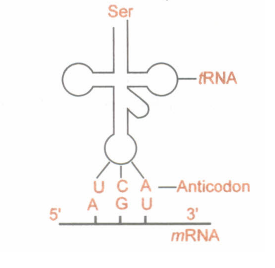
It actually looks like an inverted L.
15.
i) Restriction enzymes are molecular scissors used in molecular biology for cutting DNA sequences from a specific site. It plays an important role in gene manipulation. The enzyme recognizes a specific 4-8 base pair sequence known as the recognition sequence and cut the sequence at a specific site.
For example, the enzyme EcoRI cuts the DNA between G and A only when the sequence GAATTC is present in the DNA.
↓
5' - GAATTC - 3'
3' - CTTAAG - 5'
↑
Hence, structures called overhangs or sticky ends are generated on each strand. 5'-G and AATTC 3' 3' - CTTAA G5' These sticky ends form hydrogen bonds with their complementary counterparts with the help of DNA ligase.
ii) Plasmid is an extra-chromosomal DNA molecule in bacteria that is capable of replicating, independent of chromosomal DNA.They serve as a vehicle to carry a foreign DNA sequence into a given host cell.
An example of such vector is pBR322.
16.
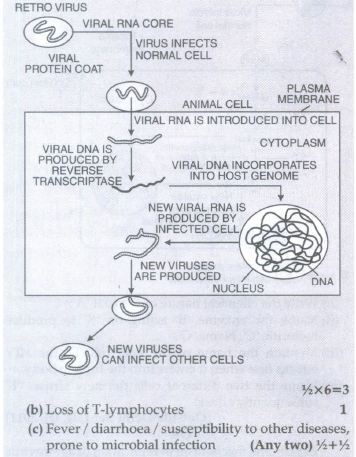
(a) The HIV replicates in the host by a process of reverse transcription, In this process the viral RNA replicates to form viral DNA with the help of the enzyme reverse transcriptase. This viral DNA then gets incorporated into the host cell DNA which directs the infected cell to produce virus particles.
(b) The HIV infected patients loose immunity because of loss of T-lymphocytes. The HIV enter into helper T-lyphocytes & produce progeny viruses which are released into the blood & attack other helpe T-Iymphocytes. This leads to the progressive decrease in number of T-lymphocytes which results in the loss of immunity as a result of which the patient in unable to protect himself from any type of infection.
(c) The common symptoms of HIV patients are fever, diarhoea, susceptability to other diseases and infections.
17.
(a) Development of female gametophyte: The female reproductive part of a flower is gynoecium, which consists of three parts-stigma, style, and ovary. The ovules are formed in the ovary and attach to it through placenta. The ovule is surrounded by one to two protective layers are called integuments leaving a small opening at one end termed as a micropyle. The stalk of the ovule is called funiculus.The ovule is composed of multi-celled cellular tissue called the nucellus. A hypodermal cell of nucellus toward at the micropylar end enlarges and becomes a megaspore mother cell that undergoes meiosis to form a linear tetrad of four megaspores. Out of four, only one remains functional and three megaspores degenerate. The functional megaspore undergoes three successive mitotic divisions to form eight nuclei, which arrange themselves into three groups. Three: nuclei migrate towards the micro-pylar end and form the egg apparatus. Other three nuclei form antipodal cells at chalazal end. The remaining two nuclei come together as polar nuclei which fuse to form secondary nucleus in the centre of the embryo sac.
(b) Role of endothecium: Microsporangium generally surrounded by wall layers like epidermis, endothecium, 2 or 3 middle layers and the tapetum. Endothecium performs the function of protection and helps in dehiscence of anther to release the pollen
Role of tapetum: It nourishes the developing pollen grains.
18.
(a) Biotic potential. It is the potential rate of increase or it is the physiological capacity to produce offspring. The biotic potential of human species is estimated to be about 12 per female during the reproductive period of 16 to 44 years of age. The population increases when the number of births exceeds the number of deaths.
(b) Environmental resistance. The factors such as shortage3 of food, disease, predation, environmental natural calamities which impose a check on population size constitute environmental resistance. In case the factors of environmental resistance cannot produce zero growth, the population shows rapid growth. The growth curve will take the shape of 'J'. But in a world with limited resources, environmental resistance does not allow population growth to soar towards infinity.
(c) Carrying capacity. It is a measure of the feeding capacity of an environment or ecosystem for a population of a species under a given set of conditions. The population generally stabilizes around carrying capacity. All environments can sustain only a limited size of population. This limit of constant (K) is called carrying capacity
The carrying of earth for human population is about 50 billions.This figure is likely to be reached is 2100 A.D. if the present rate of growth of population is allowed.
19.
1. It was to show that DNA replication is semi conservative.
2. After completion of replication, each new/daughter molecule of DNA has one parental strand and one newly synthesised strand; this is called semiconservative replication of DNA.
3. Experiment
Mathew Meselson and Franklin Stahl performed the experiment.
4. They grew E.coli. in a medium containing \(^{ 15 }{ { NH }_{ 4 } }Cl,\) until \(^{ 15 }N\) was incorporated in the two strands of newly formed E.coli cells; this 'heavy' DNA can be separated from the normal \(^{ 14 }N-DNA\) by centrifugation in cesium chloride (CsCI) density gradient.
5. Then they transferred the cells into a medium with normal \(^{ 14 }{ { NH }_{ 4 } }Cl\) and took out samples at various time intervals.
6. They extracted the DNA and centrifuged it to measure the densities.
7. The DNA extracted from cells after one generation after transfer from the \(^{ 15 }{ { N } }\) medium to \(^{ 14 }{ { N } }\) medium (i.e. after about 20 minutes), had an intermediate/hybrid density.
8. The DNA extracted after two generations (i.e. after 40 minutes) consisted of equal amounts of 'light' DNA and 'hybrid' DNA.
This proves that after replication, each DNA molecule has one parental strand and one newly synthesised strand, i.e. replication is semiconservative.
20.
(a) Minisatellites and microsatellites
They are classified on the basis of:
(i) base composition, i.e. A- T rich or G-C rich.
(ii) length of the segment.
(iii) number of repetitive units.
21.
(b)
22.
(c)
23.
(d)
24.
(d)
Genetic fingerprinting
25.
(a)
Tinea pedis
26.
(d)
all of these
27.
(d)
Dengue
28.
(a)
binds with epithelial cells of midgut of the insect pest ultimately killing it
29.
(a)
Parthenocarpy
30.
(a)
Endothecium and tapetum
31.
(c)
helobial, free nuclear, cellular
32.
(c)
Degenerated synergid
33.
34.
(i) The dung and water are the components which gain entry from A point of the digestive chamber.
(ii) Methanogens are the group of bacteria which act upon the dung matter to produce methane. The common methanogenic bacterium is Methanobacterium.
These bacterium need anaerobic condition to digest cellulosic material present in cattle dung.
(iii) The components that get collected in gas holder or chamber are mainly methane gas (CH4) along with carbon dioxide (CO2) and hydrogen (H2) gases used as fuel.
35.
36.
(b) If both Assertion and Reason are true but Reason is not the correct explanation of Assertion.
37.
(a) If both Assertion and Reason are true and Reason is the correct explanation of Assertion.
38.
Both A and R are true and R is not the correct explanation of A.

12th Standard CBSE Syllabus & Materials
12th Standard CBSE
CBSE 12th Computer Science Python Revision Tour I - New Previous year Question Papers Study Material - QB365 Set A
NEW12th Standard CBSE
CBSE 12th Business Studies Planning Important Questions And Answers Study Material - QB365 Set A
NEW12th Standard CBSE
CBSE 12th Business Studies Business Environment Important Questions And Answers Study Material - QB365 Set A
NEW12th Standard CBSE
CBSE 12th Business Studies Principles of Management Important Questions And Answers Study Material - QB365 Set A



NCERT Books

Syllabus

Exam Pattern

Sample Question Papers

Previous year Question Papers

Important Notes

MCQ Practice test

NCERT Exemplers

Case study Questions

Image Based Questions

Passage based Questions

HOT Questions

Value Based Questions

Model Questions Papers
NCERT ( Book Back ) Questions

Assertion and Reason
Important Questions And Answers

CBSE 12th Standard CBSE Subjects
CBSE Standards








