
 100% FREE ACCESS
12th Standard CBSE Syllabus & Materials
12th Standard CBSE
CBSE 12th Economics Government Budget and the Economy Previous year Question Papers Study Material - QB365 Set A
NEW12th Standard CBSE
CBSE 12th Computer Science Interface Python with MySQL - New Previous year Question Papers Study Material - QB365 Set A
NEW12th Standard CBSE
CBSE 12th Computer Science Database Concept - New Previous year Question Papers Study Material - QB365 Set A
NEW12th Standard CBSE
CBSE 12th Computer Science Data Communication - New Previous year Question Papers Study Material - QB365 Set A
NEW12th Standard CBSE
CBSE 12th Computer Science Data Structures - New Previous year Question Papers Study Material - QB365 Set A
NEW12th Standard CBSE
CBSE 12th Computer Science Functions - New Previous year Question Papers Study Material - QB365 Set A

Published on: 28/11/2025
Download CBSE Class 12th Standard CBSE Biology question papers, sample papers, important questions, and previous year solved papers in PDF format. Get free study materials, NCERT solutions, and exam preparation resources for Class 12th Standard CBSE Biology
Questions + Answers key
Take MCQ Biology Test
1.
In the figure of anatropous ovule given below, choose the correct option for the characteristic distribution of cells within the typical embryo sac.
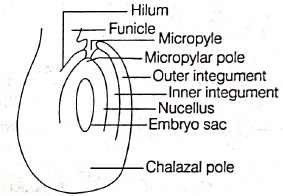
| Number of cells at chalazal end |
Number of cells at micropylar end | Number of nuclei left in central cell |
| 3 | 2 | 3 |
| Number of cells at chalazal end |
Number of cells at micropylar end | Number of nuclei left in central cell |
| 3 | 3 | 2 |
| Number of cells at chalazal end |
Number of cells at micropylar end | Number of nuclei left in central cell |
| 2 | 3 | 3 |
| Number of cells at chalazal end |
Number of cells at micropylar end | Number of nuclei left in central cell |
| 2 | 2 | 4 |
2.
Which condition of gynoecium (pistil) is shown in the figures (i) and (ii) ?
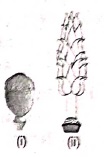
(i) Multicarpellary apocarpous,
(ii) Multicarpellary syncarpous
(i) Multicarpellary syncarpous,
(ii) Multicarpellary apocarpous
(i) Bicarpellary apocarpous,
(ii) Bicarpellary syncarpous
(i) Bicarpellary syncarpous,
(ii) Bicarpellary apocarpous
3.
Select the correct order of endosperm types
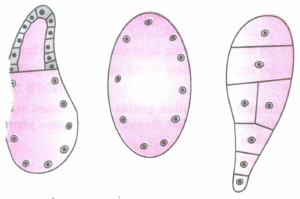
cellular, helobial, free nuclear
cellular, free nuclear, helobial
helobial, free nuclear, cellular
free nuclear, cellular, helobial
free nuclear, helobial, cellular
4.
A type angiosperm embryo sac at maturity is
4 nucleate - 2 celled
8 nucleate - 7 celled
4 nucleate - 4 celled
8 nucleate - 4 celled
2 nucleate - 1 celled
5.
Which one of the following pairs of plant structures has a haploid number of chromosomes?
Nucellus and antipodal cells
Egg nucleus and secondary nucleus
Megaspore mother cell and antipodal cells
Egg cell and antipodal cells
6.
Male gametes in angiosperms are formed by the division of
Generative cell
vegetative cell
Microspore mother cell
Microspore
7.
In some plants anthers and stigma grow and mature at the same time. This phenomenon is called
Homogamy
Syngamy
Allogamy
Fusion
8.
In a type of apomixis known as adventive embryology, embryos develop directly from the
Nucellus or integuments
Zygote
Synergids or antipodals in an embryo sac
Accessory embryo sacs in the ovule
9.
The pollen tube usually enters the embryo sac
Through one of the synergids
By directly penetrating the egg
Between one synergid and central cell
By knocking off the antipodal cells
10.
An ovule which becomes curved so that the nucellus and embryo sac lie at right angles to the funicle is
Campylotropous
Anatropous
Orthotropous
Hemitropous
11.
In a flowering plant, archesporium gives rise to
only the wall of the sporangium
both wall and the sporogenous cells
wall and the tapetum
Only tapetum and sporogenous cells
12.
In angiosperms, pollen tubes liberate their male gametes into the
Central cell
Antipodal cell
Egg cell
Synergids
13.
Intraspecific incompatibility can be overcome by
Wetting of anthers
Mixed pollination
Intraovarian fertilization
Intraspecific competition
14.
Egg apparatus consists of
egg
egg and polar nuclei
Egg and synergids
Egg and antipodal cells
15.
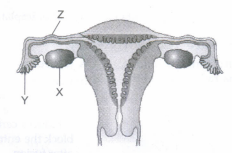
The above diagram shows a part of the human female reproductive system.
(a) Name the gamete cells that would be present in 'X' if taken from a newborn baby.
(b) Name Y and write its function.
(c)Name Z and write the events that take place here.
16.
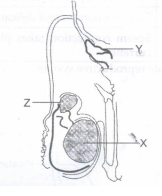
The above diagram shows human male reproductive system (one side only).
(a) Identify 'X' and write its location in the body.
(b) Name the accessory gland 'Y' and its secretion.
(c) Name and state the function of Z.
17.
The diagram shows the arrangement of blood vessels in the uterus wall and placenta of a pregnant woman.If the women has high blood pressure, would it affect the developing foetus?

18.
The given diagram shows the cross-section of an umbilical cord.

(i)Label the part A and B (both are blood vessels.)
(ii)Which would contain higher amount of urea?
19.
The middle piece of a mature sperm is characterised by the presence of mitochondria arranged in a spiral.These help in the movement of sperm tail.
With reference to the statement given above,answer the questions that follow.
(i)What do you understand by the term chondriosome?
(ii)State the major function of mitochondria
(iii)'Mitochondria is a site of presence of the major enzymes of cell.'Comment on the statement.
20.
The primary spermatocytes(diploid)undergo meiosis-I to produce secondary spermatocytes further undertake meiosis-II and produce spermatids.With reference to same,draw a diagram depictiong various stages of meiosis I and II which explain spermatogenesis.
21.
Assertion: Placenta acts as a major endocrine organ.
Reason: In mammals fetal components of the placenta derive initially from the chondroblast.
(a) Both assertion and reason are true and reason is the correct explanation of assertion.
(b) Both assertion and reason are true but reason is not the correct explanation of assertion.
(c) Assertion is true butreason is false.
(d) Both assertion and reason are false.
22.
Assertion: Corpus luteum contains blood clot and fibrin.
Reason: Corpus luteum is formed by the germinal epithelium
(a) Both assertion and reason are true and reason is the correct explanation of assertion.
(b) Both assertion and reason are true but reason is not the correct explanation of assertion.
(c) Assertion is true butreason is false.
(d) Both assertion and reason are false.
23.
Assertion: If several spermatozoa hit the egg at the same time, all can enter the egg.
Reason: The above process is called amphimixis which can be prevented by fertilisation membrane.
(a) Both assertion and reason are true and reason is the correct explanation of assertion.
(b) Both assertion and reason are true but reason is not the correct explanation of assertion.
(c) Assertion is true butreason is false.
(d) Both assertion and reason are false.
24.
Assertion : At the time of implantation, which takes place in 14days, the human embryo is called blastocyst.
Reason: Implantation occurs in the gastrula stage.
(a) Both assertion and reason are true and reason is the correct explanation of assertion.
(b) Both assertion and reason are true but reason is not the correct explanation of assertion.
(c) Assertion is true butreason is false.
(d) Both assertion and reason are false.
25.
Assertion: One cogonium produces one ovum and three polar bodies.
Reason: Polar bodies have small amount of cytoplasm.
(a) Both assertion and reason are true and reason is the correct explanation of assertion.
(b) Both assertion and reason are true but reason is not the correct explanation of assertion.
(c) Assertion is true butreason is false.
(d) Both assertion and reason are false
26.
Assertion: Epididymis is divided into three parts.
Reason: Epididymis is the organ that stores spermatozoa.
(a) Both assertion and reason are true and reason is the correct explanation of assertion.
(b) Both assertion and reason are true but reason is not the correct explanation of assertion.
(c) Assertion is true butreason is false.
(d) Both assertion and reason are false
27.
Assertion: Corpus luteum secretes the female hormone progesterone.
Reason: After ovulation, a ruptured follicle turns into yellowish solid mass of cells called corpus albicans.
(a) Both assertion and reason are true and reason is the correct explanation of assertion.
(b) Both assertion and reason are true but reason is not the correct explanation of assertion.
(c) Assertion is true butreason is false.
(d) Both assertion and reason are false
28.
Assertion: Clitoris offemale is homologous to tip of penis.
Reason: Both have same origin and richly supplied with nerves and blood vessels.
(a) Both assertion and reason are true and reason is the correct explanation of assertion.
(b) Both assertion and reason are true but reason is not the correct explanation of assertion.
(c) Assertion is true butreason is false.
(d) Both assertion and reason are false.
29.
Assertion: Cilia lining the fallopian tube helps to pick up and push the released ovum into the oviduct.
Reason: Cilia of fallopian tubes beat towards uterus.
(a) Both assertion and reason are true and reason is the correct explanation of assertion.
(b) Both assertion and reason are true but reason is not the correct explanation of assertion.
(c) Assertion is true butreason is false.
(d) Both assertion and reason are false.
30.
Assertion: At puberty human male develops secondary sexual characters.
Reason: At puberty there is decreased secretion of testosterone in male.
(a) Both assertion and reason are true and reason is the correct explanation of assertion.
(b) Both assertion and reason are true but reason is not the correct explanation of assertion.
(c) Assertion is true butreason is false.
(d) Both assertion and reason are false
31.
Assertion: In human male, testis are extra abdominal and lie in scrotal sacs.
Reason : Scrotum acts as thermoregulator and keeps testicular temperature lower by 2°C for normal spermatogenesis.
(a) Both assertion and reason are true and reason is the correct explanation of assertion.
(b) Both assertion and reason are true but reason is not the correct explanation of assertion.
(c) Assertion is true butreason is false.
(d) Both assertion and reason are false.
1.
(b)
| Number of cells at chalazal end |
Number of cells at micropylar end | Number of nuclei left in central cell |
| 3 | 3 | 2 |
2.
(b)
(i) Multicarpellary syncarpous,
(ii) Multicarpellary apocarpous
3.
(c)
helobial, free nuclear, cellular
4.
(b)
8 nucleate - 7 celled
5.
(d)
Egg cell and antipodal cells
6.
(a)
Generative cell
7.
(b)
Syngamy
8.
(a)
Nucellus or integuments
9.
(a)
Through one of the synergids
10.
(d)
Hemitropous
11.
(b)
both wall and the sporogenous cells
12.
(d)
Synergids
13.
(b)
Mixed pollination
14.
(c)
Egg and synergids
15.
(a) X = Primary oocytes
(b) Y = Fimbriae, collection of ovum
(c) Z = ampullary - isthmic junction/fallopian tube, the ovum encounters the sperms/fertilization takes place
16.
(a) X- Testicular lobules, location: Testis, outside the abdominal cavity scrotum.
(b) Y - Seminal vesicle, seminal plasma.
(c) Z - Epididymis, function: Storage of sperms.
17.
Yes, if a pregnant woman has high blood pressure, the woman develops preeclampsia, which can threaten the lives of both the mother and the foetus.It can cause low birth weight and early delivery of foetus,sometimes the child,born very early also may die.
High blood pressure can harm the mother's kidneys and other organs and also lower the number of platelets.
18.
(i)The part labelled A is a vein and B is an artery, as media of artery is thicker than that of a vein and the elastic components of vein is small when compared to that of an attery
(ii)The umbilical artery contains higher amount of urea.The veins carry oxygenated, nutrient rich blood to foetus and arteries carry deoxygenated, nutrient depleted blood away from the foetus.
19.
(i)The mitochondrion present in a cell are collectively referred to as chondriosome
(ii)Mitochondria are associated with cellular respiration (ie.oxidation of cellular nutrients) and energey generation of cell.Thus,it is also referred to as power house the cell.
(iii)Out of the total enzyme present in a cell,mitochondria alone contribute to 70%.The enzymes of Krebs, cycle are present in matrix of mitochondrial membrance) while that of Electron Transport System(ETS) and oxidative phosphorylation are situate in cristae
20.
A diagrammatic representation of meiosis-I and meiosis-II (stage(a-e) represent prophase-I)is given below

21.
(c): Placenta may be defined as the connection between the fetal membranes (amnion and chorion) and the uterine wall (decidua basalis, the portion of the decidua which is directly adjacent to conceptus at the implantation site) for physiological exchange between the fetus and the mother's blood. In mammals, the fetal components of the placenta derive initially from trophoblast, connected with embryonic blood stream, through its contact with yolk sac. Placenta also acts as a major endocrine organs as it secretes hormones such as estrogen, progesterone and hCG that are essential for maintaining a maternal physiological condition appropriate for continued development of the conceptus.
22.
(c): Corpus luteum is formed after the release of secondary oocyte from the Graafian follicle
23.
(d) : If several spermatozoa hit the egg at the same time, even then only one can get entry into the egg because after the entry of one sperm cell, the egg cell becomes impervious (not able to be penetrated) to other sperm cells. This can be done by fertilizinantifertilizin compatibility reaction. Fertilizin of egg interacts with antifertilizin of a sperm of the same species. This interaction makes the sperms stick to the egg surface. The process of penetrating the ovum by many sperms is called polyspermy. Once the sperm cell has penetrated the corona radiata and zona pellucida, its unit membrane fuses with the unit membrane surrounding the egg cytoplasm. Just after the entry of sperm in the egg, a fertilisation membrane is formed (by zona pellucida) in the egg. This membrane prevents polyspermic fertilisation. Amphimixis is the mixing up the chromosomes of a sperm and an ovum.
24.
(d): Implantation is the attachment of the early embryo called blastocyst, to the lining of womb. It begins between the fifth and seventh day after the ovulation and is enabled by the secretion of enzymes. that digest a portion of the endometrium. A blastocyst is composed of a hollow sphere of trophoblast cells, inside of which is a small cluster of cells called the inner cell mass. Trophoblast goes on to contribute to fetal membrane systems. While the inner cell mass is destined largely to become the embryo and fetus
25.
(b) Both assertion and reason are true but reason is not the correct explanation of assertion.
26.
(b) : Epididymis lies along the top and side of testes and is divided into 3 parts - anterior caput epididymis: middle corpus epididymis and posterior cauda epididymis.
The epididymis, besides forming a part of tubular conducting system for sperm transport, in it serves as a storage reservoir for sperms
27.
(c): At about the 14 day of the menstrual cycle, the distended mature graafian follicle ruptures and the ovum or secondary oocyte is extruded into the abdominal cavity. This is, the process of ovulation which is triggered by a surge in LH secretion. The follicle that ruptures at the time of ovulation promptly fills with blood forming a corpus haemorrhagicium. The granulosa cell and theca cells of the follicle lining promptly begins to proliferate and the clotted blood is rapidly replaced with yellowish, lipid rich in luteal cells forming the corpus luteum. This initiates the luteal phase of the menstrual cycle, during which the luteal cells secretes estrogen and progesterone. Progesterone is a steroid hormone that has functions in preparing the uterus for pregnancy. If pregnancy occurs, the corpus luteum persists and if there is no pregnancy the corpus luteum begins to degenerate about 4 days before the next menses (24th day of the cycle) and is eventually replaced by scar tissue, forming a corpus albicans.
28.
(a) : Clitoris of female is the small, spongy and erectile structure which hangs freely from the front end of vulva. It represents the underdeveloped penis. Whereas penis is a finger-like cylindrical outgrowth of abdomen projecting in between the scrotal sacs. Clitoris and penis both originate from the same origin, therefore are homologous.
Homologous organs are those organs which have the same origin and mayor may not have the same function. Clitoris and penis both are the reproductive organs present in female and male respectively. They are originated from the mesoderm layer and both are supplied with the nerves and blood vessels.
29.
(a) Both assertion and reason are true and reason is the correct explanation of assertion.
30.
(c) : Puberty is the period of life at which the ability to reproduce begins and reproductive organs become functional. In male, the puberty is the period between 13-16 years. Puberty in male is controlled by male sex hormone called testosterone, which is secreted by interstitial or Leydig's cells of the testes under the stimulation of interstitial cells stimulating hormone (ICSH) secreted by anterior pituitary. After puberty the seminiferous tubules start producing sperms. The development of secondary sex organs like prostate, scrotum, penis, etc., starts and secondary sexual characters like growth of hair on face, chest, pubis and axillae, broadening of shoulders, deepening of voice due to enlargement of voice box occurs. In puberty (male), height increases due to rapid growth of muscles and bones.
31.
(a) : Scrotum is a place where testes begins to descend during the third month with a concomitant shortening of gubernaculum. Proper descend of testes is essential for complete fertility because sperms needs low temperature by about 2°C from normal body temperature (37°C) to mature. The scrotal sacs has dartos muscles which constantly contracts and relaxes the loose scrotal skin. The loose scrotal skin helps to keep the testicular temperature at 35°C. If the testes do not descend from the abdominal cavity to the scrotum, the high temperature will destroy the sperm producing seminiferous tubules which results in sterility. So, scrotum acts as a thermoregulator and helps in spermatogenesis.

12th Standard CBSE Syllabus & Materials
12th Standard CBSE
CBSE 12th Computer Science Python Revision Tour I - New Previous year Question Papers Study Material - QB365 Set A
NEW12th Standard CBSE
CBSE 12th Business Studies Planning Important Questions And Answers Study Material - QB365 Set A
NEW12th Standard CBSE
CBSE 12th Business Studies Business Environment Important Questions And Answers Study Material - QB365 Set A
NEW12th Standard CBSE
CBSE 12th Business Studies Principles of Management Important Questions And Answers Study Material - QB365 Set A



NCERT Books

Syllabus

Exam Pattern

Sample Question Papers

Previous year Question Papers

Important Notes

MCQ Practice test

NCERT Exemplers

Case study Questions

Image Based Questions

Passage based Questions

HOT Questions

Value Based Questions

Model Questions Papers
NCERT ( Book Back ) Questions

Assertion and Reason
Important Questions And Answers

CBSE 12th Standard CBSE Subjects
CBSE Standards








